Mauritian Beer: The Phoenix Lager and Two Craft Breweries
Mauritius is the island where the dodo lived and died out. But the beer called Dodo is brewed a few hundred kilometers to the west, on Réunion, and Mauritius picked a phoenix for its own. If you're looking for a symbol of rebirth in that, save yourself the trouble: Phoenix is most likely just the name of the suburb up on the central plateau where the brewery stands.
Mauritian beer is the pale lager Phoenix, brewed in Vacoas-Phoenix since 1963 and the drink that washes down almost everything in Mauritian cuisine, and around it a handful of younger beers: the stronger Blue Marlin and Spéciale, the Fresh shandy, the wheat beer Manawa and two craft breweries, The Thirsty Fox and Flying Dodo. Not bad for an island of 1.3 million people. I worked my way through nearly all of them.

Where Phoenix Came From and Who Keeps It Company in the Ocean
Until 1961 no beer was brewed in Mauritius, only drunk - imported, under British rule. That year a group of local businessmen led by Pierre Hugnin and the brewer Robert Ledoux founded Mauritius Breweries, and on August 26, 1963, the first bottle of Phoenix left the brewery, a five-percent lager that has never left the island since. Today the company goes by PhoenixBev and brews Guinness under license alongside Phoenix. The Creole slogan reads "Nou Pays. Nou Labiere" - our country, our beer. No bird rising from the ashes, then. On a tropical island, though, staying power may be the bigger miracle.
Phoenix is not alone out in the ocean. Réunion, the Seychelles and Madagascar each have their own national lager, and all four are children of the colonial era: European-style pale beers made from imported malt and hops, brewed for a market that until then had mostly drunk whatever the sugarcane could give it - rum. The siblings don't leave each other alone: Phoenix is shipped to Réunion to compete with Dodo, and the Seychelles brewery is now owned outright by the Mauritian one. The dodo, meanwhile, remains a bird that went extinct on one island and sells beer on another.

The Phoenix family has grown since the sixties. The late eighties brought Blue Marlin at six percent with a marlin on the label, and later Phoenix Spéciale at six and a half - darker, heavier and to my mind better suited to the cooler months. At the other end sits Phoenix Fresh, a lemon shandy at three and a half percent, and the youngest is Manawa, a craft line PhoenixBev built on its own site in Pont Fer with a South African brewer. Manawa makes a golden ale, a pale ale, an IPA and a witbier - and that witbier is the one Mauritian beer I knew after the first sip I'd never order again. And I'm a big fan of wheat beer. So the problem is not the style.


A Fox Made of Initials and a Dodo That Flies
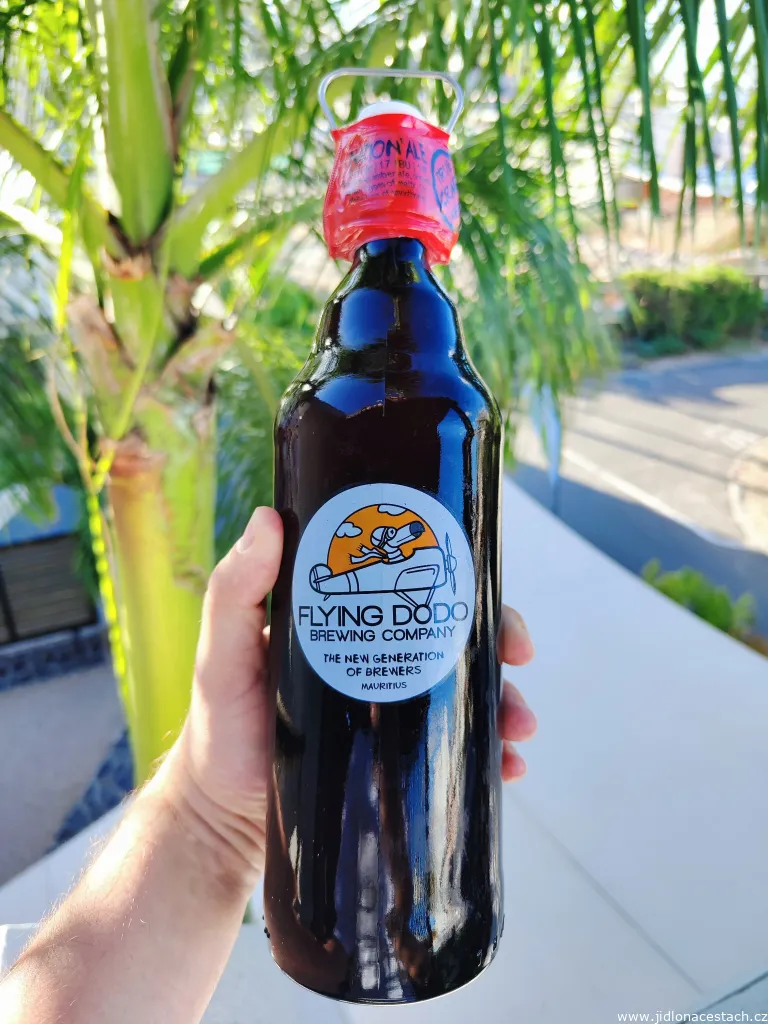
The first dent in the Phoenix monopoly came in 2011, and it came from a pub. Flying Dodo in the Bagatelle mall is the first microbrewery in the island's history: it brews in small batches, doesn't filter or pasteurize and tries a new recipe almost every month. So every beer goes into the same dark blue bottle, told apart only by the color of the foil on the neck - which is how I ended up with the Christmas Naked Santa Christmas Ale at seven and a half percent and full of spice, and the weaker Nation' Ale. The second craft brewery, The Thirsty Fox, has been run since 2019 by the Oxenham family, who also make wine and rum on the island - and the fox in the name is a set of initials, not an animal: "F" for Fabien and "Ox" for Oxenham, the way Fabien Oxenham labeled his homebrew samples for years before they turned into a brand. The range covers a pale ale, an IPA and a weiss; the IPA has the most beautiful bottle I have ever seen on a beer - a fish swims right across the label and straight off the edge of it.


How Mauritius Drinks Its Beer and Why You Should Keep the Bottle
Beer here is the drink of weekends, celebrations and the afternoon after work, and its most faithful side dish comes out of the fryers on every corner: gâteaux piments, spicy little yellow split pea fritters that the island also turns into a salad for beer and soccer. Most people buy the large bottle, 650 ml. Every glass bottle carries a deposit, and on a standard bottle that's pocket change, but on the special Flying Dodo bottle the deposit is 80 MUR (1.60 EUR) - almost half the price of the beer; shops also tend to give it back as a voucher rather than in cash. Returnable bottles are nothing new to me from back home in Czechia - they're just taken more seriously here. And on election day no alcohol is sold in Mauritius at all - if you want to watch the results with a beer, you buy it the day before.
Nine Samples on One Island
My first alcoholic drink on the island was a Phoenix, straight out of the supermarket fridge after ten hours on a plane from Istanbul - and at that moment the best lager I had ever drunk, thanks more to the flight than to the beer. Light, clean, only a hint of hops - the kind of pale lager any pub back home serves, and after ten hours in the air exactly what you want. Blue Marlin and Spéciale add body and a sweetness you don't want in the heat, Fresh is lemonade with lemon, and I left the Manawa alone. Thirsty Fox Pale Ale was the most drinkable beer of the trip for me, the IPA had a bitterness I had not expected from 28 IBU, and the weiss was light and unremarkable. Flying Dodo tasted like it came from a small batch: cloudy and spiced. A large bottle of Phoenix, Blue Marlin or Spéciale cost 80 MUR (1.60 EUR), the shandy 40 MUR (0.80 EUR), the Manawa 54 MUR (1.20 EUR), a small bottle of Thirsty Fox 60 MUR (1.20 EUR) and the Flying Dodo about 200 MUR (4 EUR) plus the deposit. No phoenix rose from the ashes and the dodo stayed extinct. The beer was cold, and on the island that is enough.


