Kecaný Svatební Koláč: The Saxon Kleckselkuchen Handed Around Before a Wedding
At first glance it looks like an accident in the kitchen. Poppy seed lies in stripes, jam in blobs, quark peeks out between them and the streusel covers only half of it. But that is exactly how this cake is meant to look, and its name owns up to it: it is kecaný, slapped on with a spoon, wherever the spoon happened to land.
Kecaný svatební koláč (in German, Kleckselkuchen) is a yeast-dough cake from the northern Czech borderlands and Saxon bakeries: onto a layer of quark you spoon stripes and dabs of poppy seed, plum butter or jam with a spoon, then almond streusel goes on top and powdered sugar once it is baked. Around Česká Lípa the bride's family hands it around before the wedding, which is why it is called the wedding cake there.

A Blob in Both Languages
The German name is a job description: Klecks is a blot and klecksen means to blot or splotch, a word that in the eighteenth century covered messy handwriting too. The Czech kecat sounds almost the same and means much the same thing, careless work with your hands or your mouth, except the two words are most likely not related. Two languages simply agreed, independently of each other, that somebody slapped this cake together, and both of them mean it as a compliment. In Saxony, Kleckselkuchen is a specialty of the whole state, from Leipzig to the Ore Mountains, while on the Czech side it survives in the northern borderlands: in Děčín they name it after a local district: podmokelský koláč, the Podmokly cake, and around Česká Lípa it is the kecaný wedding cake.
A Leftovers Recipe from a Leipzig School for Daughters of Good Families
This cake did not come out of any village and it does not go back centuries. According to the Saxon regional specialties portal it appeared around 1900 in Leipzig, at Therese Niese's cooking school for daughters of good families, as a recipe for leftovers: poppy seed left over from a poppy seed cake, quark from a quark one, a few apples or a spoonful of plum butter from a third, and Mrs. Niese taught the girls to slap it all onto a single sheet of dough so nothing went to waste. German sources say nothing about weddings - in Saxony it is a bakery cake for afternoon coffee. The wedding role came only later, in northern Bohemia, where cakes were already being handed around before a wedding and this one fit the custom nicely, because a single sheet gives every relative a piece with everything on it. So half of what the Czech internet says about it holds up: it does come from Saxony. It became a wedding cake only across the border, and nobody wrote down exactly when it crossed.
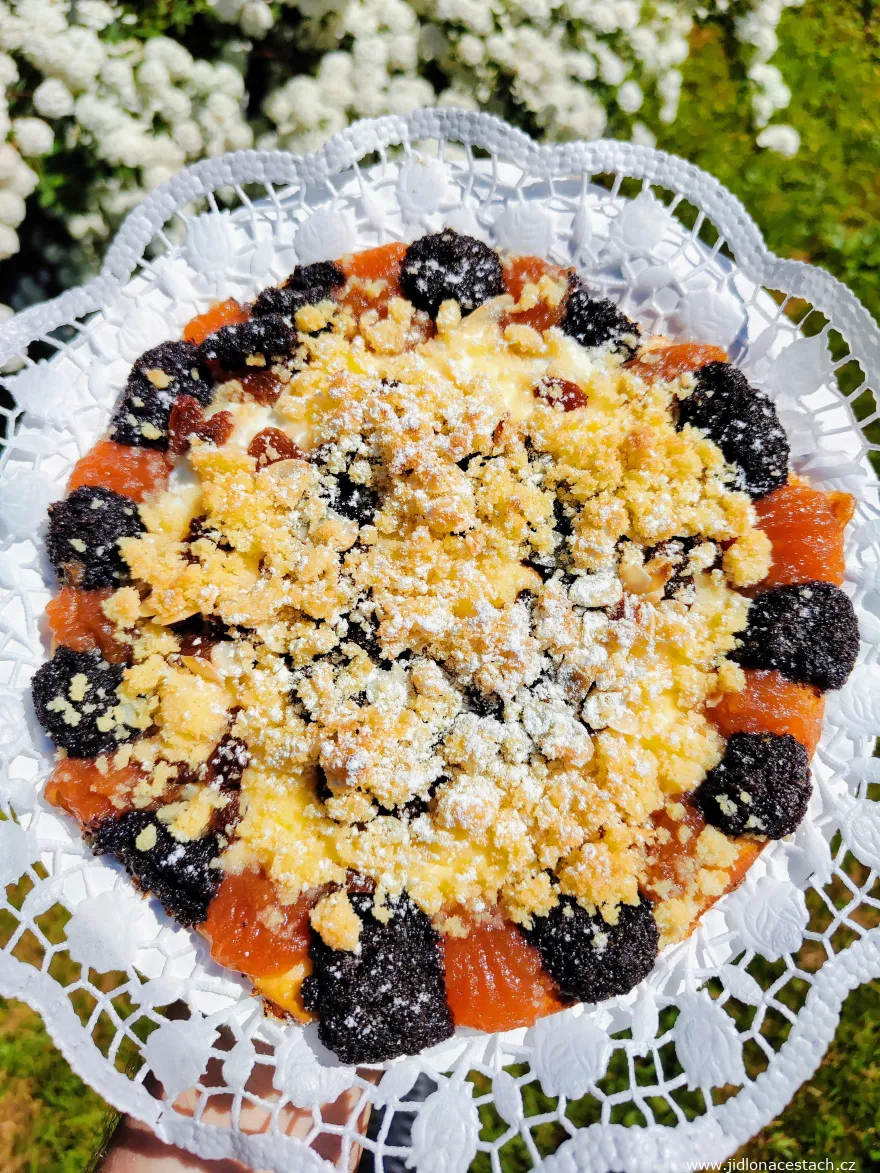
Three Fillings on One Baking Sheet
The base is a thin yeast dough with quark on it, doing what quark always does in a cake: it keeps the moisture in and its acidity balances whatever lands on top. Then the spoon takes over. Poppy seed goes on in thick stripes, plum butter or jam in blobs, and no two of these cakes look alike, because the pattern does not follow a template but the hand doing the baking that day. Streusel with sliced almonds pulls the whole thing together, and powdered sugar after baking softens any bits that caught at the edges.
In Saxony you buy it at the bakery for afternoon coffee, no special occasion and no ceremony required. In northern Bohemia it is baked both on a sheet and in a round pan, and before a wedding it makes the rounds of relatives and neighbors along with the invitation, so plenty of people hear about the wedding from a cake before they hear about it in the mail. If there is no bride in your family, you can try it in Děčín under the name podmokelský koláč, or at any Saxon bakery; they sell it in Leipzig, where it started, just as they do up in the Ore Mountains.
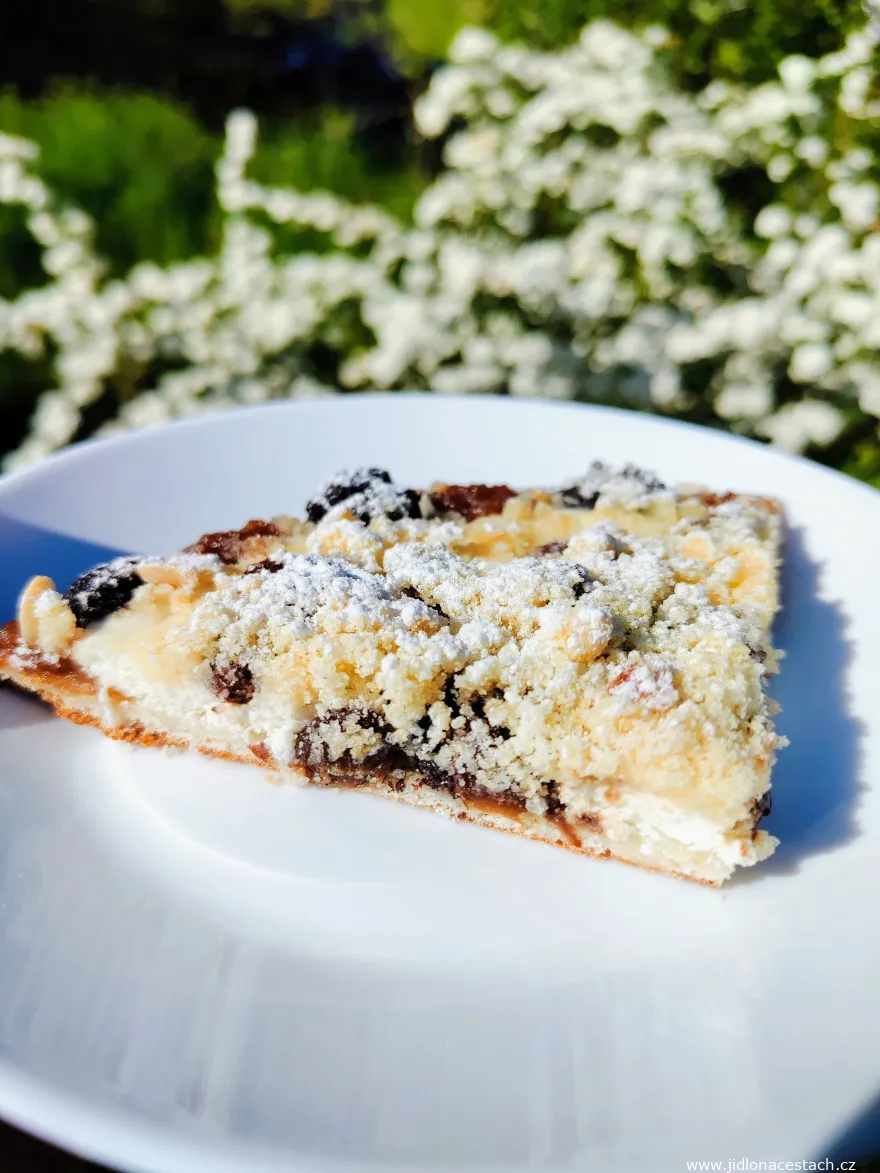
The Cake That Came Before the Wedding
I love folk traditions. As a kid I was in the children's folk ensemble Valášek, I go to the Jánošíkův dukát festival, and when I can make it I never miss the "Na chleba sa těžko dělá" competition in Nový Hrozenkov, the eastern Moravian town I come from; the dialect name says that bread is hard to earn. So when a kecaný koláč landed on our table during a visit to the Česká Lípa area, a pre-wedding gift from the family, I was delighted before I even cut into it. Cut open, it showed every layer: thin dough, white quark, dark poppy seed above it and apricot jam, almond streusel on top. The quark was gently sour under the sweet jam, the poppy seed dense and faintly nutty, the streusel crunched, and the dough under all of it was barely there - it just held everything up. I can't quote a price for this one: it was not paid for, it was given. Wedding gifts usually come from the guests. This one came to us, and before the wedding at that.


