I Segreti del Chiostro: A Convent Pastry Shop in Palermo
For most of its history this pastry shop had no counter, no door, and in fact no shop assistant a customer would ever lay eyes on. Anyone in Palermo who wanted sweets from the Dominican nuns walked up to the convent wall and put their money into a revolving box called the ruota; the box turned, and where the coins had been there were pastries. The rule of enclosure kept the nuns from any contact with the outside world, but it never stood in the way of business - contactless service was invented here a few centuries before it became a matter of hygiene.
I Segreti del Chiostro, "the secrets of the cloister", is a pastry shop in the former convent of Santa Caterina d'Alessandria in the center of Palermo, where centuries-old sweets of Sicilian cuisine are back on the counter, baked to the recipes of the enclosed nuns.

Seven Centuries Behind the Walls of Santa Caterina
The convent of Santa Caterina has stood between Piazza Bellini and Piazza Pretoria since 1311, and for almost all of that time it belonged to enclosed Dominican nuns. Sweets were their living: the convent workshop turned out cookies, fried pastries and preserves, and selling them through the ruota kept the community afloat as late as the 1980s. Palermo alone once had twenty-one convents with a pastry tradition of their own - the recipes were passed on by word of mouth from one generation to the next, and some specialties still carry the names of their mother houses. You can see how seriously the Church took the sweets behind those walls in the story of the cassata: in 1575 a synod banned baking it during Lent, so it wouldn't distract the nuns from prayer. Not many desserts can boast a church ban of their own.
The last Dominican nuns left Santa Caterina in 2014, and it could have ended the usual way: a locked gate and frescoes going damp. Instead the archdiocese and the heritage authorities entrusted the complex to the social cooperative Pulcherrima Res, which opened the cloister to the public in 2017 - pastry shop included. The recipes, for centuries handed down by word of mouth among the sisters, were handed over to a lay cooperative by the last nun to leave; its staff then spent months testing them before they dared put the results in front of customers. So for the first time the secrets of the cloister are being sold face to face: no ruota, just an ordinary counter.
Cannoli, Cassata and the Breasts of Saint Agatha
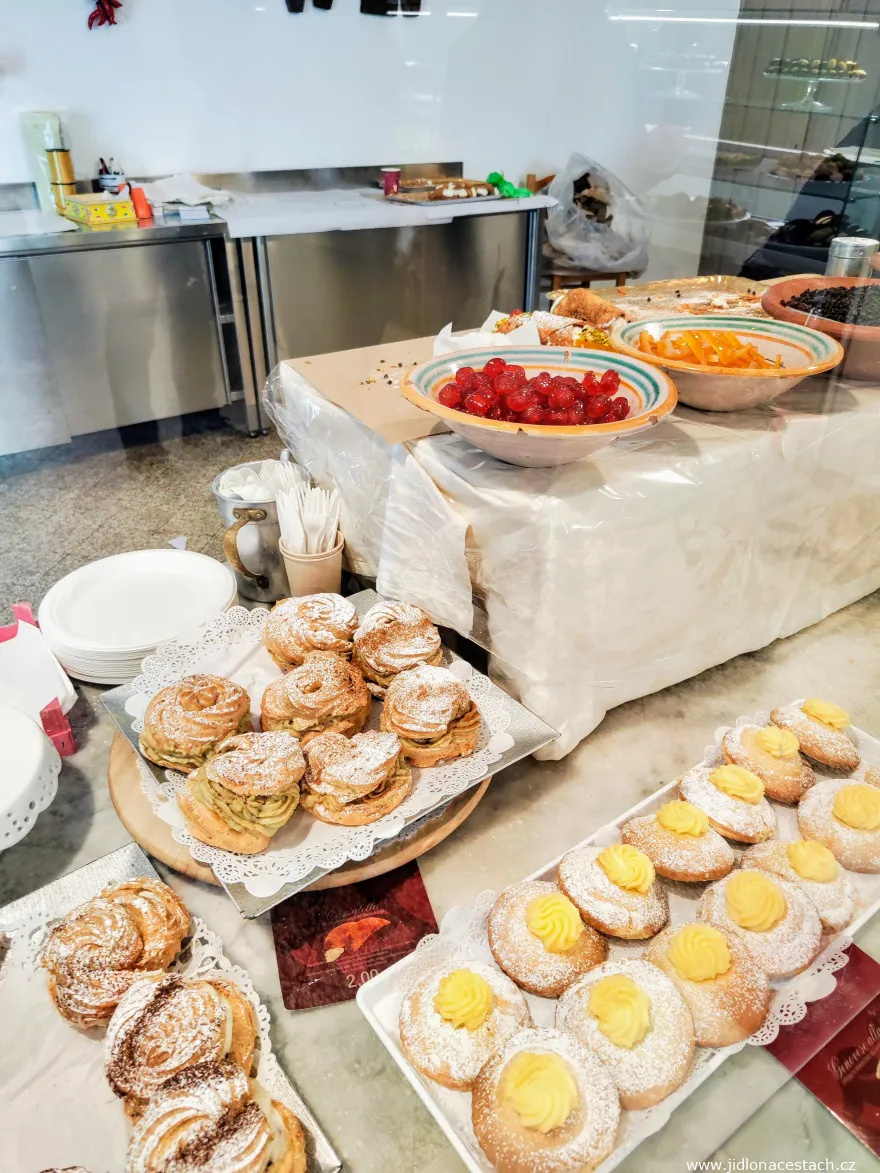
What's on the counter is a cross-section of what the Palermo convents could do: cannoli, filled with ricotta only once you order, almond frutta martorana named after the neighboring Martorana convent, cassata, and small iced cookies with candied citrus peel - they look almost like the Christmas cookies we bake back home in Czechia once a year, except that here the season never ends.
The dessert with the boldest name deserves an explanation. Minne di Sant'Agata, literally the breasts of Saint Agatha, are domes of sponge cake filled with ricotta, coated in white icing and crowned with a candied cherry; the shape recalls the bosom of the saint who, as legend has it, lost her breasts under torture. They are originally a specialty of Catania, where they are baked for the feast of the city's patron saint in early February - in Palermo they're a visitor, and the shop makes no secret of it. The Palermo way of rescuing recipes isn't the only one in Sicily either: in Erice, in the west of the island, the pastry cook Maria Grammatico picked up convent recipes through the grille, and her shop lives off them to this day.
On the Way Down from the Convent Roof
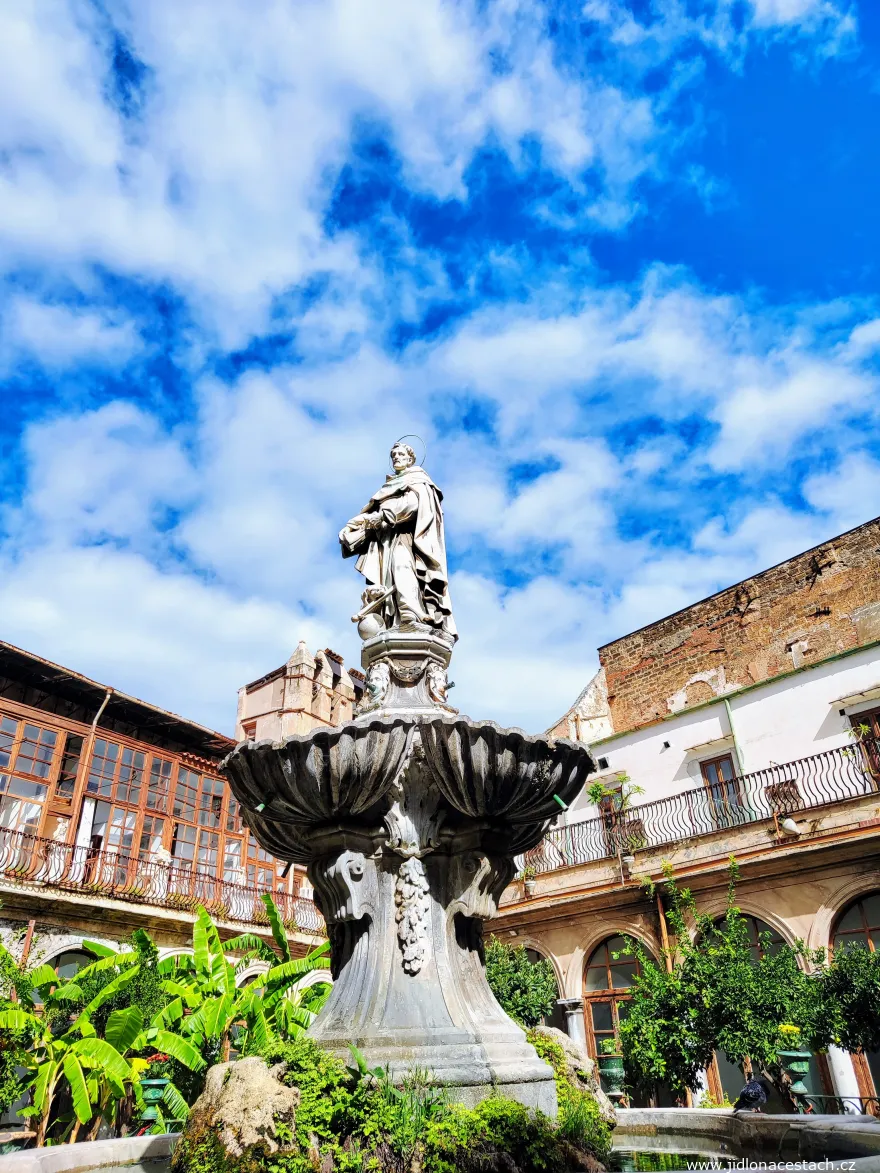
I didn't head straight for the pastry shop, and it paid off: for 5 EUR I first climbed up to the convent roof, which looks out over the fountain on Piazza Pretoria and the rooftops of Palermo, and saved the pastry as a reward for the way down. Don't let the line of locals outside the door put you off - it moves fast, and you're only in it a few minutes. I took a cannolo, filled in front of me, and minne di Sant'Agata to go with it; each pastry cost 3 EUR, a coffee 1.20 EUR. I ate them in the garden in the middle of the cloister, by the fountain with the statue - I didn't find a nicer spot for a pastry anywhere in Palermo. The shell crunched and the ricotta inside was cold and fresh. Palermo has dozens of pastry shops (see Where to Eat in Palermo). If I had to pick just one next time, I'd come straight back here.

I Segreti del Chiostro


