Stigghiola di Vitello: Sicilian Grilled Veal Intestines
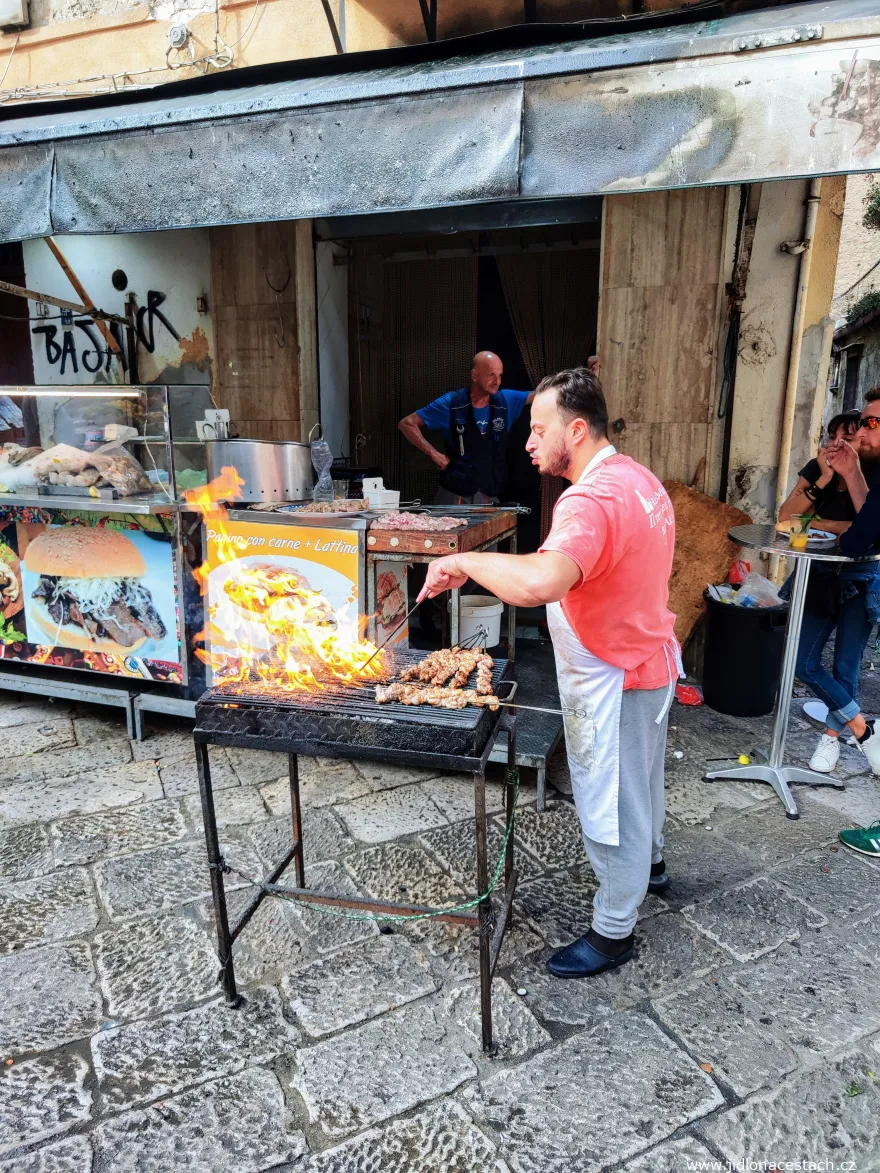
At the Ballarò market in Palermo, what got me to try veal intestines wasn't a menu but a performance. By mid-morning the man at the grill was already in high spirits, shouting down the alley, singing, carrying on a boisterous conversation with a few locals and every so often letting flames leap out of the coals as if that came with the price.
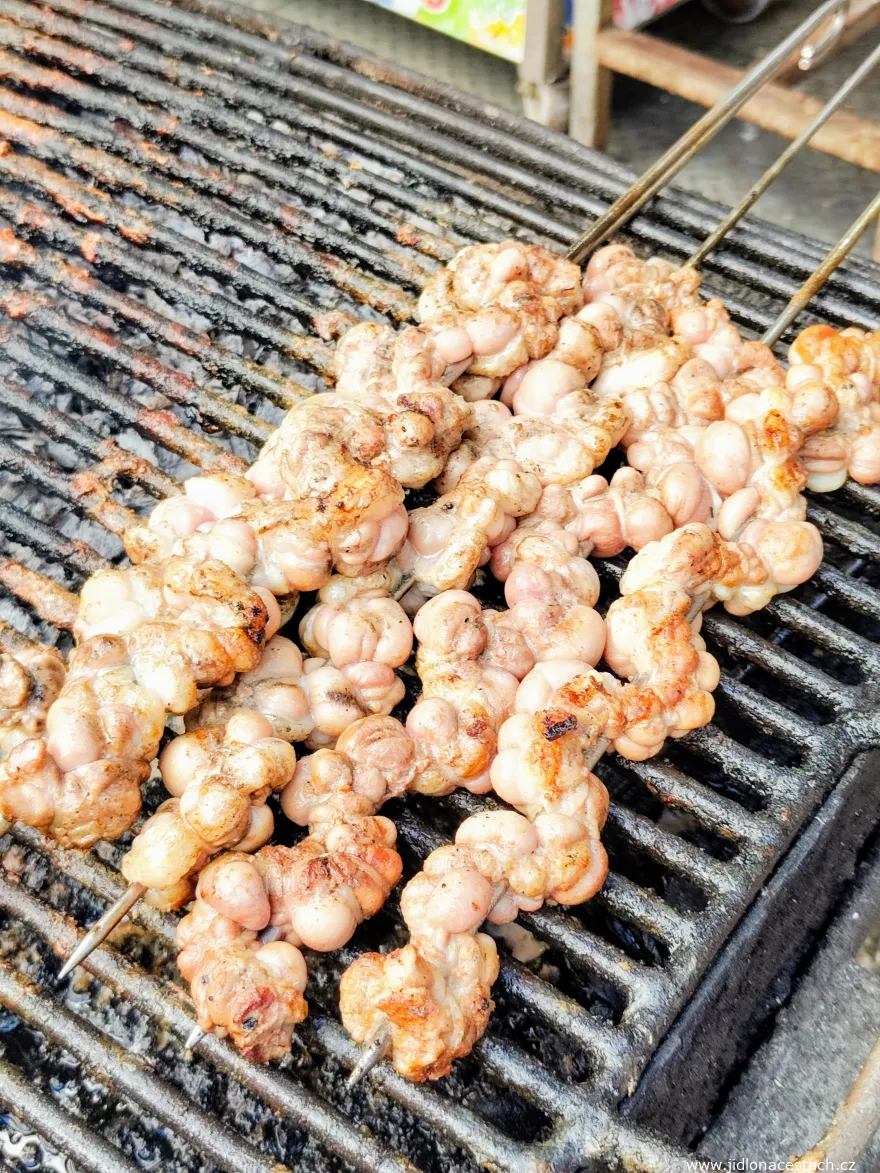
Stigghiola di vitello is thin veal intestine wound around a metal skewer, grilled over charcoal, cut into pieces, salted and finished with a squeeze of lemon - street food of Sicilian cooking from Palermo, eaten with your hands, hot and with nothing on the side. It isn't food for everyone. But then, among the stalls of Ballarò, food for everyone is hard to find.
What Stigghiola Means and Who Sells It
The name is older than anything people tell you about the dish. Antonino Traina's Sicilian dictionary traces the Sicilian stigghiola to the Latin extilia, entrails, and its diminutive extiliola - literally a little gut. The label di vitello only tells you which animal it came from: the basic and officially protected version is lamb, with veal and kid recognized as substitutes in the same dish. In Palermo dialect the word carries one more meaning that butchers don't advertise: a stigghiola is also a tall, skinny man who isn't too bright. The man who grills the intestines and sells them is a stigghiularu. The dish was born in Palermo, but today it belongs to all of Sicily: they grill it in Catania, where it comes with the oil-based sauce salmoriglio, in Agrigento and in Messina, where they call it tajuni. Lamb stigghiola proper is thinner, more delicate and goes on the fire without a skewer; veal intestine is thicker and needs the metal support. The Mediterranean cousins differ where it counts: kokoretsi from Greek cooking wraps liver and heart inside the gut and turns on a spit for hours, and the Turkish kokoreç from Turkish cooking is chopped up with spices after grilling and tucked into bread. The Sicilian intestine stays empty, on its own on the plate.
The Fifth Quarter and a Greek Legend
Just about every website about stigghiola claims the Greeks brought it to Sicily and that it was already sold on the agora. It gets copied from one site to the next and nobody ever cites a source. The documented history is more modest, and fitting for a dish made of intestines: the oldest reference anyone has found is a set of folk verses written down by Serafino Amabile Guastella in 1876, and stigghiola appears in them as an established, clearly identified specialty. It belongs to Palermo's quinto quarto cooking, the "fifth quarter" - everything left at the slaughterhouse once the four quarters of the animal have gone to wealthier buyers. The same basket gave us the spleen sandwich pani câ meusa and the fried offal frittola, sold a few stalls down at Ballarò. So the Greek origin stays a legend nobody has disproved. Then again, nobody has proved it either.

How Veal Intestines Are Grilled and Eaten
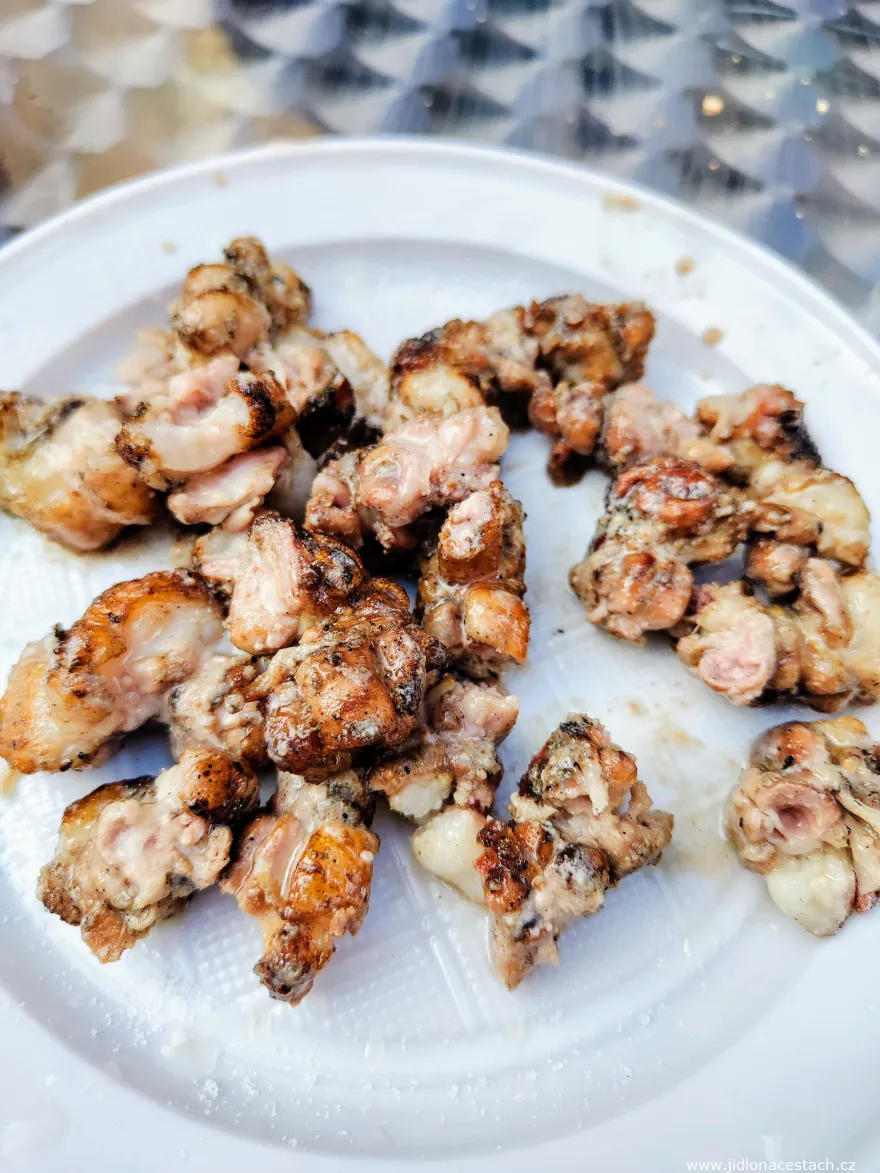
The intestines get washed thoroughly in water with salt and lemon, and for the veal version they are threaded onto a skewer and go over the coals. No marinade, no spices, no brine to hide anything in - all stigghiola gets is salt and lemon, and only after grilling, when the seller pulls the bundle off the skewer and cuts it into bite-sized pieces. If you've ever eaten cracklings fresh from a home pig slaughter, you know what fire does to fat: it loses its softness and starts to crunch. The fat on the intestine does exactly the same. Underneath it is meat that is no meat at all.
You spot a stigghiularu stall by the smoke before you spot the sign; a traditional Palermo rhyme has it that the man selling intestines never needs to call out, because the smell does the calling for him. You eat standing up, with your hands, off a disposable plate, traditionally with red wine, these days more often with a cold beer or a Sicilian gazzosa.
A Show at the Ballarò Market
I ate stigghiola di vitello in Palermo, at the stall of a singing stigghiularu at the historic Ballarò market (see Where to Eat in Palermo). Off the grill, the fat on the intestines was a distant cousin of fresh cracklings, the intestines themselves stayed a little gooey and the taste wasn't far off lightly sautéed liver. A portion of veal intestines with a small beer cost 8 EUR and it was quite a show: the seller shouted, sang, traded jokes with the locals and sent flames leaping over the coals, so the food ended up being only part of the fun at that stall. Great hangover food. But a hangover wasn't why I ate it at Ballarò - the man grilling it talked me into trying it, and all he had to do was sing.


