Pizzeria Timilia: Pizza from an Ancient Wheat in Palermo
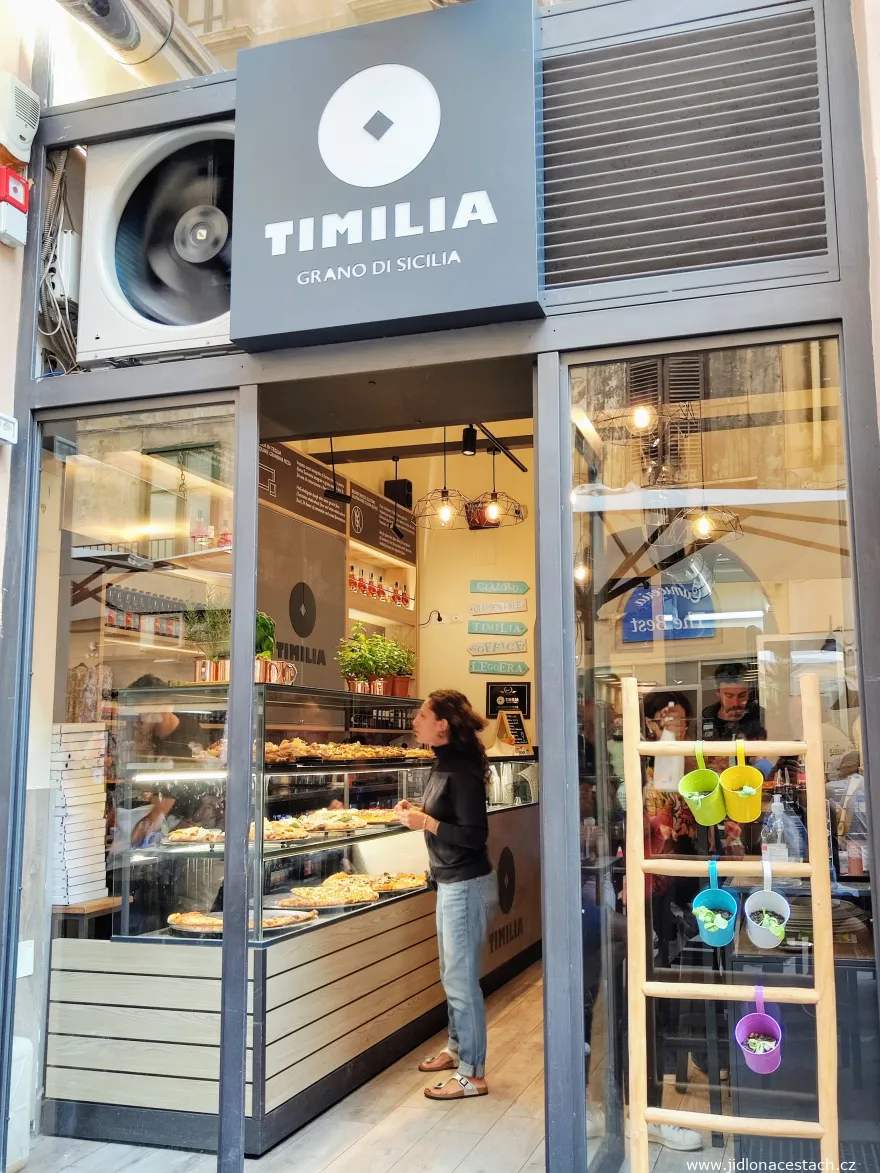
A sign above the door reads "Timilia - grano di Sicilia." Look in that name for a founder's surname, or for a grandmother whose recipes the place guards, and you'll come up empty: Timilia is a wheat. An ancient Sicilian variety with a dark grain, grown today on no more than a handful of fields in the west of the island - and this pizzeria has put it on its sign and into every batch of dough.
Pizzeria Timilia is a place on via Maqueda in the center of Palermo that bakes Italian pizza in teglia - in a tray and by the piece - from flour milled from tumminia, an ancient Sicilian wheat.

The Wheat That Gave the Pizzeria Its Name
Tumminia, timilia, trimminia, tummulia - Sicilian dialects spell the name of the wheat in so many ways you could paper a whole shop window with them. Botanically it's a durum wheat with a dark grain and a short life: sown in winter, ripe in three months, which is how it also came to be called marzuolo, the March wheat. It takes drought and gives small yields - exactly the kind of grain our great-grandfathers grew out of necessity and today's bakers sell at a premium. In Czechia the same story played out with spelt. Slow Food lists tumminia in its Ark of Taste catalog of endangered flavors, and the black bread that has been baked from it for centuries in Castelvetrano, in western Sicily, gets full Presidio protection.
The Tray Pizza That Came from Rome
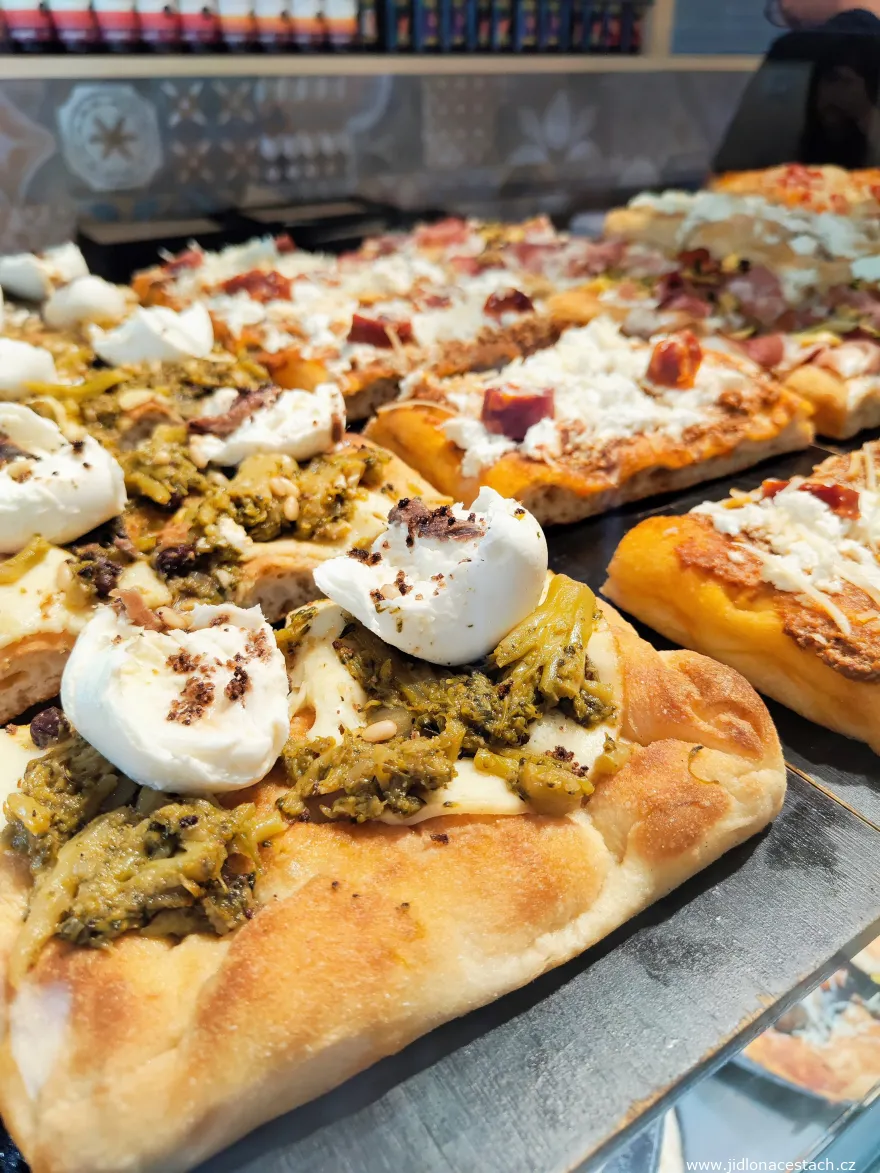
Pizza in teglia literally means "in a tray" and describes how it is baked; al taglio, "by the cut," describes how it is sold. Both names belong to the same format. The dough takes far more water than a classic pizza dough would, proves for hours and bakes in rectangular trays, and the finished sheets then wait in the display case - you point at a piece, the man behind the counter cuts it off, weighs it or charges by the piece, and warms it through in the oven. Where a Neapolitan pizza spends ninety seconds in the oven and arrives whole and soft, a tray pizza bakes for long minutes, and the reward is a crisp base and a crumb full of big bubbles.
The format was born in postwar Rome, where bakers started stretching bread dough into trays - nobody can pin down the exact decade - and it only spread across the rest of Italy in the last few decades. Sicily had its own tray pizza long before that, though: the taller, softer sfincione with tomatoes, onion, anchovies and breadcrumbs. In a city whose street food runs on arancini and their kin, pizza still comes second.
From a Few Stools to a Restaurant
Timilia was opened in 2017 by the Palermo pizzaiolo Tommaso Di Bella, and by his own account the old-wheat flour goes into every dough here, all of it proving for more than 72 hours. Alongside the trays sold by the piece he also bakes round Neapolitan-style pizza. The place started out as a takeaway counter with a few stools to sit on; later it turned into a restaurant with table service. One thing hasn't changed: nobody orders a single whole pizza here; you put together a selection - two or three different pieces on one tray are more common than loyalty to a single topping. And if you don't want to sit at all, you take your pieces wrapped to go - that is how pizza al taglio has always worked.
Eleven Euros at the Counter
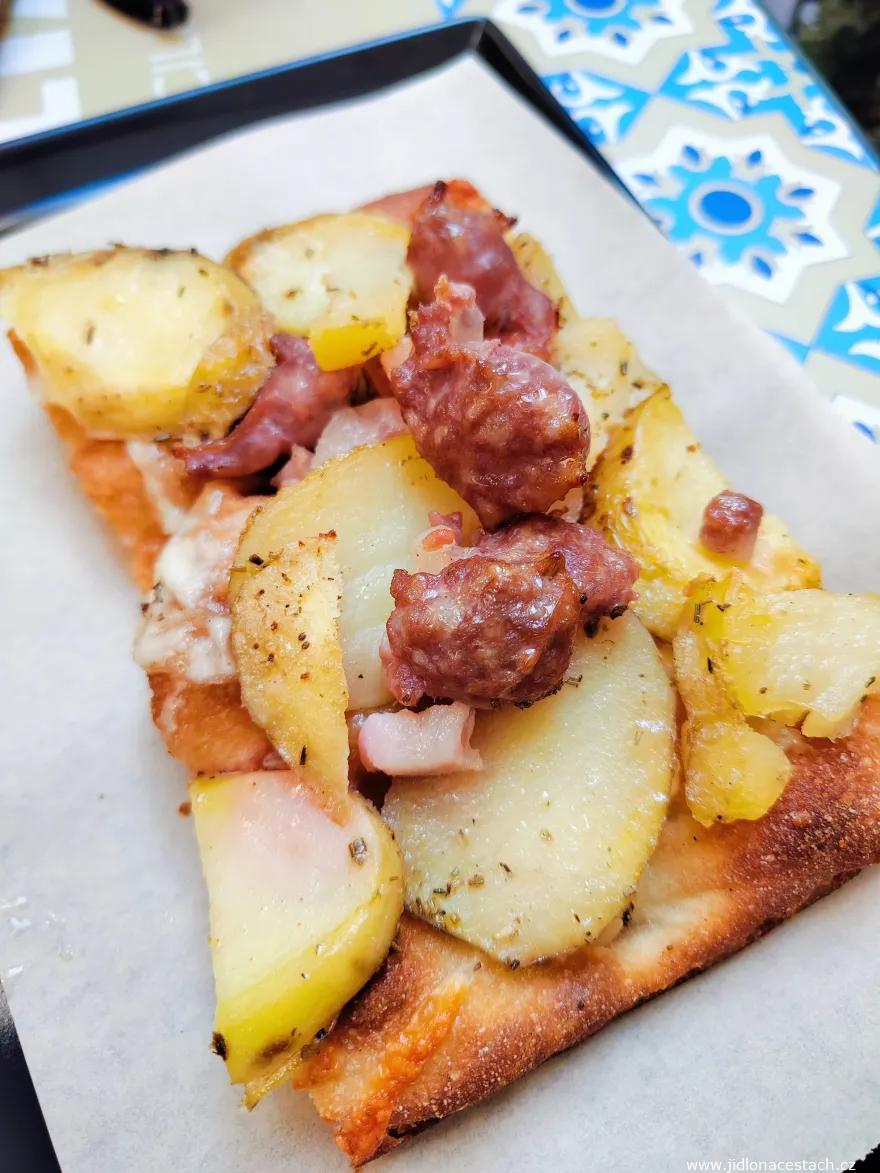
I dropped into Timilia on via Maqueda back when the inside held nothing but those few stools along the long counter and most of the seating was out on the street. It was packed, but people move through quickly when the pizza is already baked, so it was worth the wait. I picked two pieces: one with cured ham, ricotta and fresh tomatoes, the other with roast potatoes and salsiccia. The first played on the contrast of cold ricotta and salty ham against warm, crisp dough, the second was proper winter stodge - potatoes on a pizza are a side dish that has pulled up a chair next to the main course. The two pieces together came to 11 EUR. At the tables around me I spotted a few round pizzas and they looked unbelievably good - next time I'd happily stay for a whole one. That I was eating a manifesto of Sicilian grain farming never crossed my mind at the time. The explanation was hanging right above the door - all I had to do was look up from the plate.
Pizzeria Timilia


