Ballarò Market: Where Palermo Eats Breakfast
I heard Ballarò Market before I saw it. The vendors hawk their goods in a singsong cry called abbanniata, each one with his own like a trademark, and together they send a chorus down the alleys that needs no loudspeakers.
Ballarò is the oldest and largest of the three historic markets in the center of Palermo - and alongside the fruit, vegetables and fish it is a showcase of what Sicilian cooking can pull off right there on the street.
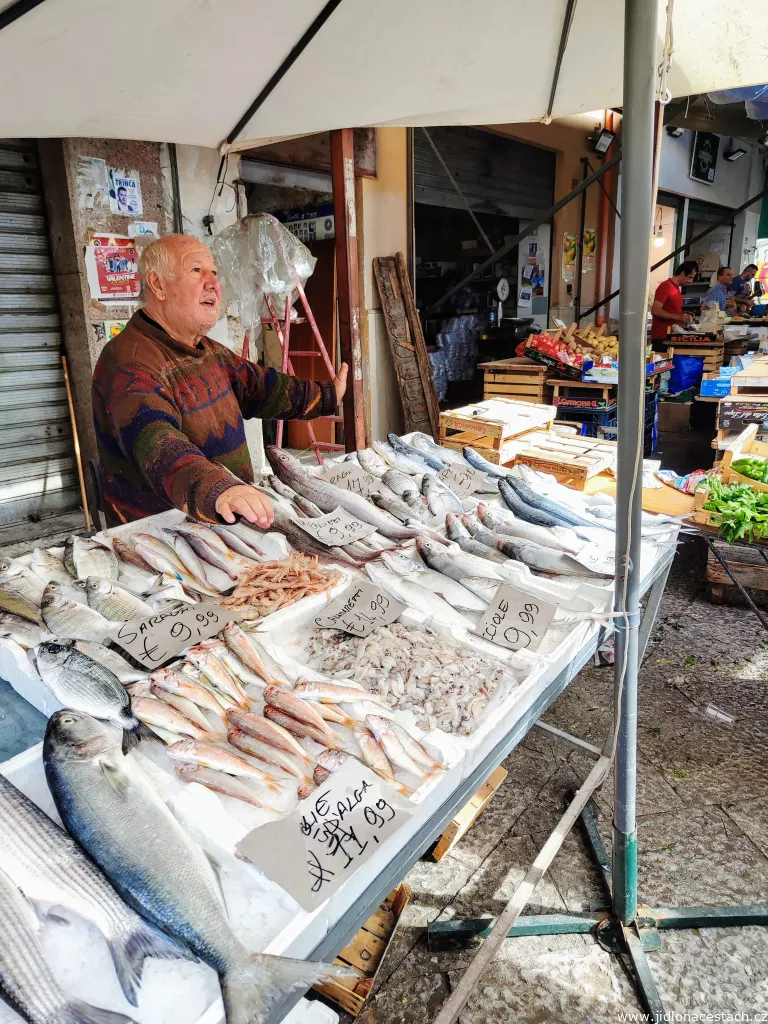
Where Ballarò Got Its Name and How Old It Is
You would think a market a thousand years old would at least have its name sorted out. Historians offer at least five theories: the most cited one leads to the Arab village of Bahlara near Monreale, whose traders brought their goods here; others talk about an Arabic "market of mirrors", an Indian king and an Aragonese captain. Palermo's oldest market is also the market nobody can agree on the name of. Take your pick of the theories - the locals aren't going to settle it for you.
The market itself is better documented than its name. It probably started in the 10th century, when Sicily was under Arab rule and the surrounding Albergheria quarter was part of Palermo's medina - so the comparison to a souk that every guide trots out is, surprisingly, well founded. The first written mention of the "public marketplace of Ballarò" dates from 1327; anything earlier is held together by guesswork rather than documents. And the age doesn't show in the way the place runs: the stalls keep going as if nobody had gone home since the Middle Ages.
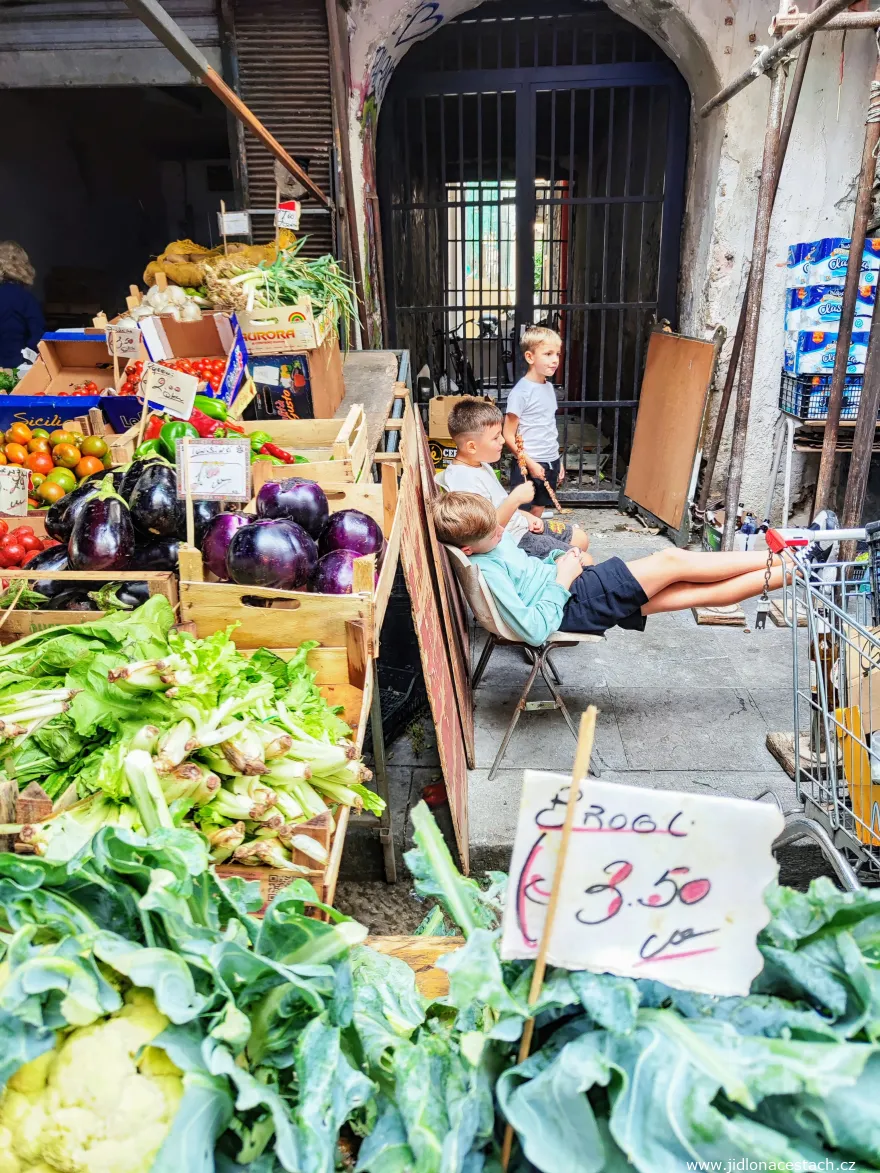
What People Eat at Ballarò Market
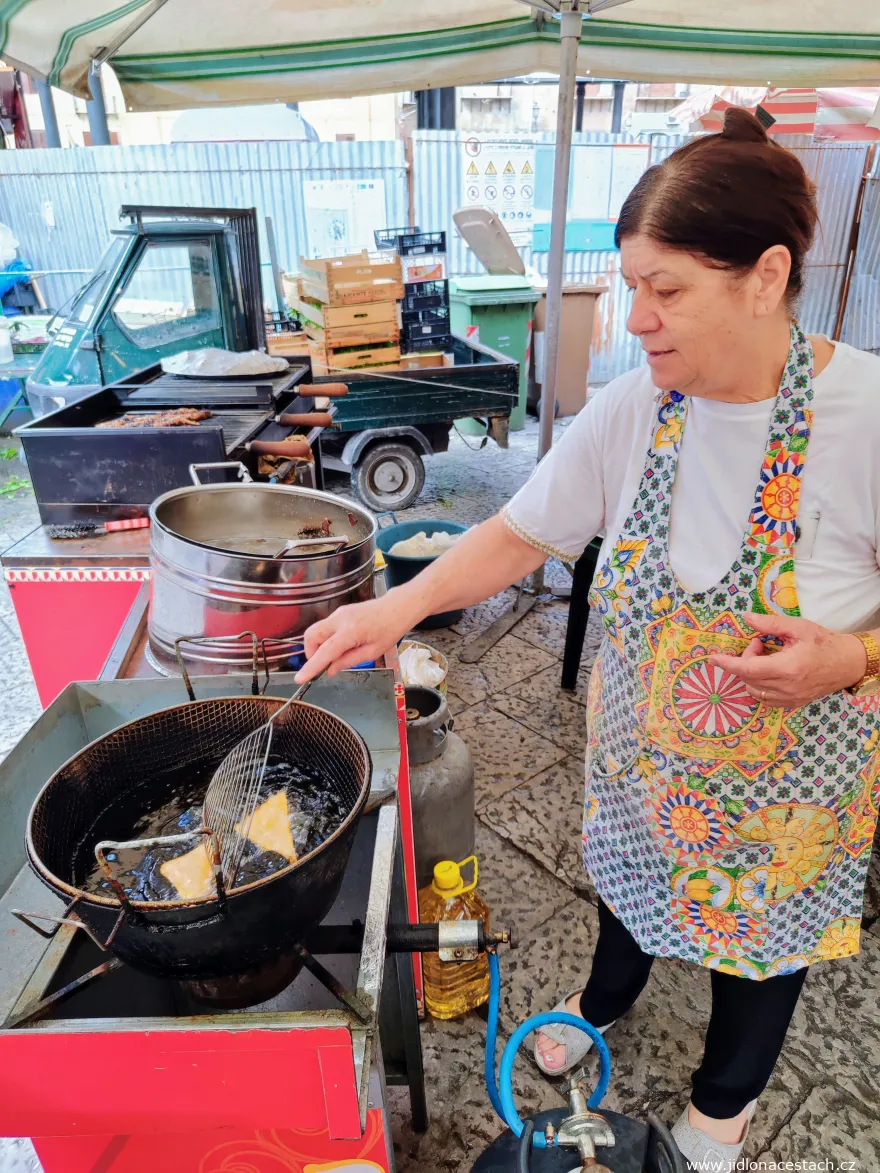
Panelle bubble away here in hot oil, chickpea-flour fritters that Palermo inherited from the Arabs and that are fried all over western Sicily today. You'd spot a distant chickpea cousin of the grated-potato pancakes we fry back home in Czechia - except nothing gets grated here: the batter is cooked into a thick porridge, left to set, cut up and dropped into the oil. The best advertisement for the food here isn't a sign anyway: at one vegetable stall I watched local kids tucking into grilled lamb intestines called stigghiola instead of candy.
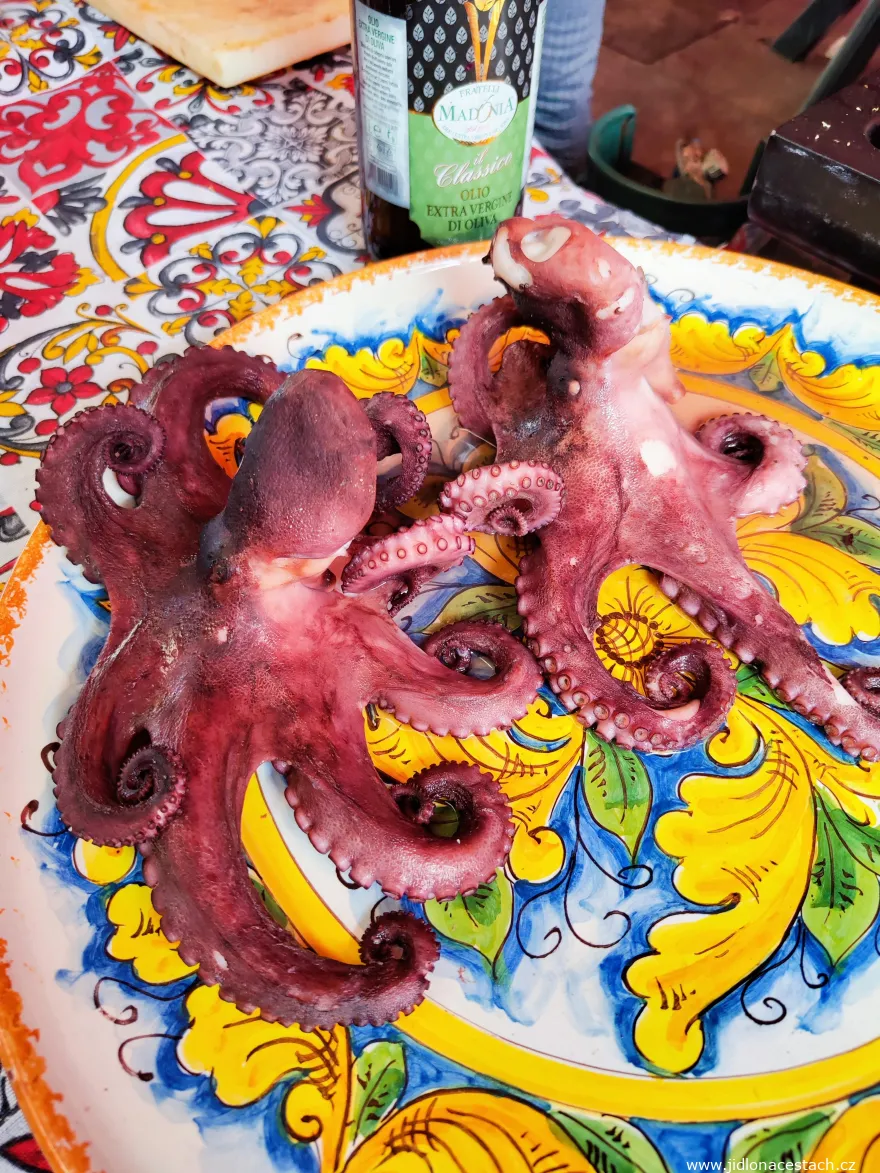
Boiled octopus is sold straight out of a big pot, and the vendor will happily cut it into unbelievably tender pieces for you - though Ballarò shares that specialty with both its sister markets, Vucciria and del Capo. Alongside it, sardines a beccafico, raw shrimp and oysters on ice. Even raw seafood is no Sicilian monopoly: across the water, Apulia has a crudo di mare tradition of its own - it just doesn't sing about it as much.
When to Go to the Market
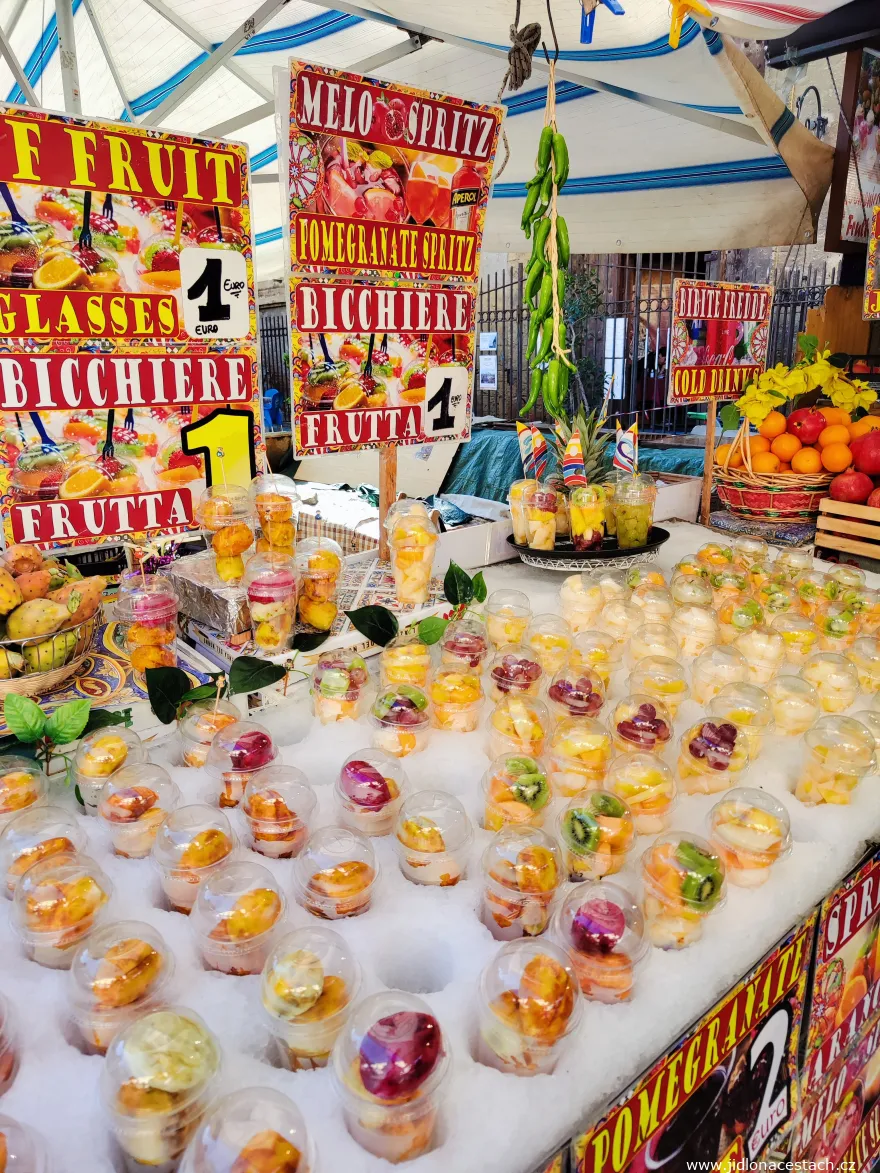
On paper the market is open Monday to Saturday, roughly from 7:30 a.m. to 8 p.m., but the hours only tell you so much. The biggest show is Saturday morning, when every stall is going at once and a flea market spills in alongside the food. If you want the freshest goods and alleys you can actually walk down, come first thing on a weekday - and at a fruit stall, have the old lady at the juicer squeeze you a glass of orange or pomegranate, or grab a cup of cut fruit off the ice.
Shrimp and Oysters for Breakfast
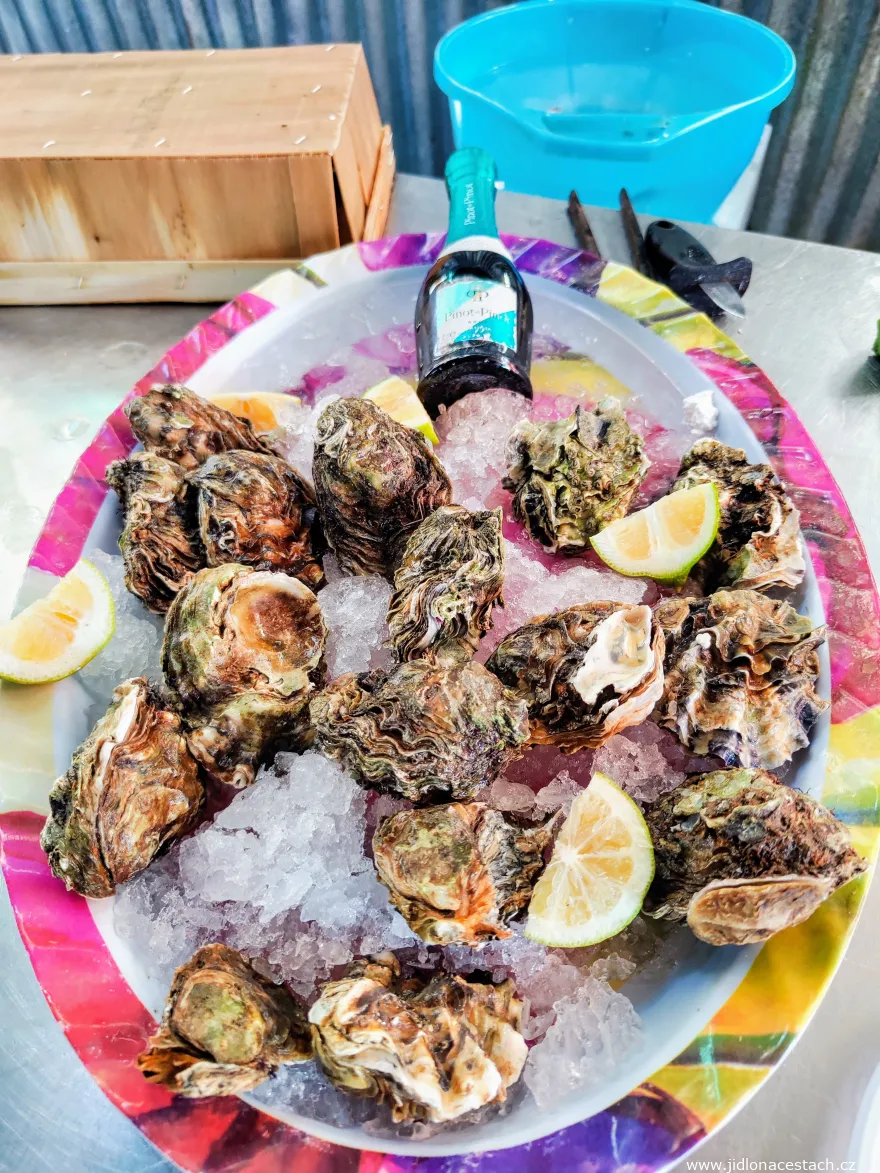
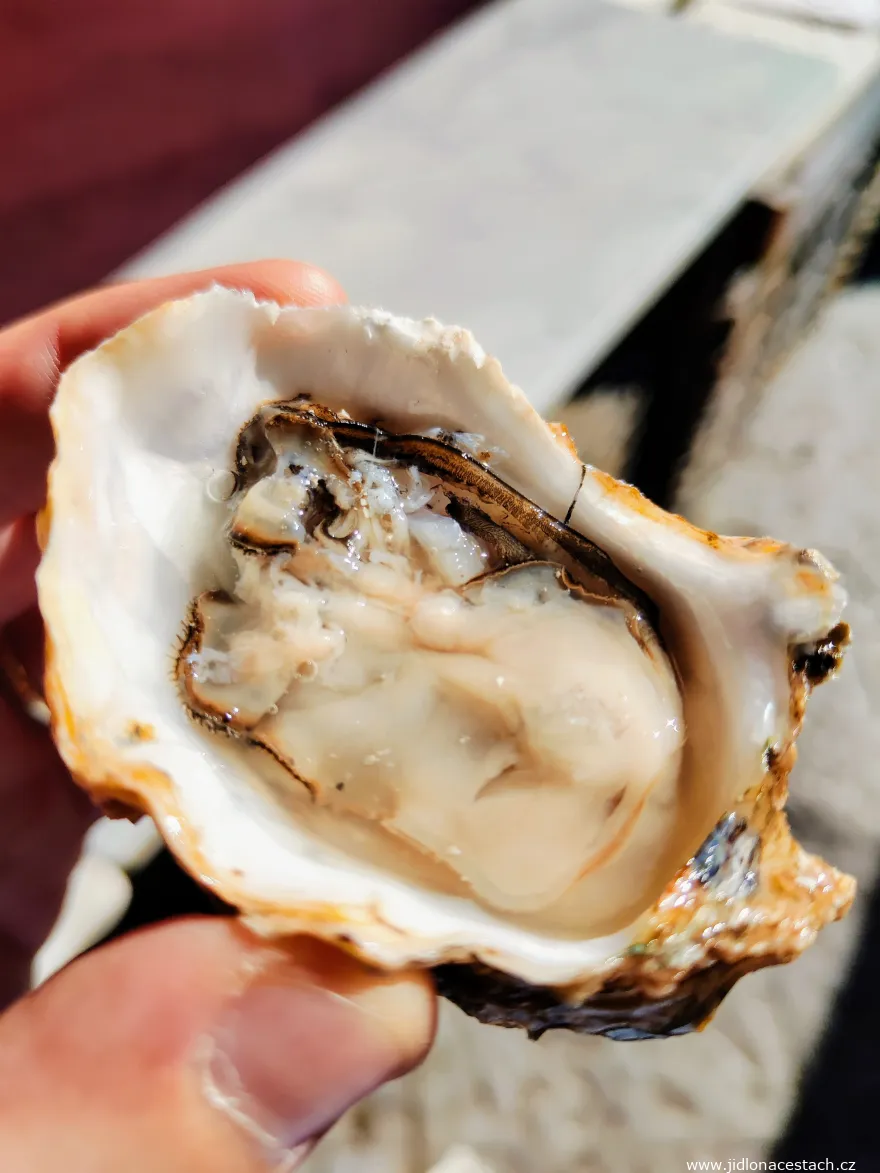
I turned up at Ballarò hungry and made it a three-course breakfast. The woman at the stall peeled the raw shrimp right in front of me, splashed them with lemon and olive oil and seasoned them with a spice mix she wouldn't name; they tasted faintly sweet, and the plate cost 3 EUR. She opened the oyster, freshly landed, in front of me too and added nothing but a squeeze of lemon - cold, salty, pure sea. A single oyster, 3 EUR.

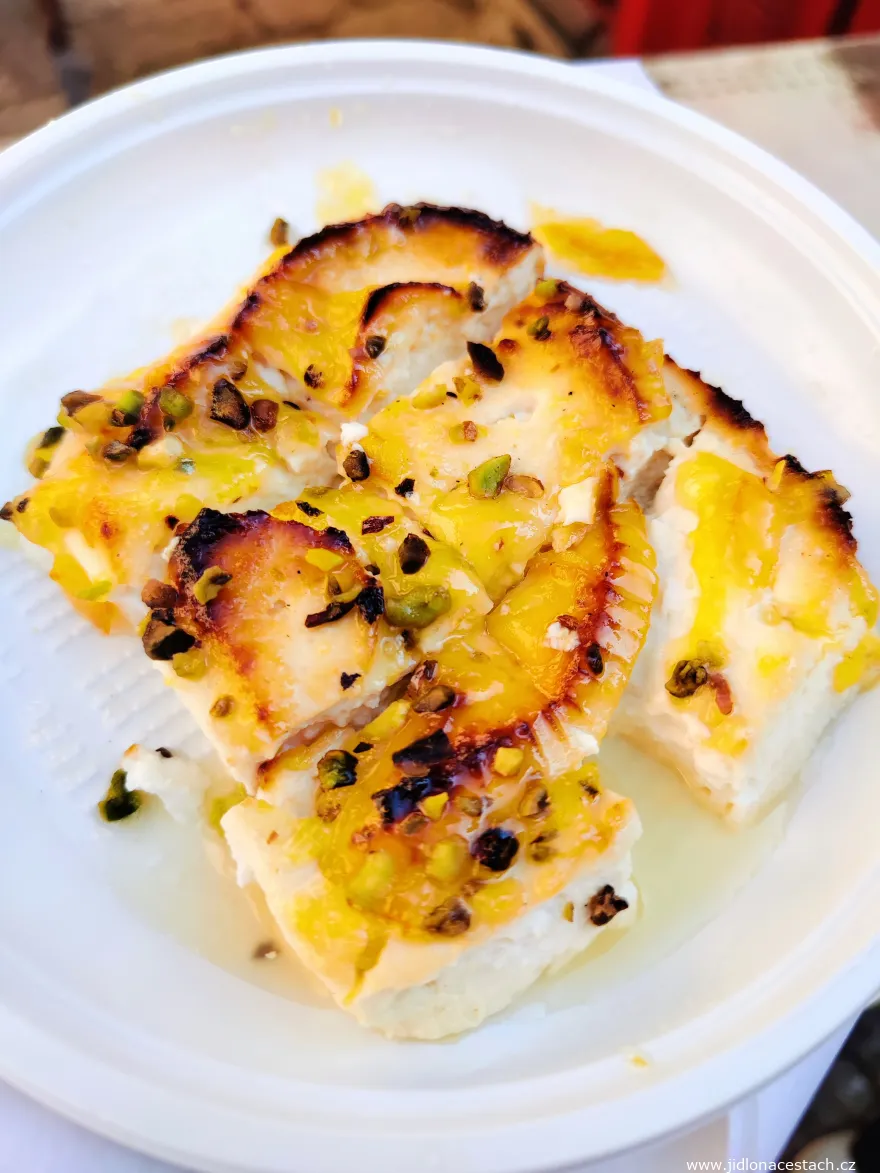
I finished breakfast with baked sheep's milk ricotta with jam, honey and pistachios for 3.50 EUR: under the browned crust, a sweet-and-salty cheese that comes apart in slices. It was sold as ricotta from Corleone - except cheese sources have no record of a Corleone specialty; baked ricotta is made all over Sicily and the most famous kind ages in the mountains near Messina. Standing at the counter I had no idea, and the flavor didn't suffer for it. Three courses on my feet and without a menu - a market that has survived a thousand years knows why it shouldn't change a thing.
Mercato di Ballarò


