Vucciria Market: Where Palermo Stays Up Late
Sicilian has its own version of "when pigs fly": i balati ra Vucciria 'un s'asciucanu mai - the flagstones of the Vucciria never dry. For centuries that was a safe bet, because the fish stalls hosed the stones down from morning to night to keep the catch from spoiling in the sun. These days you'd lose that bet: only a handful of fish stalls are left and on plenty of mornings the flagstones dry long before the market wakes up.
The Vucciria is the most famous of Palermo's historic markets - a tangle of alleys and two squares between via Roma and the old port, a fading market by day and, after dark, one of the liveliest street food scenes in Italy.
The Butcher Shop That Gave Palermo Its Word for Racket
Ask anyone in Palermo what vucciria means and you'll hear: confusion, uproar, racket. The real origin of the word is a good deal more prosaic - and meatier. The name arrived with the French: boucherie, butcher shop, turned into bucceria in Sicily, because the market grew up around the slaughter of billy goats (Sicilian becco) and the selling of meat. It took centuries of traders' shouting to give the word its second meaning, which in the end drowned out the first. So the Vucciria isn't named after the racket it makes - it's the other way around: the Palermo word for racket is named after the market.

A Square from a Viceroy, Fame from a Painter
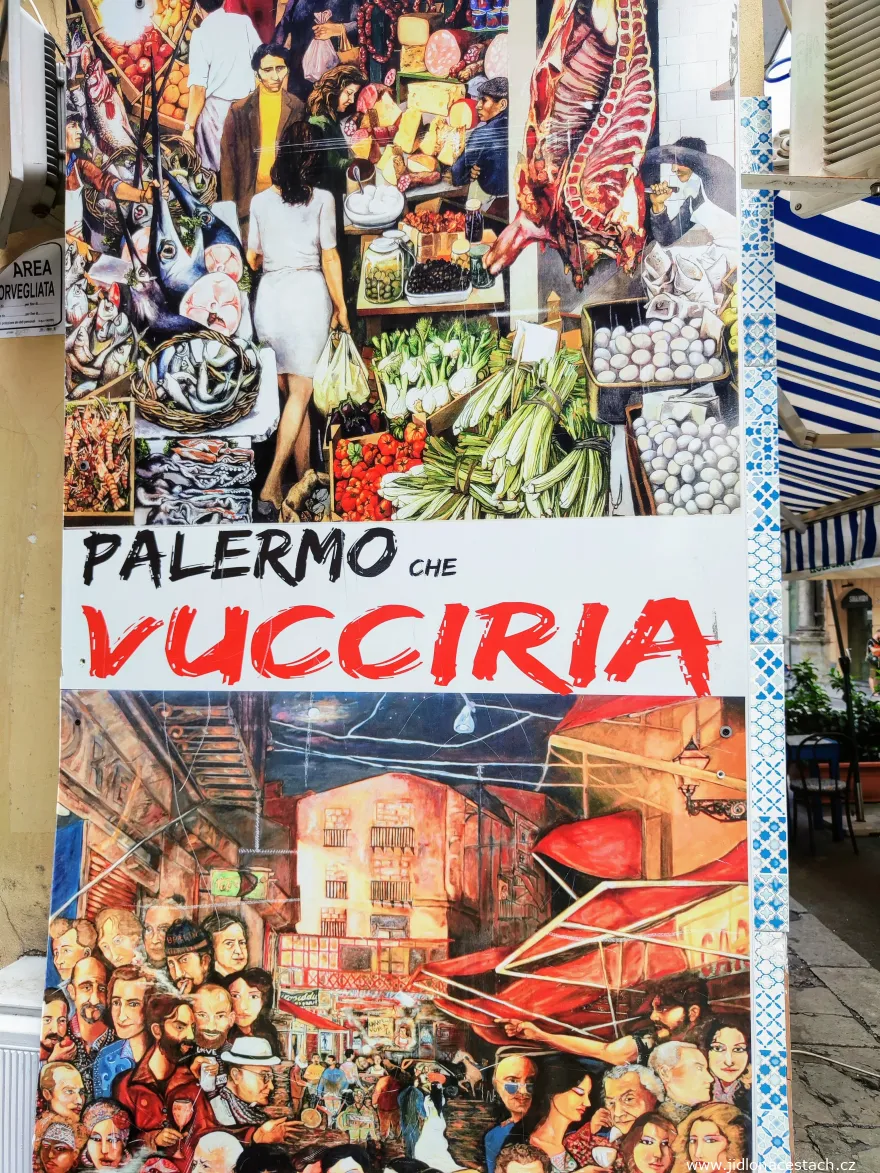
Nobody knows for certain when trading started here - sources are split between Arab times and the twelfth century, when Genoese and Pisan merchants moored at the nearby port. The first firm date is 1783, when the viceroy Caracciolo rebuilt the heart of the market as an arcaded square; it still carries his name. The fame came later, and it came from a painter: in 1974 Renato Guttuso squeezed the whole market - fish, meat, vegetables and the crush of people - onto La Vucciria, a canvas three meters tall and three meters wide. The painting hangs in Palazzo Steri a few minutes' walk away, and there is often more produce on it than in the market itself. You'll come across the painted Vucciria before the real one anyway: its own poster hangs on a wall right at the edge of the quarter. These days the market partly makes a living out of being a reminder of itself.
Asleep by Day, Grilling by Night
The daytime Vucciria is more a memory of a market: a few vegetable stalls, the odd fish, plenty of shutters down. Its sister markets - Ballarò, the oldest and biggest of the Palermo three, and del Capo - have a much firmer grip on the everyday trade.
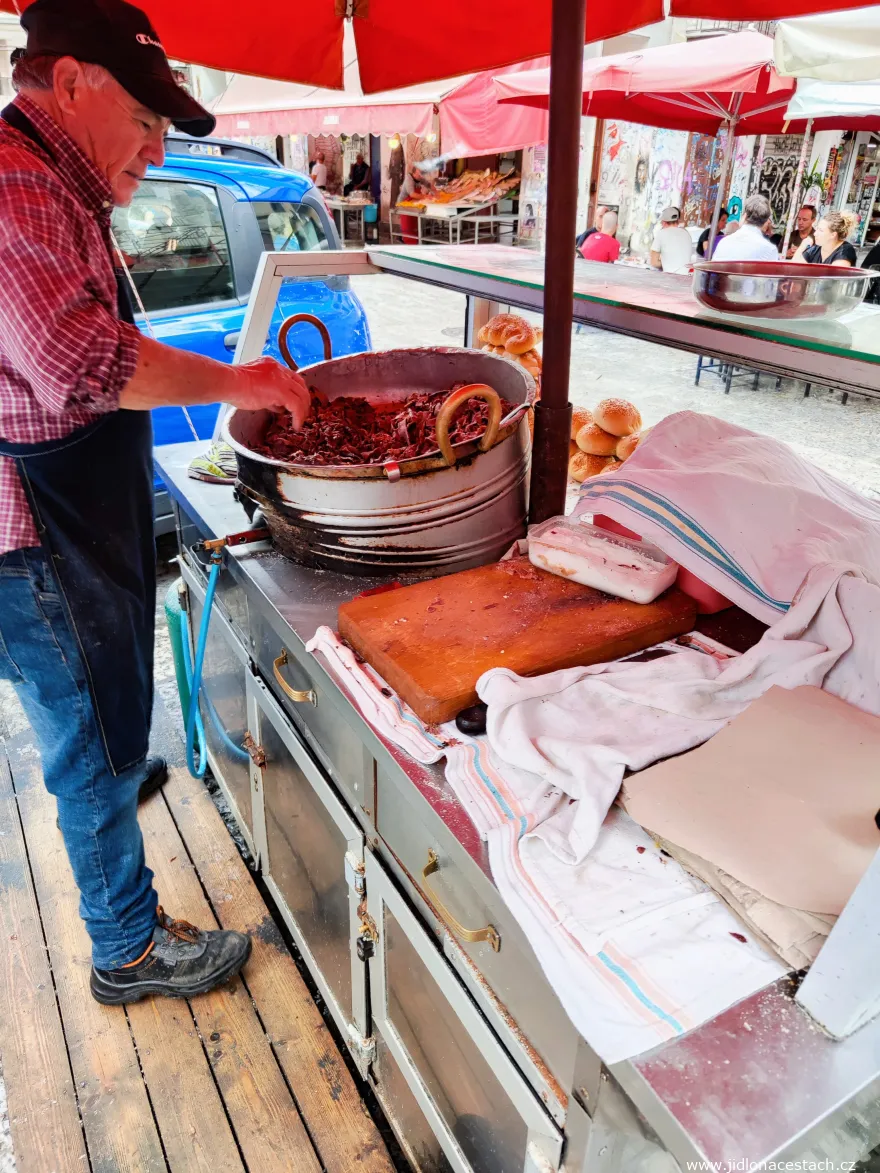
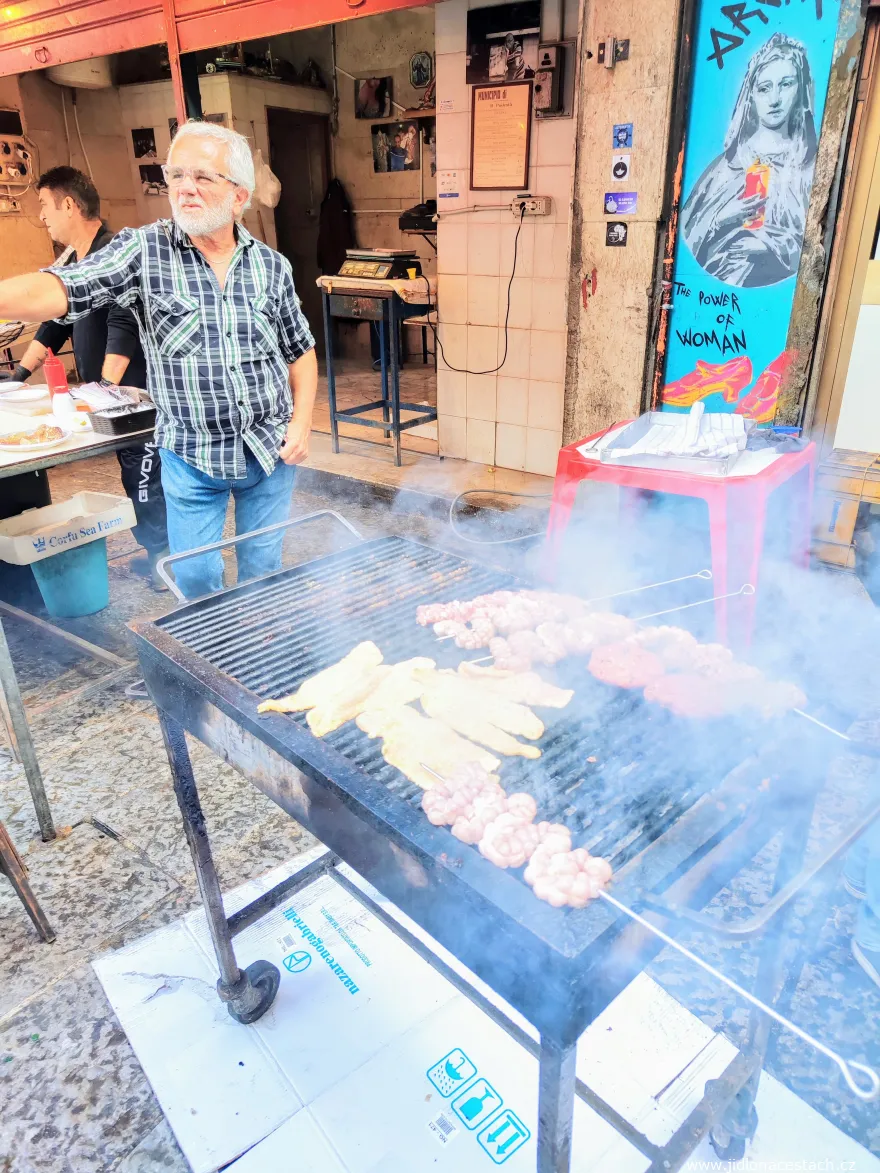
After dark the roles swap. Piazza Caracciolo fills up with little tables and drinks carts, music plays and Sicilian street food goes on the grill: stigghiola sends its smoke halfway across the quarter, they fry chickpea panelle, slice sfincione and, for the braver eaters, put together pane ca meusa, a bun filled with stewed spleen. To go with it, a Messina beer - a Sicilian brand that its multinational owner let die and that fifteen former employees then brought back as a cooperative. If you want to see a market, come in the morning; if you want to experience the Vucciria, come in the evening. The locals in the surrounding buildings would tell you they experience quite enough of it - the arguments over late-night noise are as much a part of the quarter as the smoke off the grills.
The First Market You'll Run Into
I didn't go looking for the Vucciria - it found me. All I had to do was walk down via Roma, catch the smoke off the grills and let it pull me in among the stalls. I crisscrossed the alleys: one stallholder was ladling offal out of a tin pot, a little further on stigghiola was turning on a grill on wheels, and above the heads of the shifting crowd hung the shouting that has its own name here. The Vucciria is one of Palermo's obligatory tourist stops and it shows - I prefer Ballarò or del Capo, which sit further from the center and care more about customers than about spectators. Still, the Vucciria is well worth a walk through: get something off the grill, order a Messina and just watch the place work for a while.
Mercato della Vucciria


