Portuguese Sardines: A Delicacy in a Tin
The shop throws you off at first: shelves stacked with small colorful boxes as if this were a perfumery, and prices you would expect on a wine list. Only up close do you work out what is for sale - tins of sardines, the kind of little fish whose career back home usually ends up mashed with a fork into a sandwich spread.
Portuguese sardines - sardinhas em lata, sardines in a tin - are gutted fish that are steamed, packed into a can and covered with olive oil, tomato sauce or a spicy marinade; Portuguese cuisine counts them among the country's crown jewels, and people take them home instead of jewelry.
A Name from a Foreign Island and Tins from Four Coastlines
It is only right to start with an admission that Portuguese dictionaries make without batting an eye: the name of the national fish isn't Portuguese at all - the word sardinha came from the Latin sardina, and that from Greek, where it literally meant the little fish from Sardinia. So the Portuguese made a national symbol out of a fish named after an Italian island, and they take it in stride. And the name is the only thing they borrowed - everything else, from the fishing to the tin, they built themselves.
Tinned sardines are no Portuguese monopoly, though, and it is only fair to say so. Galicia in northern Spain has a canning tradition of its own, started by Catalan entrepreneurs who moved in, and so does Brittany in France, where the women on the canning lines are nicknamed Penn Sardin to this day. And the world's biggest exporter of tinned sardines today is Morocco, which ships out more than a hundred and fifty thousand tons a year - mostly abroad, oddly enough, while the tins grow scarcer on its own shelves. All those traditions grew up independently of one another; what they share is the Atlantic fish and the French invention of the sterilized tin from Napoleon's day. In Portugal, though, this isn't one region's specialty: canneries stood all along the coast, in the south as well as the north. In Sicily, for the record, the same little fish never goes into a tin - they stuff it and serve it as sarde a beccafico, or turn it into pasta con le sarde with fennel.
The First Place the Portuguese Talked Themselves Out Of
Sardines were being salted and exported in Portugal back in the 18th century, long before anyone invented the tin. The industrial era began in the middle of the 19th century in the south of the country: in 1853 a cannery opened in Vila Real de Santo António - Ramirez, the company behind it, is still going and is often cited as the oldest continuously operating cannery in the world - and a year later sardines were being canned in olive oil in Setúbal as well, where the producers picked up an award for them at the world's fair in Paris. And yet the story told for a long time had a foreign hero: the first cannery was supposedly founded by a French businessman named Delory. Except that he didn't reach Setúbal until 1880, more than a quarter of a century after the first Portuguese tins. A rare case of a nation talking itself out of its own first place - usually it is the other way round and nations fight to claim it.
The French did come, mind you, only later and out of necessity. In the 1880s the sardine shoals vanished from the Breton coast, and the canners there followed the fish south, capital and machinery and all. The migration did Portugal good: between the world wars more than a hundred and fifty canneries were running along the coast, and a tin of sardines was one of the country's biggest exports. Then came the slump in the second half of the 20th century - catches thinned out and cheaper Moroccan competition grew - and the firms that came through it were mostly the ones that bet on quality instead of volume. Today's boutique tin shops are the legacy of exactly that bet. Which Portuguese town was the very first, incidentally, is something the sources still can't agree on; the only certainty is that it wasn't a Frenchman.

Steam First: What Separates an Average Tin from an Exceptional One
It is all decided before the tin is ever closed. The industrial shortcut drops the raw fish straight into the can and cooks it inside; the fish releases water and waters down its own sauce. The traditional pré-cozido method steams the sardines beforehand, ten to twelve minutes outside the tin - the flesh firms up, keeps its juices, and the oil stays clear. Anyone who ever helped their grandmother put up preserves knows the principle; it's just fish being sterilized here instead of apricots. After that, the sauces are a world of their own: olive oil, tomato sauce, spicy piri-piri, and the newer canneries are trying ginger or curry as well.
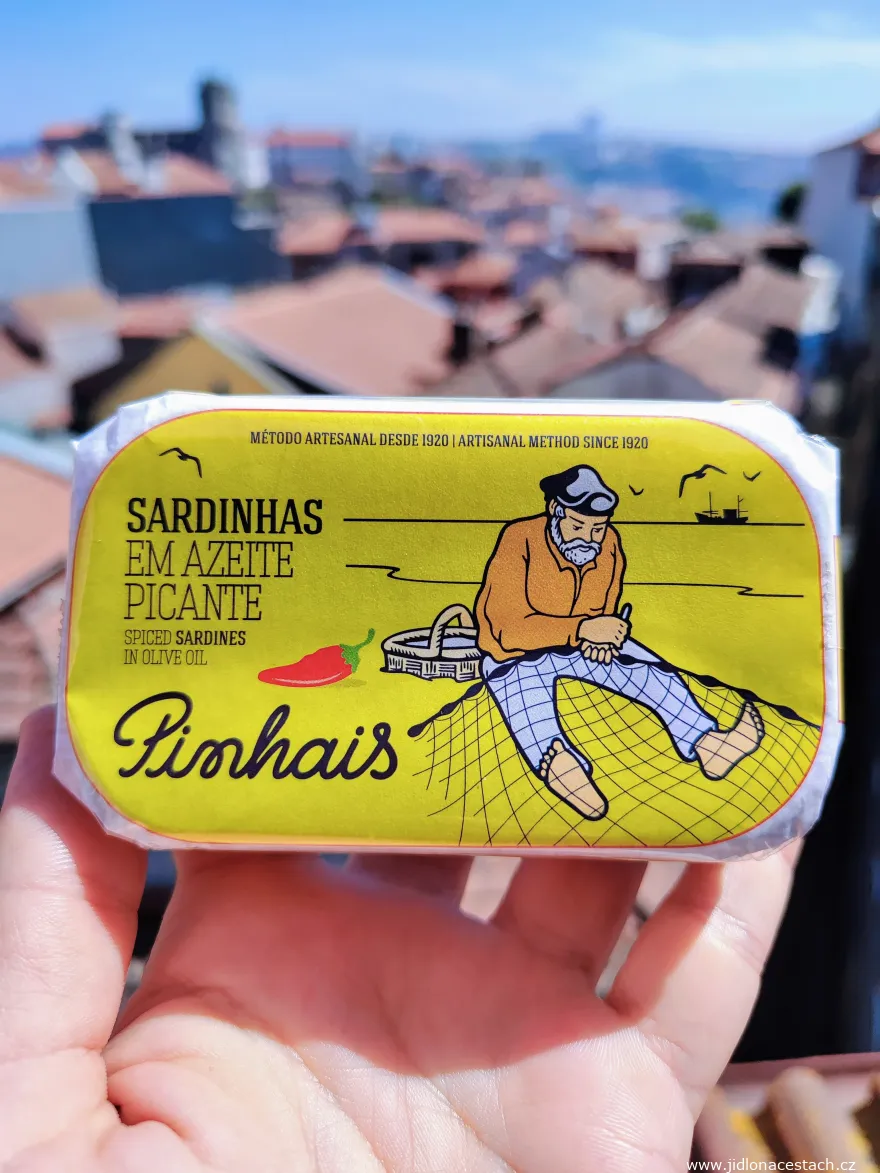
In Matosinhos on the edge of Porto, the Pinhais cannery, founded in 1920, has stuck to the traditional method. The sardines there are still cleaned and packed by hand, the ovens have been in service for close to a hundred years, and every tin gets a piece of chili pepper, a bay leaf, a round of carrot and a slice of pickle. You can visit the factory too: an hour-long tour walks you through the whole production process, and you pack your own tin at the end. The one thing that has changed is the ownership - the Pinhal family sold the company in 2016 to its longtime Austrian business partner. You can tell this isn't a museum piece for tourists from the international ranking of tinned fish judged by a panel that includes Michelin-starred chefs: NURI, the brand from this very factory, took sixth place out of more than four hundred tins tasted.
How to Eat a Tin and How to Spot the Real Thing
A Portuguese doesn't put a tin aside for hard times - he opens it onto bread, eats it with boiled potatoes and onion or as a starter, and will happily set it in front of guests. The bread is no accident: folk tradition has it that the poor once just rubbed the fish across a slice to give the bread some flavor - and the habit of eating a sardine on bread that soaks up the juices has lasted ever since. It's also the best way to approach your first tin: a slice, a fish, no cutlery needed. Just don't confuse the tin with the grilled sardines that scent every corner during the June festivals of Saint Anthony: a fresh sardine off the grill is seasonal, festive food, while the tin is a year-round institution - and the Portuguese draw the line between the two more sharply than a tourist would expect.
The tin, on the other hand, is the surest answer to the question of what to bring back from Portugal - and the producers know it. In the specialist shops known as conserveiras, a good tin runs about 5-9 EUR and the packaging plays on nostalgia: the Sardinha do Tempo line carries years like 1919 on the tins. The date on the wrapper isn't the vintage of the catch, though - the fish inside is current and the year is pure decoration. Genuine vintage sardines, aging in oil the way wine ages in a cellar, are a French discipline - collectors there keep whole archives at home, sorted by year. The Portuguese tin isn't interested in ageing; it delivers right away.

A Tin from the Market in Porto
I bought my sardines at the market in Porto, where the tin stalls blaze with color the way a newsstand blazes with magazines. The sellers have a peculiar ritual there: they pull out a phone and show you photos of opened tins to prove how neatly the fish are lined up inside - and they talk about their goods the way other people talk about Michelin stars. I walked away with the spicy sardines from Pinhais: firm flesh that holds its shape on the fork, less fishy oil than I know from tins back home, and chili that arrives late, only with the second bite. The best sardines I've ever eaten - at 4-5 EUR a tin. They flew home in my carry-on: Portugal negotiated an exemption under which tins up to 150 grams can go on board outside the liquids bag, and it really works - security let them through without a single question. The one trap was waiting back at the market, a few stalls along: tins you couldn't tell apart from sardines, with milk chocolate inside. Not every sardine you bring back from Portugal has ever swum.


