Bifana: The Portuguese Pork Sandwich
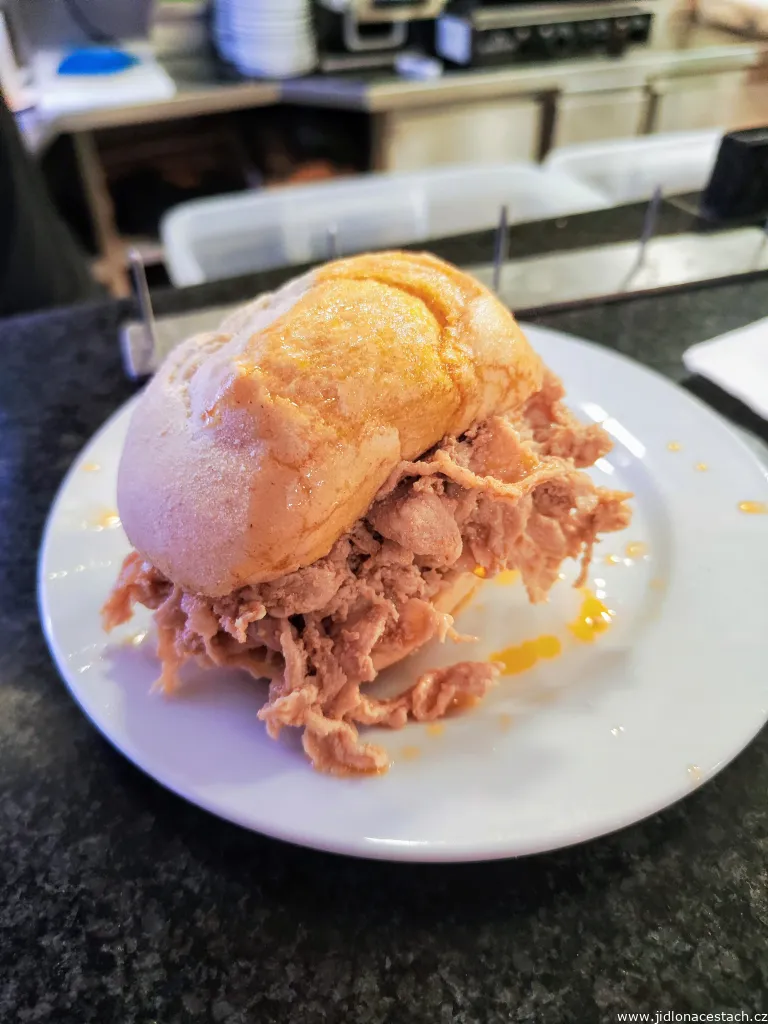
Learn a few Portuguese words before you travel and the menu stops being scary: bife is a steak, so a bifana must be a steak in a roll. Except that instead of a proper slab of meat what arrives is a roll with paper-thin slices of pork hanging out of it and sauce dripping down your hand. Nobody was ever won over by the way this thing looks. And yet it's one of the country's best-loved quick meals: a bifana is a Portuguese sandwich of paper-thin pork slices simmered soft in a spicy sauce and tucked into a papo-seco roll - Portuguese cooking at its most concise.
What Bifana Means and Where You'll Find It
The name is a small linguistic trap. Bifana comes from bife, the Portuguese word for a slice of meat, borrowed long ago from the English beef. So the sandwich is named after beef even though beef has never been anywhere near it: the meat is always pork, usually thinly sliced leg. The dictionary can complain all it likes.
Geographically the bifana is a national dish with a birth certificate from the Alentejo countryside - today snack bars and street stalls sell it from Lisbon to Porto. In the family of Portuguese sandwiches it's the simplest of the lot: cachorrinho next to it is a sausage with cheese in a pressed roll, francesinha a layered construction you need a knife and fork for, and sande de pernil is slow-roasted leg pulled into shreds. Across the border the same job is done by the Spanish montadito de lomo, a thin slice of pork in a roll that could be a carbon copy - only without a shared history, because the two cuisines hit on the idea quite separately.
Where the Bifana Was Born
Guidebooks like to write that the bifana has been in Portugal forever. IT HASN'T - the modern bifana is roughly as old as rock'n'roll; it surfaced in the decades after the Second World War, much like its more famous cousin the francesinha. Two places in the Alentejo claim to be its cradle. Vendas Novas tells of a café on the road from Lisbon to Évora that started selling thin meat in a roll to passing drivers; the railway settlement of Casa Branca counters that bifanas were handed to travellers at its station back in the days of steam. Neither has a scrap of paper to prove it. Vendas Novas did, however, register "Bifanas de Vendas Novas" as a trademark in 2011, so it is winning the argument officially, if not historically.
The Sauce, the Papo-Seco and a Beer to Go With It
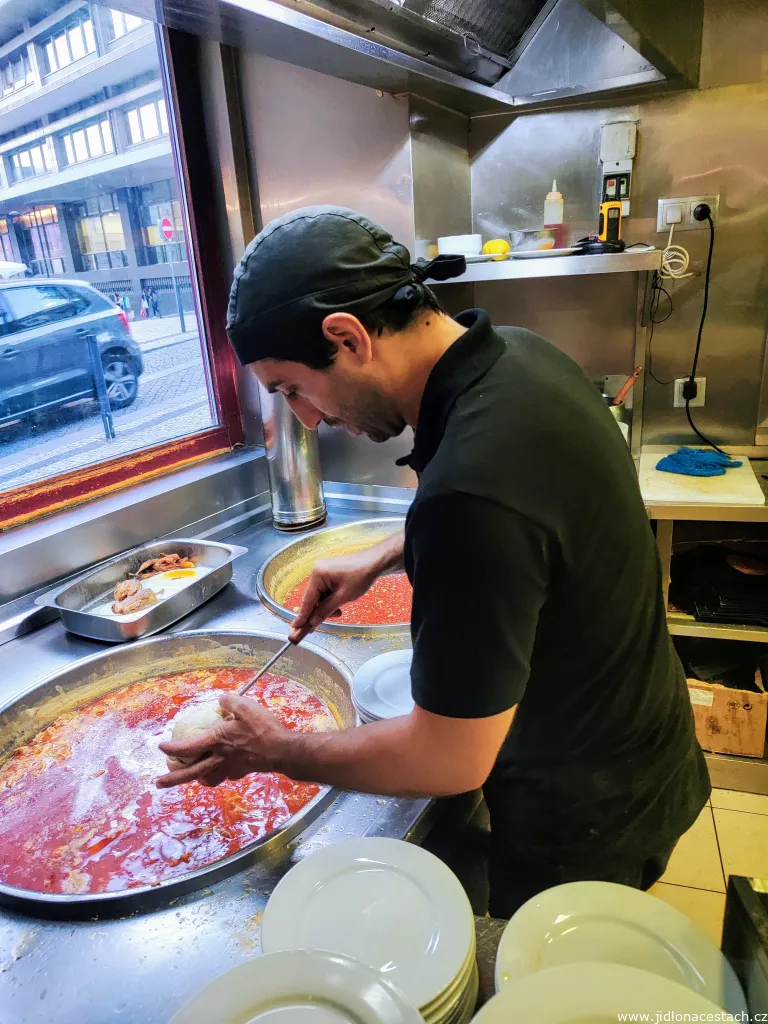
The sauce decides everything that matters; the slices of meat simmer in it so long that they all but fall apart - every place guards the recipe for it as a family secret, and the country divides along its lines. In the south it tends to be pale and simple: white wine, garlic, bay leaf. Porto cooks it dark, thicker and sharper, quite happily with beer or a splash of port wine; in the Alentejo you'll come across a version where the meat is cooked down slowly in lard and the wine never gets a look in. The crisp-crusted papo-seco is in the sandwich for the same reason bread dumplings end up on a plate back home in Czechia: the sauce. Just so it doesn't forget, the cook dips it into the sauce once more right before serving.
A bifana is eaten standing up, in your hand and fast - at the counter, after a football match, at summer festivals where the bifana stall goes up right next to the beer tap. A cold beer belongs with it so naturally that in the Porto version it goes straight into the sauce. In the south people add mustard, in the north the bite of the sauce is enough on its own. The only rule: don't ask for cutlery, it would be out of a job. In Vendas Novas they have turned fast eating into a sport and hold an annual contest to see who can put away the most bifanas in ten minutes; the current record is six. That sounds modest right up until the moment you first meet that hot sauce.
At the Counter in Casa das Bifanas
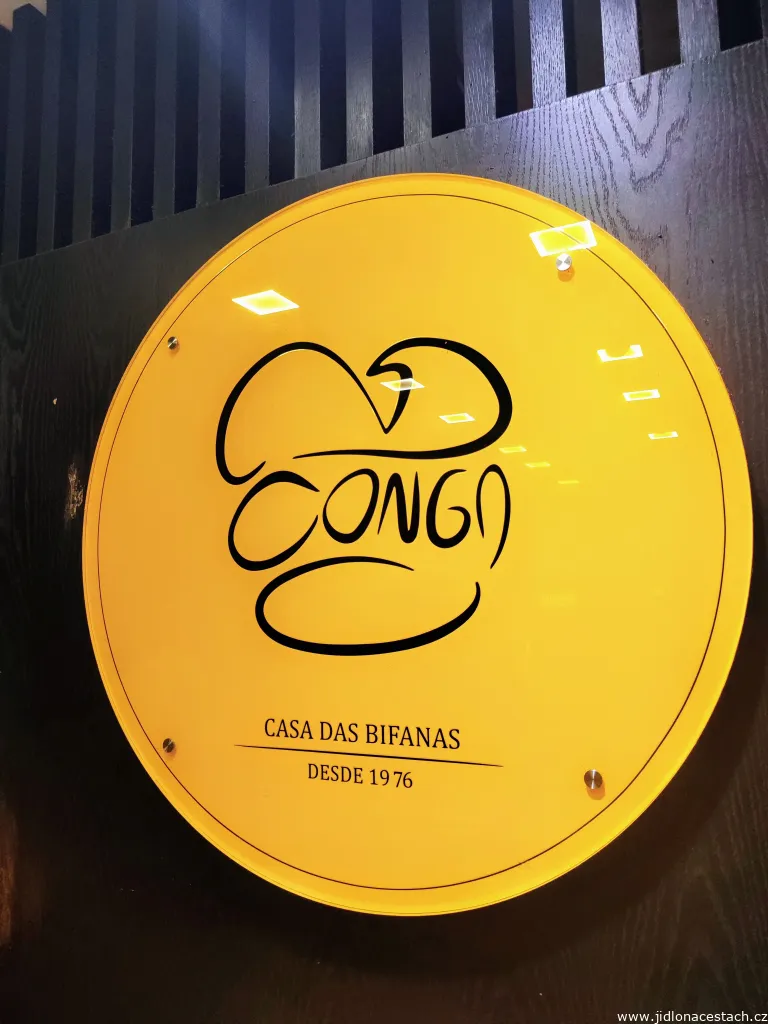
I ate my bifana in Porto, at Conga on Rua do Bonjardim, a place that calls itself Casa das Bifanas and has stuck to them since 1976 (see Where to Eat in Porto). I took a seat at the bar with a view of the kitchen: the cook fished the meat out of a tray of bubbling sauce, piled it into a split roll and pressed the roll into the sauce one more time. The whole thing took maybe ten seconds; less than a minute passed between the order and the first bite. The meat put up no resistance, the sauce had a piquant kick and the roll had soaked up exactly as much as it could take and still hold together. The only mistake was mine - I bit in straight away and burned my tongue, because a sauce that has had meat simmering in it for hours never reaches the plate any way but scalding. The bifana cost 2.40 EUR and the lesson came free: food that takes ten seconds to make deserves at least a minute of your patience.


