Francesinha: Porto's Most Famous Sandwich
In some Portuguese restaurants they'll cut your sandwich in half for a surcharge. It sounds like the easiest money in the history of hospitality - until you see what that surcharge actually involves. The cook doesn't pick up a knife and slice a finished dish in two. He halves the base itself, coats each half in cheese separately and bakes it again, then pours sauce over both and buries them under fries. Two halves suddenly add up to more food than one whole.
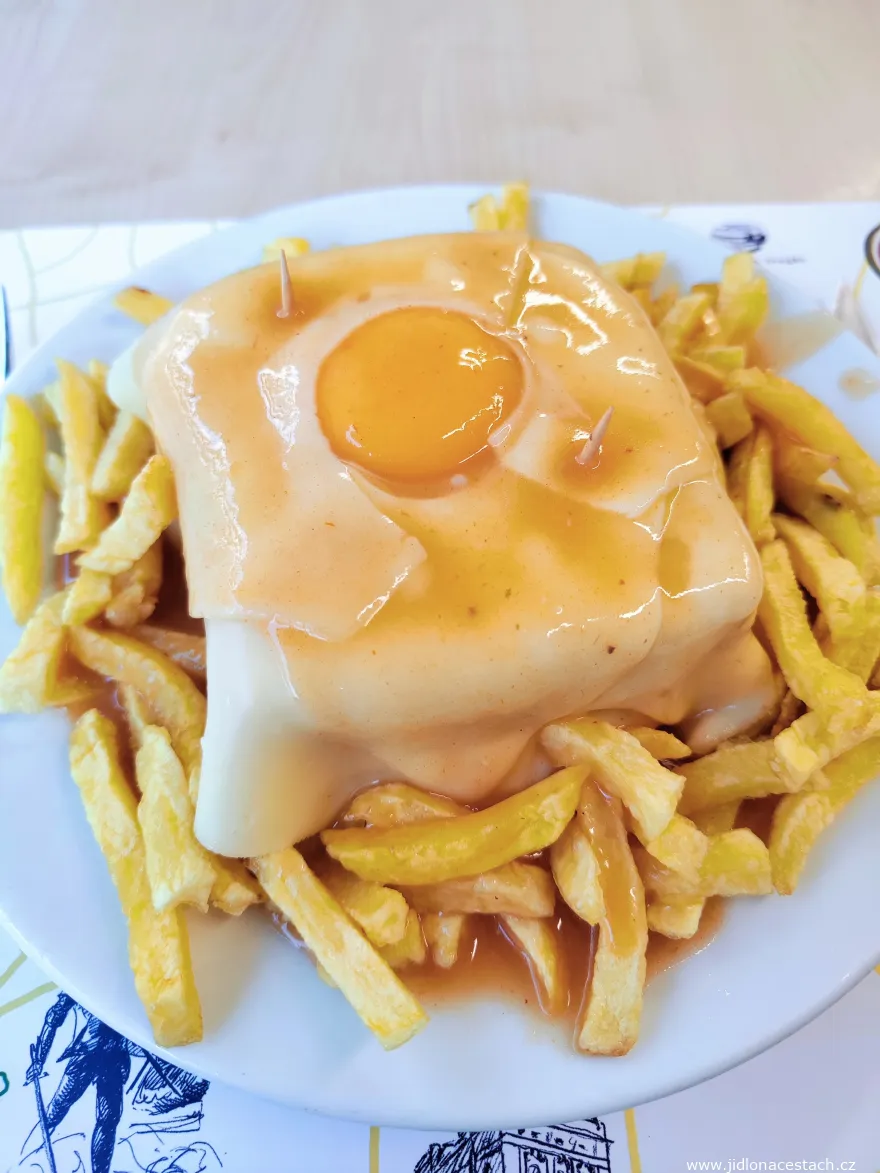
Francesinha is a baked sandwich of Portuguese cuisine: ham, cured sausage and steak are layered between two slices of sandwich bread, cheese is melted over the top and the whole build is drowned in a hot, spicy sauce of beer and tomato. The fries around the plate soak up whatever spills over.
The Little Frenchwoman You Won't Find in France
Francesinha literally means little Frenchwoman. Portuguese papers love to repeat the legend that the creator of the sandwich, by all accounts quite the ladies' man, named his creation after French women - the spiciest ones he knew. There is no period evidence; what is certain is the French connection: francesinha came about as Porto's answer to croque-monsieur. But where French cuisine smothers a toastie in béchamel and considers the job done, Porto stacked three kinds of meat inside and drowned the lot. Francesinha is baked all over Portugal today, yet Porto remains home - among people in the know, Lisbon long had a reputation as the city that does something questionable to the sauce. And one more trap: the seaside town of Póvoa de Varzim has been making francesinha poveira since 1962, a dry sandwich with mustard that you eat with your hands and that borrowed nothing from Porto's fame but the name.
Who Invented Francesinha, and on Which Street
The father of francesinha is Daniel David Silva, a cook who came home after years in France and, between 1952 and 1953, started putting a toastie together his own way in a restaurant on Porto's Rua do Bonjardim. Guidebooks often date it as late as the 1960s - by then the finished francesinha was merely spreading across Portugal. The one thing the sources disagree on is the name of the place: some name the A Regaleira restaurant, others Reboleira. The street, at least, is certain. And that's the best part of the whole story: Rua do Bonjardim is also home to Conga, the place made famous by its bifana. Porto's two flagship sandwiches were born on the same street. Anyone who wants to understand what this city lives on doesn't need a map - one address will do.
What Goes into a Francesinha and How to Eat It
The base sounds like something out of a sandwich toaster, the kind that sat in half the kitchens back home in the nineties: sandwich bread, ham, cheese. Then come the reinforcements no home cook knows - linguiça, a thin smoked sausage, plus a fresh sausage and a slice of beef steak or pork tenderloin. And above all the sauce. Tomatoes, beer, hot piri-piri, sometimes port wine or whisky as well; the better places keep the exact ratio to themselves, and Café Santiago has even given its sauce a name of its own, Essência, and guards the recipe. The sauce is what sets Porto's francesinhas apart more than anything else - everyone stacks the layers of meat much the same way, and the signature is written in what goes over them.
Don't mistake it for a snack. Francesinha is a lunch or a dinner bordering on an athletic feat - Portugal even holds eating contests with versions that weigh several kilos - and it's eaten strictly with a knife and fork: a sandwich drowned in sauce simply won't stay in your hand. You wash it down with a fino, a small draft beer. Anyone who wants a fried egg on top looks for the word especial on the menu. And anyone who wants to choose well watches where the locals go - the most celebrated addresses come with a line.
Six in the Evening at Café Santiago
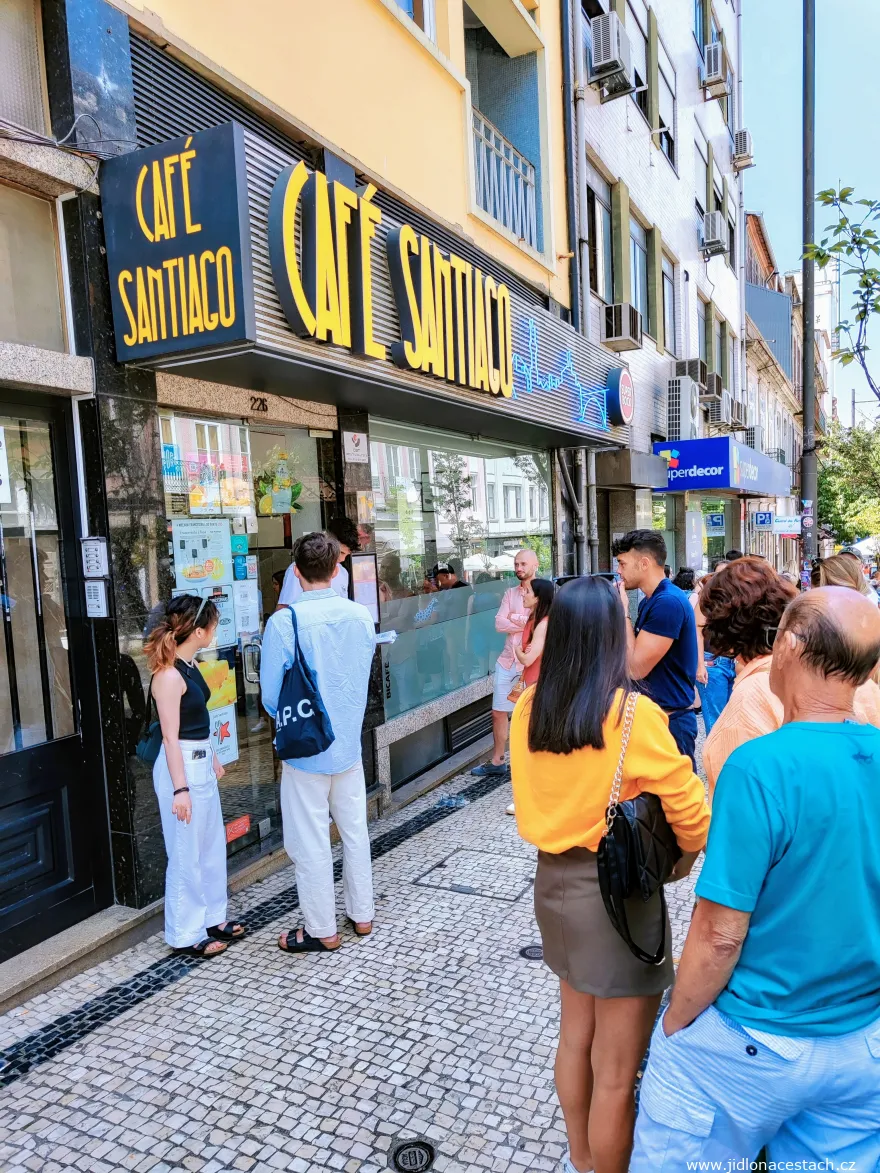
I ate my francesinha in Porto at Café Santiago (see Where to Eat in Porto): two locals recommended it to me independently of each other, and it is a fixture in the top ten of the city's francesinha rankings. At noon there's a line outside, so I turned up without a reservation around six in the evening - and sat down in an empty restaurant. The version with beef steak and an egg on top cost 14 EUR. The sauce burned less than I'd expected after all the talk of piri-piri; it warmed slowly instead, and the beer in it came through. The bread under the cheese had long since turned into a sponge soaked with sauce, and the yolk spilled out at the very first cut. Within half an hour every table in the restaurant was taken. Come for francesinha at noon and you stand in line. Come at six and you watch the line form.