Ararat: The Armenian Brandy They Call Cognac at Home
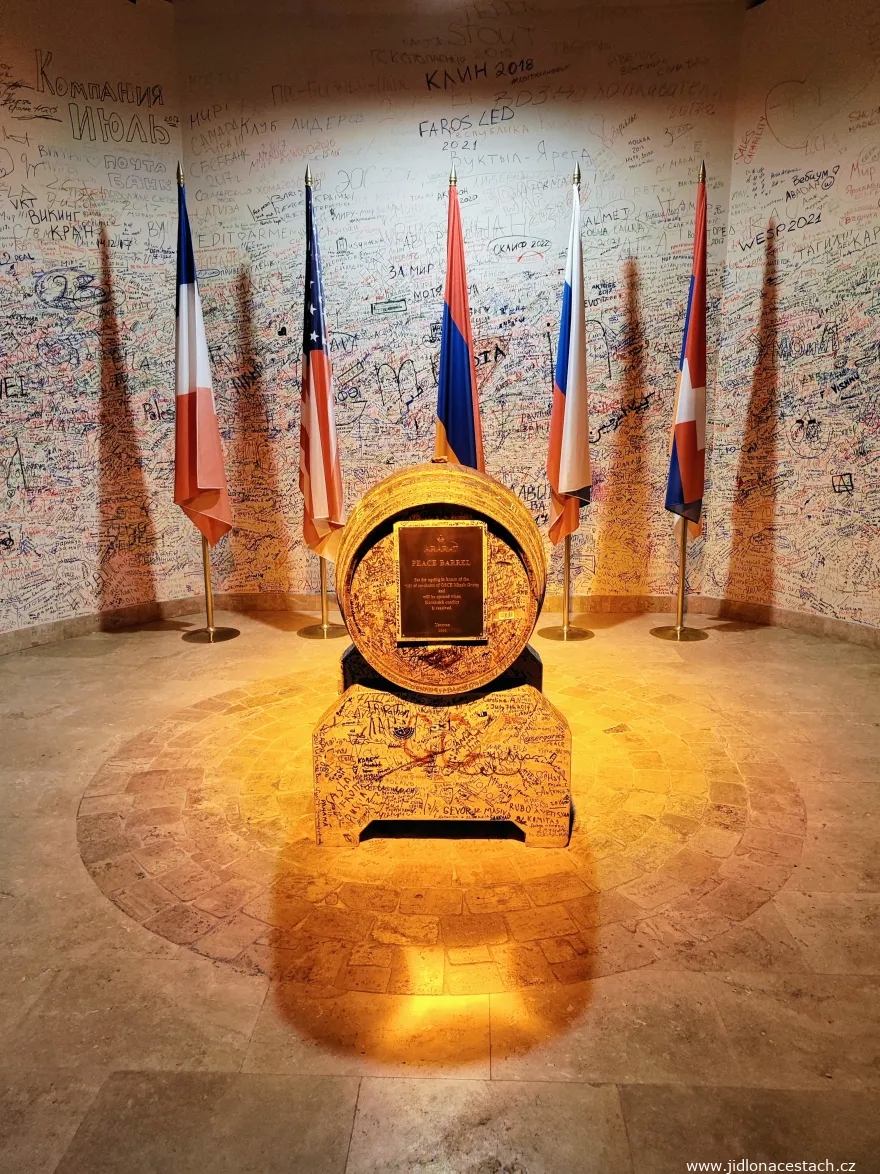
At the Yerevan distillery, a gilded barrel stands among the flags, its sides covered in visitors' signatures. Our guide said one thing about it that stuck with me more than anything else on the tour: "All the brandy they have here, they want to open as late as possible, so it's as good as it can be. This one barrel they'd like to open right now." They filled it after the fighting broke out in Nagorno-Karabakh, and it is to be opened when the war ends.
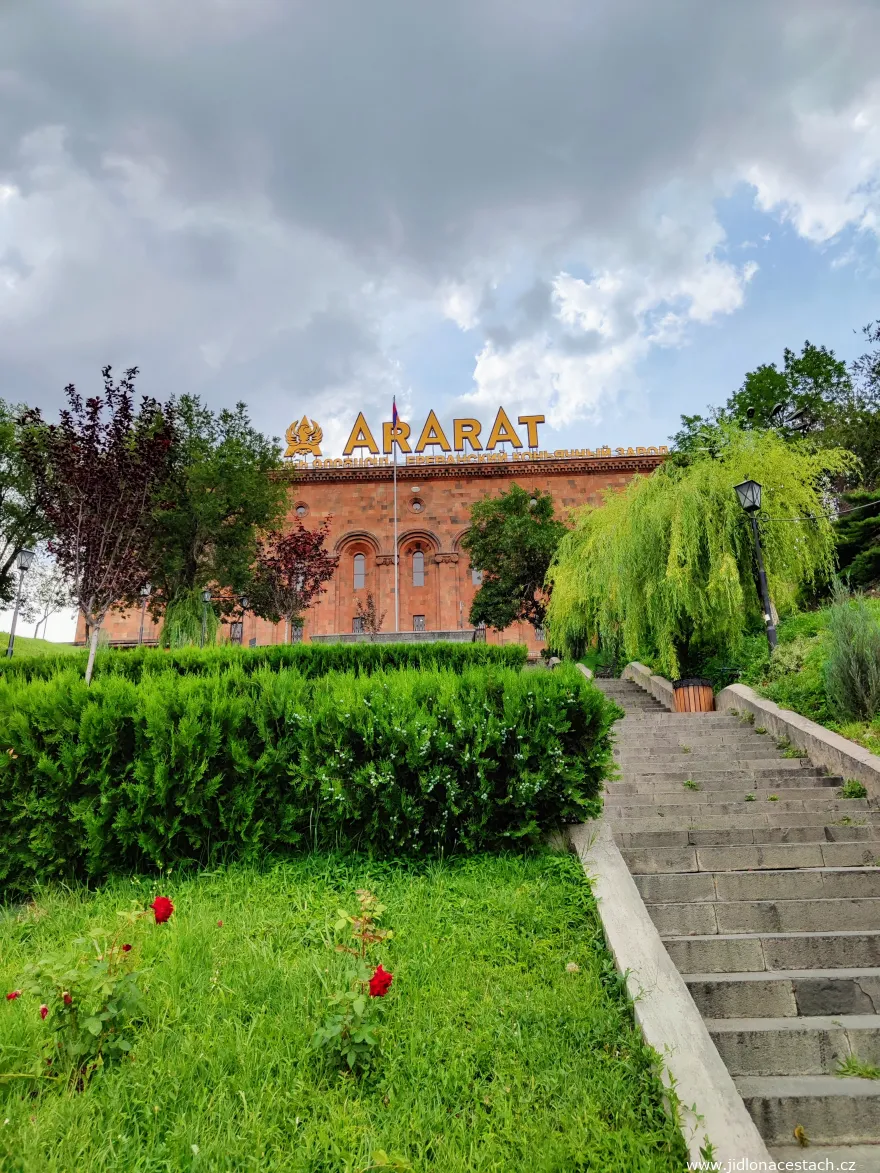
Ararat (Armenian Արարատ) is an Armenian brandy made from grapes of the Ararat plain, distilled twice and aged in barrels of Caucasian oak - the flagship of Armenian cuisine in liquid form and the country's best-known export. It takes its name from the mountain where, according to the Bible, Noah landed his ark and planted the first vine. The mountain sits in Turkey these days and the distillery belongs to the French - and those are only the first two contradictions that come with Ararat brandy.
Why Ararat Brandy Is Called Cognac at Home
Under European law, the word cognac belongs only to the spirit made around the French town of Cognac. Across the former Soviet Union, though, "cognac" is what people call any brandy that started as wine and went through a double distillation and an oak barrel, and Armenians have called their drink that for a hundred years. In its 2017 partnership agreement with the European Union, Armenia committed to giving the word up - at home by 2032, on export labels by 2043 - and Brussels chipped in three million euros to help it say goodbye to the name. We've been through the same thing back home: the molasses spirit we had always sold as rum lost the right to that name when we joined the EU - it's called tuzemák now, and people go on drinking it exactly as before. To Armenian ears, though, the new word "brandy" sounds every bit as foreign as the French one, so the old bottles with КОНЬЯК in Cyrillic stand in the museum proudly, not apologetically. And grape cognac is no Armenian invention, just an Armenian specialty: over in Georgia, Sarajishvili opened his distillery in Tbilisi at the same time Tairyan opened his in Yerevan, Moldova has its divin, and I've tried Kyrgyz cognac, Bulgarian Pliska and Albanian Skënderbeu as well. Ararat is the most famous of that family, not the oldest.


Who Makes Ararat and What's True About Churchill
The distillery was founded in Yerevan by the merchant Nerses Tairyan - the company dates itself to 1887, while its rival Noy claims his winery, which is ten years older, and both have a piece of the truth. In 1948 Soviet Armenia split the original business into two plants; ever since, Yerevan has had two distilleries, each insisting it is the original one. In between, the cognac went to the tsar's court under the name of the Russian distiller Shustov, and in 1998 Pernod Ricard bought it during privatization. The brand's most famous story - Stalin poured Churchill an Armenian cognac at Yalta and Churchill then had crates of it shipped to London - has nothing behind it, according to the authors of Armenian Food: Fact, Fiction and Folklore; it appears neither in Churchill's memoirs nor in Mikoyan's, and the Churchill Museum names the French Hine as his favorite cognac. The distillery goes on telling it anyway. A good story sells more bottles than any medal.
What Ararat Is Made From and How to Drink It
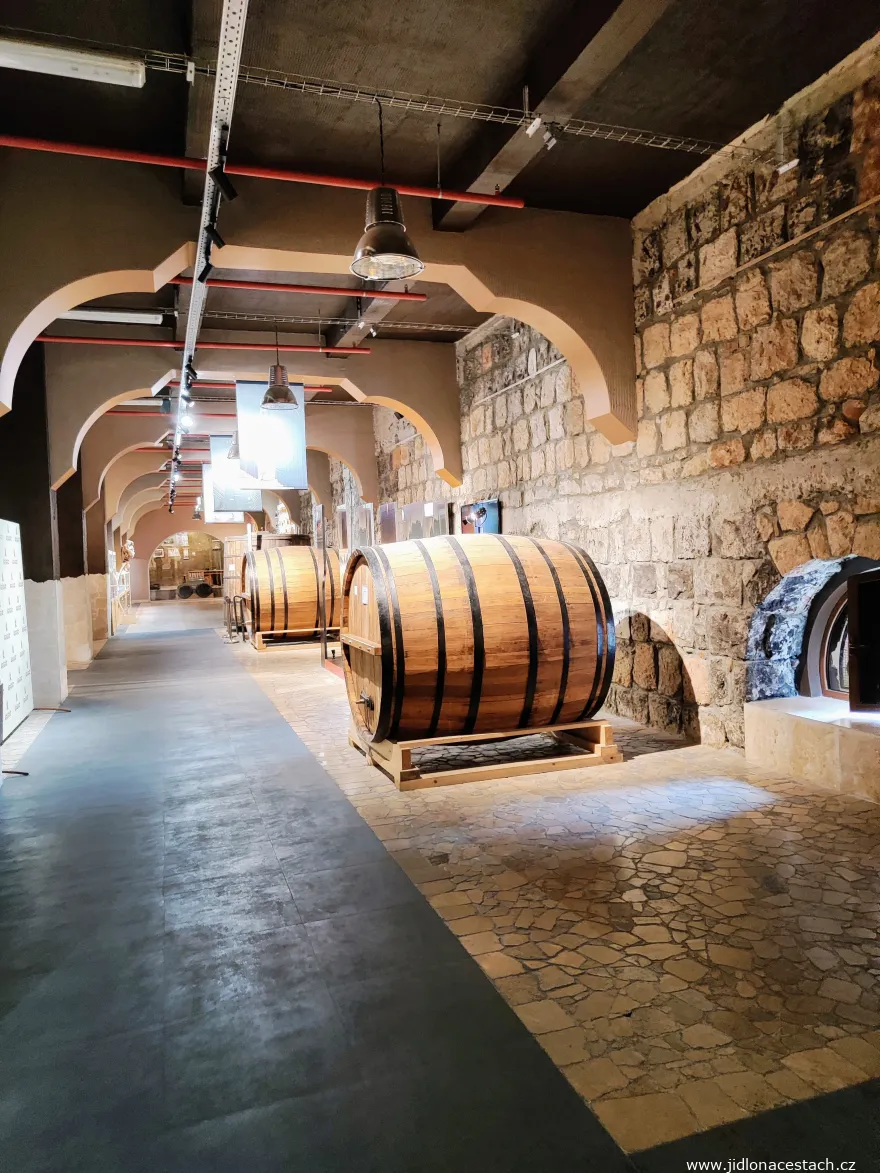
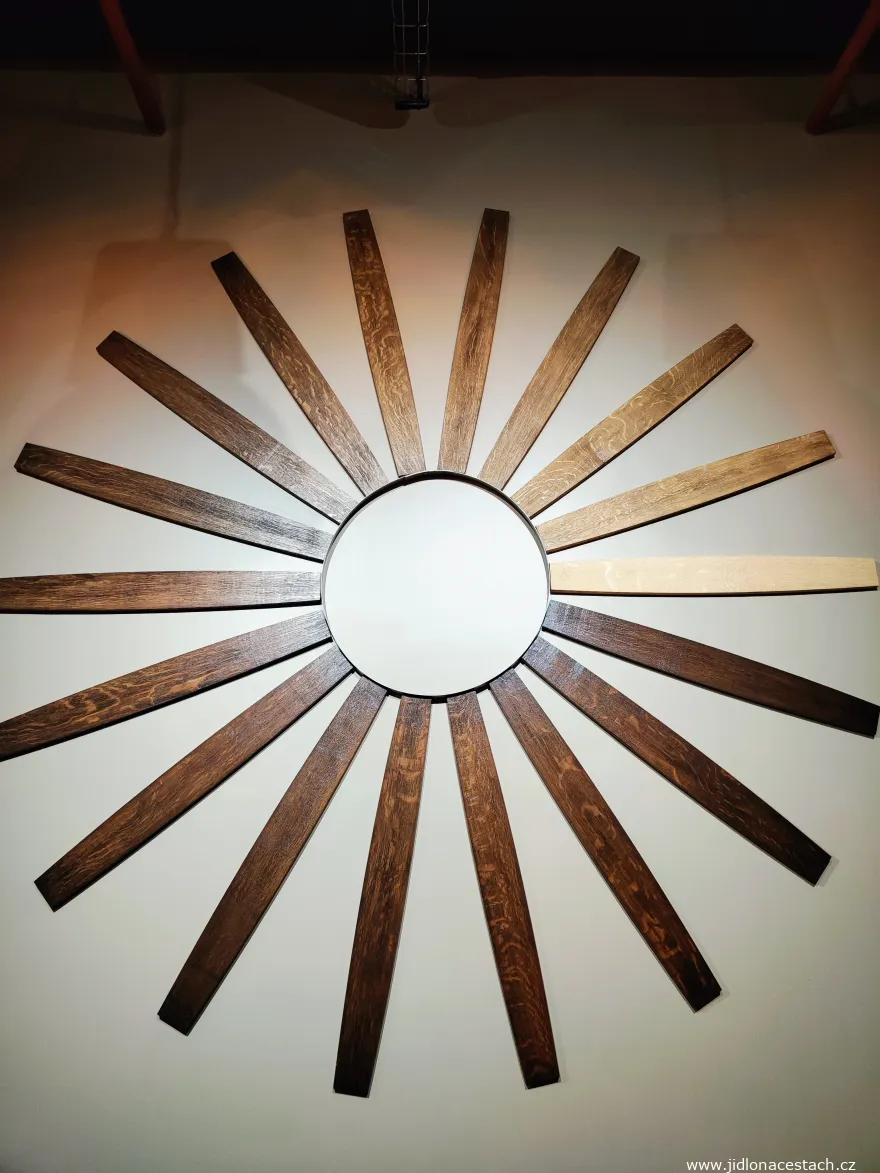
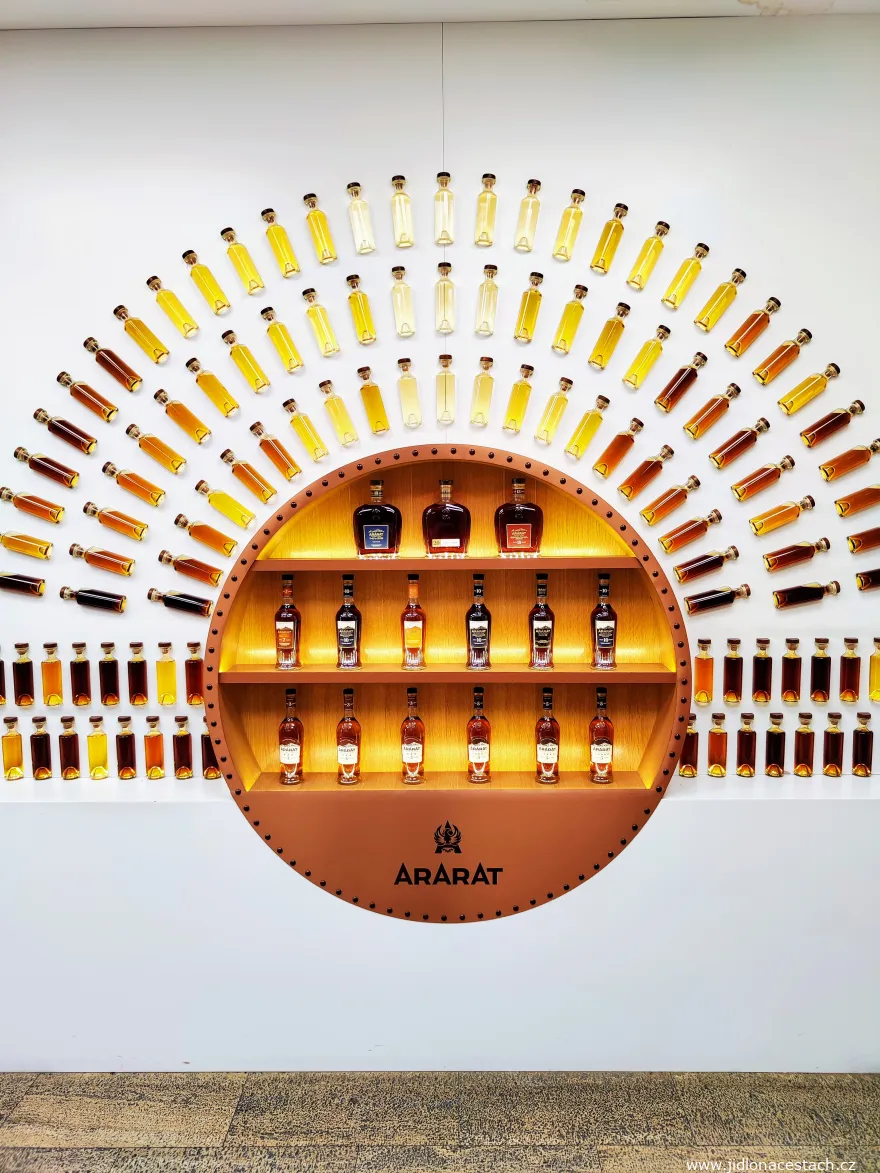
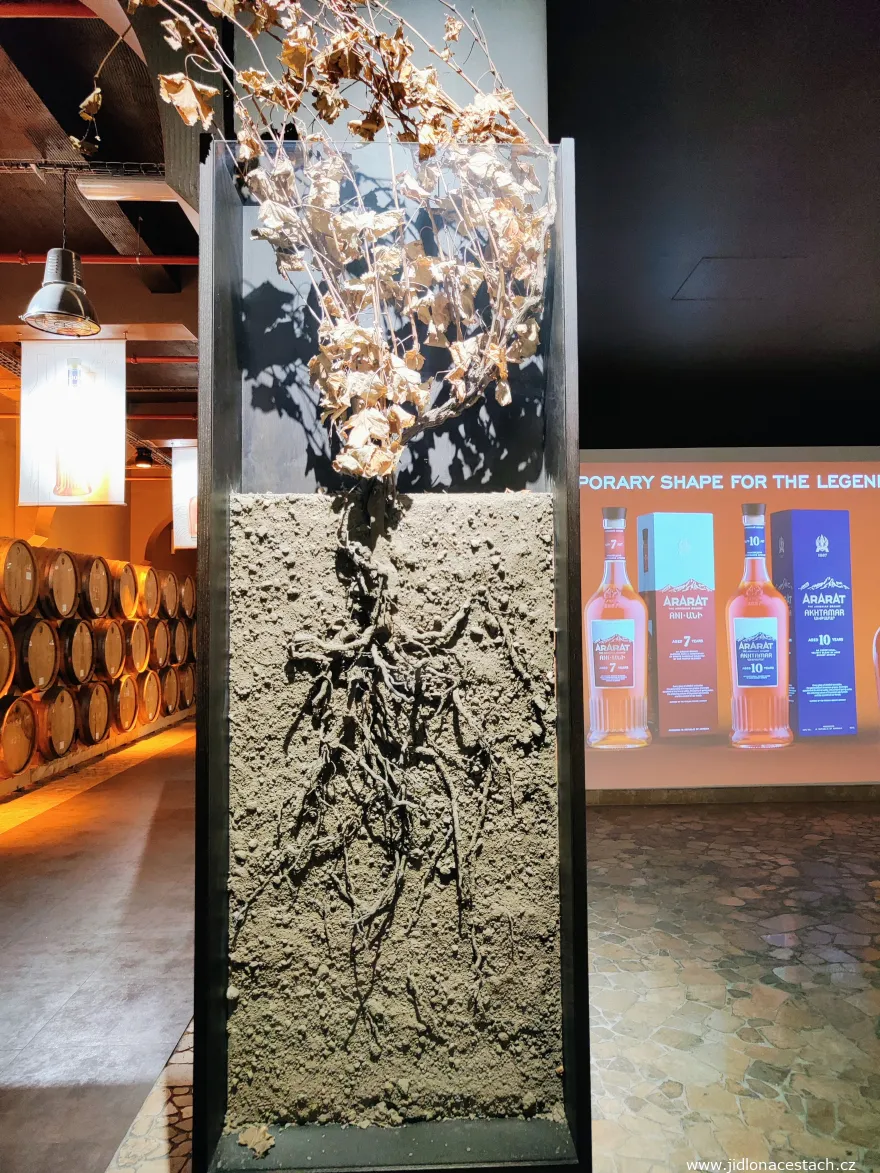
The grapes are native Armenian varieties such as Voskehat or Garan Dmak from the Ararat plain, where winter drops to minus twenty and summer climbs to forty. The spirit then ages in barrels of Caucasian oak, wood that soaks in water for two years before the barrel is ever built. The color comes from fire, not from the grapes: the museum has a ring of wooden staves running from pale to almost black - the harder the cooper chars the barrel, the darker the spirit that comes out of it years later. Next to it is a cross-section of a vineyard showing how much of the plant lives underground, and I've been through plenty of wineries, but this display stuck with me more than most. The range carries names out of Armenian history - Ani, Akhtamar, Vaspurakan, Nairi - and ages of seven to twenty years in the barrel. This is not a drink for dinner. Armenians keep a bottle at home for a child's wedding or the birth of a grandchild, and they sip it slowly from a snifter, with chocolate or baklava.

Three Glasses at the Ararat Museum
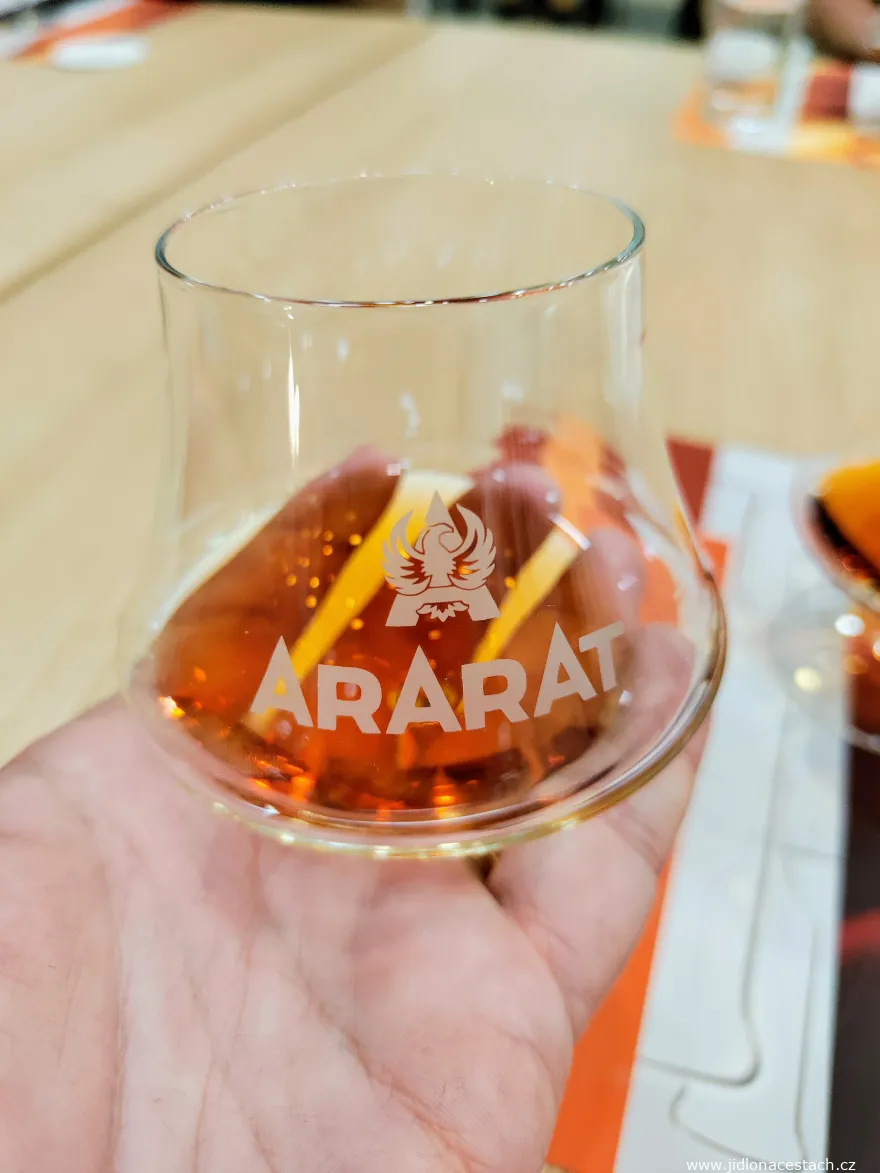
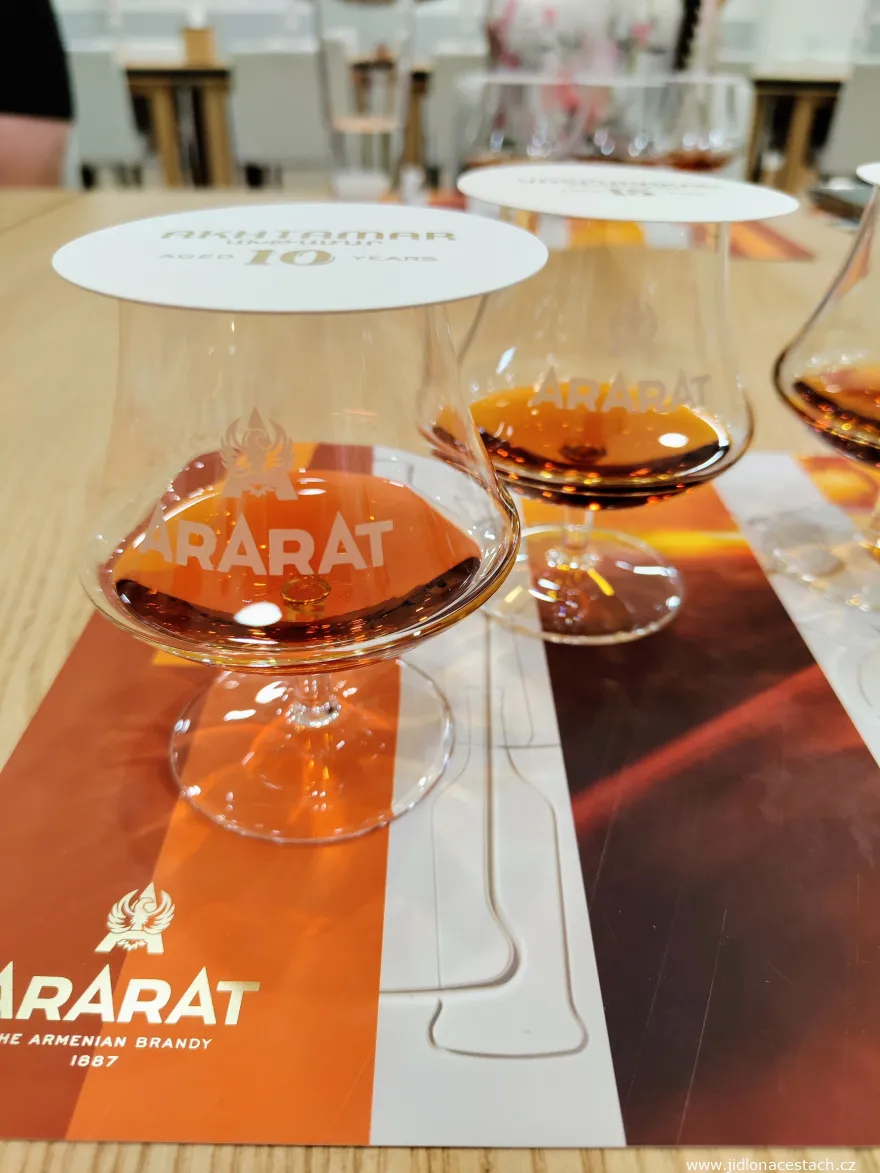
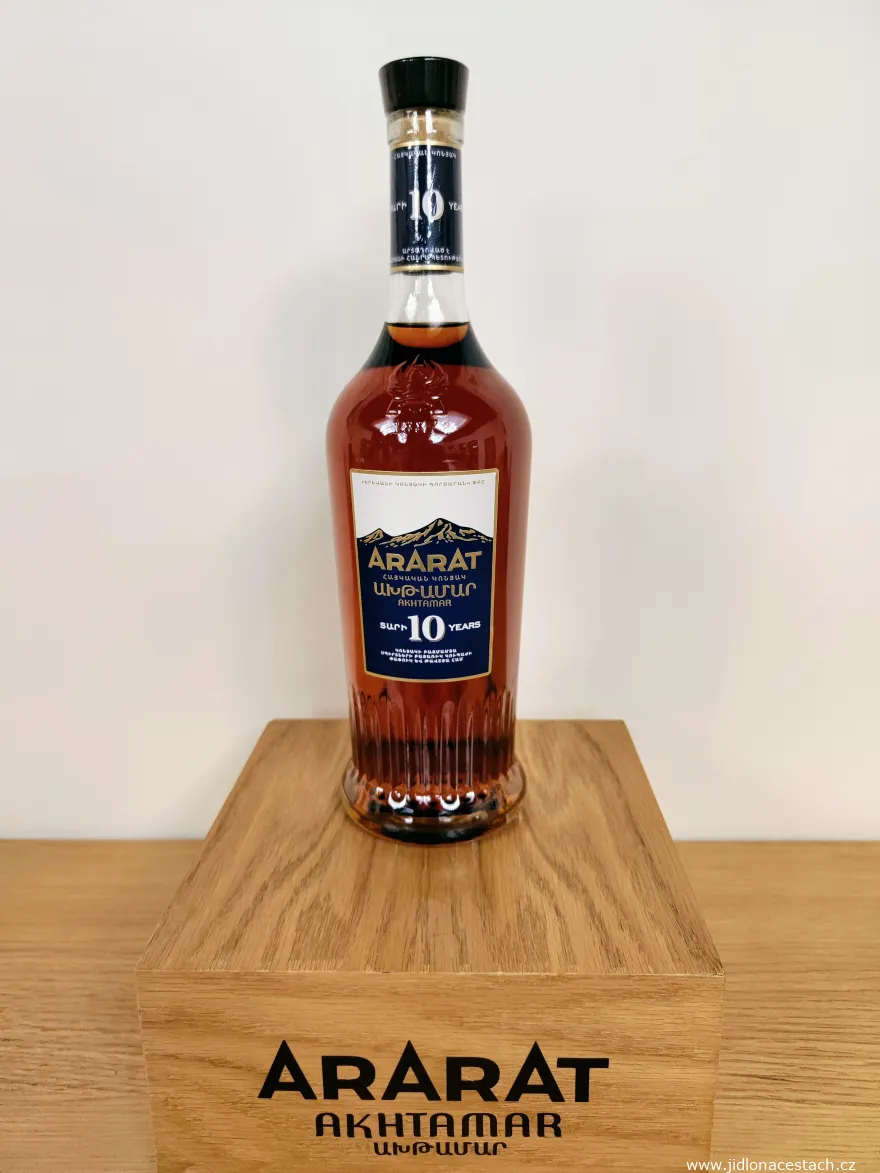
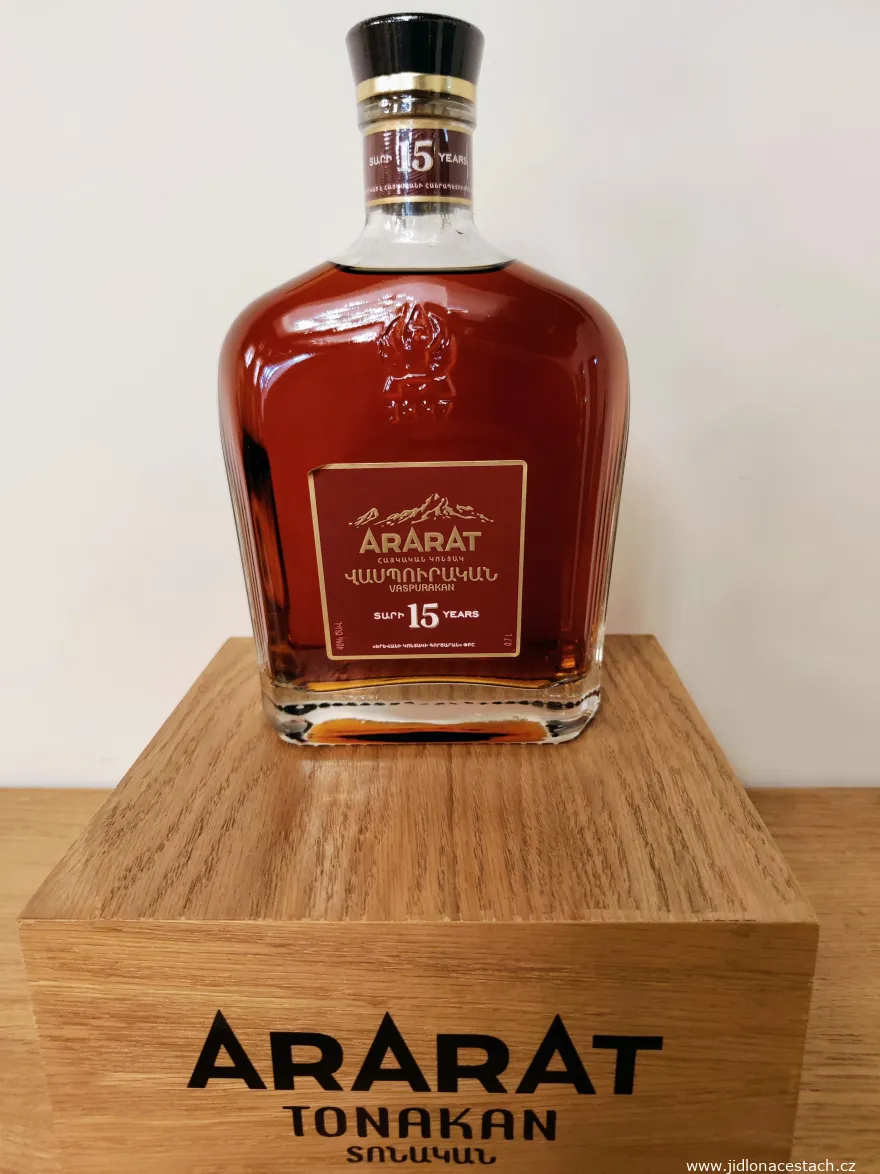
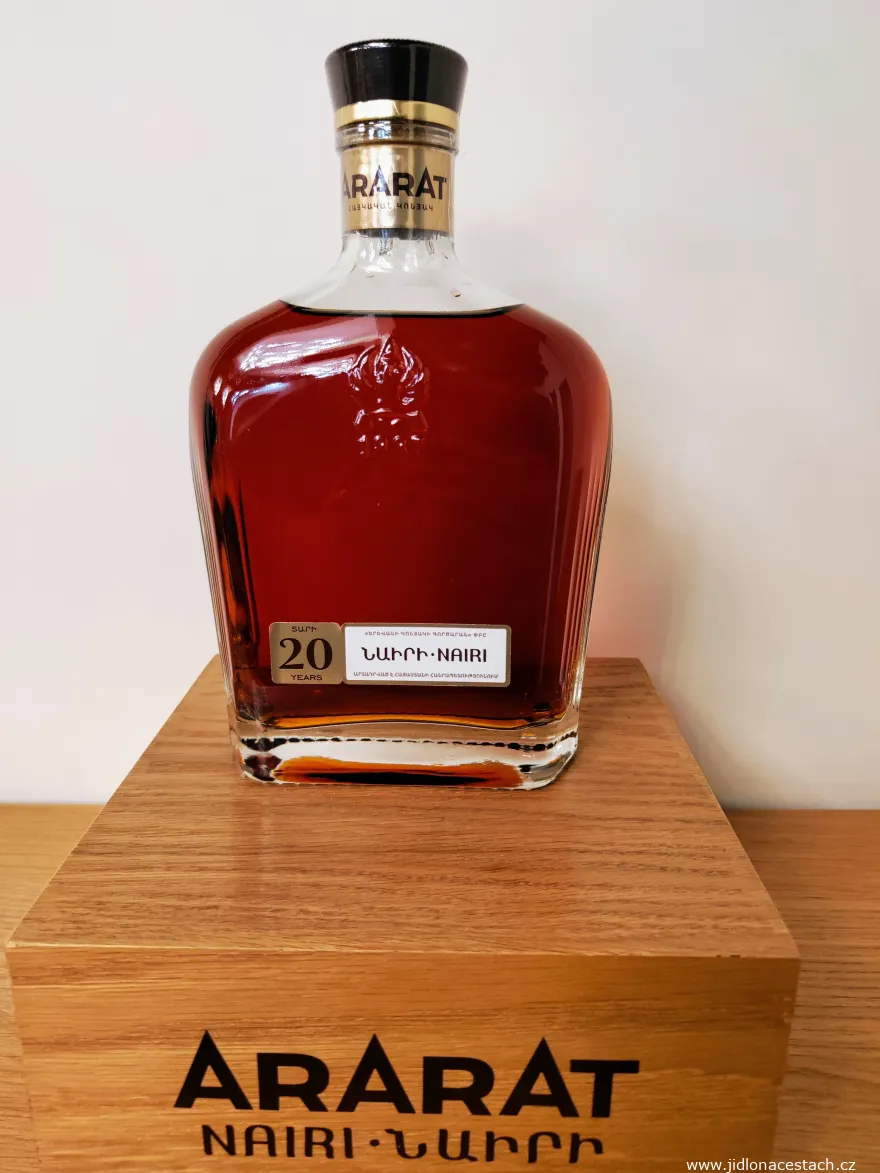
I tasted Ararat brandy where it is made - at the distillery museum in Yerevan (see Where to Eat in Yerevan), where the tour ends at a table of glasses with little labels, so nobody has to guess what they're drinking. I went for the advanced tasting, as most of the group did: the ten-year-old Akhtamar, the fifteen-year-old Vaspurakan and the twenty-year-old Nairi. The Akhtamar smelled of dried apricots and was still sharp in the mouth, the Vaspurakan was thicker and sweeter, with vanilla from the barrel, and the Nairi, the darkest of the three, left a finish that was still there long after I'd walked away from the table. The tour with the tasting cost 10,000 AMD (24 EUR), and I got more out of it than out of most winery tours I've done anywhere. The Nairi in that last glass had spent twenty years in a barrel. Under the deal with Brussels, the word cognac has roughly the same span left on the labels - after that, Armenians will write it only at home, and only in their own alphabet.
Ararat Museum


