Sarde a Beccafico: Sicilian Sardines Stuffed with Breadcrumbs and Raisins
Beccafico is a bird. A warbler that gorges itself on figs at the end of summer, which is why in Italian it is called the "fig-pecker". Sicilian nobles once had it caught and stuffed; today it is protected and hunting it is an offense. The only place on the island where beccafico is still served legally is the fish market - except that what goes by that name there is a sardine.
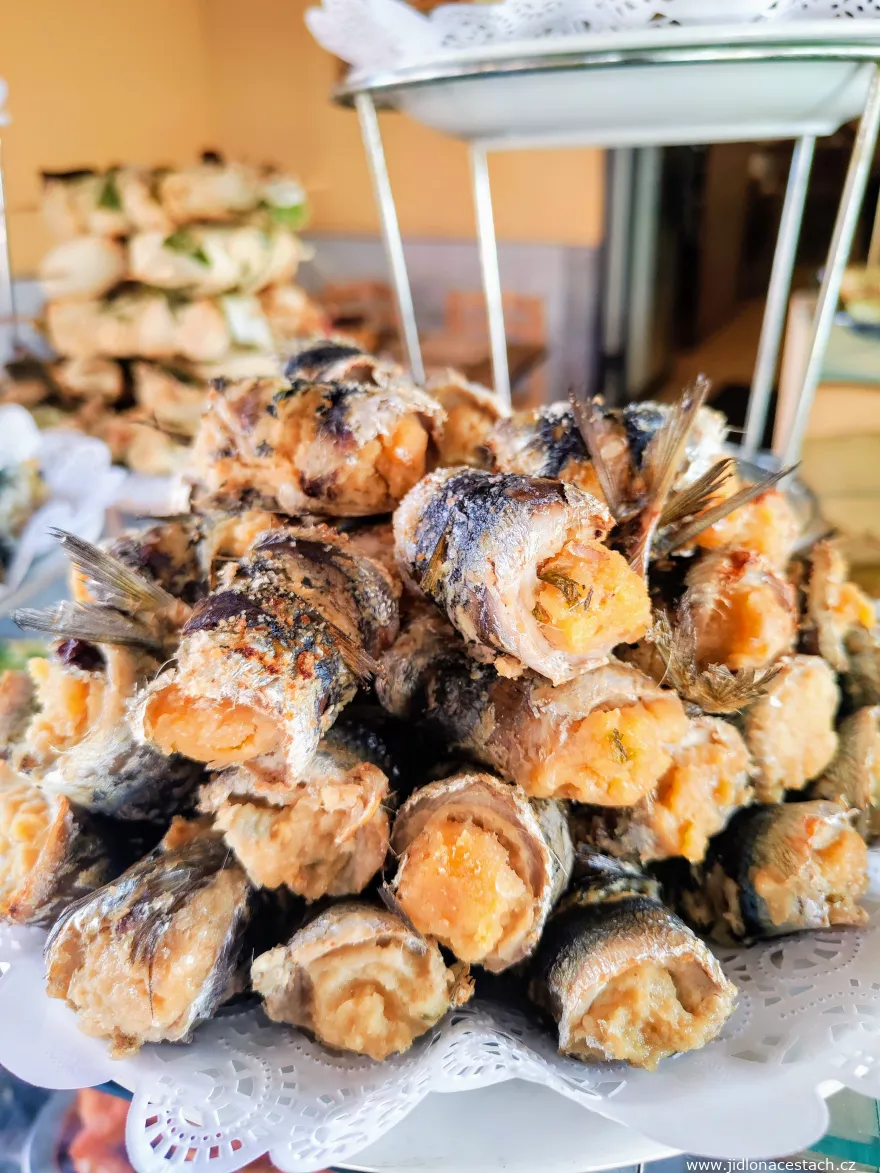
Sarde a beccafico (in Sicilian: sardi a beccaficu) are sardines opened out like a book, stuffed with toasted breadcrumbs, raisins and pine nuts, rolled up and baked with the tail sticking straight up - the best-known stuffed fish in Italian cooking. That tail is no accident: it stands in for the bird that is missing from the dish.
How a Warbler Became a Sardine
The story told by every Sicilian cookbook and every website about Sicilian food goes like this: the gentry ate stuffed warblers, the servants watched from the kitchen and then played the lord at home with something that cost a few pennies - with a sardine. Stuffed with breadcrumbs instead of innards, rolled up so that the shape of the bird was at least hinted at. It is a legend with no date and no author: not one source can produce a cookbook, a chronicle or a year, only "once upon a time". Which does not disprove it, it just puts it where it belongs - among the stories people believe because they fit. The only certain things are what survived: the name of the bird and the tail pointing up. And for the record - raisins and pine nuts are not this dish's Arab legacy, but the legacy of Sicilian cooking as a whole; the sardine dressed up as a little bird turns up in the sources many centuries after the emirs.
Three Cities, Three Sardines
Sarde a beccafico belong to the whole of Sicily, and yet nowhere on the island will you find agreement on what exactly you are ordering. Palermo rolls the sardines up, stuffs them with breadcrumbs, raisins and pine nuts, bakes them with bay leaves and slices of orange and is quite happy to serve them cold. Catania does not roll them at all - it stacks two fillets like a sandwich, puts breadcrumbs and caciocavallo cheese in between and fries them, without raisins, without pine nuts, without any of the things that count as the dish's signature elsewhere. Messina fries them too, adds capers to the filling and then stews the finished sardines in tomatoes. The rest of the family: the island rolls swordfish the same way into involtini di pesce spada and in Palermo the very same sardines, raisins and pine nuts are cooked with fennel into pasta con le sarde. Liguria knows stuffed sardines as well, Greek cooking has sardeles gemistes with a strikingly similar filling and Tunisian cooking stuffs its sardines with harissa - but they are relatives in shape only; the bird in the name belongs to Sicily alone.
What Is Inside and What Only Looks the Part
The sardine is first opened out "like a book": it is cut along the back, the spine and the head are pulled out, the tail stays on. The filling is humble in itself - breadcrumbs toasted in oil with garlic and parsley - and what makes it rich are the raisins and pine nuts, sweetness against the salty fish. Bay leaf and orange do not go into the filling; they are tucked between the rolls in the baking dish and simply perfume them as they bake, and that is the scent people later mistake for spices. Unlike the beef roulades we braise for an hour back home, this Sicilian roll comes from the sea, takes three bites to eat and bakes in a quarter of an hour.
They are eaten hot and cold, as a starter and as a main course, on a Sunday feast day and on an ordinary weekday, because in Sicily the sardine is a cheap fish and fresh from spring to autumn. In the markets they sit on the counter already baked and are sold by the piece, not by the portion. The bay leaf between the rolls is not eaten - it is there for the smell, not for the eating. Portion size is a matter of opinion: in the opening scene of the TV adaptation of Il ladro di merendine, Inspector Montalbano puts away a kilo and a half in one sitting.
Two Sardines from del Capo, Two from Ballarò
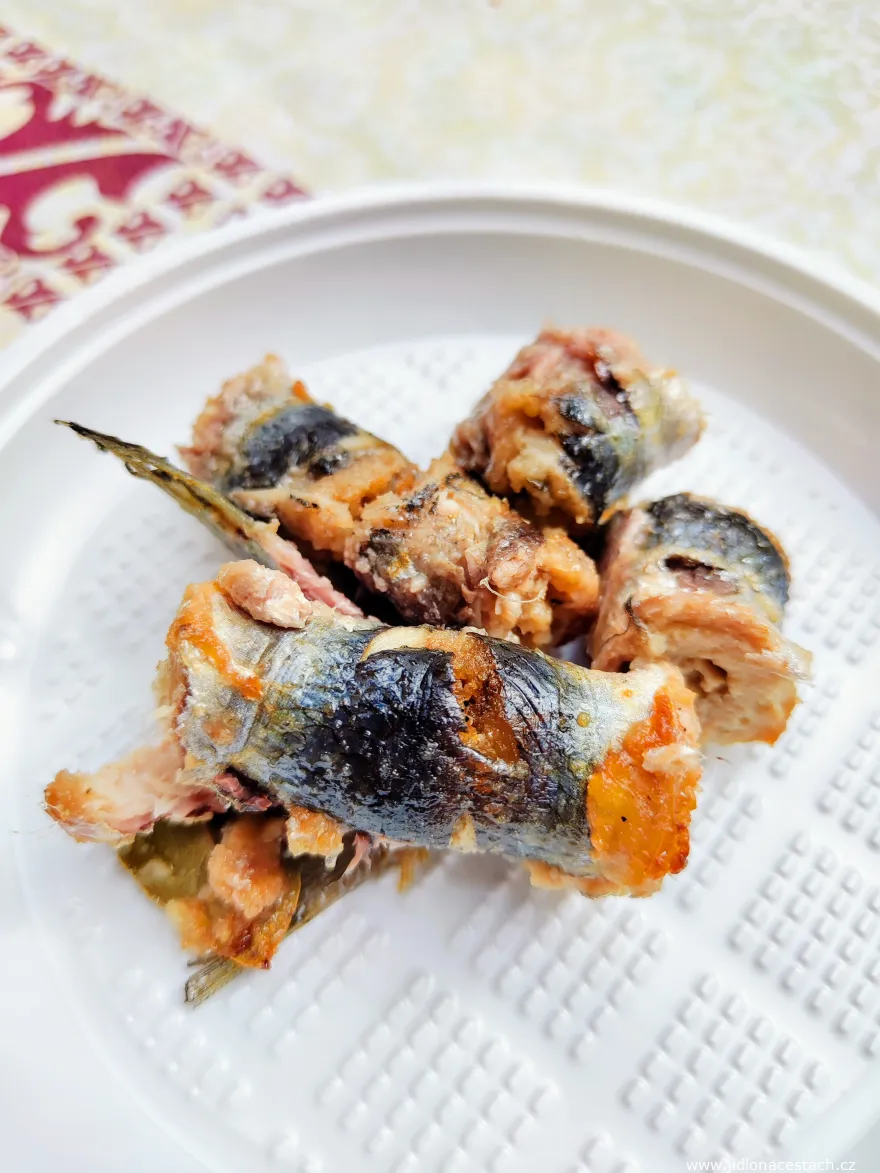
I bought them twice in Palermo, both times at a fish market: first at the del Capo market, then at the Ballarò market (see Where to Eat in Palermo), where they were lying on a tray, already baked, between sausage skewers and other rolls. They tasted sweet, sweeter than I would have expected from fish - the raisins overpowered the salt and the bay leaf came only from the baking dish, not from the filling. The breadcrumbs inside were damp with oil and fish juices, the pine nuts crunched, the skin stuck to the paper. Two pieces cost 1 EUR, exactly the same at both markets. The tail stuck straight up, just the way it should.


