Farata Aka Vinoda Bistro: Farata Right on Flic en Flac Beach
More than five hundred people on Google have agreed on a rating of 4.6 out of 5 - a number few restaurants with a sommelier and starched tablecloths manage to hold on to. Here it belongs to a takeaway window, where you eat standing up, straight out of your hand.
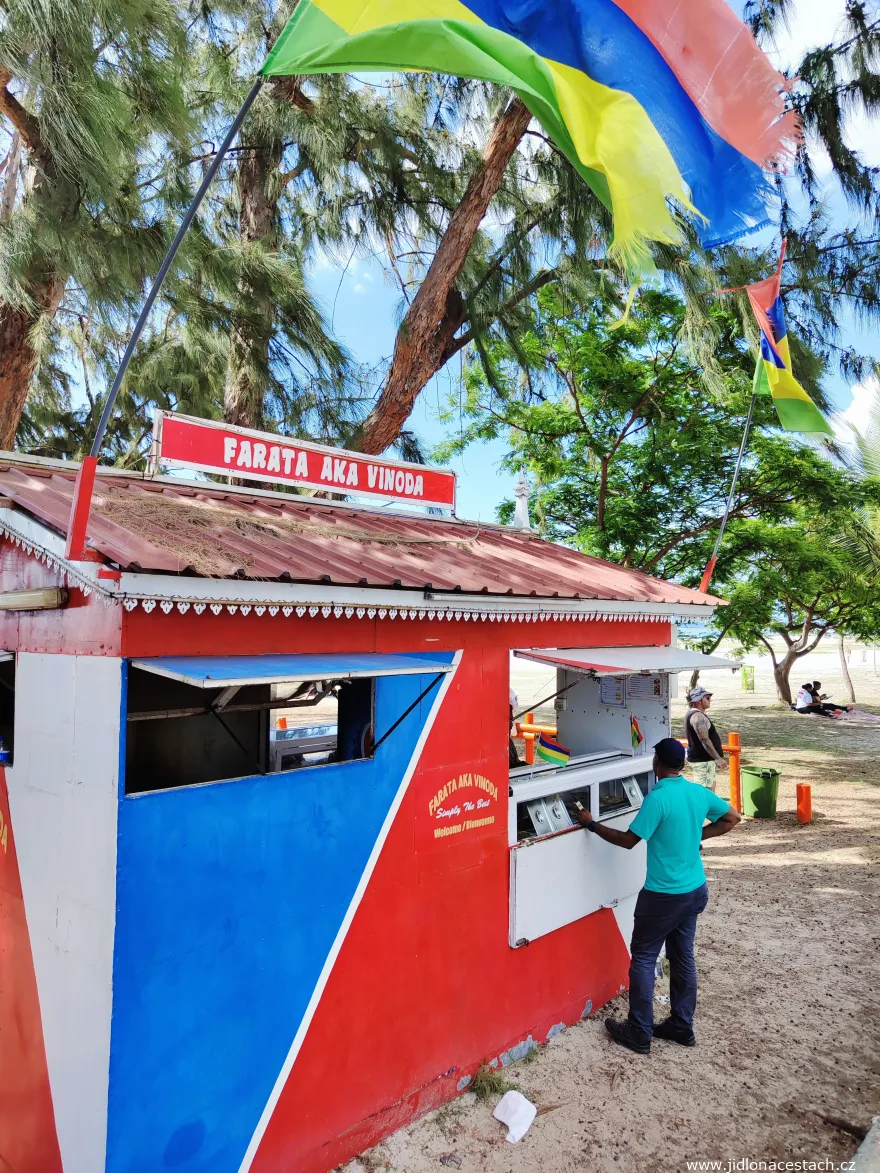
Farata Aka Vinoda Bistro is a tin-roofed stall right on the public beach in Flic en Flac that specializes in stuffed farata flatbreads, the most widespread street food in Mauritian cuisine. The sign above the window sounds even more confident than the reviews: below the name of the place it adds the tagline Simply The Best, so anyone who grew up with the radio on in the nineties hears Tina Turner in their head while they wait.
Who Vinoda Is and What Aka Means
The name of the stall is a little puzzle. Aka is short for also known as, which makes the whole thing a nickname: farata, aka Vinoda. Vinoda is a first name common in the island's Hindu community and in Sanskrit it means joy or delight; I never did find out which of the people behind the counter it belongs to. The most interesting part of the name is the first word, though: the stall calls itself Farata, while TripAdvisor lists the very same place as Roti Aka Vinoda. So not even the directories agree on what the flatbread is called - and you won't find a better practical demonstration that roti and farata mean almost the same thing in everyday Mauritian speech. Purists do insist that a proper farata has to have more layers, but nobody argues about that at a window on the beach.
Griddle, Ghee and Steam Trays
The public beach in Flic en Flac is lined with stalls and mobile kitchens: Ti Kabann fries noodles a little further along, and Kot Ti Baz wraps farata as well. At lunchtime a long line forms in front of Farata Aka Vinoda - and it still moves at the pace of an ice cream window in mid-July. The speed comes down to a simple division of labor: the flatbread is cooked fresh on a big griddle and brushed with ghee, while the finished fillings wait in stainless steel trays right next to it. Wrapping up an order takes seconds. In Mauritius that is the usual system for places with such limited facilities, but few of them run this smoothly.
The price list is short and there is no tourist markup. A farata with a vegetarian filling costs 20 MUR (0.40 EUR) - exactly what places far from the beaches and the hotels ask for it. Chicken is twice that, and if you want, you can have fish, shrimp or even octopus in your flatbread. The one thing to plan for is cash - nobody here takes cards.
Lamb Farata on the Beach
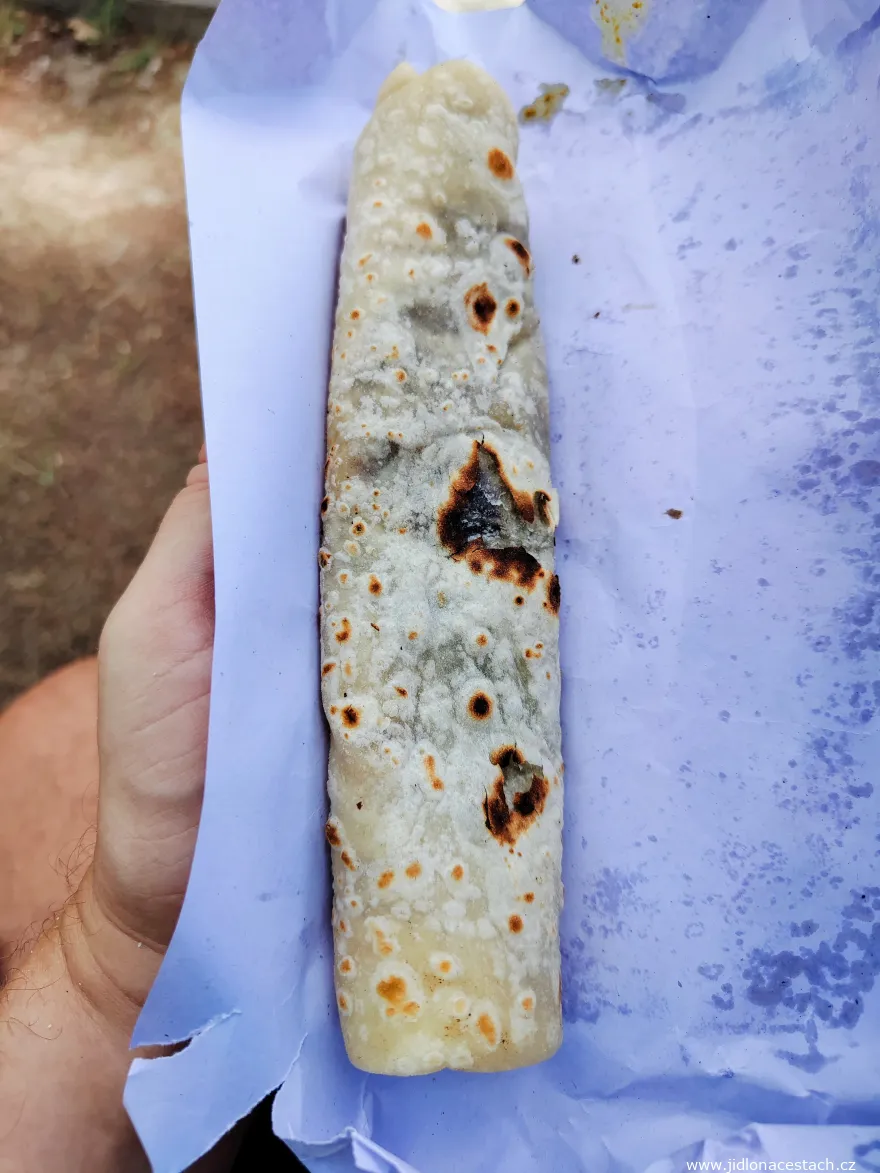
I stood in line for the lamb farata, the most expensive thing on offer. It came rolled into a cylinder and wrapped in paper, with browned spots blistered across the dough, and I ate it standing a few steps from the window. The flatbread was soft and faintly greasy from the ghee, the browned spots had a proper crunch, and the lamb filling had the thickness and the kick of a curry; if that isn't enough for you, they will add chili paste. The speed of it took nothing away from the flavor - they simply know how to season a filling here. The priciest thing from the best-rated window on the beach: 50 MUR (1 EUR).
Farata Aka Vinoda


