French Cheeses
Not even France knows how many kinds of cheese it has. There's a line that keeps getting passed around in which Charles de Gaulle grumbles that you can't govern a country with 246 kinds of cheese - except the same quote circulates with 258, 365 and 600, and French fact-checking sites doubt the general ever said it at all. The French can't agree on the number in their own joke, let alone on the real one. What has always fascinated me about cheese is how wildly different the results can be from a single ingredient - from creamy little pillows to pungent blues. In French cuisine cheese even gets a course of its own between the main course and dessert - and there are hundreds of kinds to pick from.
Official labels bring at least a little order to the chaos: more than forty French cheeses carry the AOP, France's protected designation of origin, and shops sort them into families by paste and rind - fresh, bloomy-rind, washed-rind, blue, pressed. Working through a selection like that would take years, which is why I am building this guide piece by piece - alongside the finished Swiss and Spanish cheeses, the French one will grow bit by bit. And I'm starting with a cheese most visitors to France walk straight past.
Pérail: The Sheep's Milk Cheese in Roquefort's Shadow
Pérail is a soft sheep's milk cheese from the southern Aveyron - a disc that barely fills your palm, with a thin white rind like a camembert and a paste that makes a run for it at room temperature. The name is Occitan: peralh simply means "cheese" - in the Grands Causses, apparently, there was no need to specify which one. It turns up in the records of Sylvanès Abbey as early as the 12th century, but for most of its history it was a cheese made from what was left: the women on the farms made it from the milk of Lacaune ewes at the end of the milking season, when the roquefort dairies stopped buying it. The same region, incidentally, beats cheese into mashed potato as well and calls it aligot.
Official recognition was slow in coming, too. Producers had been after the prestigious AOP since 1994, but small farm dairies and industrial creameries spent a quarter of a century failing to agree on one set of rules, so Pérail had to wait until May 26, 2025 for the more modest European IGP mark. Its neighbor roquefort, made from the milk of the same ewes, has had its seal since 1925 - a full century longer. Today Pérail is made by Papillon as well, one of the historic roquefort producers: the cheese of leftovers is now made by the very people who had the milk left over in the first place. It ages for only seven to ten days and is eaten young: on its own or on a cheese board, ideally with a glass of French wine.
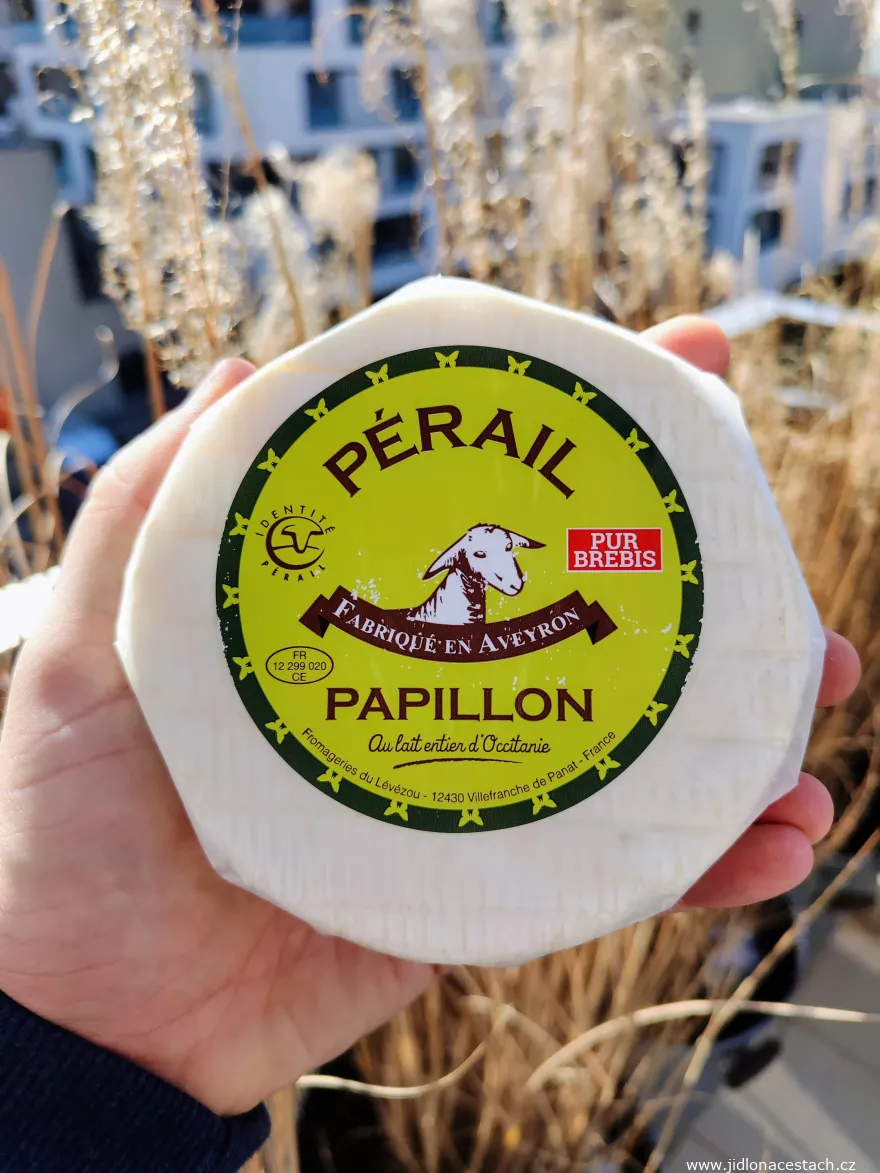
Where I Got My Pérail
I didn't have to drive to the Aveyron for it. You can reliably buy Pérail in Czechia too - I get mine at Makro, the wholesale store, where a 150 g pack runs about 5 EUR. The rind is thin and velvety, the paste creamy and running by the time it reaches room temperature, the flavor milky and gentle, only lightly salted, with a discreet sheepy note instead of the sharpness everyone expects from sheep's cheese. Pérail waited thirty-one years for its European stamp. It reached a Czech Makro long before that.
(This article is just a start - I'll be adding more French cheeses as I go.)


