Aligot: French Mashed Potatoes with Cheese
Mashed potato sits at the top of my list of side dishes and I make no apologies for it. I cook almost every day and I know how many things can go wrong with something that simple: potatoes boiled to mush, cold milk, lumps, butter added too timidly. So when I was reading up on what people eat around Toulouse before a trip there and came across a mash that takes nearly half a kilo of cheese to a kilo of potatoes, I knew what I'd be hunting for before I got to the end of the sentence.
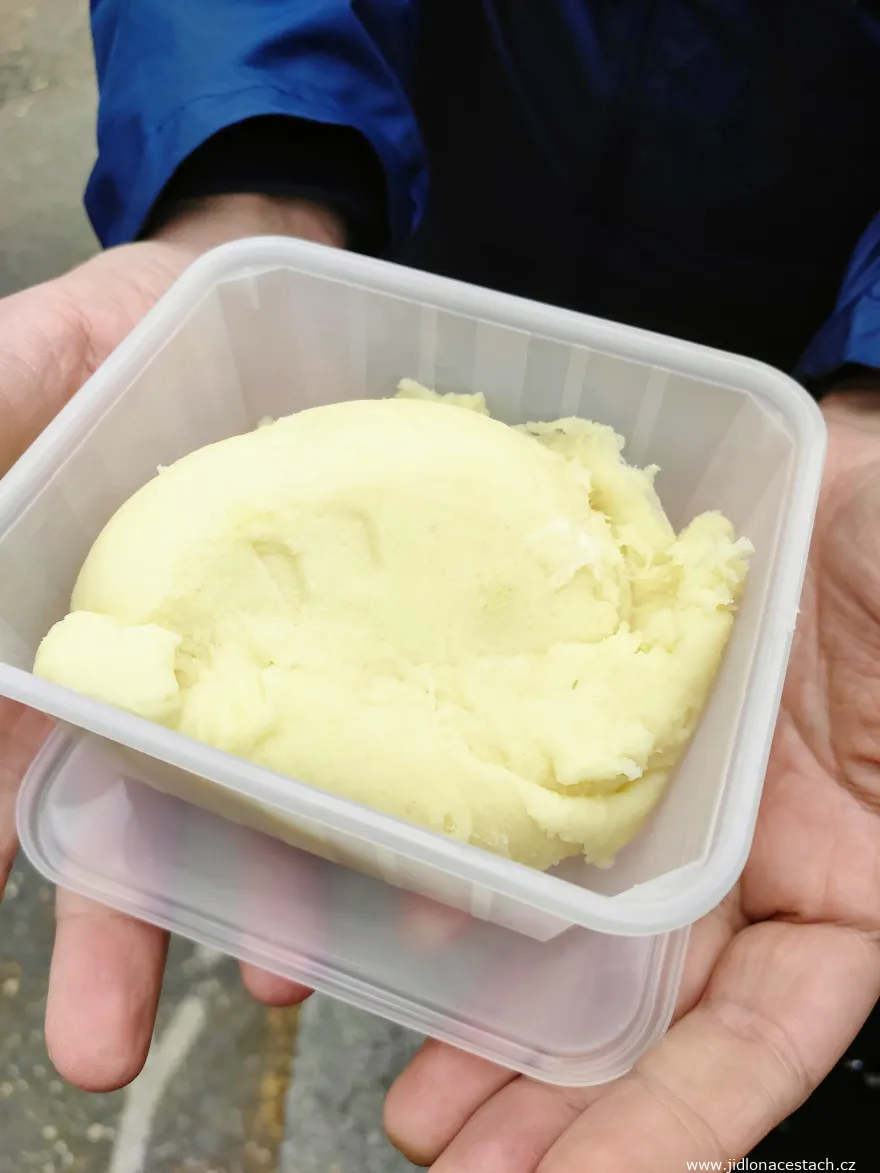
Aligot is mashed potato whipped with fresh cheese, butter and cream and worked until it pulls into long strands - a country dish from the Aubrac plateau that is now part of French cuisine everywhere. It looks like mash and behaves like melted cheese.
Whose Aligot It Is and Where the Name Came From
The Aubrac is a high pasture straddling three departments - Aveyron, Cantal and Lozère - and all three claim aligot for themselves: where their borders meet stands the Cross of the Three Bishops, and the argument over whose mash it is has ended up in a joint campaign for a shared protected designation, since nothing else would ever settle it. It began as the food of one mountain region and today the whole of France knows it: in the 19th century thousands of Auvergnats went to Paris to sell coal and wine, their cafés turned into bistros, and aligot was being stretched in them long before anyone thought to call it a regional specialty.
The name comes with two birth certificates. The tourist version has pilgrims bound for Santiago begging the monks for "aliquid", Latin for something to eat, and that something supposedly became aligot. The dictionary is more sober about it: the word comes from the Occitan aligouot, first recorded in 1846, and is related to the old French haricot in its sense of a stew of leftovers, not a bean. A mash of leftovers sounds less noble than a gift to pilgrims, but it fits a dish that was born in mountain dairies.
Bread First, Potatoes Later
Guidebooks will tell you that the monks of the Aubrac abbey were cooking aligot as early as the 12th century. They were cooking something, just not this. What they served the pilgrims was a soup of broth, bread and fresh cheese, and its country cousin patranque is still made with bread in Cantal to this day. Potatoes only entered the recipe in the 19th century, when the grain harvest failed up in the mountains, and dictionaries first record the word in its present-day meaning in 1879. Not a single period document shows the monks standing over that pot; the legend holds because it's a lovely one. Anyone dating aligot to the Middle Ages is dating the soup.
Fresh Cheese, a Long Strand and a Sausage Alongside
The lead role belongs to cheese, and to cheese that is barely cheese yet: tomme fraîche, a fresh curd two to five days old, protected since 2023 by the geographical indication Tomme fraîche de l'Aubrac. Aged cheese melts into the hot mash and just sits there; fresh curd stretches. That's why the mash is worked over a low flame in figure eights until the spoon, lifted out, trails one long unbroken rope; three hundred to five hundred grams of cheese go into a kilo of potatoes. Butter, cream and a whisper of garlic make the mash, the cheese makes the aligot. The base is the very same mash we put next to a schnitzel back home, only with half a kilo of cheese melted into it, and nobody is apologizing for that. Reach for a stick blender at home and you'll get glue: broken-down starch stretches too, but in an entirely different way.
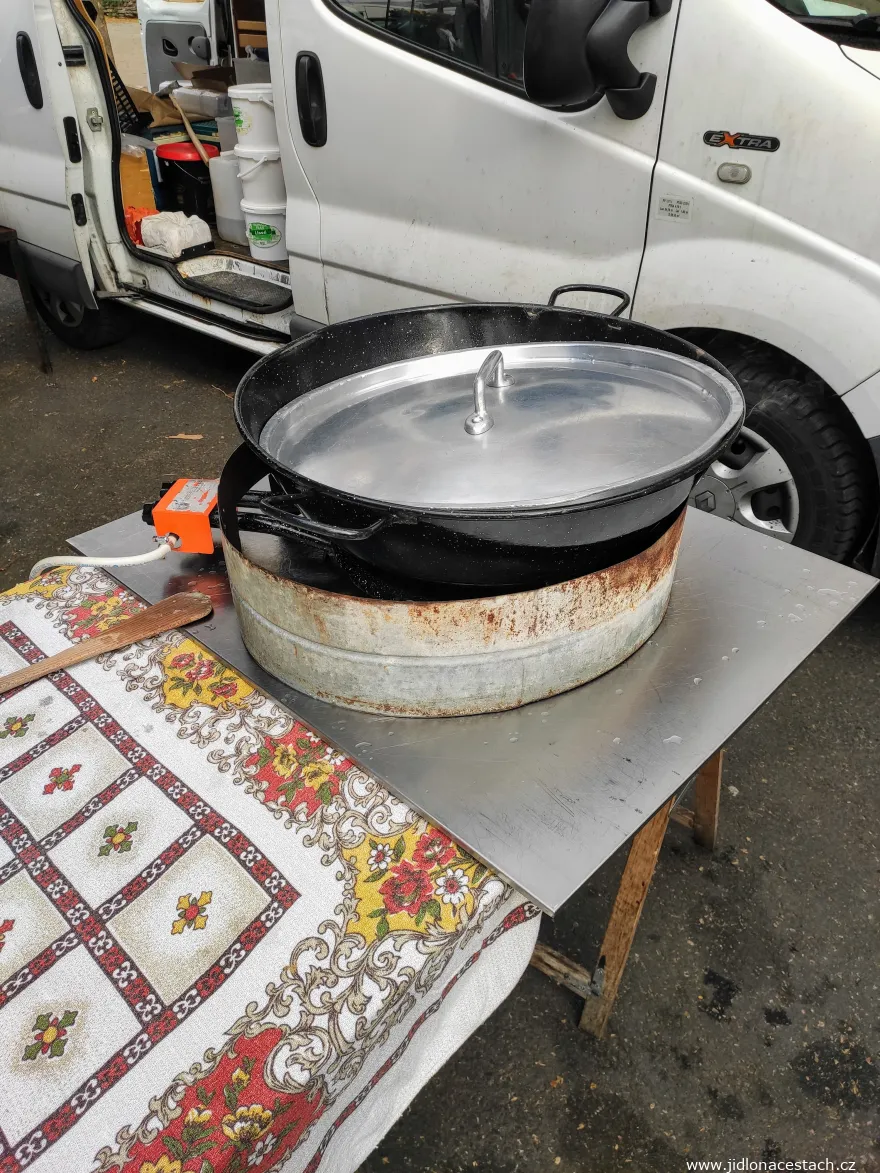
It's eaten as a main course, or as a side dish that refuses to behave like one: the classic is aligot-saucisse with Toulouse sausage, or with roast meat. At village fêtes it's stirred in huge cauldrons and the cook raises the spoon as high as he can, because the length of the strand is the measure of quality and of pride alike. It can only be reheated slowly in a pot with constant stirring, so saving a box for tomorrow is a bad idea - aligot is food for right now. And if you're after it in Toulouse, you don't have to head for the mountains: producers from Aveyron bring it down to the markets here in their cauldrons.
A Stall from Rodez at the Saint-Aubin Market
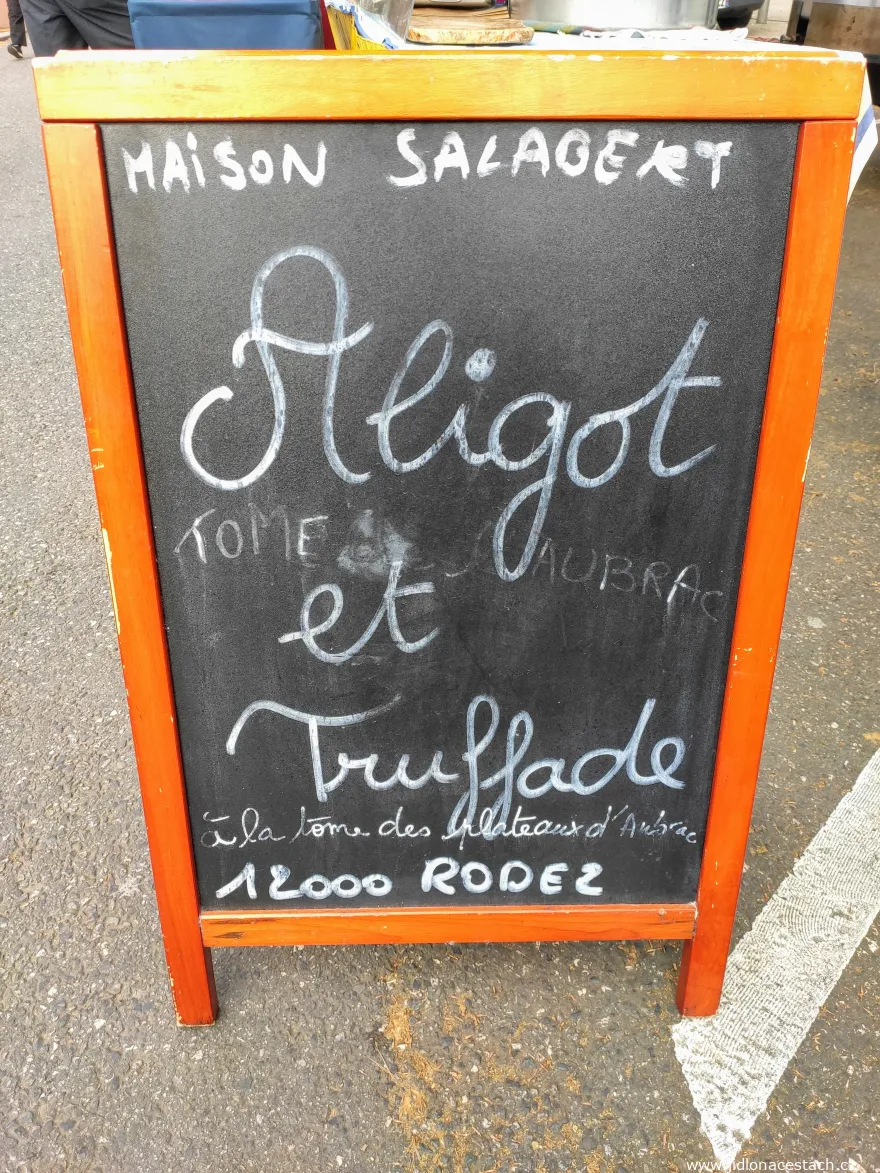
I bought my aligot in Toulouse at the Sunday Saint-Aubin market, from a stall with a black cauldron and a sign chalked up: Maison Salagert, Aligot et Truffade, tomme from the Aubrac plateau, 12000 Rodez. So the stall had travelled down from Aveyron and had both aligot and truffade on offer; I took the aligot, in the version flavored with truffle that the Aubrac makes for feast days and for winter. A large portion in a takeaway box cost 5.40 EUR. The mash was dense and held its shape, trailed lazy strands behind the fork as I lifted it, and tasted mostly of milk and fresh cheese, with butter in the background and garlic as no more than a suspicion; the truffle lay over it as an earthy aroma that only arrived once I'd swallowed. Since that Sunday, two mashes have shared the top spot on my list of side dishes.


