Rugelach: The Chocolate Crescents of Ashkenazi Cooking
In the word rugelach I can hear the Czech rohlík, the crescent-shaped roll we buy by the bagful back home. I assumed that was just the private fancy of a man standing outside a bakery with his mouth full. Except the dictionaries half agree with me: the Yiddish root rog comes from the Polish róg, a horn, and the same Slavic root sits inside our rohlík. Cousins who have never heard of each other.
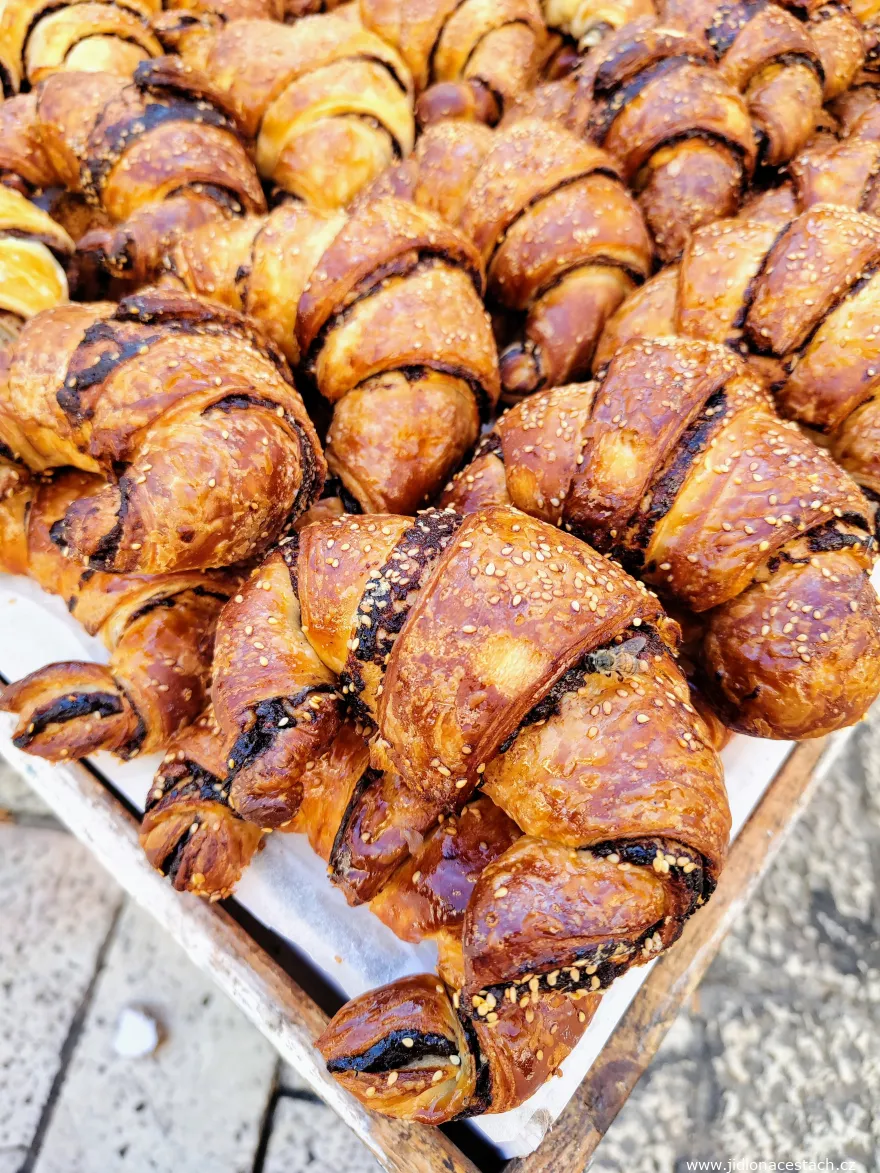
Rugelach (Hebrew: רוגלך) are small pastries of Israeli cuisine with Ashkenazi roots: a triangle of yeasted dough is spread with a filling, most often chocolate, and rolled up from the wide side to the tip into a little crescent. A plural, by the way - a single piece is a rugele, but nobody in Israel uses that, because nobody buys a single piece.
From Poland to Jerusalem and Newark
English recipe sites like to explain that rugelach means "royal". Hebrew linguists know nothing of the sort - what they do point to is the horn: the Yiddish diminutive rogele, rogelech in the plural, simply means "little horns". Rugelach are shared Ashkenazi heritage: they were born in Poland and traveled to Israel and to America with immigrants. Then the two ends of that journey went their separate ways. Israel stuck with the heavy yeasted dough, the same one that goes into chocolate babka; America came up with a quicker cream cheese shortcrust in the 1940s, so today the New York and the Jerusalem rugelach share a name and a shape. The bite, though, no longer does. Just watch out for the Polish namesake: today's rogalik is a soft bun with plum butter, and the Poznań rogal świętomarciński has a pedigree of its own and shares nothing with rugelach but the horn in the name.
Why It Isn't a Jewish Croissant
Israeli media call it the "Jewish chocolate croissant" and tourists are happy to believe it, because the shape fits. The history doesn't. The story of bakers who, after the siege of Vienna, baked a pastry shaped like the crescent on the enemy flag is told about the Austrian kipferl, about Russian crescent cookies and about the croissant too, and every region has bent it to fit its own horn; the Austrian pastry is on record as far back as the Middle Ages, while the croissant only appeared in the nineteenth century. Rugelach share no ancestor with the croissant, only a silhouette. Nobody can put a date on the first rugelach; Polish sites talk about two hundred years on Warsaw market stalls and get no further than oral tradition. For a pastry that lasts three bites that seems fair enough: nobody recorded in the chronicles what people ate on the way back from the market.
Yeasted Dough, Chocolate and Margarine Nobody Minds
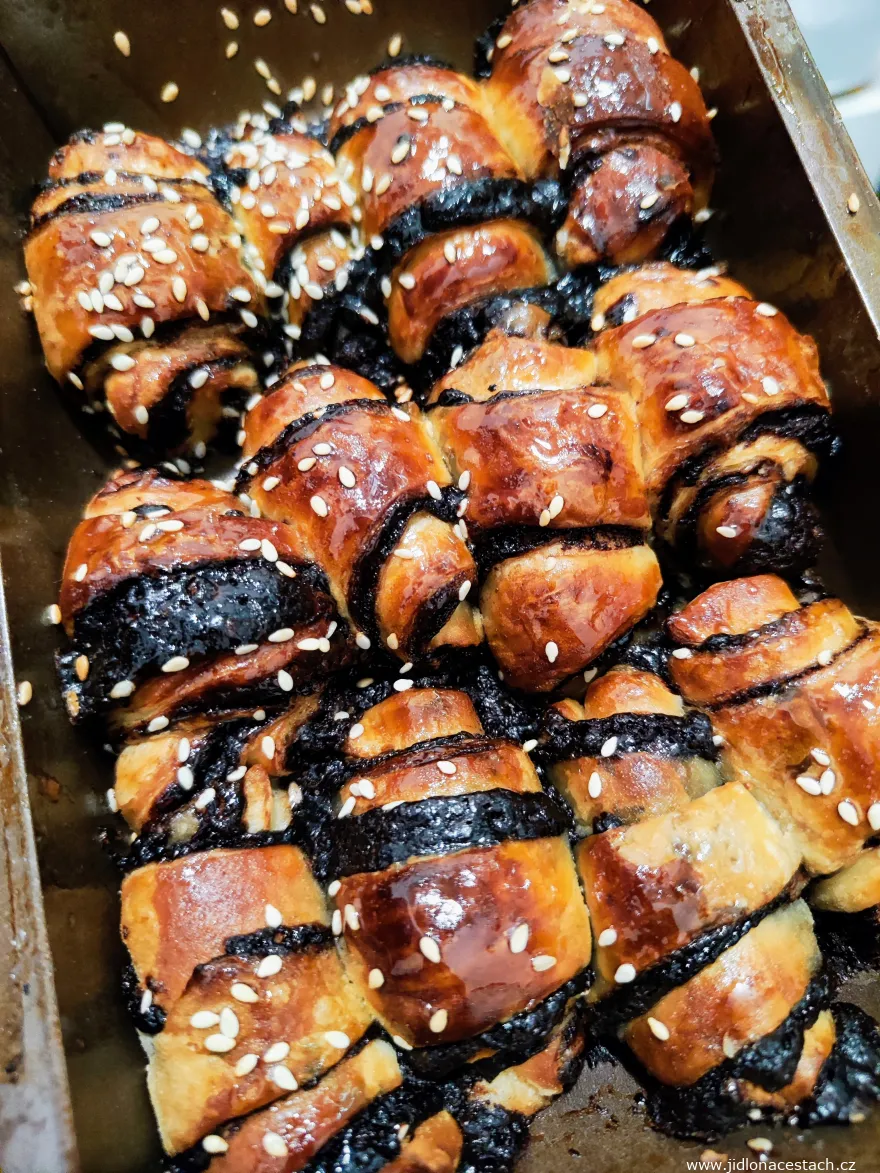
In Israel rugelach are baked from an enriched yeasted dough that stays dense once it comes out of the oven, which is why it can take a thick chocolate spread from the baker and a pour of syrup on top after baking. The ratio of dough to chocolate is that of a marbled bundt cake, only rolled into a pocket you can carry in one hand. Now, about that margarine: the most famous chocolate rugelach in the country, from the Marzipan bakery at the Machaneh Yehudah market in Jerusalem, are parve, meaning dairy-free. Kosher rules don't allow anything dairy after meat, so a bakery that wants to sell in the afternoon swaps butter for margarine. The tourist convinced he is sinning with butter is in fact eating a pastry an Orthodox diner can happily have after shawarma.
Rugelach have no holiday of their own. Unlike Hanukkah sufganiyot or Shabbat challah, they are baked all year round and eaten whenever, with coffee or straight from the bag on the way home from the market, out of the pack of twelve that bakeries treat as the default. You can tell how fresh they are just by touching them: good rugelach are still warm at the bakery, because they're baked in batches all day. In recent years a pistachio craze has swept the country, and the pistachio rugelach from one stall at Machaneh Yehudah have become a hit that people drive across the country for, or so the owners say. Chocolate has survived it just fine. It was being baked here long before pistachios ever became trendy.
Twelve Mini Rugelach Straight from the Oven
I went for the mini version from one of the small bakeries, where the baker had just pulled them out of the oven. The pastry was dense and filling, the chocolate wasn't arguing with the dough and the sesame on top added a salty full stop; warm off the tray, the little crescent melted on my tongue before I could chew it. Two or three bites a piece. A pack of twelve cost 15 ILS (4 EUR). I bought them as provisions for the road. Or rather, that's how I justified the purchase at the till.


