Lahmajun: The Armenian Pizza with Roots in Aleppo
Armenian pizza has been around in Armenia for about as long as the Beatles. The oldest recipe for it is seven centuries older than that, only nobody wrote it in Armenian: it comes from Aleppo. Armenians make no secret of this - the Armenian Wikipedia calls the dish "Armenian and Arab pizza" in a single sentence and leaves you to take your pick.
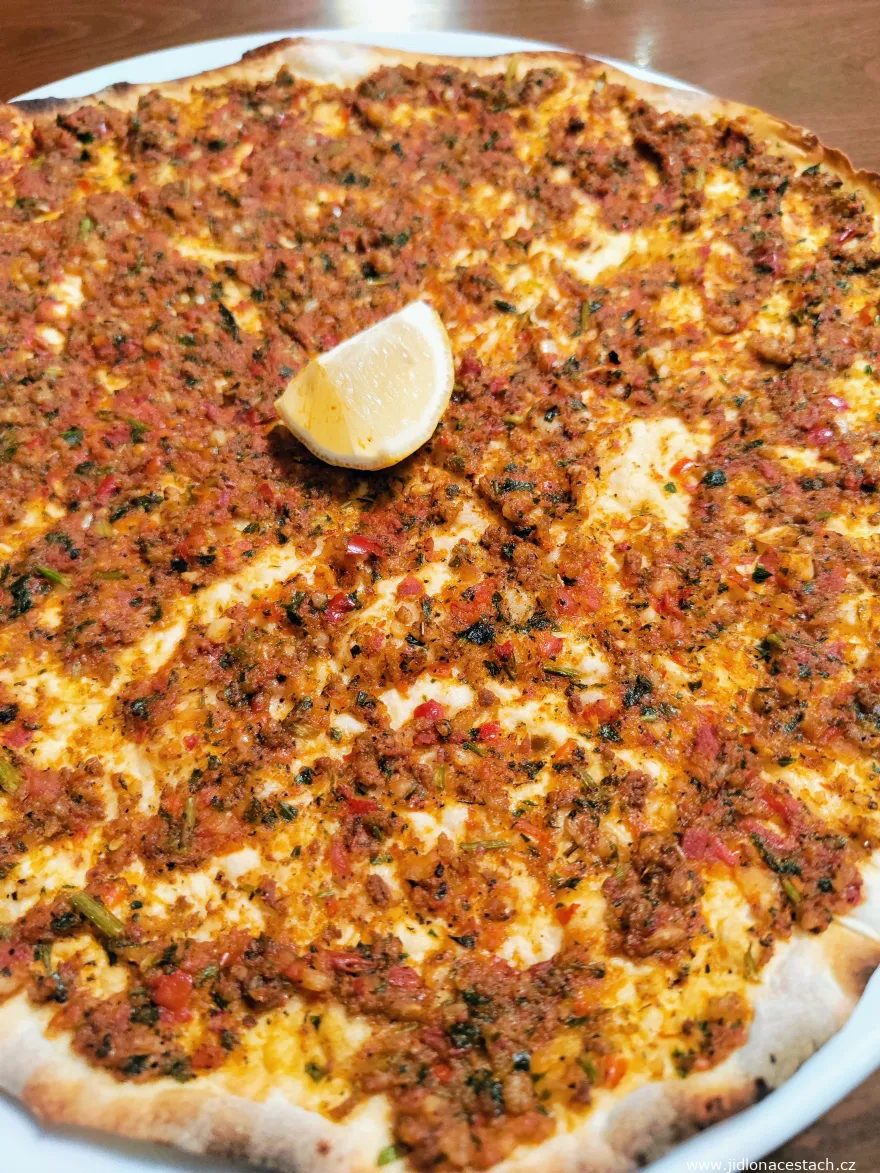
Lahmajun (Armenian լահմաջուն, on the street more often լահմաջո, lahmajo) is a thin round flatbread spread with a raw mix of ground meat, tomato, bell pepper and onion and baked in fierce heat until crisp - an everyday fast-food staple of Armenian cuisine that isn't Armenian in origin.

Meat and Dough the Whole Region Claims as Its Own
The name is Arabic and says exactly what lands on the plate: lahm is meat, ajin is dough. Turkish made it lahmacun, Armenian lahmajun, and in Yerevan the final n dropped away, leaving lahmajo, so the dictionary and the shop sign now differ by one letter. The flatbread is cooked across the whole belt from southeastern Turkey through northern Syria to Lebanon and Israel: Turkish cuisine knows it as lahmacun (in Gaziantep with pistachios and pomegranate molasses), Syria and Lebanon as lahm bi ajin, and in Israel it sells under a Hebrew spelling of the same word. Armenian lahmajun doesn't come from the Turkish one - both descend from the same Aleppo original, and I couldn't find a single source that tells them apart by shape or dough. The one difference I'm sure of: in Yerevan they cheerfully sell it with cheese, which has no place on a Turkish lahmacun. Turkish pide is built differently - a leavened boat with raised edges, just as often with cheese - and it comes closer to pizza than lahmajun does.
From Aleppo to Yerevan in Seven Centuries
For once the history comes with firm dates. A 13th-century Aleppo cookbook describes meat spread over a thin sheet of dough and baked in an oven; the Turkish word lahmacun didn't make it into a dictionary until 1955. The flatbread reached Armenia in the 1960s with Armenians coming back to the Soviet republic from Aleppo in Syria, and their descendants brought a second wave when they fled that same city ahead of the Syrian war. One of them opened a place in central Yerevan called simply Lahmajo Kajc, and the local press wrote that Syrian Armenians had added spice to Yerevan's lahmajun. Nobody knows who first baked one in Yerevan - even so, that is an unusually complete family tree for a dish that carries itself like a timeless classic. The argument over nationality plays out just as it does with other dishes in the region: when Kim Kardashian captioned a photo of lahmacun "Armenian pizza" in 2020, Turkish singers hit back, a Turkish food historian drily pointed out that the flatbread is Middle Eastern and belongs to everyone, and the row rolled on.
Why Cheese Stays Off Lahmajun and How to Order It
The whole technique rests on one thing: raw ground meat, onion, tomato, bell pepper, parsley and black pepper are blended almost smooth and spread over the dough the way we spread a savory paste on bread for an afternoon snack back home in Czechia, except that here somebody then slides the bread into the oven. In that heat the meat cooks through in a couple of minutes and its juices run into the dough, which stays thin and crisp because it gets no time to rise. Cheese traditionally has no place here - the base would go soft under it and lahmajun would turn into an ordinary pizza; according to the Armenian Wikipedia a proper one should weigh 150 to 170 grams, a figure every website since has copied from it. Recipes disagree about whether matsun yogurt belongs in the dough: some cooks add it, most make do with flour, water, salt and yeast.
You eat lahmajun hot and with your hands, folded or rolled, at a bakery counter as readily as in a restaurant, where it arrives on a plate with a wedge of lemon. In Yerevan you'll find it at dedicated takeaway places and at ordinary restaurants, and almost everywhere the classic comes with a panrov version alongside it, the one with cheese, which defies tradition and holds its place on most menus anyway. To wash it down there's tan, the salty yogurt drink that goes with most fatty food in Armenia.
Paper-Thin Dough at Anteb Restaurant
I ate lahmajun in Yerevan at Anteb Restaurant (see Where to Eat in Yerevan), a place that serves the food of the Gaziantep region in Turkey and where I had already fallen for mantapur and gouvaj. The dough was paper-thin and perfectly crisp - it snapped rather than bent. The topping was a thin spiced film rather than a layer of meat, with parsley and chili flakes on top and lemon whose acidity cut through the fat of the meat. A single lahmajun cost 900 AMD (2.20 EUR). Kim Kardashian got an international row out of a photo of this flatbread. All I got was the bill.


