Gouvaj: Lamb Baked Under a Bread Lid
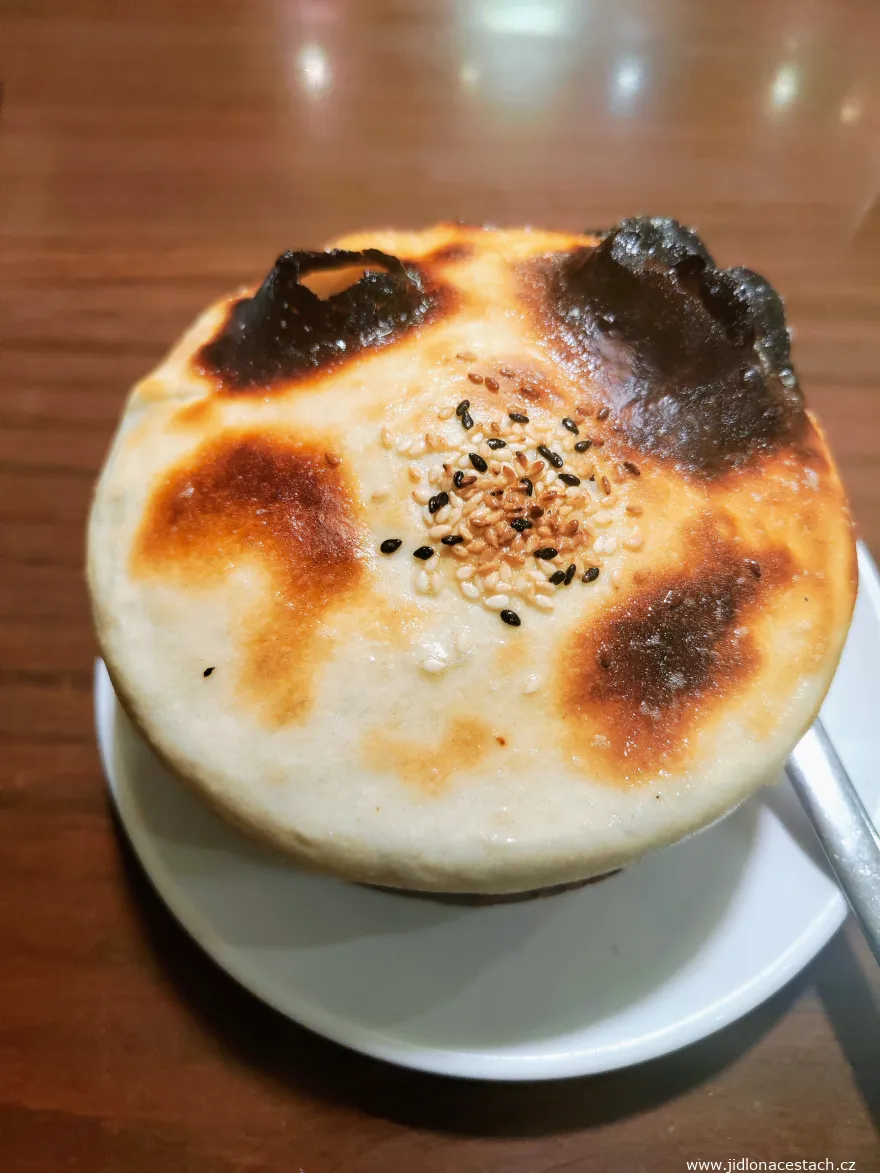
There was no meat in sight on the plate that landed on my table at Anteb Restaurant in Yerevan. Just a white dome of bread with a scattering of sesame and nigella in the middle, charred black around the edges, and not a hint of what was underneath. Only when my spoon broke through the crust did the steam come pouring out - tomatoes, peppers and lamb.
Gouvaj is lamb and vegetables baked slowly in a ceramic dish that is sealed with a round of bread dough instead of a lid; it comes from the strand of Armenian cooking that arrived from what is now Turkey. The lid doubles as the side dish.
Why Gouvaj Is Named After a Pot
The name belongs to the pot, not to the dish. Turkish güveç is an earthenware pot with a lid, and only secondarily whatever gets baked in it - the word is recorded as early as the 11th century in the dictionary of Mahmud al-Kashgari, and from Ottoman kitchens it spread in every direction. I couldn't find the Armenian spelling of gouvaj in a single dictionary or recipe - the name lives on a menu, not in a textbook, and diners spell it two different ways in their reviews. Its relatives are more forthcoming: Turkish cooking makes güveç kapama, the same meat in a pot covered with a sheet of dough, Bulgarian has gjuveč and the rest of the Balkans đuveč, which happily skip the meat and take rice instead, with Macedonian baked turli tava as a close cousin. Georgian chanakhi goes the same way in individual clay pots, only with eggplant and potatoes and without a lid you could eat. So gouvaj is a dish shared from the Balkans to the Caucasus; what is Armenian about it is mainly the address where you eat it today.
How the Turkish Pot Reached Yerevan
The trail leads to Gaziantep. Anteb Restaurant, where you get gouvaj in Yerevan, cooks Western Armenian food and takes its name from Aintab, as I already knew from their mantapur; more telling than the sign over the door, though, is what Gaziantep still does today. Meat and vegetables get layered into an earthenware güveç there and sent into a stone oven, and that is the most likely cradle of gouvaj - not a mountain village in Armenia, but the cooking of a city that now sits behind a closed border. I have no hard proof - no date, no recipe from Aintab; I have the name of the pot, the name of the city and a map, and the three line up almost suspiciously well.

A Lid You Can Eat
The whole trick is that the lid bakes along with the food. Lamb, ideally shoulder, goes into a ceramic dish with onion, garlic, peppers and tomato paste and cooks until it is almost tender, then a sheet of bread dough is stretched over the dish and it all goes into the oven once more. The dough keeps the steam in, the meat braises underneath in its own juices, and the flatbread drinks up the sauce from below while it takes on a crust up top. The vegetables around the meat depend on the season and the cook: on my plate at Anteb, peppers and tomato took over; elsewhere you get beans, zucchini or okra.
Break the lid from the edge with a spoon, not with your hands - there is steam under there. Gouvaj is at its best the moment it arrives, while the flatbread is still crisp. To drink, go for salty yogurt tan, which cuts through the tomato sauce better than beer does.
Under a Charred Dome at Anteb
I ate lamb gouvaj in Yerevan at Anteb Restaurant (see Where to Eat in Yerevan), where it came to the table with the crust slightly charred. Under the lid the meat had fallen apart into soft threads, held together only by a thick sauce of tomatoes and roasted peppers. The dish cost 3,600 AMD (8.80 EUR).


