Tjvjik: Armenian Fried Liver with Onions
If anyone had told me before the trip that a plate of offal would end up at the top of my Armenian list, I'd have laughed. Armenia has khorovats off the mangal, dolma wrapped in leaves, lavash straight out of the tonir and a whole family of soups that would all deserve that top spot. Then a plate arrived with nothing on it but liver, onions and tomato sauce, and that settled it.
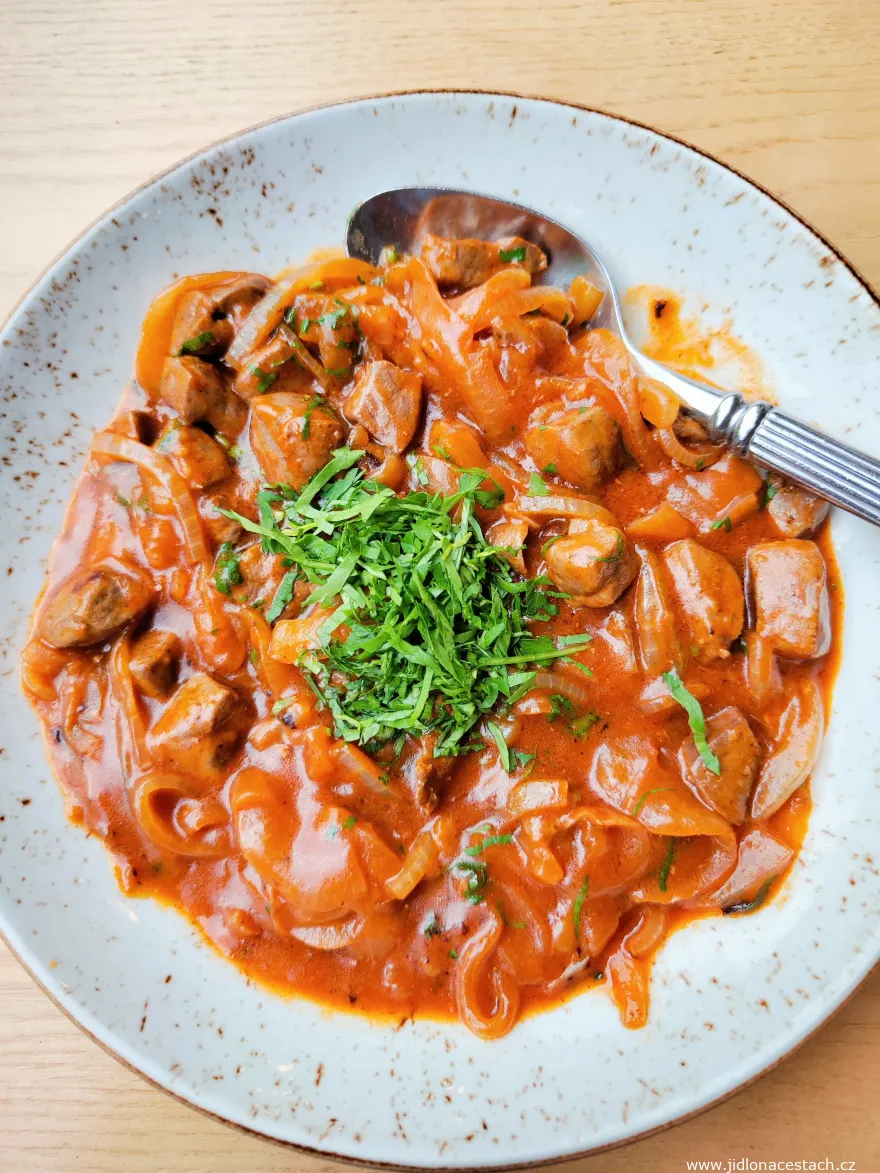
Tjvjik (Armenian: Տժվժիկ) is beef or lamb liver cut into pieces and fried with onions, these days usually stewed in tomato as well, and in Armenian cuisine it's one of the dishes you order without a second thought. The traditional country version throws in lung and sometimes heart; the restaurant one sticks to liver.
What Tjvjik Means and Who Else Fries Liver with Onions
It's pronounced roughly "tzhv-ZHEEK", and in the Latin alphabet you'll come across two spellings: tjvjik from the French convention, where j sounds like the s in "measure", and tzhvzhik from the English one. Both are the same word. The etymology traces it back to the verb tjvjal, to hiss and sputter, plus the diminutive ending -ik, so the dish is named after the noise it makes in the pan. Armenians use that same word for a fidgety child. Whatever wriggles gets a name - in the pan and at the table. The word itself is purely Armenian and the dish behind it is national, not regional. The whole region knows the principle of cheap offal with onions, though, and every cuisine has its own name for it: Georgian cooking makes kuchmachi from chicken livers and hearts with walnuts and pomegranate, the Turkish arnavut ciğeri dusts cubes of liver in flour and piles them onto fried potatoes, and the closest thing to the Armenian plate is the Iranian khorak-e jigar, where tomato joins the liver and onions in exactly the same way. In the Balkans they make teleški džiger, only that one goes on the grill instead of in the pan.
The Dish They Made a Film About in Armenia
Nobody puts a date on the first tjvjik; offal dishes don't make it into the chronicles. There is something about it, though, that few dishes can claim: it has its own film. In 1961 the Hayfilm studio shot a twenty-one-minute comedy called Tjvjik, based on a short story by the writer Atrpet, and the whole plot turns on one piece of beef liver. A well-off neighbor buys it out of pity for his poorer one, so the man can cook himself a tjvjik, and then brags about the good deed for so long that the kindness curdles into farce. It was the last role for the actor Hrachia Nersisyan, and reportedly the studio's first film shot in Western Armenian. Western cooking has since quietly dropped offal from its menus; Armenia wrote a short story about it and then put it on film.
What Goes into Tjvjik and How It's Eaten
The main ingredient is liver, and liver has one weakness: a minute too long turns it to rubber. That's why the onions go into the pan first, to soften and sweeten, and the cubed liver only at the end, just long enough to brown on the outside and stay pink in the middle. A tomato or a spoonful of paste, which almost every recipe adds these days, turns the pan into a sauce: it binds the onions to the liver and gives the dish the sharp edge it needs, without which it would be nothing but greasy and heavy. If you're putting lung and heart into the country version, cook them tender well before the liver goes in. It's fried in oil with butter, salt and pepper, and finished with a scattering of parsley.
Tjvjik is a main course, not a starter; in a restaurant it comes on its own or with mashed potatoes and rice, and you can eat it with a spoon, because there's plenty of sauce. One practical tip when you're ordering: check what's actually in it. Restaurants mostly cook it from plain beef liver, home and country versions throw in lung as well, and if that's not for you, ask before you order. You'll find a chicken version these days too; it's a quick shortcut at home, not an old tradition. And since the name of the dish also suits an unruly child, don't be surprised to hear it from the next table, where nobody is eating liver at all.
My Armenian Number One
I ate tjvjik in Yerevan at Tavern Yerevan Riverside (see Where to Eat in Yerevan), the beef liver version with onions and strained tomatoes. The liver was tender and delicate, with no bitterness and none of that grainy dryness I can't stand; the onions had cooked down almost into a sauce and the tomato held them in a sharp balance, so it ate surprisingly light for what was on the plate. At the same restaurant I also tried a salad of aveluk, wild sorrel, and both were faultless. The portion cost 2,200 AMD (5.20 EUR). People come to Armenia for khorovats and dolma, and I was glad I had both. The top spot, though, stayed with the plate they made a film about.


