Khorovats: Armenian Grilled Meat
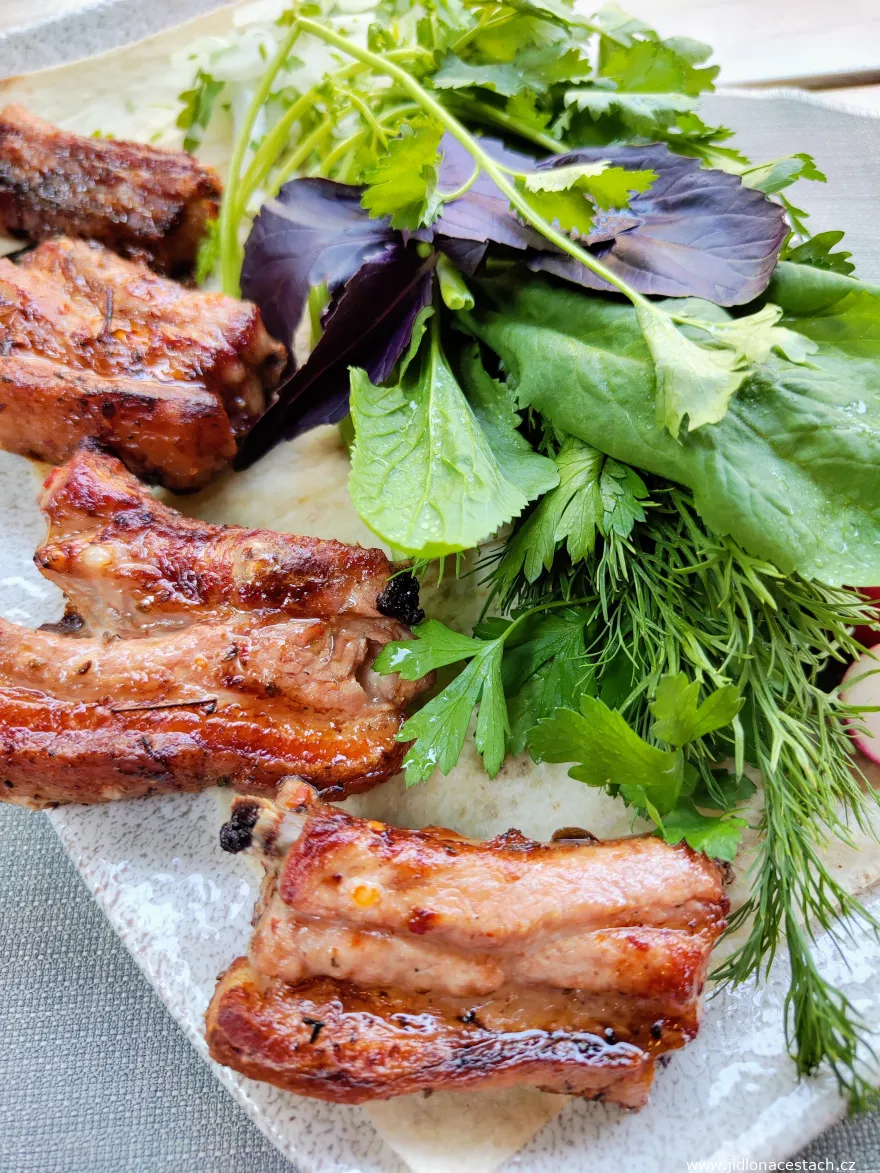
Order the fanciest cut on the menu at an Armenian restaurant, pork tenderloin or beef fillet, and you expect the high point of the evening. I tried it several times and every time it came off the grill dry. Plain ribs, on the other hand, a piece of meat with bone and fat on it, beat anything pricier sitting next to them on the table, every single time.
Khorovats (Armenian: խորոված) is meat cut into chunks, mixed with onion, threaded onto skewers and grilled over charcoal - the dish no celebration in Armenia can do without.
What the Word Khorovats Means and Who Else Grills the Same Way
The word itself is just grammar: khorovats is the past participle of khorovel, to grill over an open fire, so it literally means nothing more than "grilled". That's why in Armenia khorovats doesn't name a particular cut of meat but a method - there's vegetable khorovats too, made of eggplant, pepper and tomato. The dictionary lists a figurative sense as well: khorovats is also someone who has been emotionally crushed - one word for grilled meat and for a broken heart. The technique isn't Armenian, mind you: skewered meat over coals turns up all across the Caucasus. Georgian cuisine has mtsvadi, grilled in Kakheti over vine wood, Azerbaijan has tikə kabab of lamb with sumac and Iranian cuisine its kababs with saffron and onion. What's Armenian is the name, the range of meat (lamb, pork, beef, chicken and offal on one grill) and the bread it's served on.
A Grill With No Date and a Town That Crowned Itself
Anyone hunting for the year khorovats was first mentioned goes home empty-handed. Armenian sources give no dates at all - they describe grilling meat on a spit as a technique as old as fire itself, which is more honest than a legend about some sultan. The one thing you can put a date on is the festival: since 2009 the little town of Akhtala in the north of the country has held an annual khorovats competition, and in 2017 the organizers declared themselves the world capital of grilled meat. Yet khorovats is missing from the official list of Armenian intangible heritage, while lavash has been on the UNESCO list since 2014. So the bread under the meat is officially protected heritage; the meat itself is merely the reason the bread gets baked.
Onion, the Mangal and How Khorovats Is Eaten
Onion is the star of the marinade, chopped and crushed hard enough to give up its juice - salt and spices are only backup. Armenian recipes differ in what else goes in: wine, vinegar, lemon or pomegranate juice, and the meat sits in it anywhere from two hours to a whole day depending on the size of the pieces. It's grilled on a mangal, a tin firebox on legs filled with charcoal, and the word is Arabic, used by Armenians, Azerbaijanis, Georgians, Persians and Turks alike: the neighbors squabble over who owns dolma, but on the grill itself they all settled on one name without an argument. The result is a lot like a weekend barbecue in the garden back home, only without the sausages and without the spice mix out of a sachet - onion, fire and a piece of meat on the bone have to carry it alone.
The cooked meat is pulled off the skewers straight onto a sheet of lavash, a handful of fresh herbs, raw onion and grilled vegetables come to the table with it, and you eat right away - the juices are meant to stay in the meat, not on the plate. Khorovats is celebration food: no wedding, christening or family gathering in the garden happens without it. Pork usually turns up in three forms - "soft" meat, ribs and pieces called "fingers" - and that choice makes or breaks the meal. To see grilling on a grand scale in Yerevan, head for Proshyan Street, known as Barbecue Street for the sheer number of grill restaurants; and what you drink with fatty meat is tan, the salty yogurt drink.

Ribs at the Lavash Restaurant
The best khorovats I ever ate was in Yerevan, at the Lavash Restaurant (see Where to Eat in Yerevan), and it was pork ribs. A crust off the coals, and underneath it meat that fell off the bone on its own, with fat rendered just far enough to keep the rib juicy without turning it greasy; the onion from the marinade came through sweet, the smoke only faintly, and it needed nothing else. The portion cost 4,200 AMD (10 EUR) and of everything I ate off a grill in Armenia, that was the best. I tried the tenderloin and the fillet elsewhere and both came out dry. The bone the cook left in the meat did more for the flavor than the whole marinade.


