Voloran: Fried Eggplant Rolls with a Vegetable Filling
The word voloran does exist in the Armenian dictionary. It just doesn't mean anything you can eat: it's a bend, a curve in the road, a meander in a river. It comes from the verb ոլորել, to twist and to coil, and whoever put this item on the menu was describing neither the taste nor the origin, but the movement of the hand that makes it.
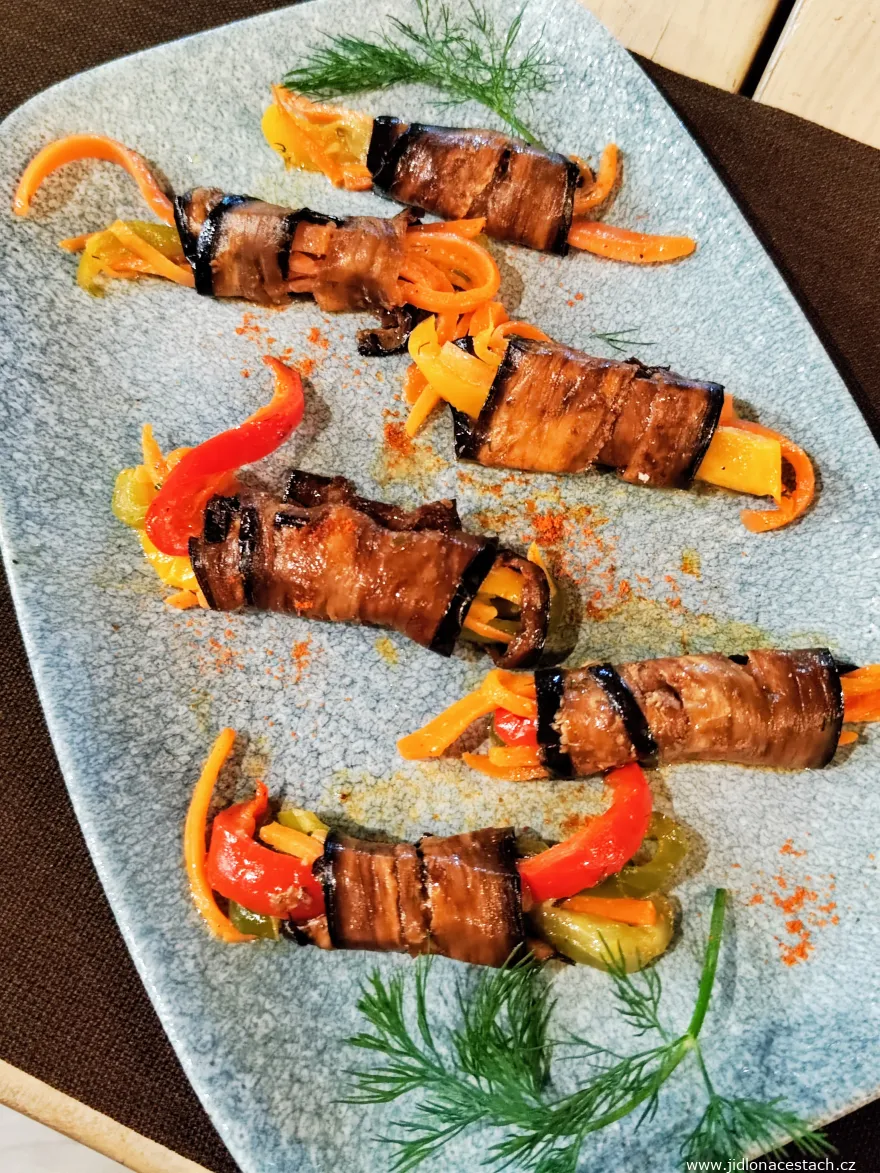
Voloran (Armenian: ոլորան) are eggplant rolls: thin slices of eggplant fried until soft and rolled around a mixture of sauteed carrot, bell pepper, onion and tomato - a cold appetizer that Armenian cuisine puts on the table next to the cheeses and the herbs.
Who Voloran Belongs To and Where It Gets Rolled
You won't find it under that name in Armenian cookbooks. In its entry on the eggplant, the Armenian Wikipedia admits that Armenian cuisine has no names of its own for eggplant dishes, and recipes for the same thing simply go by smbukov rulet, eggplant roll, with a Russian word in the middle. That is more honest than any legend: a roll of fried eggplant is a format shared by the whole South Caucasus and the former Soviet Union, not an Armenian specialty. The most famous version belongs to Georgian cuisine - badrijani with a paste of walnuts and garlic, a dish so firmly Georgian that even Turkish recipe sites file it under the heading "Georgian appetizer." Turkish cuisine fills its patlıcan sarma with ground meat, Azerbaijan has badımcan ruleti with mayonnaise, and in Georgia you can also buy a vegetable version with bell pepper and pomegranate. So the carrot and pepper filling has no homeland. It only has the cook who has just rolled it.
A Roll Made from Whatever Was in the House
Look for a date on this dish and the most you'll find is a shortage. A Russian cooking site puts the cheese version of eggplant rolls at roughly the 1980s: walnuts for the Georgian badrijani were impossible to come by in the late Soviet Union, so home cooks swapped them for cheese, carrot or whatever was left in the cupboard. Nobody puts a date on the vegetable version, so I won't either. It's a record of what the shops had rather than something handed down from anyone's ancestors. It tells you nothing about the taste. It only tells you how much an eggplant can take.
How an Eggplant Learns to Bend
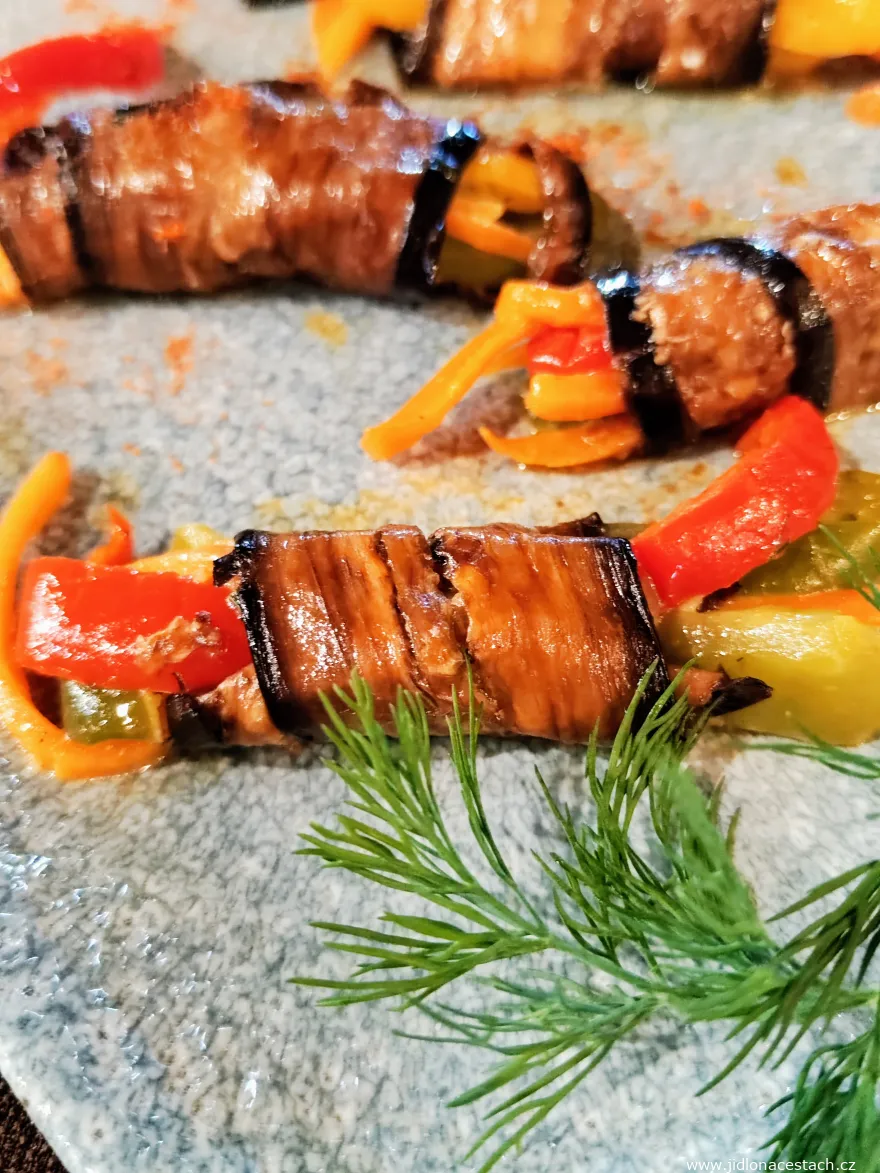
The main ingredient is eggplant, which on its own is nothing you'd want to eat. Cut lengthwise into slices, it first sits for half an hour in salted water to give up its bitterness and stop soaking up oil like a sponge; only then does it go into the pan, where it browns and softens enough to be rolled without cracking. The filling is fried separately and only briefly - the carrot and the pepper, cut into long thin strips, are meant to stay al dente, with the onion and the tomato there just to hold everything together. After that it's only a matter of folding the slice over the vegetables, rolling it up and scattering dill on top.
Voloran is a cold appetizer, so it turns up at the moment when the table hasn't decided anything yet: next to the cheeses, the fresh herbs and the bread, while the kitchen is still making up its mind about the meat. Order it as your only course and you'll leave the table hungry - it's a light opening, and you follow it with something like tolma or grilled vegetable khorovats, where the same eggplant shows what it can do over coals. It's also a dish that lets a vegan order from an Armenian menu without explaining anything or leaving anything out: oil, vegetables, salt and dill, and that's the whole list.
Voloran on the Table at Lavash
I ate it in Yerevan, at Lavash Restaurant (see Where to Eat in Yerevan), where it came on a long plate, six rolls side by side with a sprig of dill on each. The eggplant was soft and glossy, the filling stayed al dente - the carrot and the pepper still crunched when I bit into them - and the combination of eggplant, carrot and pepper worked perfectly in a dish that simple. The dish cost 2,200 AMD (5.20 EUR). For six bends on one plate, that was the cheapest stretch of road I drove in Armenia.


