Ajika: A Hot Sauce from the Caucasus
In Chișinău they brought it to me without my asking: a little extra bowl, nudged toward the meat as matter-of-factly as a bread basket arrives anywhere else. Nothing about that bowl warned me it was the sharpest thing on the table. Ajika (in Romanian: adjică) is a hot sauce made from tomatoes, peppers and garlic and preserved in jars - a Soviet-era dip with a Caucasian name, eaten across the whole former USSR; Moldovan cuisine is just one of many that have adopted it as their own. Except here, "hot" means a lot more than you'd expect from a side served in a little bowl.

A Name That Means Salt
Moldova didn't come up with the word ajika - it's Abkhaz, and it simply means salt. The original paste was called apyrpyl-jika, "pepper salt": hot peppers, garlic, coriander, fenugreek and a handful of real salt, ground raw on a stone into a smooth, fiery mass. Its home is Abkhazia and neighboring Samegrelo (Mingrelia) in the west of Georgia - tomatoes never belonged in it. The Romanian spelling adjică just writes the same word differently; it's still pronounced ajika.
How the Tomatoes Got into the Salt
The tomatoes and sweet peppers were the work of Soviet households: cheap vegetables from the garden, a meat grinder and the need to save summer in jars turned a Caucasian seasoning into a winter staple. No source pins down exactly when that happened; all that's certain is that the original never needed tomatoes. In Moldova, cooked "ajika for the winter" has taken root so thoroughly that local websites list it among traditional Moldovan dishes; Romanian recipes are careful to mention where it came from. It reached Romania mainly through recipe writers from Bessarabia. Georgia, meanwhile, added both "Abkhazian salt" and Mingrelian ajika to its national list of intangible cultural heritage in 2018. Moldova has no listing of any kind - just pantries full of jars, where every autumn tomatoes turn into salt.
On a Moldovan shelf, though, ajika sits among cousins that are easy to mix it up with. Romanian zacuscă smells of roasted eggplant and peppers and has no interest in burning you, Bulgarian lutenica is a mild spread of roasted peppers and tomatoes, and Balkan ajvar does without tomatoes altogether. Ajika is the only one in the family that doesn't roast its ingredients, and the only one where heat is a requirement rather than an accident. One Romanian recipe site puts it perfectly: roast your Georgian ajika and you've got zacuscă.
An Autumn Ritual with a Meat Grinder
The Moldovan version only looks simple. Tomatoes, kapia peppers, carrots and often apples too go through a meat grinder and then simmer over low heat for one to three hours until the mixture thickens; many recipes hold back the garlic and hot peppers until near the end. It's the same autumn canning that anyone who grew up in Czechia knows from their grandmother's pickles: the hot jars get wrapped in a blanket and left until morning. Heat is a family matter - one home cook makes her ajika so mild she spreads it on bread for the kids, another makes it as fiery as the peppers will allow.
Once a jar is opened, it goes on the table all winter: with grilled meat, on bread, even with potatoes. Restaurants in Chișinău serve it with meat too - some as a side you pay for, others just bring it unasked. The only reliable advice: before you dig in with a spoon, try just a dab. Homemade ajika has no label promising it's mild; as I found out, the restaurant kind doesn't promise anything either.
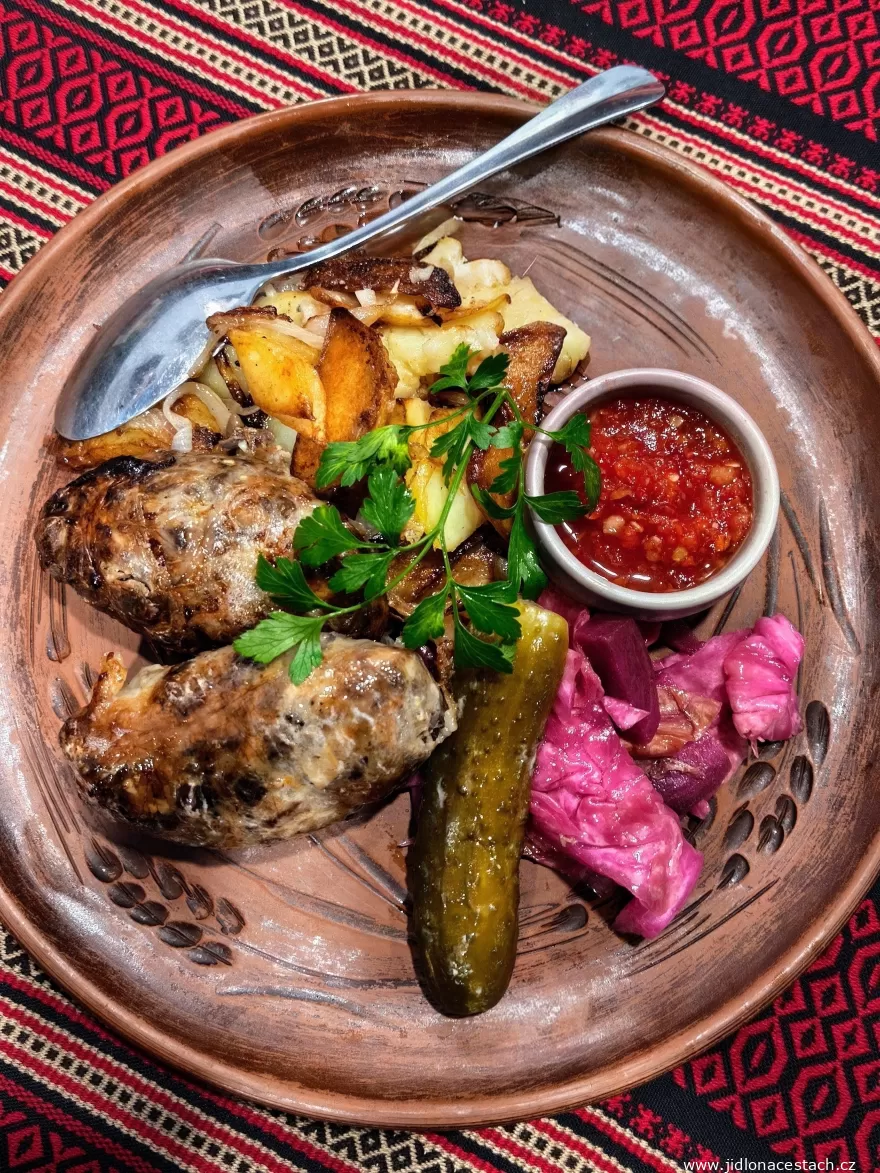
The Extra Bowl in Chișinău
My extra bowl sat next to a plate of cighiri, pork offal meatballs wrapped in caul fat, at Acasă la Mama Restaurant in Chișinău (see Where to Eat in Chișinău); it came with the meal and wasn't charged separately. I couldn't taste much tomato in it - my guess is that this one was almost all peppers and garlic, closer to the Caucasian original than to the textbook Moldovan version. And it was so hot that I only added it to the meatballs a pinch at a time. The Abkhaz simply call it salt. In the end, that's exactly how I used it.


