Cighiri: Pork Offal Meatballs Wrapped in Caul Fat
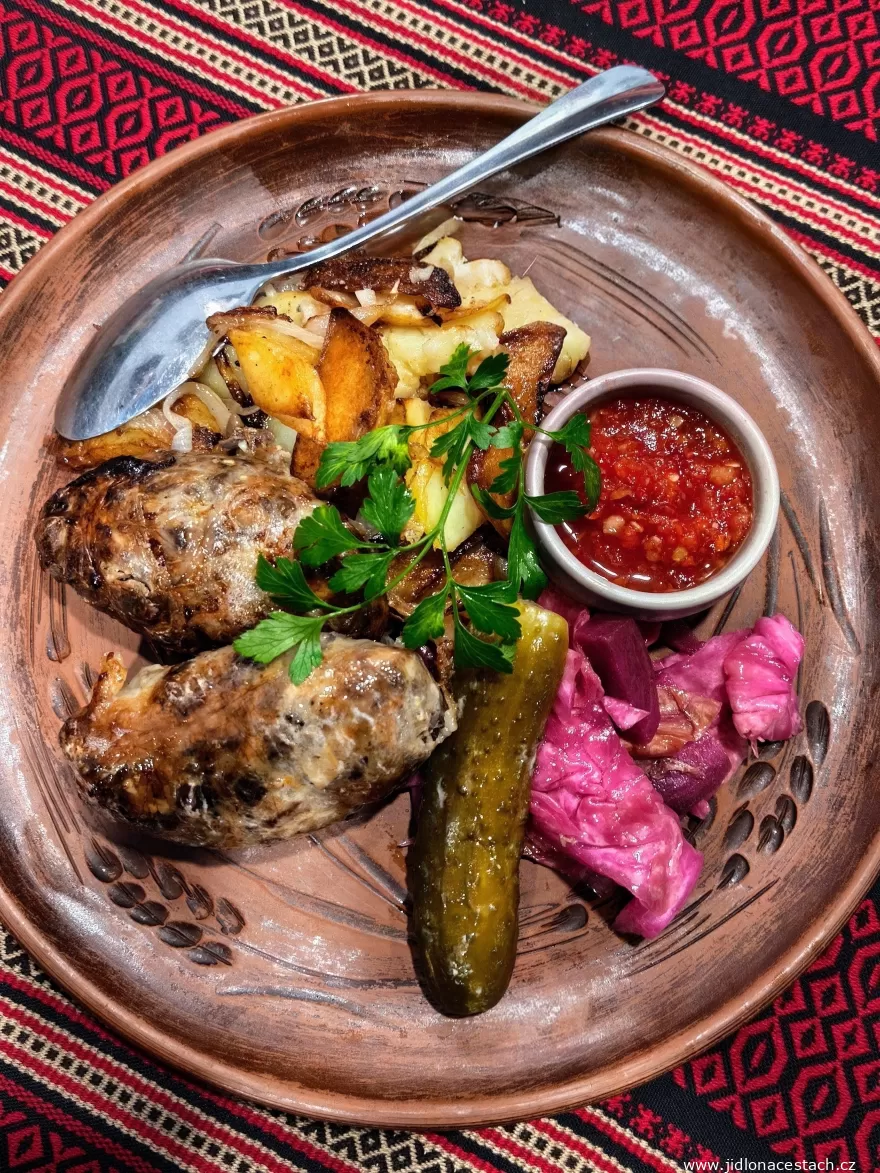
They look like meatballs the cook forgot to unwrap: browned, coated in a delicate lace of fat that's toasted dark in places. Your first instinct is to cut that wrapping off and push it to the edge of the plate. Do that, though, and you'll ruin the best part - the lace bakes along with the filling and gives it both juice and a crust. Cighiri are meatballs made from pork liver, lungs and heart, ground with onion, eggs and garlic, each one wrapped in pork caul fat and fried in lard or baked in the oven - a festive dish of Moldovan cuisine.
What Cighiri Means and Where People Eat It
It's pronounced chee-GEER, and the word came in with Ottoman Turkish: it shares a root with ciğer, liver, which already lends its name to another dish on this site - the Turkish ciğer kebabı. Romanian bent the loanword its own way, though: cighir means not just this dish, but the caul itself and pork lungs as well. One word for the wrapping, the filling and the finished result; few languages are that economical. Geographically, cighiri belong to historical Moldavia - today's Republic of Moldova and the Moldavian counties of Romania around Iași and Bukovina, spilling over into Dobruja. In the rest of Romania they make the Easter drob de miel, a lamb offal meatloaf, instead, and the offal-in-caul cousins carry on further south: the Bulgarian drob sarma adds rice, and the Turkish ciğer sarma even raisins and pistachios. What sets cighiri apart is simple: as a rule, there's no rice in them.
Offal, Onions and a Lace of Pork Caul
Inside, liver, lungs and heart come together, often backed up by a piece of pork so the offal flavor doesn't have to carry the whole show. The offal is parboiled with a bay leaf, ground and mixed with fried onion, eggs and garlic - so far it's basically meatloaf, just with a bolder cast. The difference comes with the prapur, the caul, a fatty membrane that wraps a pig's internal organs: it's soaked in cold water, cut into squares about the size of your palm, and each portion is wrapped up tightly in one. In the heat, the prapur does three jobs at once - it holds the meatball together, bastes it with its own fat and finally turns into a crisp, delicate crust. Without the caul, they're not cighiri but plain pârjoale - the kind of patties Romanian cookbooks are full of. Home cooks do disagree on one point, though: some always parboil the offal, while others braise it raw with the onion and insist that boiled offal comes out gray and rubbery.
From the Ignat Pig Slaughter to the Fields
The home turf of cighiri is the pig slaughter. It has a fixed date in both the Romanian and Moldovan calendars - Ignat, December 20 - and the fresh offal, which won't keep, was exactly what went into cighiri. Whatever didn't get eaten over the holidays was sealed under melted lard and lasted until spring: early in the morning, the woman of the house would cook a big mămăligă, tuck the warm cighiri into a hollow in the middle, wrap the whole thing in dish towels and send it out to the fields. A thermos made of cornmeal. Nobody can date the first cighiri, though; the earliest firm trace is a dictionary entry from the late 19th century. These days the dish is no longer tied to a single December day, and it occasionally shows up on the menus of restaurants serving home-style cooking - that's where to look for it.
People eat them hot as a main course and cold as a snack, and the sides stay down to earth: potatoes or mămăligă, plus murături - pickled vegetables whose cabbage often comes out pink, because beet goes into the barrel too. A dish this rich practically begs for something sour to cut through it.
Back at Acasă la Mama
I ate cighiri in Chișinău, at Acasă la Mama (see Where to Eat in Chișinău), on my second visit there. This time my waiter didn't speak a word of English, and my order of cighiri clearly came as a pleasant surprise to him, and to the rest of the staff as well. When I wanted advice on a side dish, the language barrier was winning - luckily the waiter from my first visit was on the floor too; he understood what I was after and recommended something whose Romanian name I couldn't make out. I took his word for it, and I'm glad I did: gloriously decadent, greasy potatoes with onion and garlic; pink pickled vegetables on the side to freshen things up, and to round out the trio, a bowl of ajika, a spicy preserve of tomatoes and peppers that just about every household here puts up for the winter. The cighiri themselves delivered everything they promised: a crust crisped to a crunch and a tender, richly livery filling inside - heavy, but just perfect, and I was licking my lips long after the last bite. The portion cost 169 MDL (8.20 EUR), and the potatoes on the side 93 MDL (4.60 EUR). It was only the receipt that told me what the waiter had actually recommended: cartofi prăjiți ca acasă, fried potatoes "just like at home" with onion and garlic. At Mom's house - which is what Acasă la Mama means - I suppose there was nothing else he could have recommended.


