Tea
Tea in the strict sense is a drink made from the leaves of the tea plant, but on the road the word covers all sorts of things - from the deep red brew of the Middle East to mountain herbs in the Balkans. Sitting down for tea is one of the most pleasant things I do when I travel. You rest, you strike up a conversation with locals even without a shared language, and there is no need to hurry anywhere. And if I had to name the single best tea of my travels, it would be the Turkish one.

Čaj or Tea? Two Routes of One Word
The way a country says "tea" reveals how the drink first got there. The world's words for tea form two great branches, and both come from China. Overland, with the caravans of the Silk Road, travelled the Mandarin and Cantonese pronunciation "cha" - which is why it is chay in Persian, çay in Turkish, shay in Arabic, chay in Russian and, at the end of that road, čaj in Czech. By sea, Dutch merchants shipped tea from the ports of Fujian province, where the same character is read "te" - and that gave us the English tea, the French thé and the German Tee.
The exception proves the rule: the Portuguese traded with China through Macau, where Cantonese is spoken, so they brought home "chá" - the only Western European naval power to do so. The map of the word tea is really a map of old trade routes. And that is why, when I order çay in Istanbul, I sound almost like I do back home.

My Tea Ranking: Turkey, Iran, Iraq
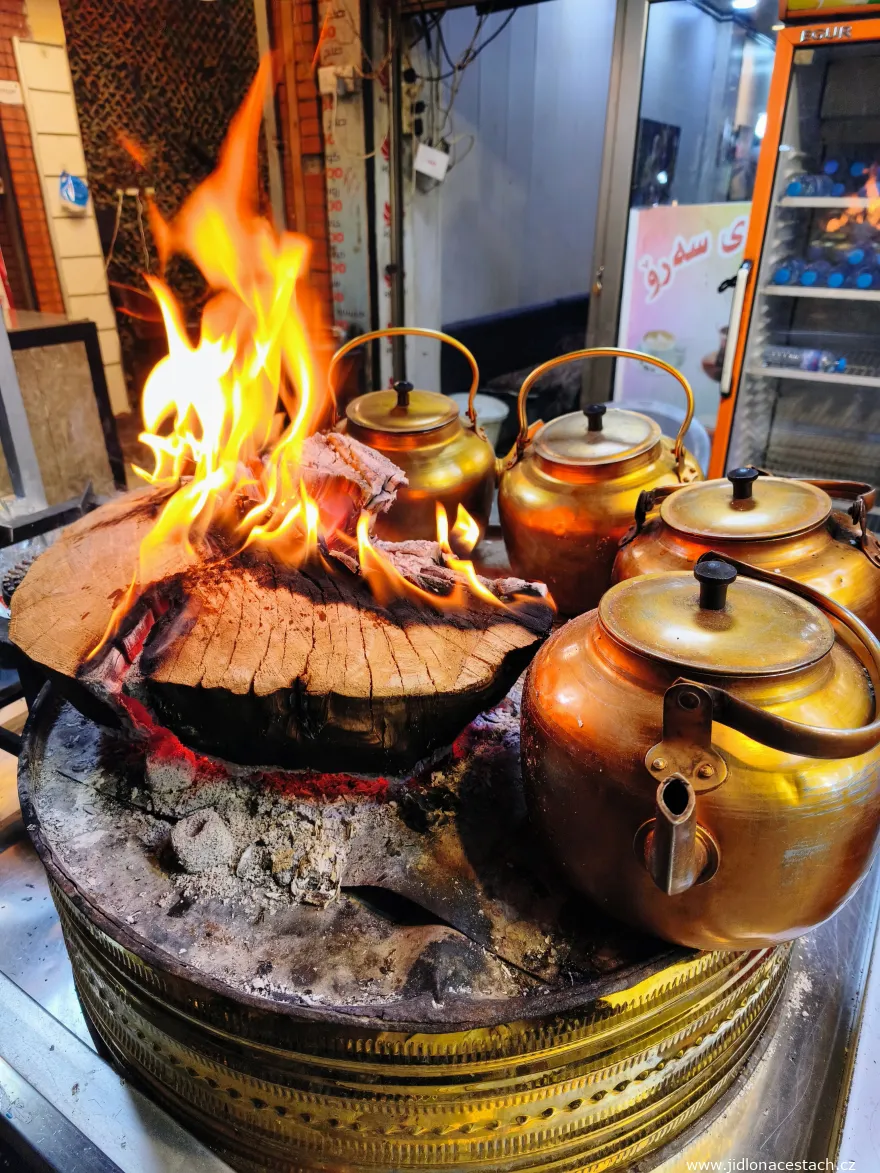
Turkish tea leads, and by a wide margin. It is brewed in a two-tier teapot called çaydanlık: a thick concentrate called dem steeps on top, water boils below. The host pours a little concentrate into a tulip-shaped glass and tops it up with hot water to taste - light açık or dark koyu. That is exactly what I love about it: I decide the strength and sweetness myself. Add the rich color locals call tavşan kanı (rabbit's blood) and the çaycı tea carriers who glide through the crowds of the Grand Bazaar with their swinging trays without spilling a single drop. Tea bushes thrive on the rainy slopes around Rize on the Black Sea coast, and Turks today rank among the world's biggest tea drinkers per capita - the famous Turkish coffee is more of a "festive dessert" in Turkey; the fuel of everyday life is çay.
Iranian tea is my second love after the Turkish one. It works on the same principle of diluting, only the strong brew comes from a teapot perched on a samovar - originally a Russian invention that became so at home in Iran that you will find one in every teahouse and household. Iranians even grow part of their tea themselves, in Gilan province by the Caspian Sea. Tea is sweetened here with crystallized sugar called nabat or with a sugar cube that locals place straight in their mouth, sipping the hot tea through it.
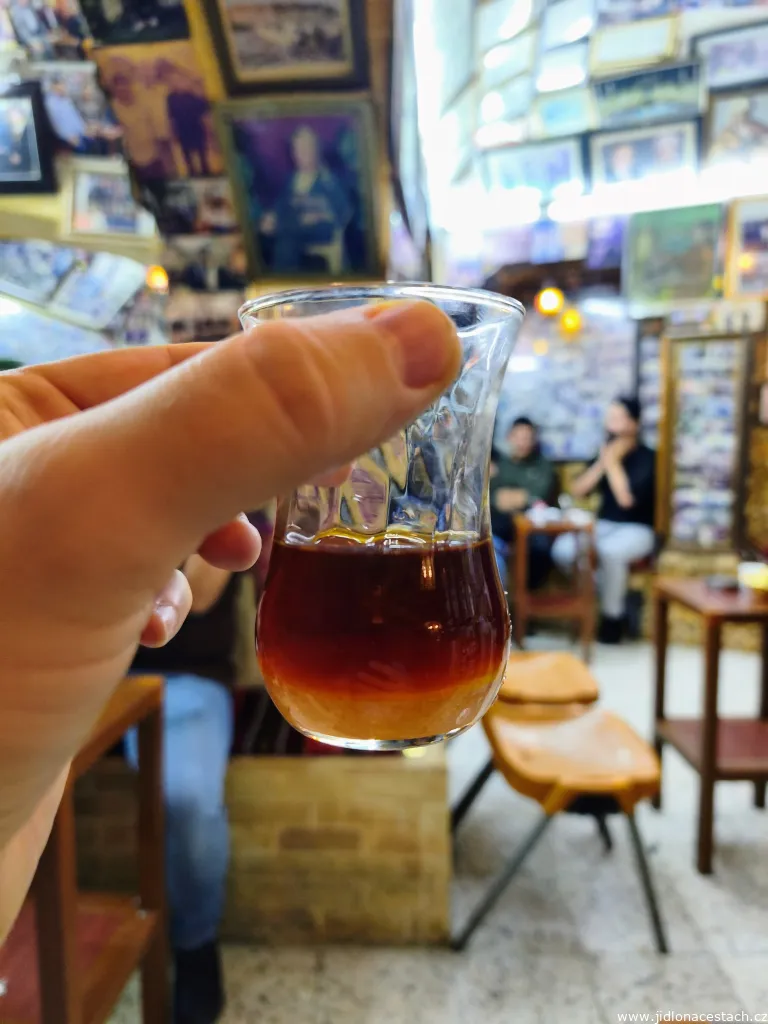
Iraqi tea is a chapter of its own. Tea reached Iraq only with the British, through the port of Basra; today the country ranks among the world's biggest tea importers. The brew is scented with cardamom (to me it oddly smells more of rose) and sweetened with so much sugar that it often does not even have time to dissolve, leaving a visible layer at the bottom of the istikan glass. It is the sweetest tea I have ever drunk - and I admit it is too much for me. If you want to find your own limit of sweetness, start right here.
Teahouses Are an Institution in Their Own Right
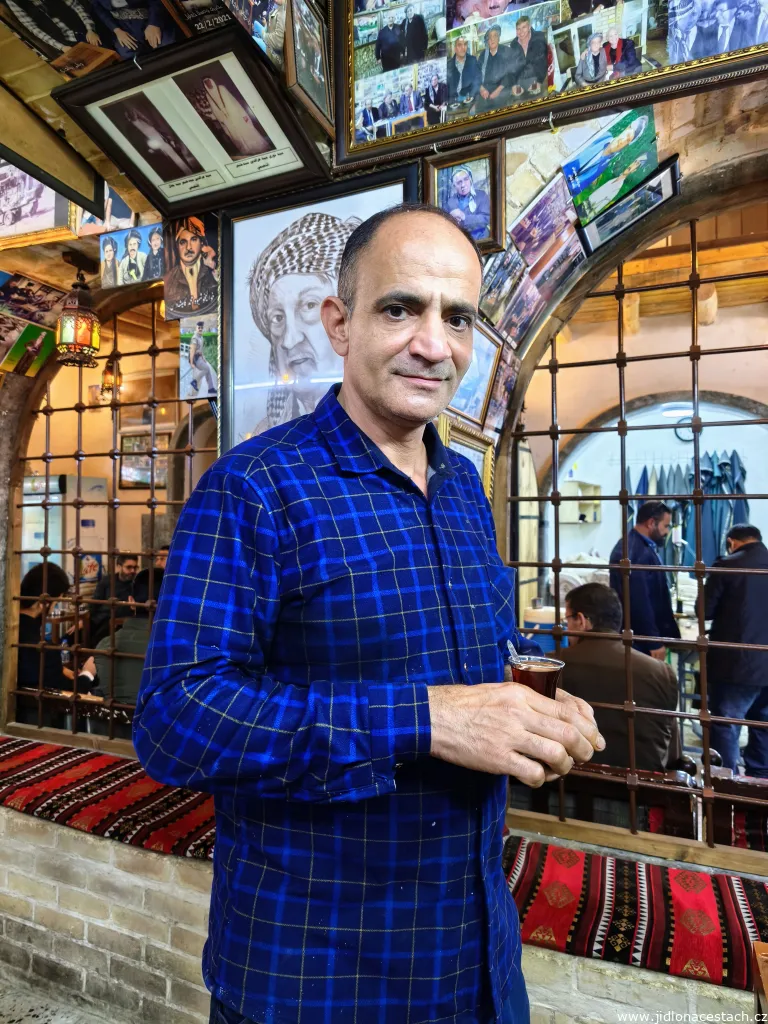
A teahouse (chaykhana) is the social hub of the Middle East, much like a pub back home in Czechia, only without alcohol: politics is debated there, deals are struck, and it has traditionally been a male domain. The best example I know is the Mam Khalil teahouse in the old bazaar of Erbil, open since 1952: the walls are covered with thousands of framed photographs of guests, from kings and poets to ordinary regulars, and the founder's son runs it today. Regimes come and go; the tea keeps flowing.
Whenever I sit down in a teahouse, sooner or later I end up chatting with someone local. I do not have to try, it simply happens - and I enjoy it a lot. My strongest teahouse memory, though, is from Istanbul. On my first visit to Turkey, many years ago, I found a small teahouse in a side street with a view of the main tourist artery, and I must have sat there for two or three hours. A Turkish street band sat down at the table next to mine - just like that, to have a glass themselves. It was no tourist spot, it was nearly empty; people came there for the tea. That atmosphere stayed with me more than many a monument.
Herbal Teas: Balkan Mountainsides and North African Mint
A botanist would object that a drink without the tea plant is no tea, but I love herbal teas just as much as the real thing. My favorite grows in the Balkans: a perennial of the genus Sideritis, known as ironwort or mountain tea. In Bulgaria it is picked in the Rhodope Mountains and sold as Mursalski tea - slightly sweet, vaguely reminiscent of linden to me, and I like it even without honey; it is also caffeine-free, so you can drink it all day long. The very same plant goes by a slightly different name in every country: in Albania it is çaj mali (tea from the mountain), in Greece tsai tou vounou, in North Macedonia and Serbia planinski čaj, and in Turkey dağ çayı. Ever since I first tasted it in Bulgaria, I have brought some home from every trip - it is also my tip for what to bring back from Bulgaria.
North Africa goes its own way: fresh mint and sugar go into green tea. In Morocco, mint tea is practically the national drink, and in Tunisia they upgrade it with pine nuts into thé aux pignons - for me half drink, half snack.
Tea is to my travels what beer or coffee is to others: an excuse to stop and watch the world go by. Find a teahouse in a side street, order a glass, and let the city run on without you for a while. Which tea has stuck in your memory from your travels? And would you dare to try the Iraqi one, or is that too much sugar for you too? 😊
Cheers!



Mam Khalil: Legendary Teahouse in the Heart of Erbil
Chaykhana Mam Khalil is a legendary teahouse hidden in the labyrinth of the old Qaysari Bazaar in Erbil, Iraq. Its walls and ceiling are covered with thousands of framed photographs of guests. You will find politicians, poets, and ordinary regulars among them. The establishment was founded in 1952 by Mam Khalil, and today his son continues the family tradition.

Iraqi Tea
Iraqi tea is a central element of social life in Iraq and a daily ritual accompanying inhabitants from morning to evening. It spread massively only in the nineteenth century thanks to British trade with India and Sri Lanka. Added cardamom gives the tea a specific aroma, while the extreme amount of sugar influences the taste.

Çaj mali: Albanian Mountain Tea
Çaj mali is a traditional Albanian herbal tea prepared from plants of the Sideritis genus. It comes from the mountainous areas of Albania, where it is hand-picked during the summer months at altitudes of around 1,000 to 2,000 meters. Bundles of this tea are commonly sold by small vendors along Albanian roadsides. Similar mountain teas are found in other Balkan and Mediterranean countries.

Turkish Tea
Turkish tea is a strong, dark red drink prepared from black tea. Locals drink it by the liter instead of coffee. Preparation requires a special double teapot called a çaydanlık. A strong concentrate is created in its upper part, which is subsequently diluted with boiling water according to the guest's taste. Turkish tea is served in typical tulip-shaped glasses.

Iranian Tea
Tea is an inseparable part of the daily life of Iranians and a symbol of their hospitality. Iranians drink tea on every occasion - from family gatherings to business meetings. Traditional black tea, often sweetened with crystallized sugar, is prepared in a samovar, a device introduced to the country by Russian merchants in the 19th century. Tea is served in small glasses and is sometimes sipped through sugar placed in the mouth. Iran is one of the largest tea consumers in the world.

Nabat: Traditional Iranian Crystallized Sugar
Nabat is traditional Iranian crystallized sugar. It consists of large, transparent or yellowish crystals, often on sticks. It is mainly used to sweeten tea. Apart from Iran, it is also popular in other Middle Eastern and South Asian countries.

Thé Aux Pignons: Tunisian Tea with Pine Nuts
Thé aux pignons, or tea with pine nuts, is a traditional Tunisian beverage that combines the flavors of green tea, mint, and pine nuts. It is available in cafés and restaurants across Tunisia, and locals enjoy it at any time of the day.

Mursalski Tea: The Mountain Herbal Tea from the Rhodopes
Mursalski tea is an herbal infusion made from the dried stalks of the mountain tea herb, a protected plant of the high Bulgarian Rhodopes and Pirin. It's sold as whole stalks with the flowers still on, it has no caffeine, and it tastes sweet, much like linden-flower tea. The same herb grows in Greece, North Macedonia and Albania too, where they simply call it mountain tea.

Café in Nevmekân Sahil Library, Istanbul
Nevmekân Sahil is a cultural center in the Üsküdar district of Istanbul. This hidden gem of the Asian side of the city hides more than 100,000 books, historical maps, and rare manuscripts focused on the Ottoman era under its glass roof. Visitors can study here in peace or just relax with a cup of Turkish tea. The interior, full of natural light, offers a perfect escape from the noise of bustling Istanbul. Admission is free.