Dejvická 34 Restaurant, Prague: Lunch Menu and a Late Dinner
In two days we're off to Florence, so my taste buds needed getting in shape. I sent them to training camp in Dejvice.
Dejvická 34, the restaurant of chef and co-owner Tomáš Černý, serves Italian cuisine and has held the Michelin Bib Gourmand award every year since the fall of 2021. This is the third time I'm writing about it: the first time I had lunch at the chef's table, the second time I went the day before TV aired its win on Pohlreich's Best Restaurant. This time it was the lunch menu plus a few picks from the à la carte.

A Fifth Year with the Bib and the Same Faces on the Floor
The trophy shelf has filled up since my last visit. In Michelin's first nationwide selection, Dejvická 34 held on to its Bib Gourmand as one of only three places that have kept the Bib since the days when the guide covered only Prague - and of the eighteen holders in the country, it's the only one Michelin lists as Italian (see my overview of Michelin restaurants in Czechia). Gault&Millau gave it three toques two years running, and Tomáš Černý won the 2024 Zlatý kuchař (Golden Chef) poll.
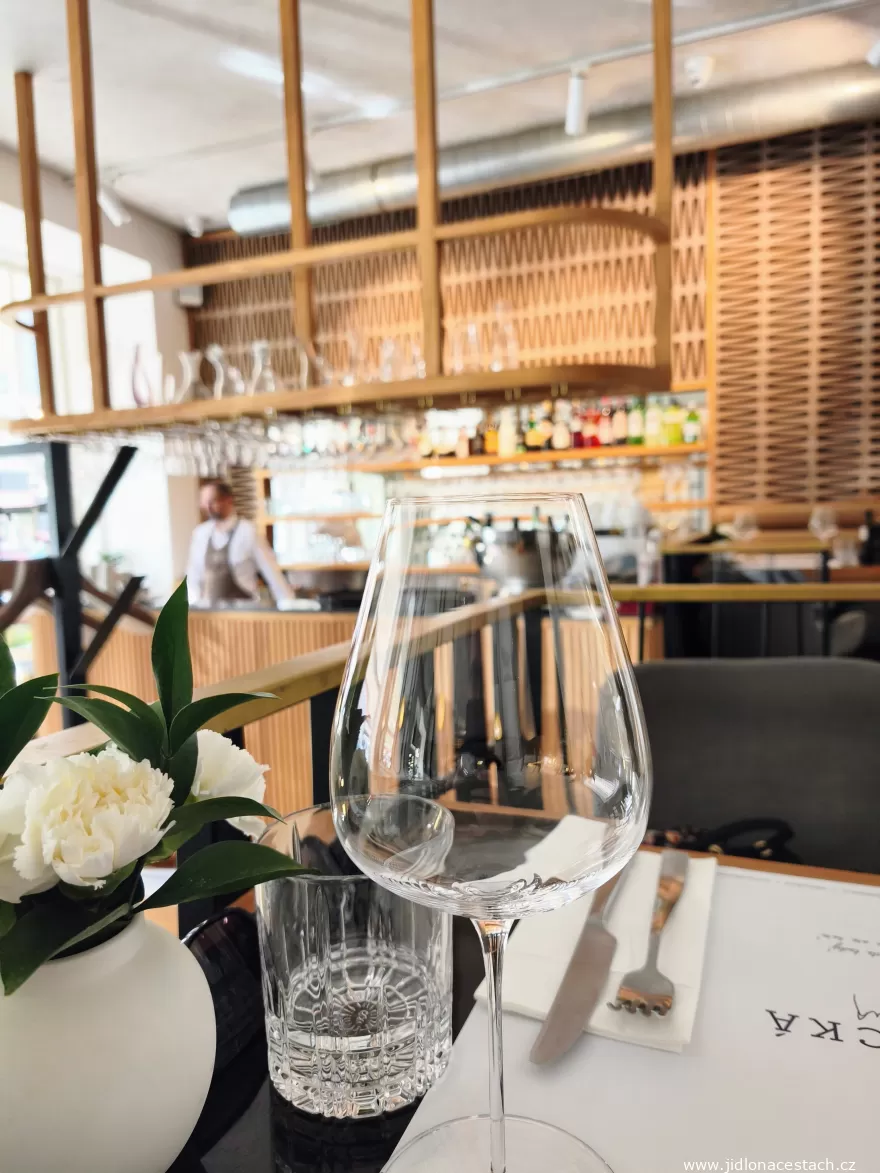
What pleased me even more was what hadn't changed. Michelin's inspectors describe the place as "somewhat labyrinthine"; we found our way through the maze without hesitation to the raised section of the dining room where we'd sat once before. And most importantly, we were greeted front of house by largely the same faces as years ago. The plates change, the people clearly don't - and that says at least as much about a restaurant as the stamps in the guidebooks.
Lunch Menu: Chanterelles, Rabbit and Strudel Cut on the Bias
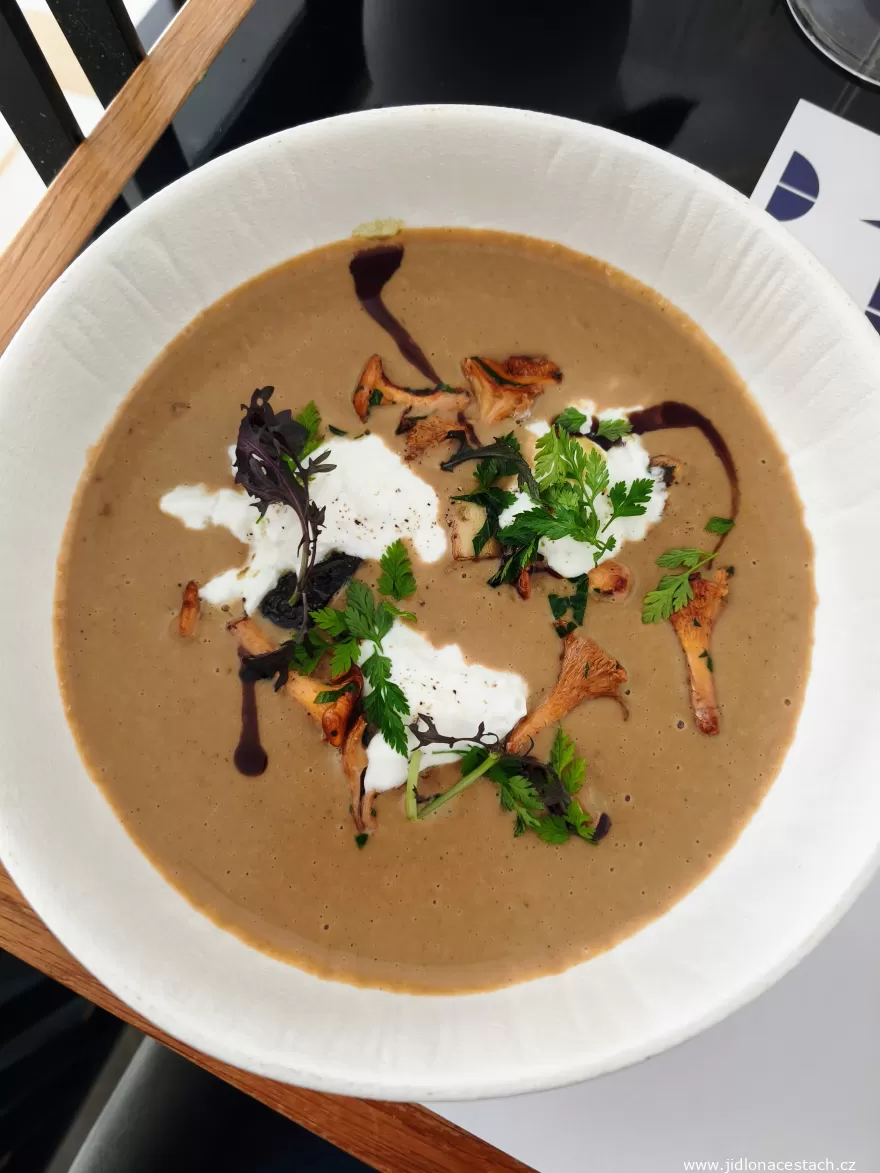
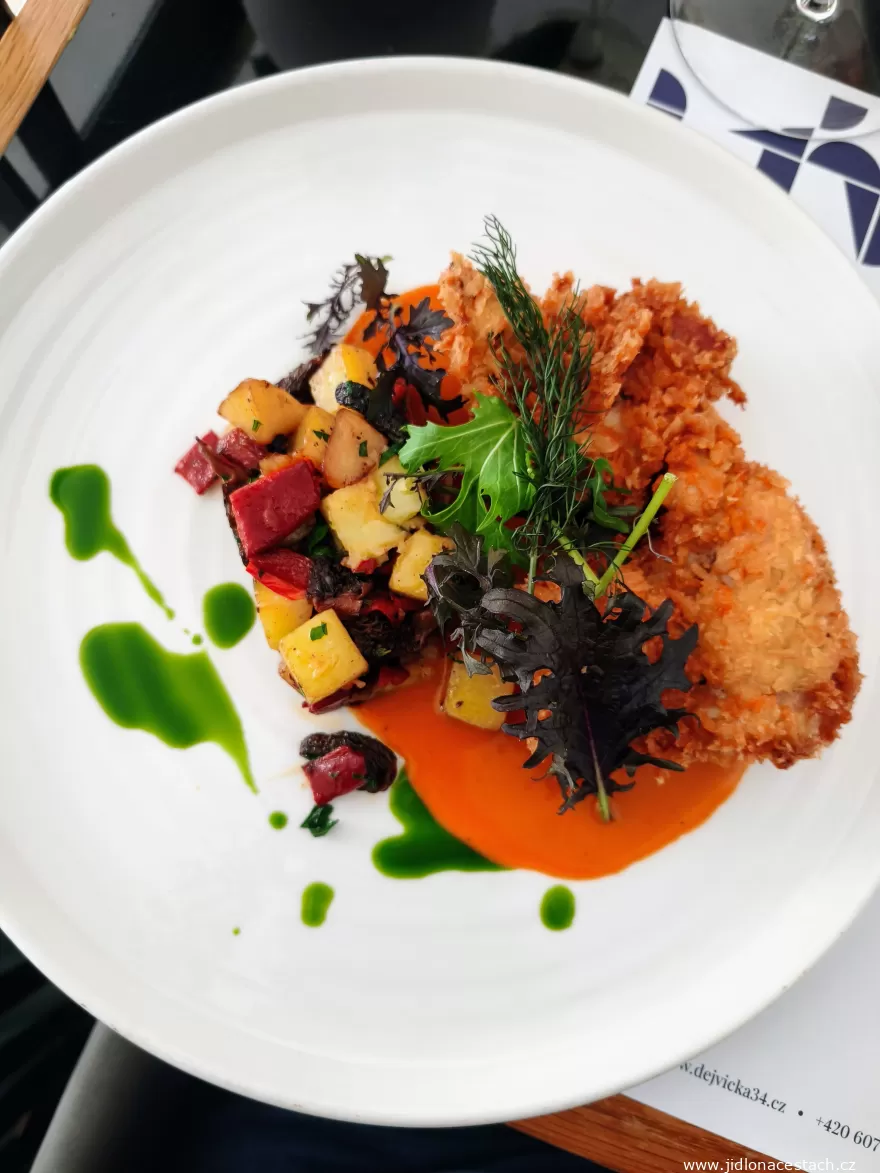
The lunch menu here is rewritten every week. It opened with a cream of mushroom soup with sautéed chanterelles, burrata and pumpkin seed oil: a portion that could easily pass for a lighter main course, with an unexpected tangy note in the cream that nicely lightened the mushrooms. The fried rabbit schnitzel with a ragù of potatoes, piquillo peppers and morels and a delicate paprika sauce arrived juicy and bigger than it looks in the photo.
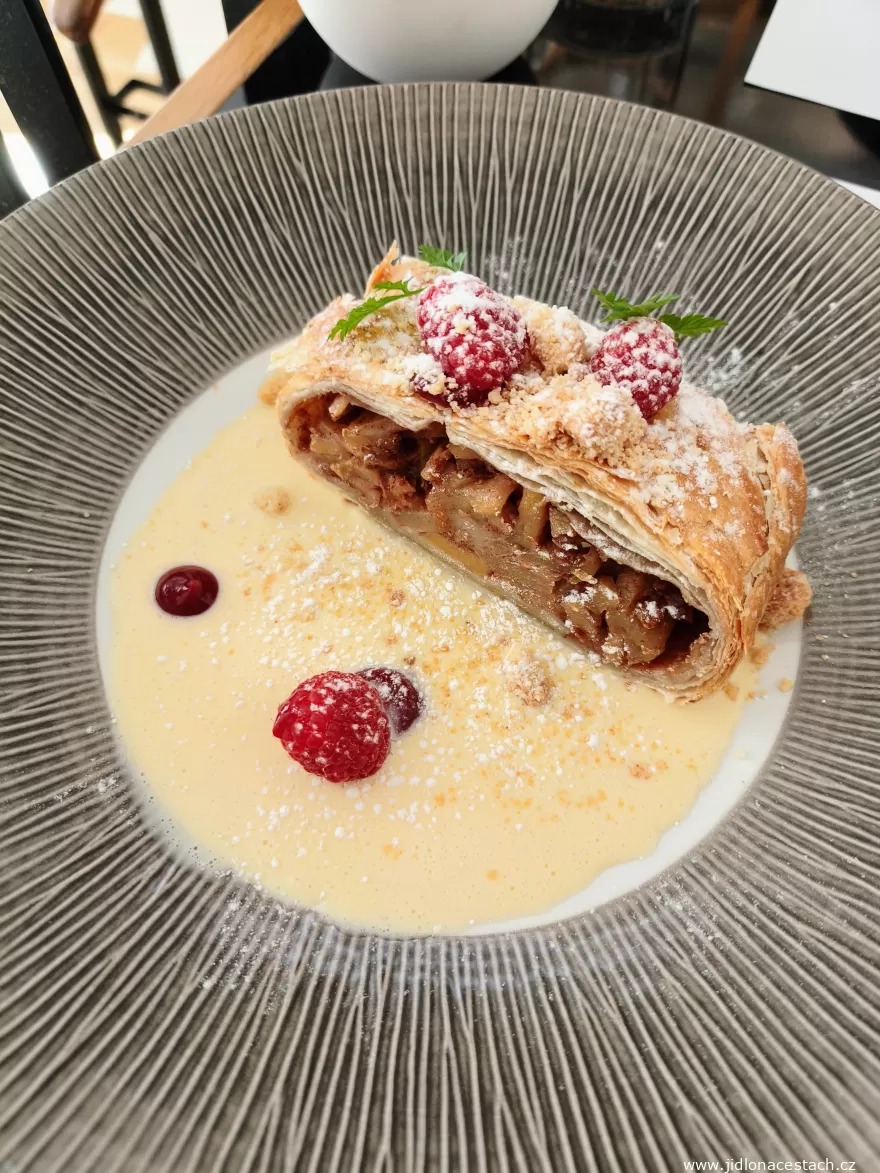
You may be wondering what a rabbit schnitzel and apple strudel are doing in an Italian restaurant. Just look at a map: Italy borders Austria, and in South Tyrol strudel is officially listed among the region's traditional food products. The legend that the Wiener schnitzel traveled the other way (from Milan with Field Marshal Radetzky) has been debunked: nobody has ever found the document it relies on in the Viennese archives. On top of that, Tomáš Černý cut his teeth in both Italy and Austria. The cook cut our apple strudel with walnuts, vanilla sauce and raspberries on the bias. I don't know whether it was intentional, but the slightly slanted cut showed off the layers of pastry and apple better than a straight one would have.
The Evening Menu, Tasted at Noon
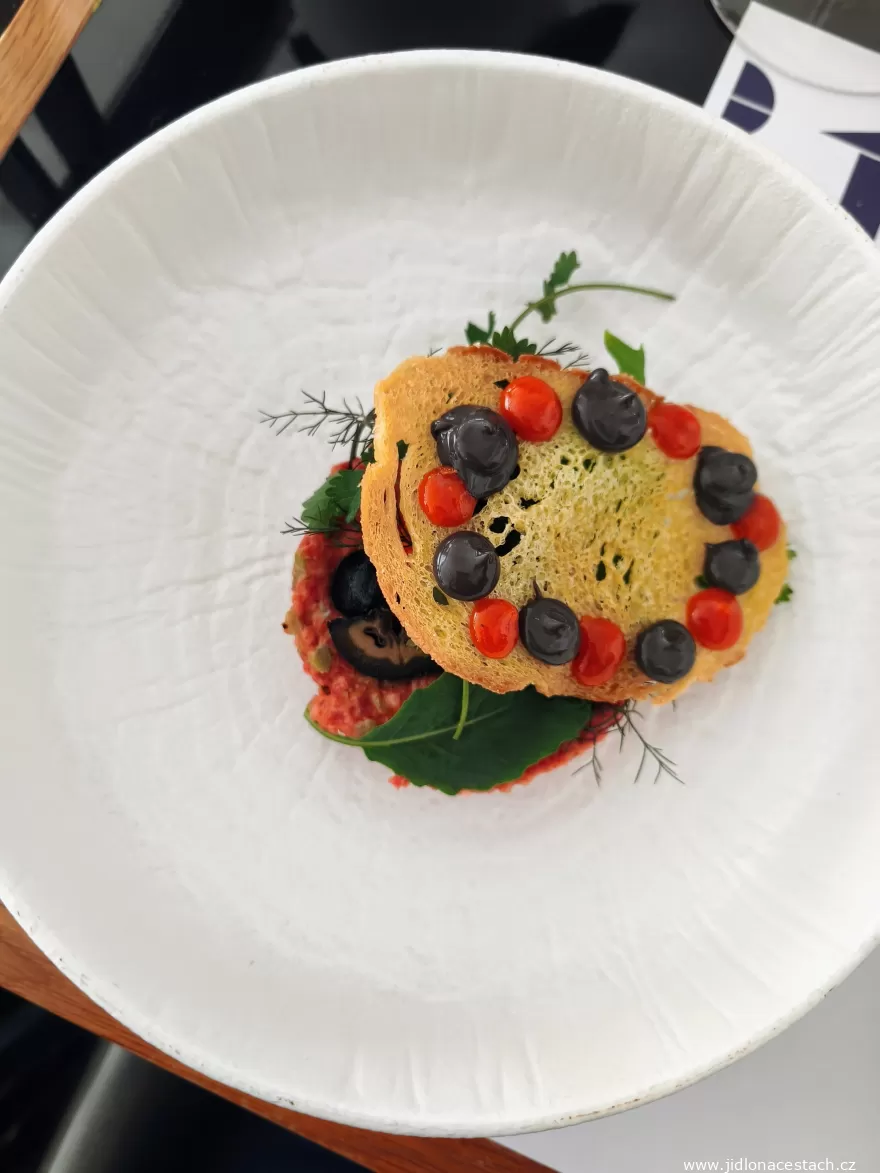
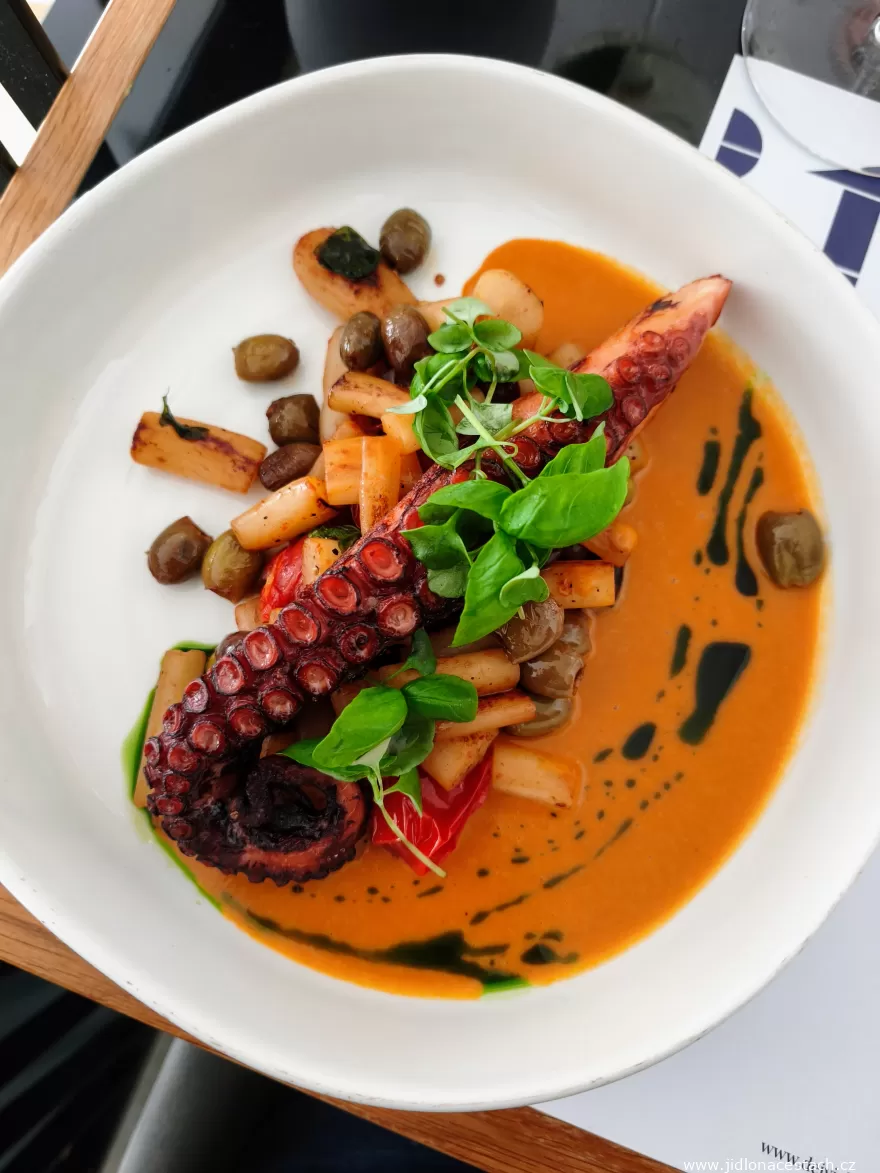
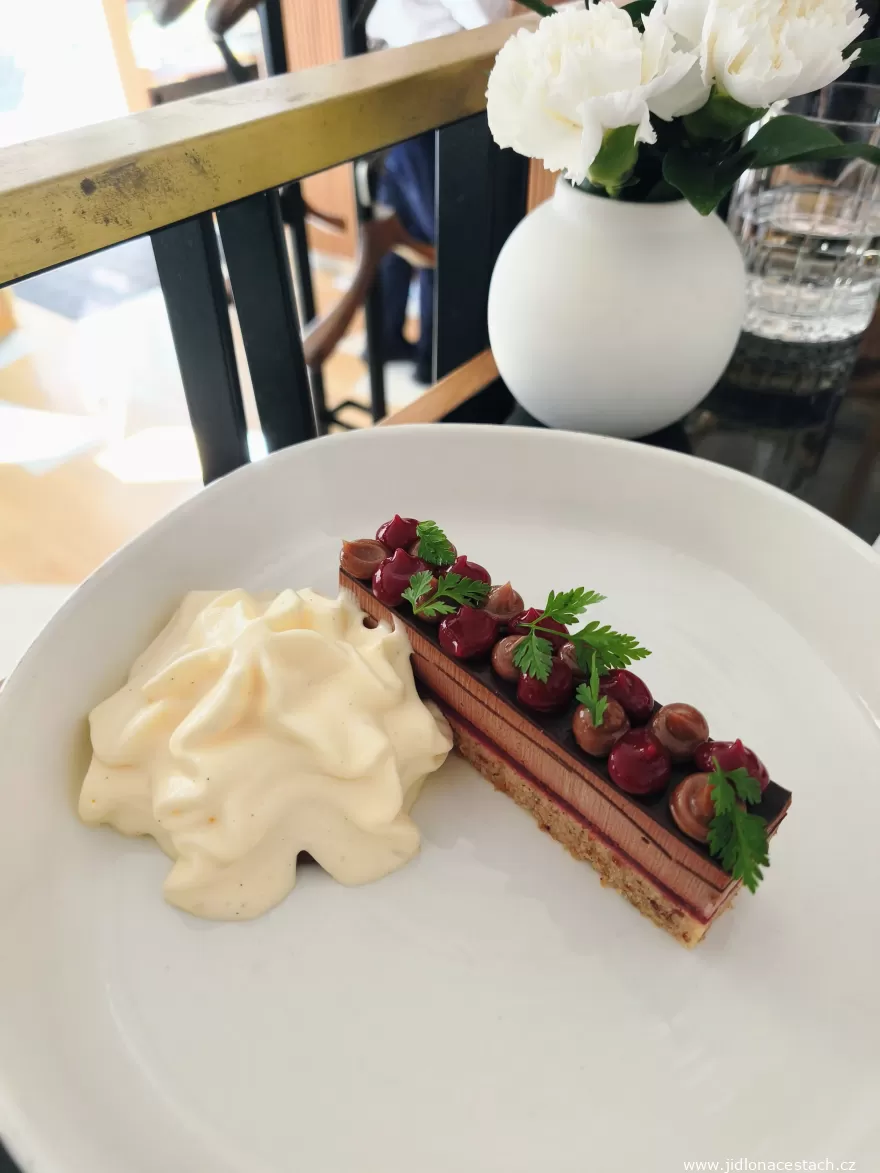
From the à la carte we chose beef tartare from aged chuck, octopus and a chocolate slice. The tartare had cucumber mixed right into the meat, and they weren't stingy with it. It worked better than I expected. On the plate it came with homemade tomato ketchup, more interesting than it modestly sounds, black garlic mayonnaise and green walnuts: unripe walnuts picked around St. John's Day, soaked to draw out their bitterness and preserved in spiced syrup. The octopus was tender; the lobster and cognac sauce came perfectly seasoned, without the heaviness it sometimes has. And the ragù of black salsify, Datterino tomatoes and Taggiasca olives? As of today, I can't think of a side that would suit octopus better. The chocolate slice with raspberries and nougat cremeux then made the day's dessert contest a draw: I couldn't choose between it and the strudel.
Later, looking at the menu, I realized we had actually put together the Pozdní dejvická večeře (Late Dejvice Dinner) ourselves: a set evening menu for 1,450 CZK (58 EUR) for an 8:30 booking, with the table yours until ten and a glass of prosecco and water included. We just took it apart plate by plate at noon.
Beethoven's Riesling and What Everything Costs
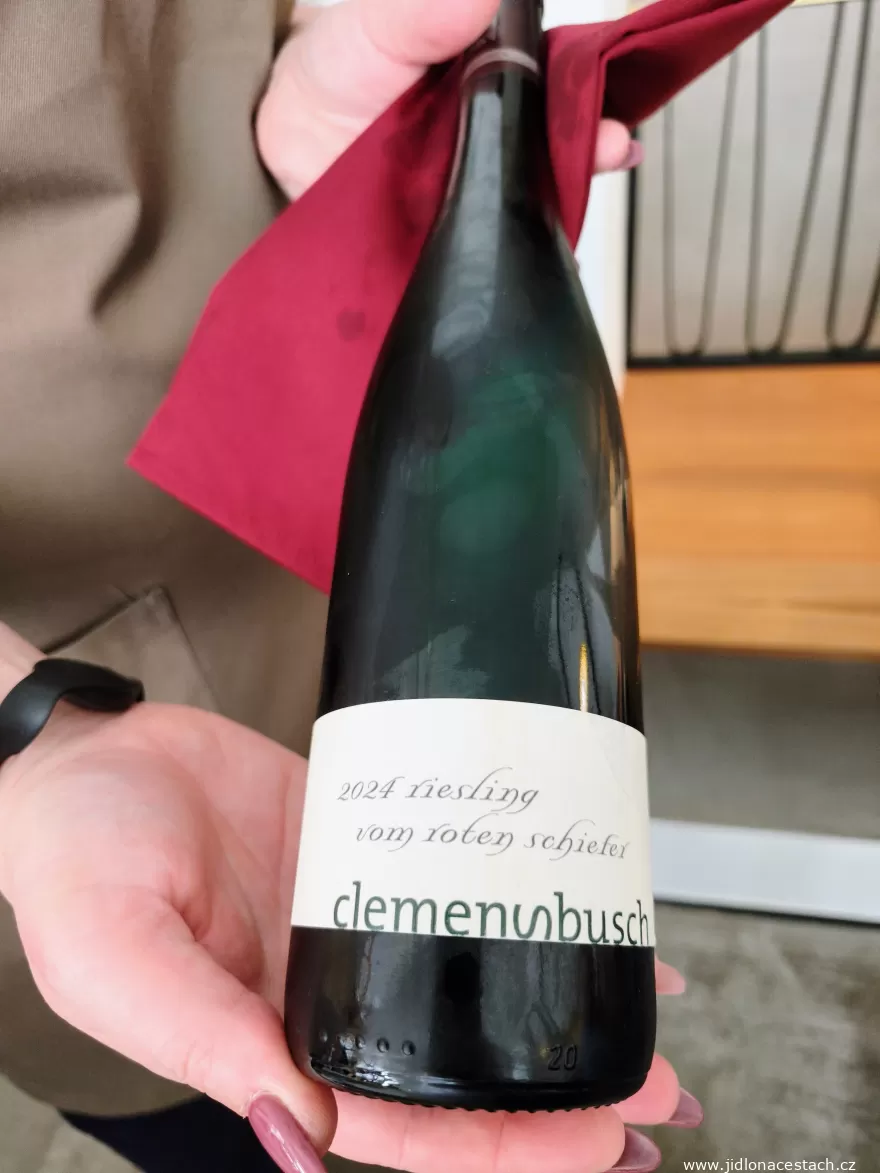
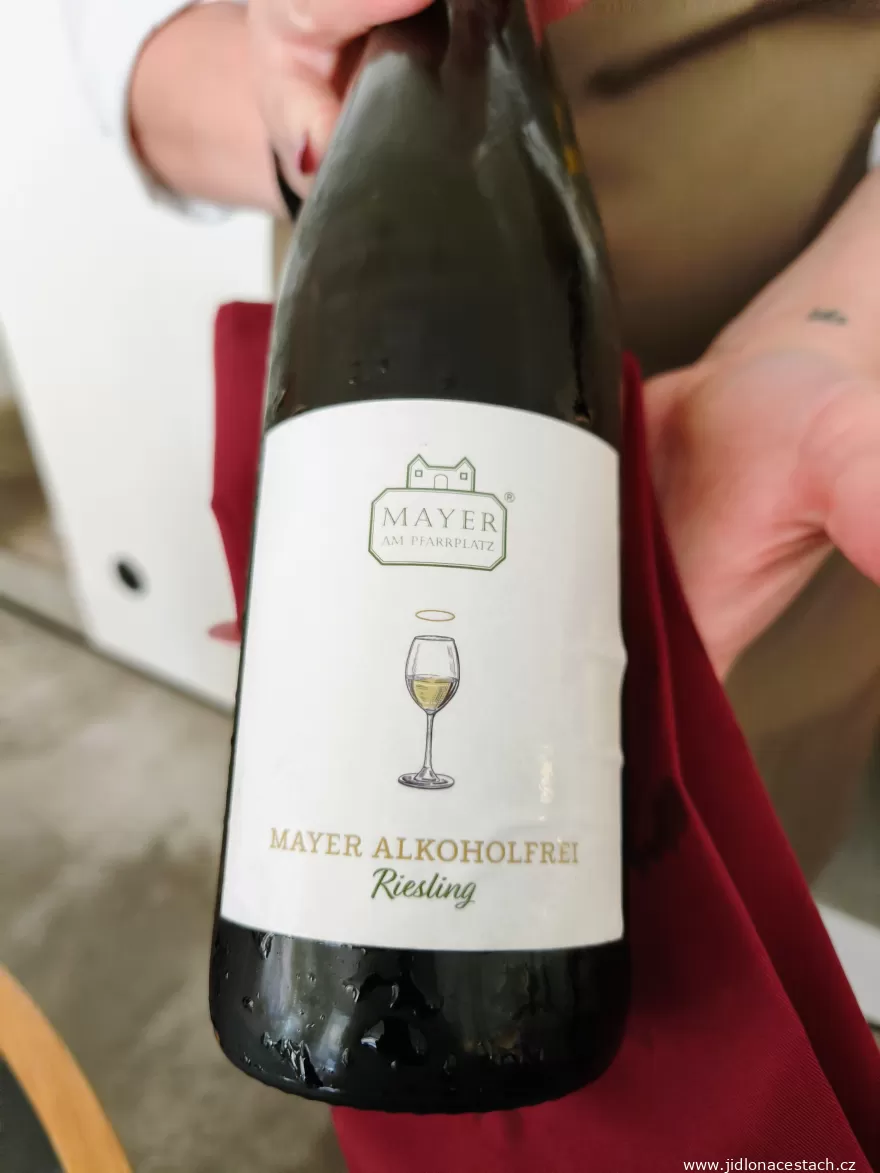
We drank Rieslings by the 125 ml glass. The alcohol-free one (195 CZK/7.80 EUR) comes from the Viennese winery Mayer am Pfarrplatz, in whose house Beethoven lived in 1817; the alcohol is evaporated from the finished wine under vacuum so the aroma survives. Alcohol-free wine is still a very tough category - but this bottle put up a respectable fight. The second glass (255 CZK/10.20 EUR), Clemens Busch's biodynamic Riesling from the red slate above the Mosel, tasted every bit as Mosel as you'd hope. With dessert I gave in to my weakness for dessert wines: the Moscato d'Asti from G.D. Vajra (190 CZK/7.60 EUR per 100 ml) has five percent alcohol and 130 grams of sugar per liter, yet served chilled it didn't come across as too sweet, even next to chocolate.
And the prices? The full three-course lunch menu costs 950 CZK (38 EUR), 790 CZK (32 EUR) without dessert and 750 CZK (30 EUR) without the starter; a main course on its own comes to 620 CZK (25 EUR) with meat or fish and 490 CZK (19.60 EUR) with pasta or risotto. Compared with lunch at Michelin-starred restaurants, it's still the price of a lunch, not an investment - and the portions are definitely not tasting-menu size. The taste-bud training camp went so well that the roles have reversed: Dejvice has set the bar. Now it's Florence's turn.
Dejvická 34


