Arishta: Armenian Noodles Toasted Before They Hit the Water
Most pasta in the world meets hot water first. Not arishta. Before it ever reaches a pot it goes into a dry pan, and before that it spends a few days hanging on a string in the sun. Anyone who sees it for the first time assumes something got scorched in the kitchen: the plate holds noodles that are pale and deep gold at the same time, as if someone had toasted them by accident. It was no accident.
Arishta (Armenian: արիշտա) are homemade noodles made from a stiff dough of flour, water and salt that Armenian cuisine dries first, then toasts in a dry pan until they take on color, and boils only at the very end.

What the Word Arishta Means and Who Else Uses It
The word reached Armenian from Persian: reshte means thread or string, and it comes from the verb meaning to spin. So Armenians eat spun dough, and they are not the only ones. Arishta is cooked across the whole belt from Iran through the Caucasus to Anatolia: Iranian cuisine has reshte, Turkish cuisine erişte, Azerbaijani ərişdə, the same word in different pronunciations, and in every case a thin dried noodle. The toasting is no Armenian invention either: in Anatolia you can buy ready-toasted kavurma erişte, and Persians use one word for two different noodles, raw ones for thick soup and pre-toasted ones for rice. What sets the Armenian version apart from its neighbors is mostly what it leaves out: no milk goes into the dough, just flour, water and salt.
A Winter Store That Now Sells in Supermarkets
The history of arishta has no date and no founder, and this article is not about to invent one. What can be documented is the job it did: arishta was food put by for the winter. In the fall the stiff dough was rolled into a sheet as thin as lavash, folded, cut into strips, and the strips were hung on a string to dry in the sun for a day or two, then moved to a dry pantry where they lasted through the winter. Toasting before boiling gives them the flavor of browned flour; without it this would be nothing but dried dough. The tradition is kept up today by the Bazikyan family business in the town of Gavar on Lake Sevan, which packs arishta "from grandma's recipe" in 450-gram bags and supplies supermarkets, where it sits in the same supermarket chains as instant noodles and cooks in ten minutes. Grandma would probably point out that speed was never the point.
How Arishta Is Eaten and Why Nobody Hides It Under a Sauce
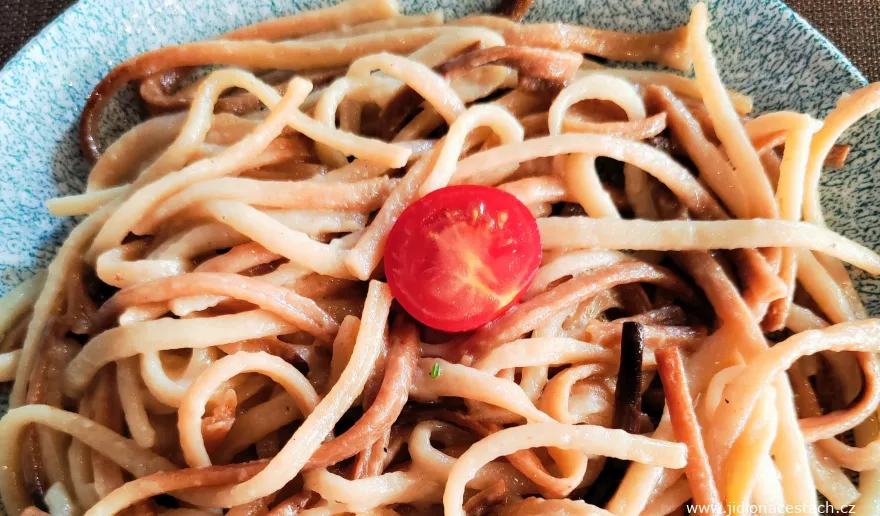
The dry pan does most of the work. No fat, no water, just noodles and heat until they color up, and because the toasting never comes out even, a finished plate of arishta looks like two dishes at once: pale noodles next to deep gold ones. Anyone who remembers noodles being cut for soup at home and spread out on a tea towel to dry knows where this dough comes from; Armenia only added the pan. Arishta reaches the table most often with melted butter and matsun, the fermented milk that cuts the fat, other times as part of a pilaf or in chicken broth. Sauce does not come into it: the toasting has already supplied the flavor and drowning it out would be a waste. In a restaurant you will get it as a side, but order it separately as a course in its own right. And a store pack of dried arishta weighs a few hundred grams and fits in a backpack, which is rare among edible souvenirs.
A Plate of Noodles at Lavash in Yerevan
I ate arishta in Yerevan, at Lavash Restaurant (see Where to Eat in Yerevan), where they bring it as a side to meat: a small heap of noodles, half a tomato and a sprig of herb. The pale noodles were soft like ordinary pasta, the toasted ones held their shape and smelled of browned flour, almost of nuts, and the herb butter soaked into both. It had enough flavor of its own that I never missed the meat. The plate cost 1,000 AMD (2.40 EUR). Drying, toasting and boiling included.


