Ghapama: The Armenian Festive Stuffed Pumpkin
The Armenian singer Harout Pamboukjian has a song in which a hundred hungry people sit around a table, each of them holding a spoon, and a single pumpkin lies in the middle. The chorus doesn't solve the problem - it just repeats it. And yet the song plays at festive tables all over Armenia, because the dish it sings about was made for exactly this situation.
Ghapama (Armenian: Ղափամա) is a whole pumpkin hollowed out and filled with rice, dried fruit, nuts and honey, baked with its own lid on and cut open only at the table - a festive dish of Armenian cuisine that you can't order for one.
One Word, Three Dishes
The name is the best proof that the Caucasus shares words far more readily than recipes. Ghapama comes from the Turkish verb kapamak, to close or to cover, and it describes a technique: you seal something up and let it finish in the heat. The same word lives on in three languages today, and in each one it means a different dish: in Turkish cuisine kuzu kapama is lamb braised under a lid, in Azerbaijan qapama layers meat with vegetables and eggplant, and only Armenians use the word for a sweet pumpkin. The technique is what they share. The stuffed pumpkin has cousins of its own, they just sit down at other tables: the Turkish kabak dolması is savory and stuffed piece by piece, the Iranian dolme kadu gets ground meat and a pomegranate sauce, and the Turkish sweet baked pumpkin balkabağı tatlısı has no filling at all.
A Newcomer That Looks Like an Ancient Tradition
Guidebooks call it an age-old dish and I'd like to believe them, but the pumpkin is an immigrant in Armenia. It didn't reach the South Caucasus from the Americas until the eighteenth and nineteenth centuries, so ghapama is probably younger than most of the dishes it sits among on the festive table. Nobody puts a date on the first recipe. Armenians are far more eager to tell you what the pumpkin stands for: the pumpkin itself is the Earth, the rice is humankind, the dried fruit and nuts are the nations and religions, and the whole thing is baked as a wish for the world to prosper. It's a legend, but an honest one - it suits a dish there's no way to eat except in a crowd. What's more interesting is who does without ghapama. Agos, the paper Armenians publish in Istanbul, acknowledges that Western Armenian cooking barely knows it; this is a dish of Eastern Armenia, and for a long time the two branches of Armenian cooking knew less about each other than you'd expect.
What's Inside and When It Gets Opened
You cut the pumpkin open at the stem, scoop out the seeds and butter the cavity. In goes half-cooked rice, dried apricots, raisins and prunes, walnuts, honey and cinnamon, then the lid goes back on and the whole thing bakes until a spoon slides through the wall of the pumpkin. The rice here isn't a side dish but a sponge: it soaks up the honey, the fruit juices and the butter, and that's exactly what sets it apart from an ordinary baked pumpkin. Alongside the sweet classic there's a savory version with meat, onion or chickpeas, which Armenians tie to particular regions - Goris, say, or Marash - and when no region comes to mind, they simply say msov ghapama, the meat one.
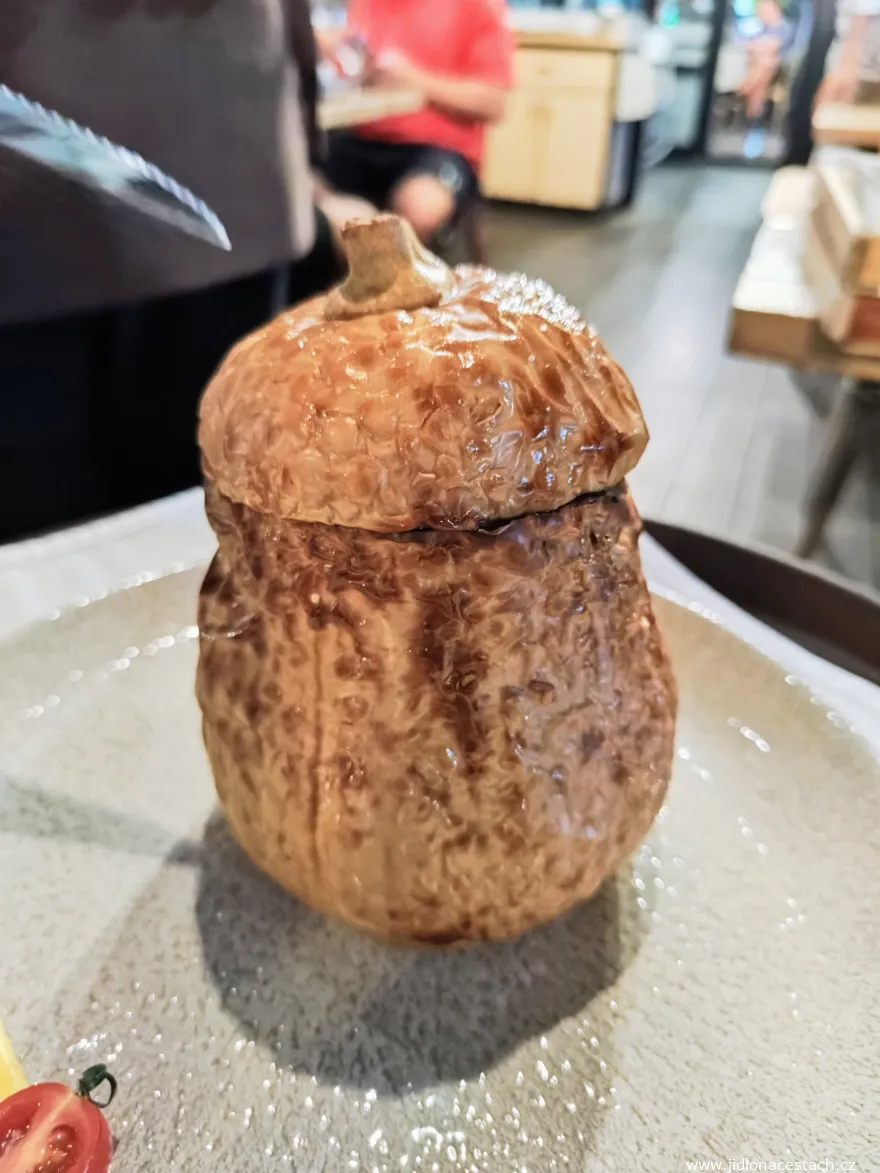
Ghapama is a dish for New Year, Easter and weddings; nobody bakes it at home on a weekday, because for two people that's far too much pumpkin. It comes to the table whole, the lid comes off, steam billows out of the pumpkin and the wall is cut from the top into segments that fall open like petals. If you want to taste it outside the holidays, there's only one route: restaurants in Yerevan keep it on the menu all year, but they count a portion per table, not per guest. Going for it on your own is a mistake only a foreigner makes - like me.
A Whole Pumpkin for One at Lavash
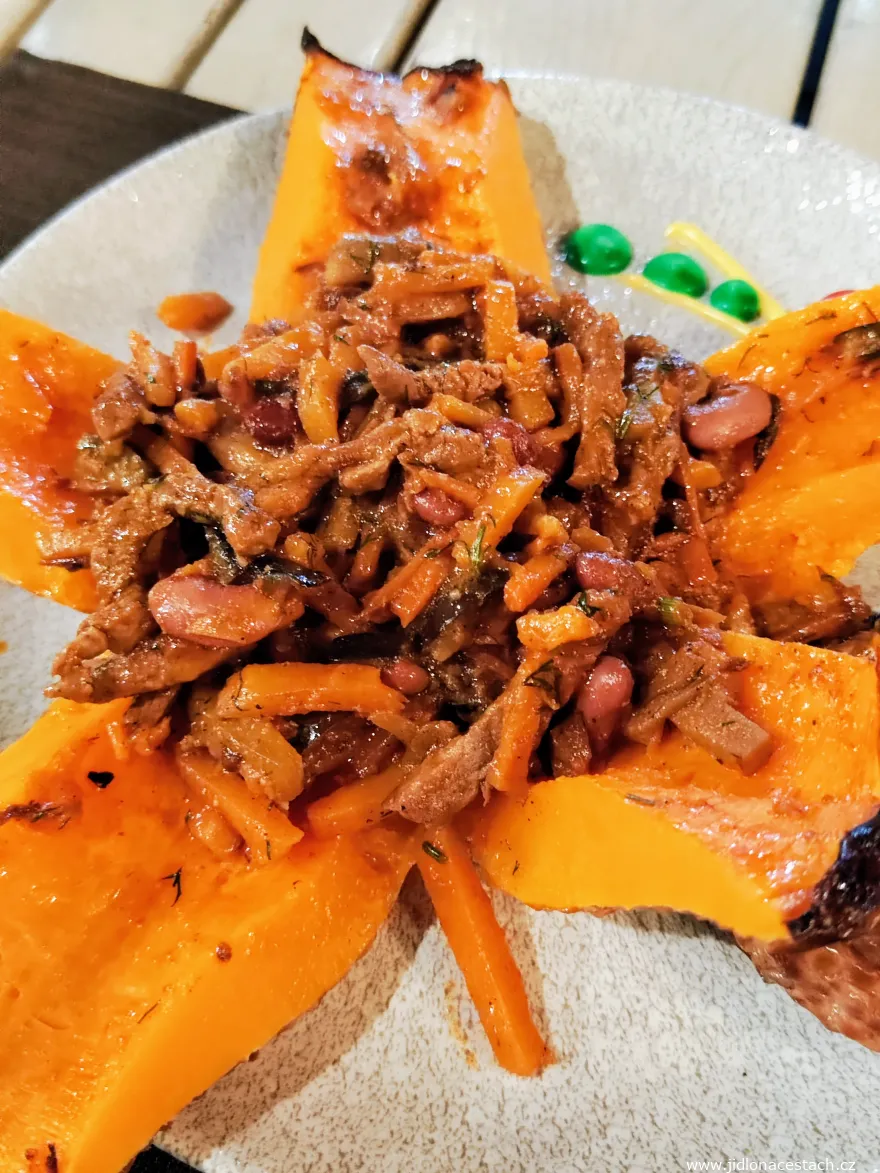
I got a portion meant for a whole table in Yerevan, at Lavash Restaurant (see Where to Eat in Yerevan), where the menu listed "Erzrum ghapama". Erzrum is today's Turkish Erzurum, a city with an Armenian past, and for a moment I thought I was eating an old tradition from there; now I know I was wrong. The stuffing, though, was done properly: beef tenderloin, carrot, beans, eggplant, onion and garlic. The pumpkin came whole, lid and all, and when it was cut open and the walls fell apart, it vaguely reminded me of a scene from one of my favorite sci-fi films, where you also wait to see what crawls out of an opened egg; here all that came out was steam. The sweet flesh of the pumpkin and the savory juices from the meat fit together so well that I couldn't tell which of the two was the side dish. The filling was beautifully seasoned, the pieces of tenderloin tender and the beans held their shape. The dish cost 3,800 AMD (9.20 EUR) and was meant for two or three people. In his song Pamboukjian wonders what to do with one pumpkin for a hundred people. At my table I had the opposite problem.


