Idiazabal: Smoked Sheep's Cheese from the Basque Country and Navarre
Thirteen thousand fifty euros. That's what a buyer paid at auction in Ordizia in 2014 for half of the winning cheese. The price of a used car for a wedge of sheep's cheese sounds absurd. But in Gipuzkoa, the September auction is a bit like the hockey final back home.
Spanish cuisine calls this cheese Idiazabal: a hard cheese made from raw milk of mountain sheep, pressed into round wheels, aged at least two months, and the only Spanish cheese with a protected designation of origin that's allowed to be smoked. Most wheels sell for far less than they did in Ordizia. One of them ended up with me too.
The Village That Didn't Invent the Cheese, It Just Had the Best-Known Address
Idiazabal is a village in the Goierri region below the Aralar mountains, where Basque shepherds have driven their flocks up to summer pasture since time immemorial. The cheese was made all across these mountains, from Urbia to Gorbea, and people simply called it queso del país, cheese from around here. When the designation of origin was set up, the name chosen was that of the village whose cheeses were best known on the markets and at competitions at the time - and so today one village lends its name to a product made across two autonomous communities. The protected area covers the whole of the Basque Country and Navarre, with one exception: the Roncal valley guards its own, even older designation, and its Roncal ages longer and tastes sharper. On the other side of the Pyrenees, French cuisine turns the milk of the sister Manech sheep breed into Ossau-Iraty, softer, rind-washed and unsmoked; and the more famous Manchego, from La Mancha, is a distant relative from a different sheep and a different climate. Anyone wanting to compare them will find an overview in our piece on Spanish cheeses.
Eight Thousand Years Nobody Ever Measured
Tourist websites love to claim that Idiazabal has been made for eight thousand years. Eight thousand years is the age of Basque shepherding, not of the cheese; it's only existed under its current name for around a hundred and fifty years, and it's been on Europe's register of protected designations since 1996. What can be documented is the late 19th century, when shepherds from Goierri started winning competitions with their wheels, and then the official dates, which sources argue over by a few years either way. The smoking, though, has a legend the Basques happily admit to: the cheeses supposedly sat in mountain huts by the fire that kept the shepherds warm, and the smoke worked its way into them uninvited. People liked the taste, and so today the cheese is smoked on purpose, for six hours over beech, birch, cherry or hawthorn, whatever the dairy has on hand.
Coarse-Wooled Sheep, Lamb Rennet and Quince on the Side
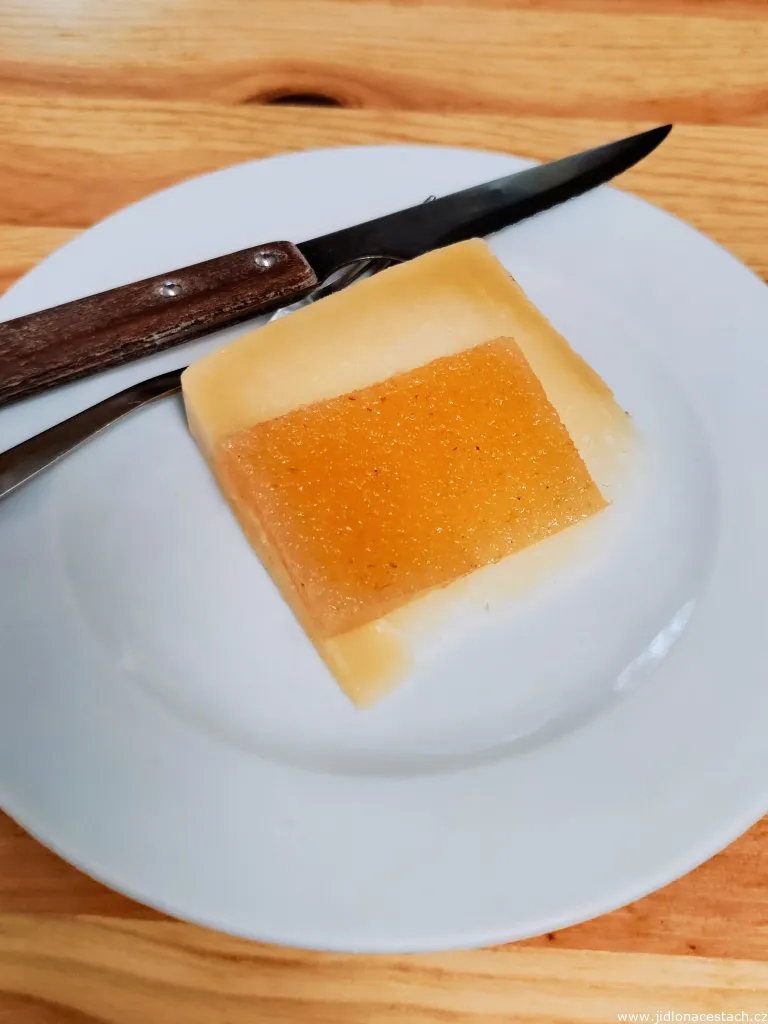
The main character here is the latxa sheep, whose name means coarse, after wool that's no good for a sweater. It's only allowed to graze in its own mountain region, and alongside it the law permits just one other breed, carranzana. The milk can't be pasteurized and is curdled with lamb rennet, so the cheese carries the taste of the pasture, the animal and the season - a spring wheel tastes different from an autumn one. Cut open, the paste is firm yet buttery, the rind smooth, dark brown on the smoked version. Anyone who knows smoked cheese from a Czech barbecue knows what to expect from the smoke - except here, under the rind, there's no rubbery mass, just firm, buttery cheese. Idiazabal is traditionally paired with membrillo, quince paste sliced with a knife into sticks - closer in texture to a firm jelly candy than to jam from a jar - and a handful of walnuts. Tart txakoli or the apple cider sidra reliably cuts through the sheep's-milk fat.
In the Basque Country, Idiazabal tends to show up at the end of a meal rather than the start: in the sidrerías, cider houses, a plate of cheese with quince jam and walnuts closes the menu after cod omelet and grilled beef; at home it appears instead of dessert, and in bars you'll find it on pintxos. It's cut into thin wedges from the center out to the rind and should sit out of the fridge for at least half an hour before serving, or it just tastes salty. On the label, one word makes all the difference: ahumado means smoked, natural means unsmoked, and anyone bringing the cheese home as a gift should know which one the recipient can handle. On the first weekend of May, the village of Idiazabal holds a cheese market with young wheels from the new season. Anyone who wants to taste cheeses from across the whole region without bidding at auction should head there.

A Wheel from the Supermarket
I didn't come across Idiazabal in a cider house or at an auction, but on a shelf in a Spanish supermarket, sealed in plastic wrap, with a sheep and two medals on the label and the word madurado, meaning aged, not smoked. I don't remember the price - I only know it wasn't thirteen thousand.


