Coffee in Spain: Solo, Cortado, con Leche and How to Order It
Spain has one bar for every 175 people, more than 184,000 of them in all - four times the EU average. Almost every one of them has a lever espresso machine on the counter, and at almost every counter someone is saying "un café" right now. And yet the guidebooks will tell you that Spain "isn't a coffee superpower like Italy". It is - just in its own way.
Coffee in Spain is espresso made from a dark roast blend, served along a whole range of milk ratios: from black café solo through cortado and café con leche all the way to manchado, which is milk with barely any coffee in it; Spanish cuisine throws in ice, condensed milk and brandy on top of that.

Solo, Cortado, con Leche: A Glossary for the Counter
You don't order Spanish coffee by size, but by how much milk it's allowed. Solo is espresso with nothing in it; a cortado gets just enough hot milk to "cut" the bitterness - the word is the past participle of cortar, to cut - and it traditionally comes in a small glass, so you can see the dark bottom and the pale top. Café con leche mixes coffee and milk half and half and, unlike a cappuccino, has only a thin layer of foam, while manchado is hot milk "stained" with a drop of coffee. It's all about the ratio, and the ratio shifts from region to region: in Malaga they came up with a nine-step scale of their own, from solo to nube ("cloud", one part coffee to nine parts milk), which nobody outside the province can follow. Across the border the cortado has cousins: in Portugal it goes by pingado. And in Italy milky coffee is a breakfast thing and gets funny looks in the afternoon; a Spaniard will happily have a con leche at five.
Why Spanish Coffee Tastes Dark: A Patent from 1901
That bitter, faintly caramel undertone a foreigner picks up in Spanish coffee straight away has a name and a date of birth. It's called torrefacto, and a trader named José Gómez Tejedor brought it back from Mexico: miners there roasted the beans with sugar so they would survive the damp, and it dawned on him that coffee with a caramel crust keeps for six months and can be shipped the length of the country. He was granted the patent for roasting with sugar in December 1901, and his Badajoz company Cafés La Estrella set the taste of Spanish coffee for the next hundred years. The invention isn't Spanish and they roast the same way in Portugal or Argentina, but almost nowhere else did it take hold so firmly that people spoon sugar into the cup out of pure habit - coffee has always been bitter, after all. These days bars mostly grind mezcla, a blend of torrefacto and naturally roasted beans, and a new wave of specialty cafés is waging war on the scorched bean. The habit of sweetening, though, is more stubborn than any patent.
When Spaniards Drink Coffee and What They Have with It
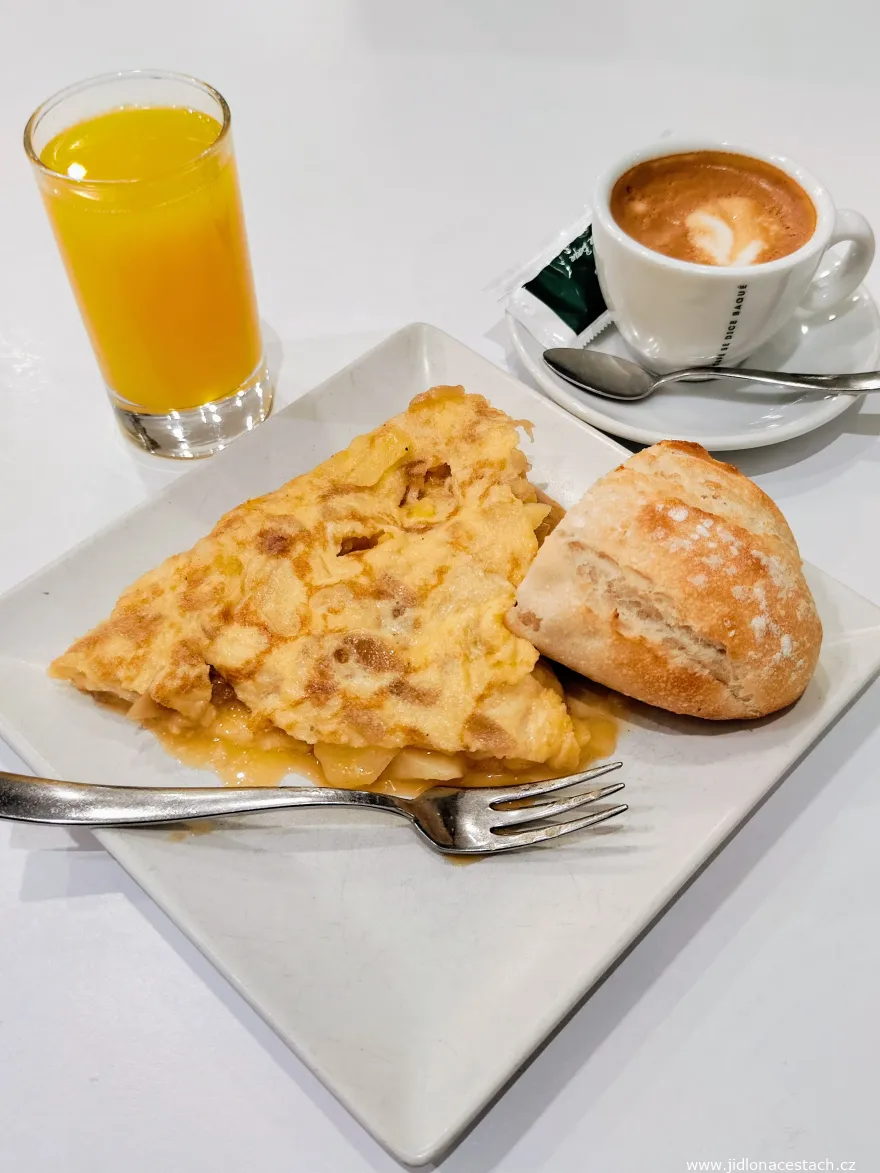
The day has its coffee stops, and you can tell them apart by the cup they come in. Mornings mean a con leche with something from the bakery - see typical Spanish breakfast - and after lunch, which doesn't start here until around two, comes the sobremesa: the lingering over empty plates that calls for a solo or a cortado, often included in the price of the working lunch, the menú del día. In summer you order café con hielo: a hot espresso arrives with a glass of ice beside it and you pour it over the ice yourself, and on the Valencian coast, with a slice of lemon, they call it café del tiempo. After dinner it's almost always descafeinado, because dinner in Spain ends at the hour when caffeine ends everywhere else. Anyone with a sweet tooth asks for a bombón, espresso poured over a layer of sweetened condensed milk, an invention of the Valencian coast from the middle of the last century. And a carajillo with brandy has nothing to do with Ireland: the story goes that Spanish soldiers in the colonies mixed it for courage (coraje), though nobody has ever proved it. The whole thing tastes like the coffee my grandparents used to make back home in Czechia: a spoonful of grounds in a mug, hot water over the top, strong, always sweetened and with no debate about where the beans came from - except that here they still make it that way, even in a bar. One practical note: a plain "un café" at the counter will usually get you a solo, so if you want milk, say so.