Gilda: A Basque Pintxo of Olive, Anchovy, and Pickled Pepper
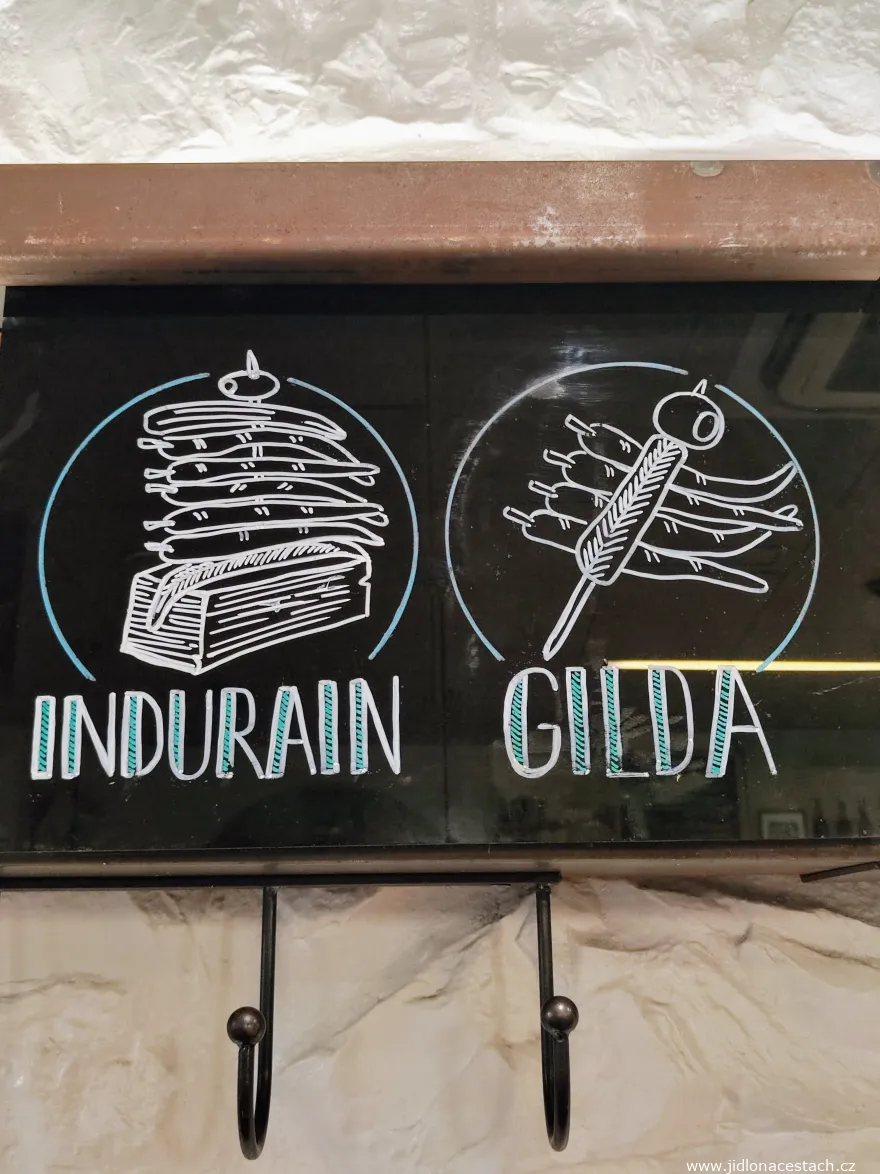
A bar counter in San Sebastián is one long glass case with dozens of nameless pintxos behind it. You order by pointing: that one with the shrimp, that one with the crab, that one with the egg. The exception is the smallest thing on the counter.
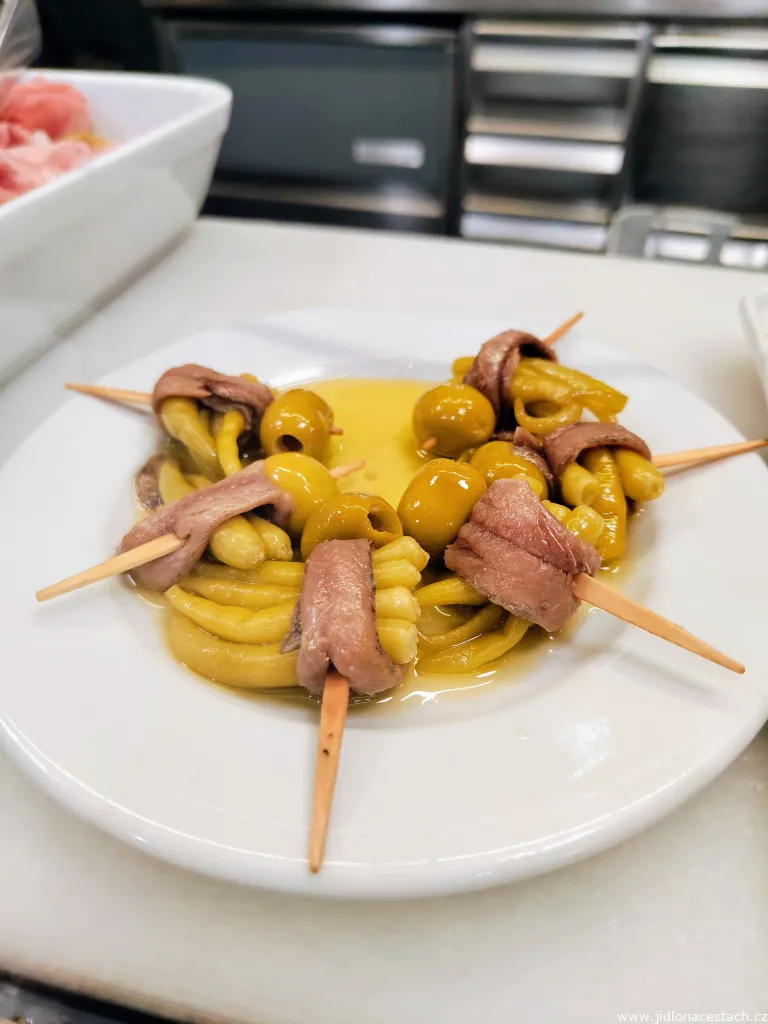
Gilda is a Spanish pintxo, or more precisely a Basque one: a green olive, an anchovy fillet and a pickled guindilla pepper, the whole thing steeped in olive oil - and it's the only pintxo on the bar with a name of its own, a date of birth and a film behind it.
Why a Salty Little Bite Is Named After Rita Hayworth
The Hollywood thriller Gilda with Rita Hayworth came out in 1946, but postwar censorship kept it out of Spain until Christmas 1947, and the Catholic Church declared it seriously dangerous. Someone at the Casa Vallés wine bar described the new pintxo in words that still get repeated today: verde, salada y un poco picante - green, salty and a little spicy, exactly like the character on screen. Nobody wrote down who said it first. The word pintxo is simpler: Spanish pinchar, to skewer, with a Basque diminutive ending. A gilda is a pintxo in the most literal sense - take away the toothpick and it falls apart into three pickled ingredients.
Geographically the gilda is easy to place: it was born in San Sebastián, it belongs to the whole Basque Country including the French side of the border, and today it's served in bars all over Spain. Spain also knows a wider family of pickles on a stick called a banderilla, named after the barbed sticks from bullfighting - a gherkin, a pickled onion, a piece of pepper, whatever's on hand. The gilda is a banderilla with a fixed recipe: olive, anchovy, guindilla, nothing else. Madrid bars do their own versions, adding octopus or cheese, and the Basques look on roughly the way Naples looks at pineapple on pizza.
Casa Vallés and the Customer with a Toothpick
The history of the gilda is short and precise, which is rare for a Basque dish. Blas Vallés and his wife Juana opened the Casa Vallés wine bar in 1942, and with the wine they served olives, anchovies in oil and pickled peppers, each in its own little dish. The gilda wasn't invented by the owner, as you sometimes read, but by a regular named Joaquín Aramburu, known as Txepetxa: he speared three things from those dishes onto a single toothpick. Casa Vallés still stands on Reyes Católicos street and still claims the invention; the sources don't agree on whether it happened the year the film was made or not until its Spanish premiere. A mistake the guidebooks make: pintxos are not a nineteenth-century tradition. The small bite on a toothpick to go with a glass at the counter only came along in the 1930s. That's why the gilda gets called the first pintxo with a name of its own. An icon of Basque food, then, came not from a cook but from a customer who got tired of picking up every ingredient separately.
What Goes Into a Gilda and How to Eat It at the Counter
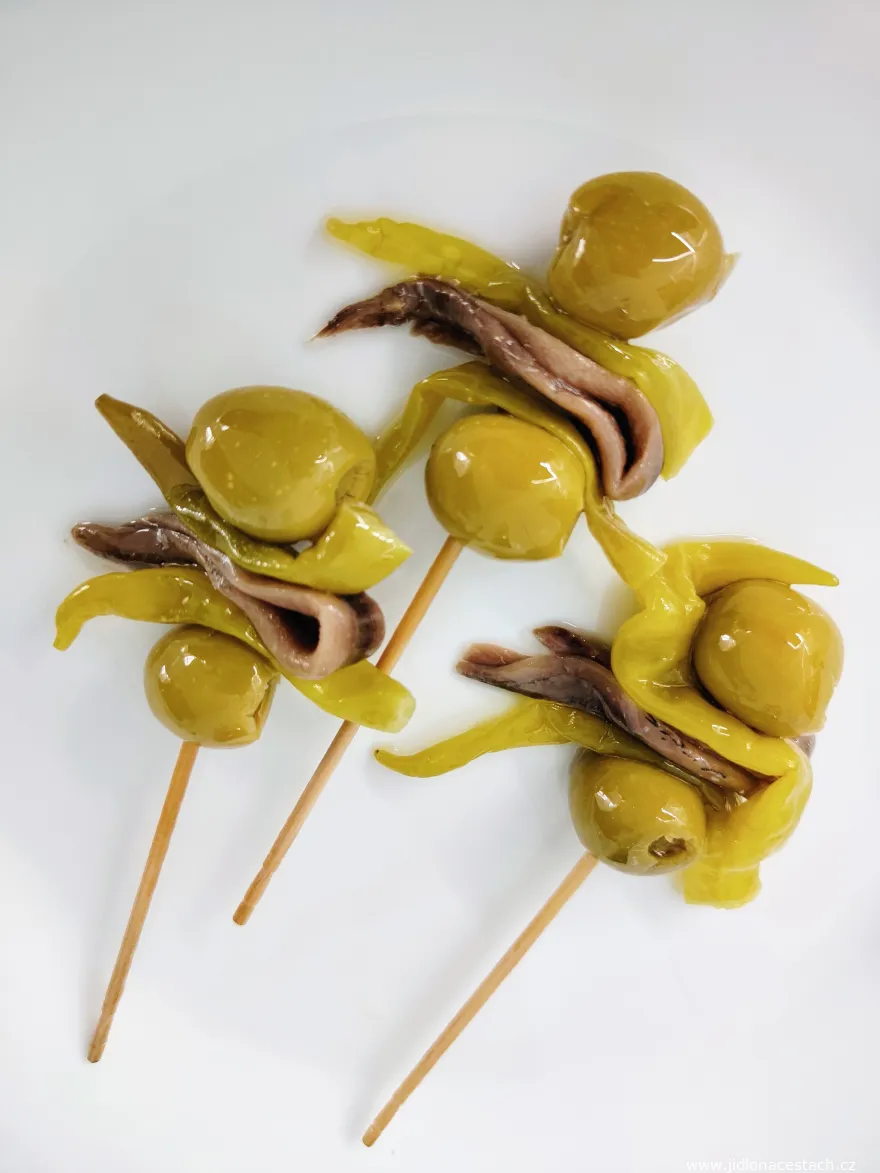
Three ingredients, each from a different corner of the map. The guindilla de Ibarra pepper from Gipuzkoa is yellow-green, thin and only mildly hot; it carries the Basque Eusko Label seal and in a gilda it supplies acidity and crunch. The anchovy comes from Cantabria, most often from Santoña, a few dozen kilometers to the west, where they've been salting anchovies for more than a hundred years, and it brings salt and fat. The olive, usually a green manzanilla, holds the two ends together and adds bitterness. Then the whole thing sits for a few hours in olive oil so the ingredients can trade flavors. Back home in Czechia we get our practice for this kind of pleasure on a jar of pickled gherkins that somebody works through to the bottom over a beer - a gilda is the same thing, just with anchovy instead of dill and oil instead of brine.
You eat a gilda standing up, in one or two bites, straight off the toothpick. It belongs to the habit of txikiteo: a small drink and one or two pintxos in each bar and then on to the next one, so the evening turns into a walk. With a gilda you drink a zurito, a small beer, the local white txakoli or, at midday, a vermouth. One thing tourists often get wrong: they take the gilda apart with a fork. It's meant to go into your mouth whole - the olive, the anchovy and the pepper should meet in your mouth at the same moment. And if you're in Gipuzkoa in December, you might catch Gilda Eguna, Gilda Day, when more than a hundred bars sell it for one euro.
A Gilda from the Counter and a Gilda from the Shelf
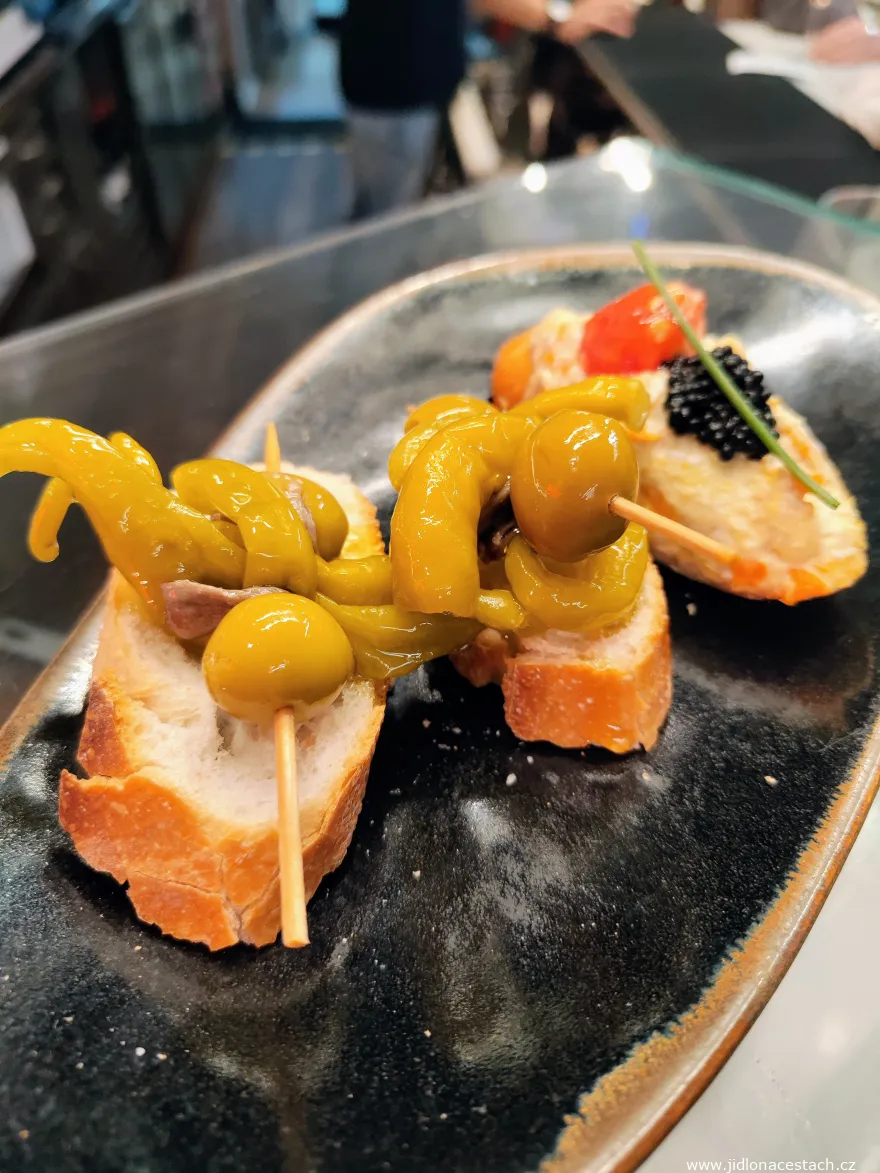
I ate my gildas in San Sebastián at Bodega Donostiarra and then at another place in town that served it on a slice of baguette, which purists frown on and which suited me fine. And then in more places. And more. The anchovy was soft and salty as anything, the pepper crunched and sent the acidity through, the olive rounded it all off and the oil stayed on my fingers - the kind of bite that has you ordering another zurito right away. One went for about 2 EUR. For comparison I also bought a pack at the Mercadona supermarket: four gildas for 2.25 EUR, roughly a quarter of the bar price. There was less anchovy in them, and you could taste it: still good, just thinner.


