Moldovan Wine: Rară Neagră, Underground Cellars, and a Glass from the South
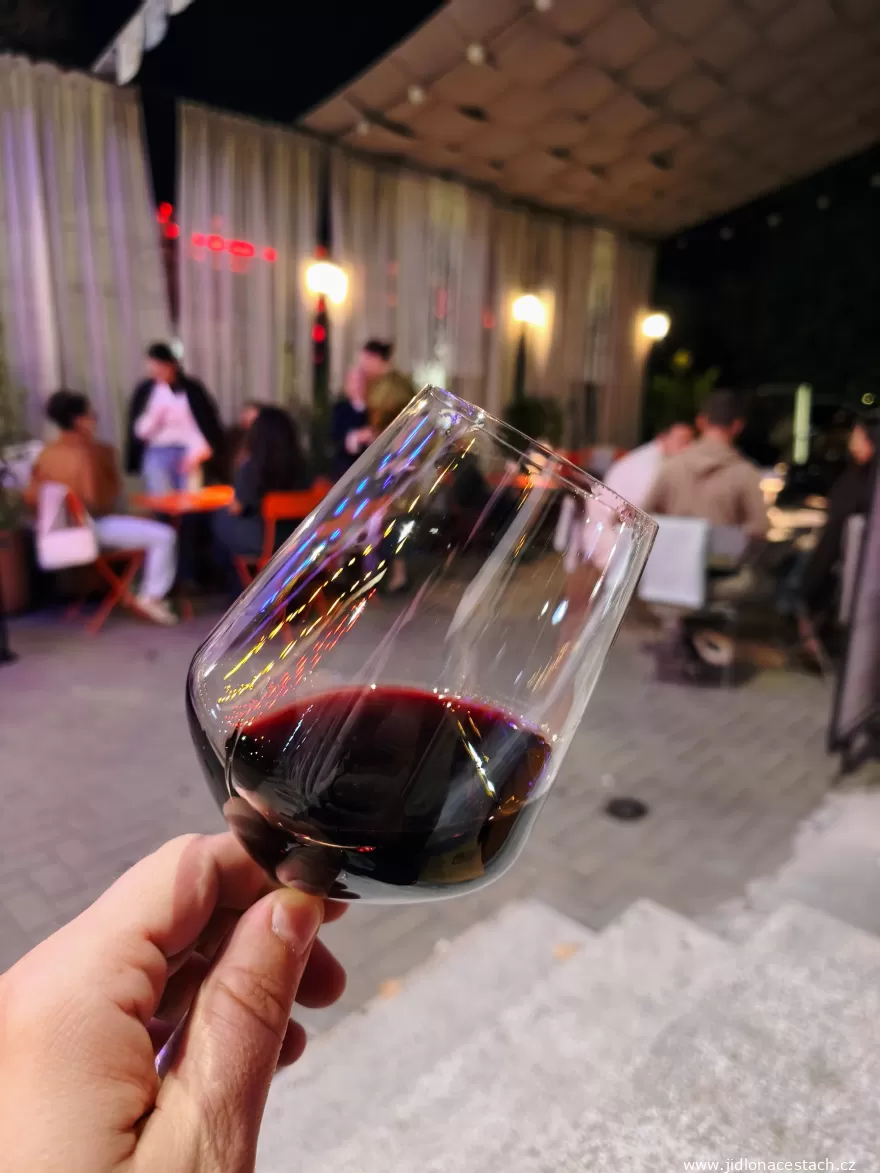
One October evening in Chișinău we headed out fairly early to the Covor bar - it was almost empty. Across the street, though, live music was coming from the terrace of the Brut wine bar. A jam session was getting going, so we changed plans, sat down under the awning and each ordered a glass of red from a winery I'd never heard of.
Moldovan wine (in Romanian: vin moldovenesc) is the biggest source of pride for both Moldovan cuisine and the economy: vines cover 7% of the farmland, wine accounts for about 8% of all exports, and it even has its own national holiday. That glass kept us at the table long after dark.
One Vine, Six Names
If you want to understand the vineyards here, you'll need a language course first. The flagship native grape, rară neagră ("sparse black"), grows across the Prut as băbească neagră, in the Ukrainian south of Bessarabia as sereksiya, and in Romania's wine regions under a handful of other nicknames - one vine, at least six names, and by New York's Finger Lakes there are even bottles labeled "Sereksiya Charni". Moldova also shares the trio of fetească grapes with Romanian wine; the only one actually bred here is the aromatic viorica, which you can try at Chișinău's self-service wine machines, for instance. All those native names cover only a fraction of the vineyard area today, though: most of it is planted with Cabernet Sauvignon, Merlot and Chardonnay, plus Saperavi from Georgia, which grows here on more than five hundred hectares - the biggest plot, curiously, in Gagauzia, among Turkic-speaking Orthodox Christians. The country's wine map is as multilingual as its streets.

Three Regions and One Roman Wall
The official map divides the vineyards into three protected regions. Central Codru surrounds Chișinău and the biggest cellars; the southeastern Ștefan Vodă was made famous by Purcari, a winery founded by tsarist decree whose Negru de Purcari, according to the winery, was even ordered by the British royal court; and the southwestern Valul lui Traian - literally Trajan's Wall - is the land of the Gagauz and the Bessarabian Bulgarians, home to both Somma and Novak. The map comes with one more number: Moldova has 3.44 hectares of vineyards for every hundred people, the most in the world according to the national wine office.
From Tsarist Colonists to Gorbachev's Axe
Guidebooks love to talk about seven thousand years of winemaking. But the only truly ancient things here are fossilized vine leaves millions of years old - and they prove there were vines, not winemakers. The well-documented glory is more recent and bears a tsarist stamp: after Russia annexed Bessarabia, colonists flocked here from across half of Europe, French grape varieties took over the vineyards in the second half of the 19th century, and before World War I the governorate had the largest vineyard area in the entire empire. Even the disaster has an exact date: phylloxera was detected on July 7, 1886, in a vineyard near the village of Teleșeu. The recovery was then driven by French cuttings brought in by Constantin Mimi, who later became governor - mostly Aligoté, which has stayed ever since. And the most famous historical praise of the local wine was written by the Moldavian prince Dimitrie Cantemir about Cotnari, which today lies in Romania: supposedly it gets you drunk after three glasses, yet leaves you without a headache. He praised its color too: the best wine, he said, was greenish and kept turning greener in the cellar.
The Soviet Union then turned Moldova into the empire's vineyard: in 1960, 220,000 hectares of vines grew here, and its wine was drunk all over the Union. That made the fall all the harder. Gorbachev's anti-alcohol campaign saw 80,000 of the country's 210,000 hectares at the time grubbed up between 1985 and 1987 - more than a third of the country's vineyards and, according to the national archives, the most in the entire USSR. So today's roughly 110,000 commercial hectares are only half the old glory; add to that, though, more than forty thousand hectares of garden vines, because vin de casă, homemade wine, is an institution here. The law gives it a category of its own: wine from hybrid grapes such as Isabella may be made "exclusively for family consumption" - you can't sell it, but you can pour it for your guests.

Two Embargoes from Moscow
The latest chapter was written by Moscow. In March 2006, Russia's chief sanitary inspector banned imports of Moldovan wines over alleged pesticides; more than 80% of exports went to Russia at the time, exports fell by two thirds and a quarter of the wineries went bankrupt. A remark made at the time, that Moldovan wine was "only good for painting fences," is still quoted bitterly in Chișinău. The second embargo came in September 2013, in the middle of preparations for the association agreement with the EU - timing nobody took for a coincidence. But Brussels promptly opened its market to Moldovan wines completely, and the industry rebuilt itself from the ground up: the share of exports going to Russia has dropped from more than 80% to under 2%, while the European Union now takes over 60%. The biggest buyer of bottles, meanwhile, is Romania: one in five bottles of Moldovan bottled wine now heads across the Prut. These days, that fence paint ships to seventy countries.
Underground Cities Full of Bottles
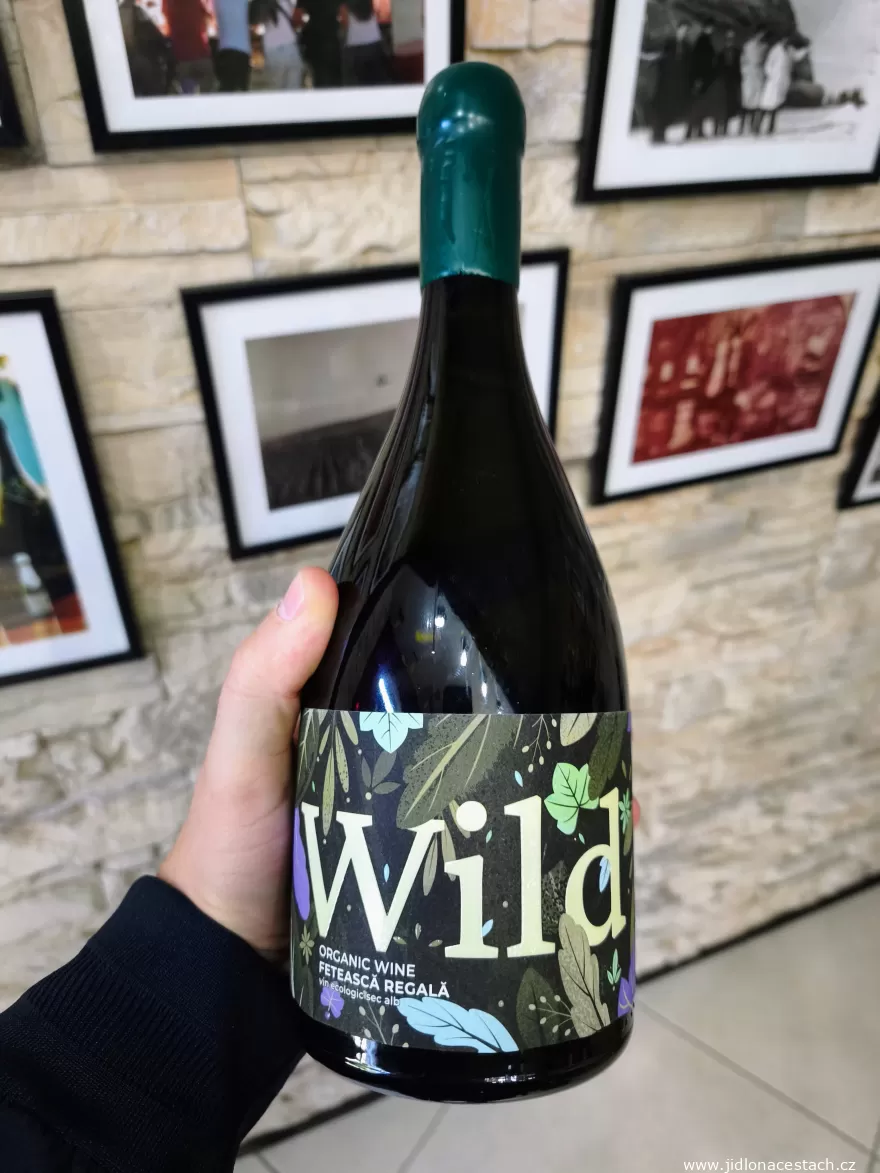
Moldova's wine pride lives underground. Two labyrinths have been dug into the limestone around Chișinău: Cricova, with 120 kilometers of tunnels, and Mileștii Mici, whose collection of over 1.5 million bottles made it into the Guinness Book of Records. We went to Cricova - the English-language tour with a tasting cost 800 MDL (39 EUR) per person, and you ride a little electric train between the barrels. Four samples then landed on the table: a sparkling rosé, a sparkling white, a still white and an archive Codru from the 2000 vintage in the vin de colecție category, meaning wines that go on maturing in the bottle for years. The best wine of the day, though, was poured for us before the tasting even began, in the underground cinema: a sparkling white from the organic Wild range, wonderfully easy to drink. I've written a separate article about the whole underground complex and the tasting.
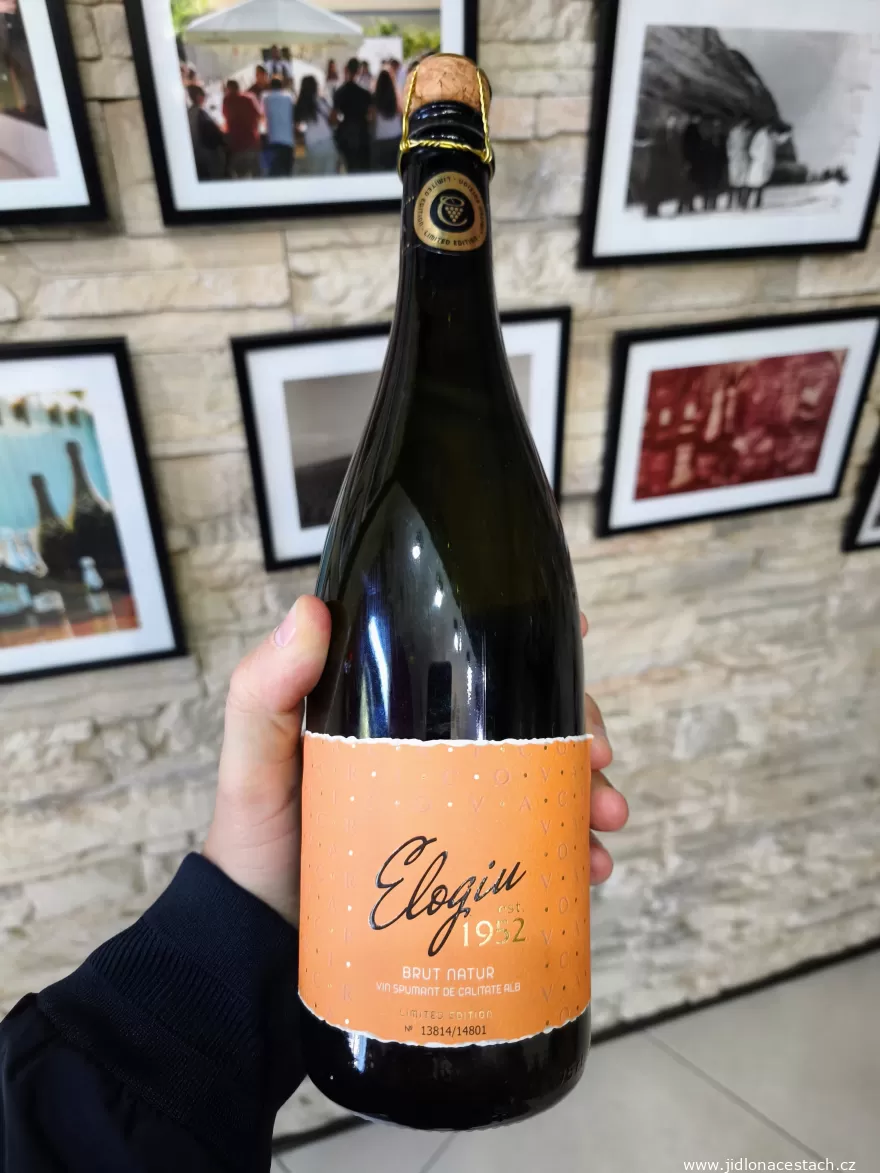
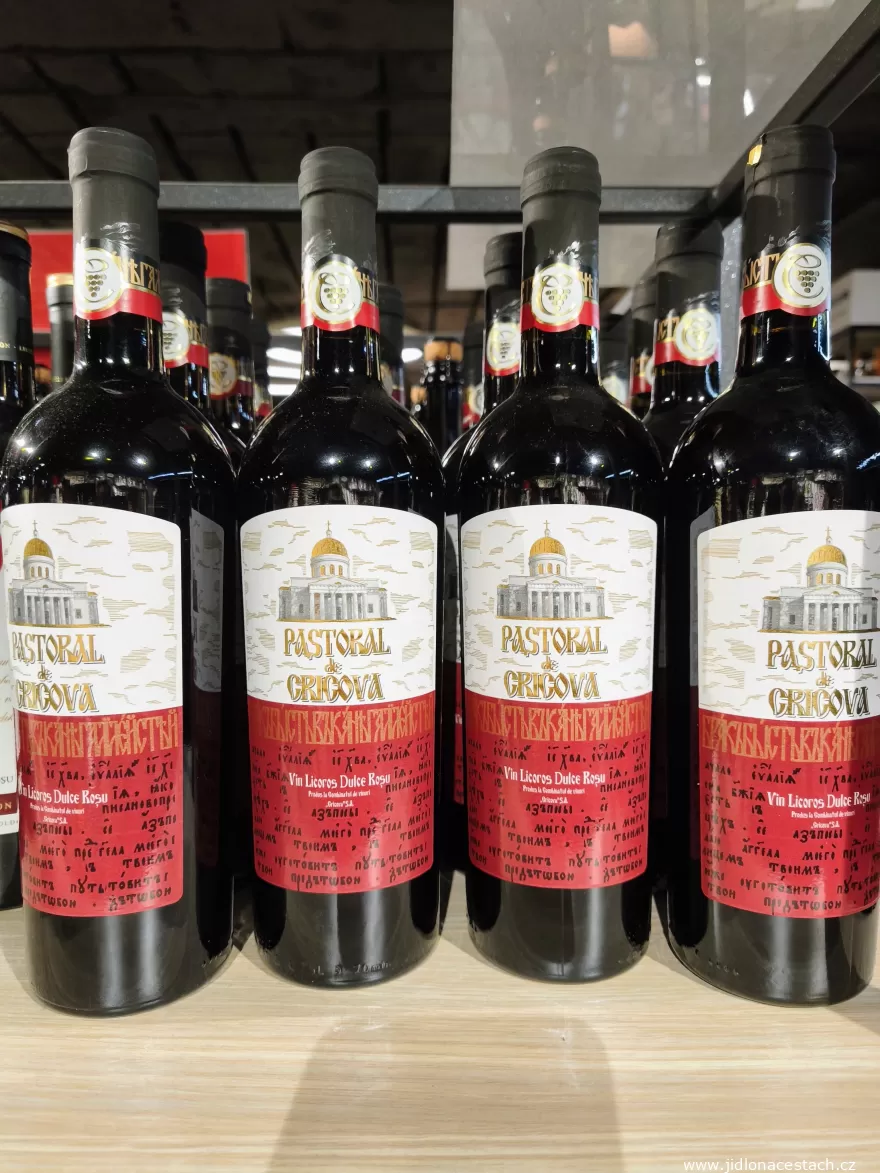
The underground shapes the style too. In the cool tunnels, sparkling wine is made by the traditional method - bottles of Elogiu Brut Natur rest on their lees for over four years at a depth no summer can reach. And alongside the bubbles, an older Soviet love lives on: sweet liqueur wines. Pastoral de Cricova, with a little church on its label, is the heir to kagor, the heavy communion wine the Russian Orthodox Church also bought from Bessarabia. So Moldova's range runs all the way from brut nature to syrupy dessert wines - and the label always gives away the sweetness, from sec to dulce.
The New Wave: Five Thousand Bottles Against Millions
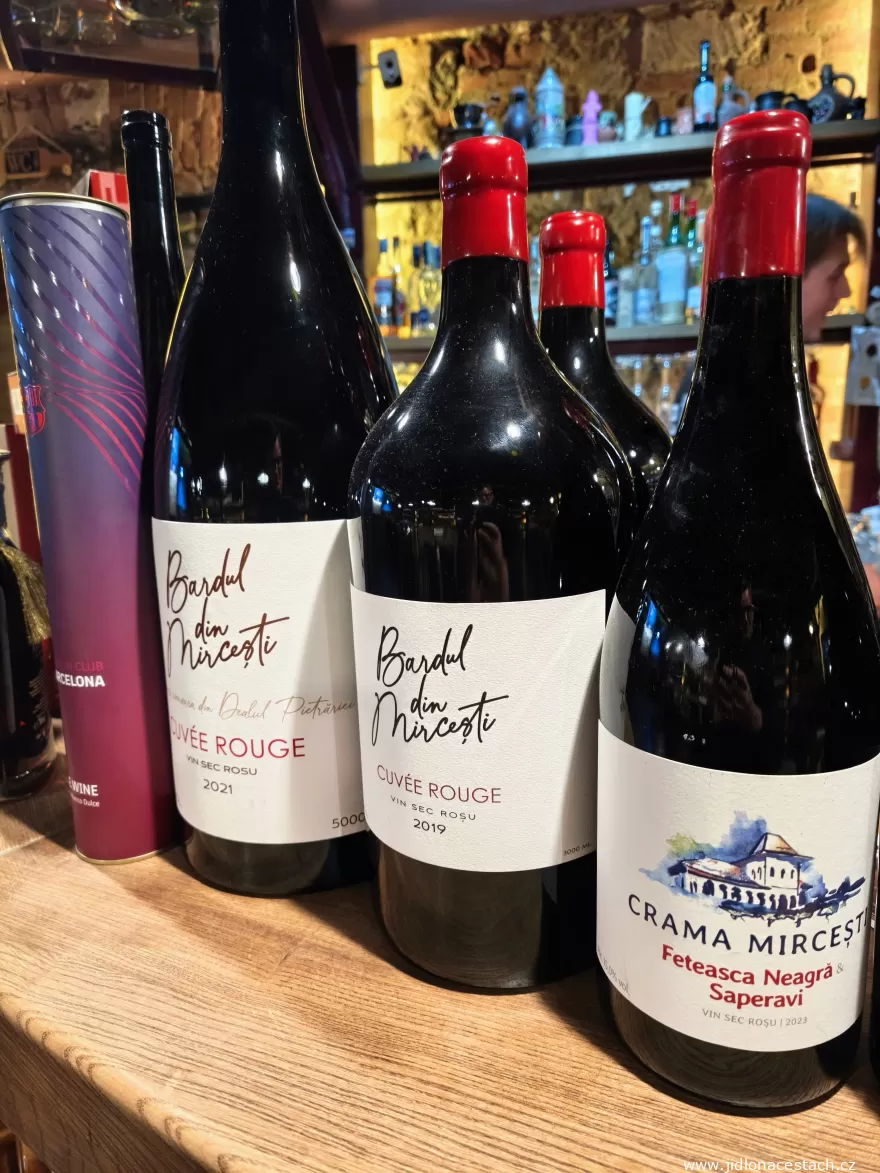
After the embargoes, a new generation grew up alongside the old industrial wineries. Somma Winery, from the Bulgarian village of Vinogradovca in the south of the country, is two brothers who spent ten years working as sommeliers in Moscow before coming back to the vines: they fill around 5,000 bottles a year, ferment partly with wild yeasts and add nothing to the wine. Their Roșu de Căuș loosely translates as "red from the scoop" - a căuș is the wooden scoop used to draw wine from the barrel. Crama Mircești near Ungheni, meanwhile, is bringing an old boyar manor back to life, and besides its regular bottles it fills five- and three-liter giants in its Bardul din Mircești range; "the Bard of Mircești" is the epithet of the poet Vasile Alecsandri, whose Mircești lies in Romania - the wine village just shares the name. And Novak, the Novak family's label, bottled in Comrat in Gagauzia, is bringing rară neagră back to market, along with the forgotten varieties alb de Onițcani and floricica. Small winemakers offer exactly what the million-bottle cellars can't: wine with a family name behind it.

When and How People Drink in Moldova
The high point of the wine year comes on the first weekend of October, when the national wine holiday, Ziua Națională a Vinului, fills Chișinău's main square with more than a hundred wineries: entry is free, and you pay for a tasting pass - a glass and ten tastings for 300 MDL (14.60 EUR, October 2026). We missed it by a week - we knew all about it, but you can't always plan a trip around the wine calendar. The south of the country also keeps its own calendar: the Gagauz traditionally don't taste the young wine before the Kasım holiday in early November, and then throw it a festival in Comrat, Şarap Yortusu. Şarap is the Turkic word for wine, so any Turk could read the festival's name without a dictionary - Orthodox, Turkic-speaking winemakers are a crash course in Bessarabian history all by themselves.
Autumn also means must, the fermenting grape juice, and winter means izvar - mulled wine like the kind you know from Christmas markets, only with honey and black peppercorns; it's heated only until the first bubbles appear and served in a clay mug that holds the heat. Wine is also distilled into divin here, and with competition like that, even Moldovan beer has a hard time. Outside the festivals, that leaves wine by the glass in wine bars and bottles from small winemakers for 120-300 MDL (5.80-14.60 EUR) in wine shops; my article What to Bring Back from Moldova will tell you which of them deserve space in your suitcase. We also did some tasting on the terrace of the Wine.md wine bar, at tables made from old wine barrels.

A Jam Session Over a Glass of Somma
Which brings us back to the terrace at Brut (see Where to Drink in Chișinău), a recently opened bar on Mihai Eminescu Street that specializes in sparkling wines, with a list running from Moldova to Spain - though what kept us in our seats was a still red. Somma Roșu de Căuș, a semi-dry blend of Cabernet and Merlot aged for a year in oak barrels, cost 100 MDL (4.80 EUR) a glass; whether it was a 100 ml or a 150 ml pour, I admit I no longer remember. Don't expect tasting notes - it was simply a great wine, and we stuck with it all evening. The bear with the Great Bear constellation on the label caught my eye, so I asked whether it was a nod to the Bulgarian Bear's Blood - the server just shrugged.

We opened the second bottle from the south, a Novak Rară Neagră 2020 from the supermarket, back at our accommodation: fresh acidity, raspberries and cherries, and more body than a grape with such a modest name would suggest; the back label recommended it with gently roasted duck or hard cheeses. And back at Brut: when the band finished after ten, we decided to give Covor a try after all - and we couldn't even get in - the place was packed to the rafters. Some bars lure guests in with their wine list - Brut reeled us in with music.


