Romanian Beer: Ursus, Timișoreana, PET Bottles and the Craft Scene
In a Romanian supermarket, the beer aisle holds something no Czech likes to see: a two-and-a-half-liter plastic bottle. As recently as 2015, more than half of all the beer sold in the country came in plastic, and although PET is slowly giving way to glass and cans, it still holds a third of the market.
Romanian beer (in Romanian: bere) is usually a pale lager from one of the three foreign corporations that dominate the market; Romanian cuisine adds a terrace, grilled mici and, over the past ten years, a few dozen small breweries that brew something other than lager. There are more than twenty brands, every one of them Romanian down to the last letter, and for most of them the name is the only Romanian thing about them.

Why Beer Is Called Bere and Who Brewed It First in Romania
Romanian took nothing from its Slavic neighbors when it came to beer. Bere comes from the German Bier, and halbă, a half-liter glass, came the same way, from the German Halbe, a half. Both words give away how beer reached the country: not from the ancient Dacians, as travel websites like to claim, but with the Habsburg army. The Dacians did ferment grain, that much is true; no source at all backs the claim that they brewed anything you could call beer. Bulgarian bira south of the Danube is the same German loanword, for that matter.
The first brewery on what is now Romanian soil stands in Timișoara, and it has a more precise birth date than most people have: on January 1, 1718, the city magistrate applied for a license to brew beer, less than a year after Prince Eugene of Savoy drove the Ottomans out of the city. The reason had nothing to do with good taste. The Banat was a marsh, its water was undrinkable, and an Austrian soldier was used to getting beer as part of his pay. The Habsburgs then built breweries beside fortresses and mines all over Transylvania and the Banat, which is why Romanian beer still has its center of gravity in the west of the country, while Wallachia and Moldavia stayed a land of wine and brandy. The Saxons, who had lived in Transylvania since the 12th century, are said to have been the first to put hops in beer - that one is a legend, and even Romanian sources call it that. The first documented trace of them is more recent: the brewery in Sadu near Sibiu, built in 1912 by Thomas Binder and his sons, whose Bere Sadu is today the only Romanian beer with a protected geographical indication. Timișoreana burned down in the meantime, was rebuilt, supplied beer to the royal court after the First World War, and is still poured under the same name today.
Three Corporations, One Country: Who Owns Ursus, Timișoreana and Ciuc
The lid of an Ursus can is stamped "Cluj 1878", and that is only half true. A brewery really did open in Cluj that year, and it has been selling beer under the name Ursus, Latin for bear, since the late 1920s; but the Cluj plant brewed its last in 2010 and three years later it was razed to the ground. Today's Ursus is brewed in Brașov, Buzău and Timișoara, and it belongs to the Japanese group Asahi, which bought it in 2017 along with Timișoreana, Ciucaș and the Azuga brand. The second biggest player is Heineken, with Ciuc from Miercurea Ciuc, Golden Brau and Silva; that last one is an odd case - the brewery in Reghin opened in 1972, was the first in Romania to export beer, and brewed it from ingredients shipped in from Czechoslovakia. Silva is brewed elsewhere now and Reghin has no brewery at all. Third comes Bergenbier from Ploiești under Molson Coors, which also brews Staropramen, Stella Artois and Beck's there. Those three hold over seventy percent of the market; add the maker of Tuborg and the homegrown Romaqua and you are over ninety. And if Ciuc and Ciucaș blur together for you, you are not alone: the first is Heineken, the second Asahi, and on the shelf they stand side by side like two cousins who don't speak to each other.
Romanians drink a lot of it, just not as much as they used to. In 2021, with 95.6 liters a head, Romania was the fourth biggest beer country in the world; consumption has since dropped to a little over eighty liters and the country has slid into the bottom half of Europe's top ten. It is still the most popular alcohol in the country, though: about a third of Romanians name beer as their drink, a fifth wine, and only a few percent țuică, which gets called the national drink here - brandy is for christenings and weddings, beer is for weekdays. The neighbors drink less, Bulgarians around 76 liters, Hungarians a little over 60.

The Land of the Two-and-a-Half-Liter Bottle
The plastic is down to one man and one winter. In December 1998, Virgil Mailat of the Bere Mureș brewery filled a PET bottle with Neumarkt beer for the first time; his Slovak suppliers had reportedly told him that putting decent beer in plastic was madness. Romanians bought beer for home by the liter, not by the bottle, a two-liter bottle worked out cheaper than four half-liters, and in under twenty years more than half the beer in the country was sold in plastic. The peak, 53 percent, came seventeen years in; PET has been losing ground every year since, and in 2025 the market split for the first time into three almost equal shares, plastic, glass and cans. Plastic is where the cheaper brands go - Ciucaș, Golden Brau, Bergenbier, Timișoreana, Noroc; order a bere la halbă in a pub and you will often get the same beer from the tap, and nobody mentions plastic.
The Craft Wave since 2013: A Vulture, a Goat and Seven Hills
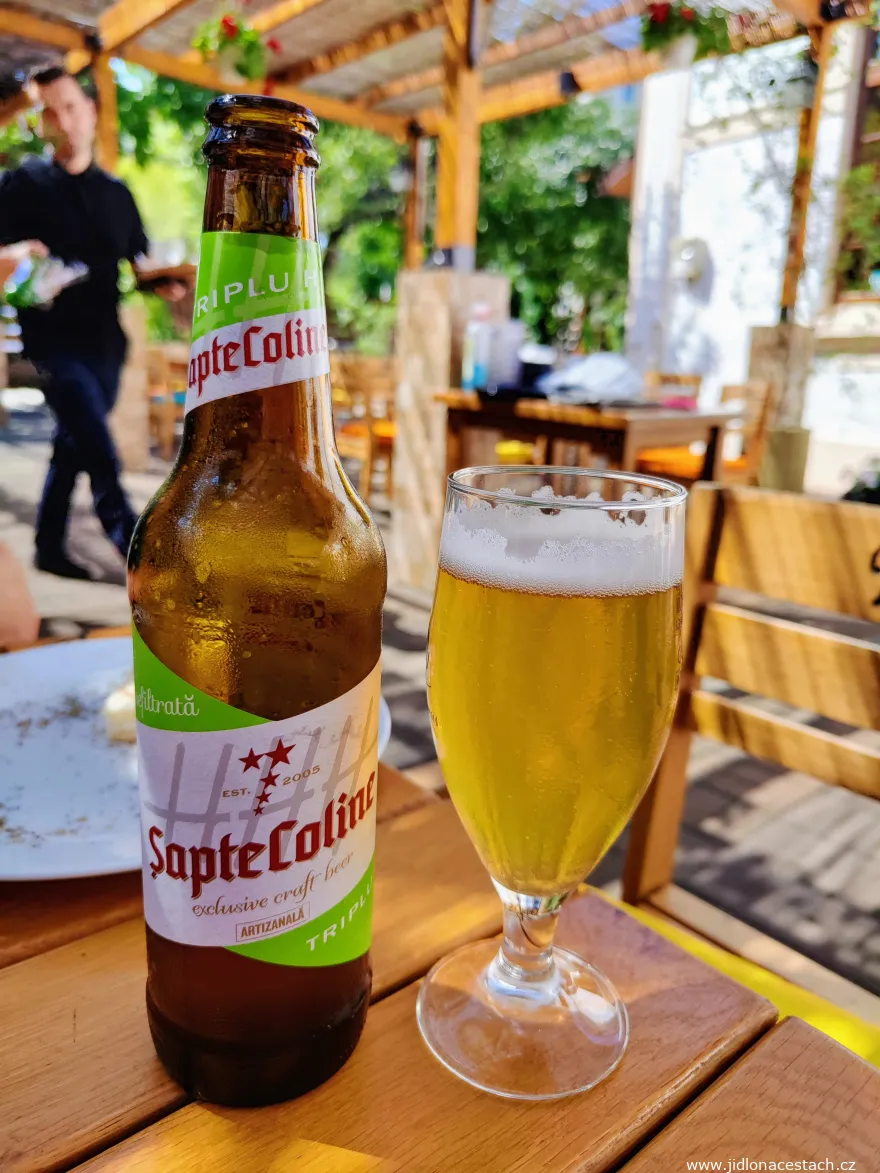
When Zăganu got going in 2013, there was practically no craft scene in Romania. The small breweries from the years after the revolution had all folded by 2010, so when Alexandru Geamăn and Laurențiu Bănescu filled the first bottles of Zăganu in Măneciu in Prahova county, they named it after a bird of prey that had vanished from the Romanian mountains more than eighty years earlier - just like all those breweries they wanted to bring back. Around fifty microbreweries have opened in the country since 2015, and two of the most interesting addresses are in Iași (also spelled Iasi), in the east, where the historic drink is wine. Capra Noastră, Our Goat, is brewed by Ionel Păsărică the Belgian way, with bottle conditioning: a single batch takes sixty days, but the beer keeps for years, and the goat in red rubber boots is exported to Belgium too - the very country the method was borrowed from. Șapte Coline, Seven Hills, has a story from a different genre - the brewery opened in 2005, closed four years later, and in 2018 was brewing again in Tomești outside the city, this time brewing a Munich-style märzen as well.
And then there is Bucur, which looks craft and isn't. Bere de bulevard, beer from the boulevard, was launched in 2019 by the maker of Tuborg in Pantelimon near Bucharest as a premium brand built on old Romanian recipes, and it sold over a million liters in its first year. There is nothing wrong with that, just know it going in. The same goes for Bucharest's Caru' cu Bere, which websites list as a brewery and which is nothing of the kind: it is a beer hall from 1879 that had its beer delivered by horse-drawn cart, hence "the cart with the beer" in the name, and today it is one of the best-known restaurants in the country. The beer still gets delivered. Just without the horses.

How to Order Beer in Romania and What to Drink It With
Draft beer is bere la halbă or la draft; a halbă is half a liter these days, even if the old wooden tankards held only four hundred milliliters, and sizes differ from place to place, so o bere mare means something slightly different in every pub. Beer here goes with summer, a terrace and a hot grill: with mici, those skinless meat rolls, you drink nothing else. In September and October, Brașov hosts the only Romanian Oktoberfest with Munich's blessing, founded below Mount Tâmpa by the local Saxon community. If you want to see what the country brews besides lager, look on the label for the word artizanală, craft, and not for the word "premium" - every corporation slaps that one on its label these days.
Four Beers in Iași
I tasted my way through Romanian beer in Iași, over several days and in several places. Three glasses arrived on the terrace of the Beraria Veche restaurant (see Where to Eat in Iași), under a reed-thatched pergola: Bucur in the brand's own glass with the top hat on it, a pale, clean, unremarkable lager, exactly what you expect from a beer "from the boulevard"; Șapte Coline, filtered and noticeably more hopped, a beer from the city that put its seven hills on the label; and Capra Noastră in a tulip glass, cloudy, amber, with a thick head and the fruity, faintly yeasty flavor of the Belgian school, and those sixty days in the bottle showed. The fourth beer, Ursus Black Grizzly, dark and six percent, I bought in a shop and drank on the way, in a park, out of the can. It was sweeter and heavier than an August afternoon deserved. The brewery that stamp brags about has been gone for ten years. The goat's glass said "făcută în Iași", made in Iași, and that one was true. So of four Romanian beers, only one carried the name of the city where it was actually brewed.