Spanish Olive Oil: Virgen Extra and How to Spot It
Rome sits on seven hills and built itself an eighth. It's called Monte Testaccio, it stands thirty-five meters high and it's made of broken pottery: the remains of more than fifty million amphorae that carried olive oil into the city for three centuries. Eight out of ten of them were filled in what is now Andalusia.
Spanish olive oil (in Spanish: aceite de oliva) is the juice of milled and centrifuged olives, and Spanish cooking pours it over bread and into the pan - and Spain makes more of it than anyone else in the world, in a good year around forty percent of the global harvest.
Why the Word for Oil Is Arabic - and Latin in Catalonia
The Spanish word for oil is one the Arabs left behind: aceite comes from Andalusi Arabic az-zayt, literally "olive juice", and the olive itself, aceituna, grew from the same root. Latin oleum never left the country, it just retreated to the edges: in Catalan, oil is oli. The Portuguese, on the other hand, side with Castile and use the Arabic azeite. One country, two language families for the same liquid - the Arabic word won where oil was pressed and sold most in the days of al-Andalus, in the south.
Olive oil is food for the whole Mediterranean, not a Spanish invention: behind Spain, depending on the drought and the harvest, come Italy, Tunisia (there's a separate article here on Tunisian oil), Turkey with its olives and Greece. The province of Jaén in southern Spain produces more oil on its own than the whole of Italy - and yet for a long time the premium label was the Italian one. There's a reason for that: almost half of Spain's exports once went to Italy in tankers, to be bottled there under an Italian label. Today it's about a fifth. The Spaniard in the Italian suit is slowly going out of fashion.
Who Brought the Olive to Spain and How Old the Oldest Tree Is
Guidebooks credit the olive to the Romans, but the Romans arrived to find the job done. The grafted olive tree was brought to the peninsula by the Phoenicians and, after them, the Greeks, centuries before Rome; the Romans turned growing it into an industry and made the south of Hispania the storehouse that filled the amphorae for Rome - hence the hill. Spain's oldest documented olive tree stands in Ulldecona in southern Catalonia; guidebooks put it at more than two thousand years old, while radiocarbon dating issued it a birth certificate for the year 314 AD. Seventeen centuries is still a respectable age for a tree. And it never claimed those two thousand years itself.
What Virgen Extra Means and Why Good Oil Should Catch in Your Throat
In a Spanish oil mill, the almazara, nothing actually gets pressed anymore: the olives are milled into a paste and the oil is spun out of it in a centrifuge; as long as the temperature stays under 27 °C, the label is allowed to say "cold extraction". Picual from Jaén accounts for half of Spanish production - a pungent oil with a bitter streak and the smell of tomato leaves; Arbequina from Catalonia is its gentle opposite, with green apple and almond; Manzanilla cacereña and Perdigón from Extremadura give a golden, dense oil with almost no bitterness. There's a trap on the label: virgen extra is pure olive juice with no defects, while plain "aceite de oliva" is refined oil with a little virgin oil added for flavor. And the bitterness and the burn at the back of the throat that newcomers write off as a flaw is the signature of fresh oil full of polyphenols - a round, mild oil is usually older, not better.
Most of Spain's oil doesn't get eaten in restaurants but at breakfast: tostada con aceite, toasted bread drizzled with oil and salted, sometimes with tomato rubbed over it, is the typical Spanish breakfast. For a Spaniard it's what bread and butter is back home in Czechia - a breakfast nobody thinks about. For generations the bar tables came with an aceitera to go with it, a refillable oil cruet that a royal decree banned in 2014: oil has to reach the table in a labeled bottle with a cap that can't be refilled. If you want to know what's being poured for you, turn that bottle around - you're looking for "virgen extra" and the harvest year, not just a best-before date. More than ten years on, there are still plenty of places with the old cruets; the law is seeping in here the way bitterness seeps into oil, slowly.
The Bottle on the Table in Alicante
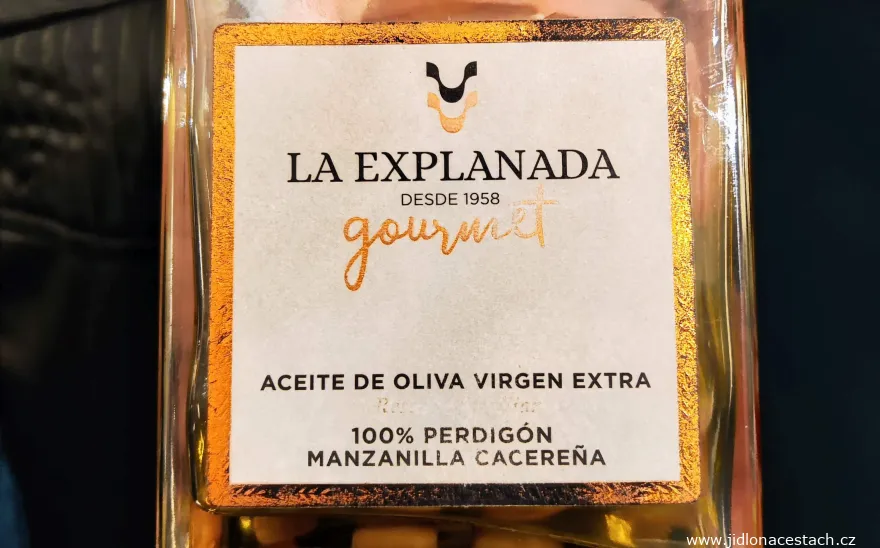
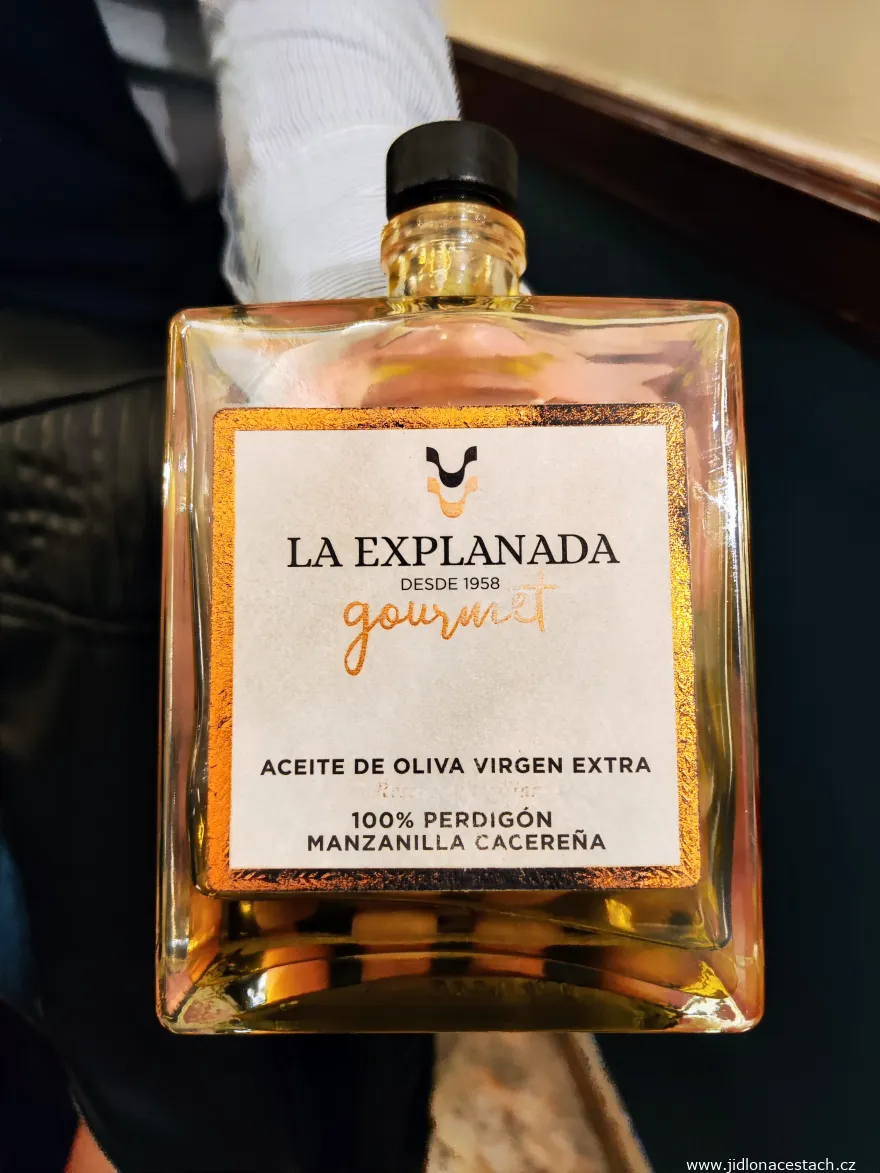
I paid the closest attention to Spanish olive oil in Alicante, at the Tabula Rasa restaurant (see Where to Eat in Alicante), a place listed in the Michelin guide, where the tasting menu came with a bottle of oil on the table - labeled, exactly as the decree requires. It was La Explanada extra virgin, the brand of an Alicante company that has been in business since 1958; the Perdigón and Manzanilla cacereña olives, though, come from Extremadura. Golden and thicker than I'd expected oil to be, tasting of ripe apple and banana, with almost no bitterness. There was no price on the bill - the oil was part of the menu, just like the cutlery. Rome built itself a hill out of Spanish oil and Italy still bottles it as its own. In Alicante they simply brought it to the table.


