Conservas: Spanish Canned Goods as a Delicacy
I was sitting in Valencia over a glass of Agua de Valencia, quietly watching the tables around me. They were ordering one can after another, and nobody looked as if the kitchen had run out of ingredients. In my head, a can was filed under dinner you eat when there's nothing else left - and here it was on the menu between the ham and the cheese, at a price that would buy you a main course back home in Czechia.
In Spanish cuisine, conservas are canned fish, seafood and vegetables that a bar serves as tapas straight out of the can - and charges for as a delicacy, not as a last resort.
What Conservas Means and Who Makes Them
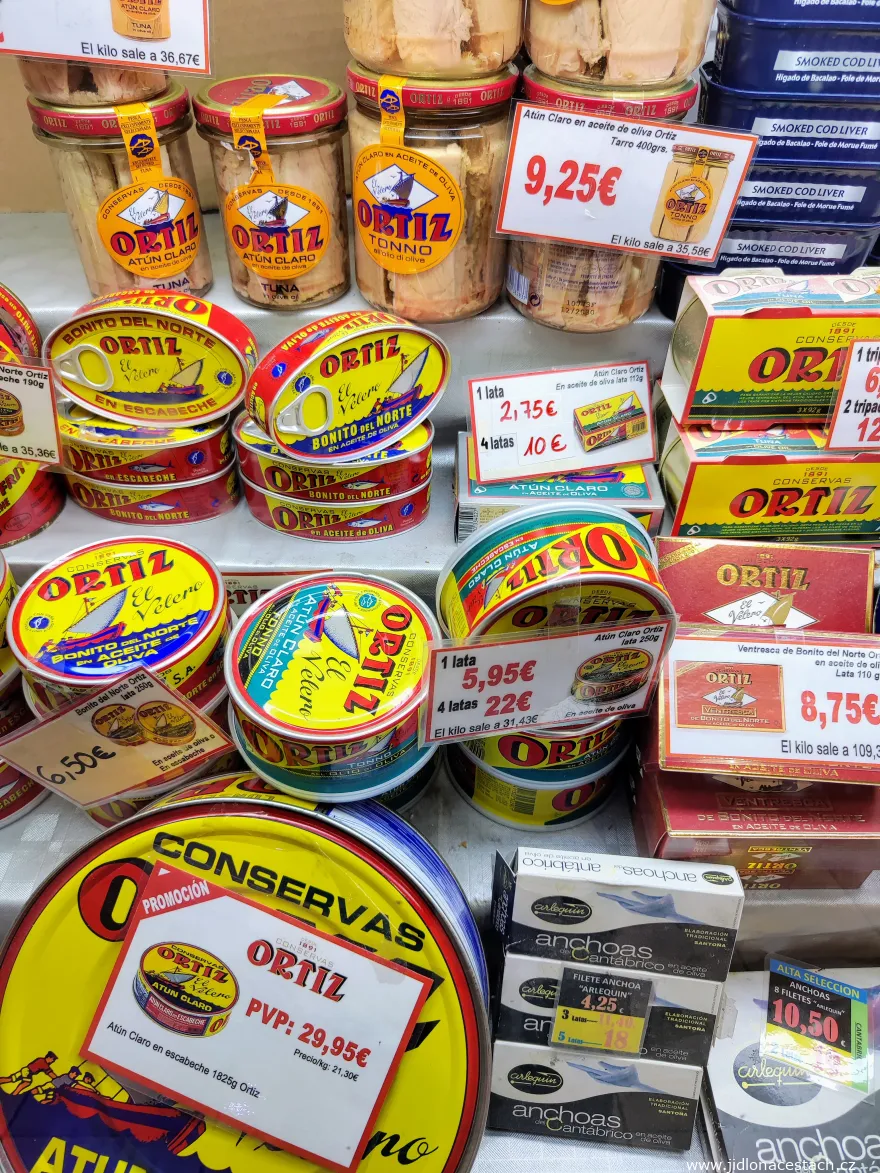
The word conserva comes from the Latin conservare, to preserve, and a Spaniard uses it for anything preserved - in a can, in a jar, in an earthenware pot. Lata is just the can as packaging. On a menu, though, the two words end up meaning the same thing - "(lata)" after the name means they won't bring you a portion on a plate but the whole original can, opened at your table. So the price isn't for a dish, it's for one particular product with a brand on the lid - and Spaniards know those brands the way we know our breweries back home.
Spain didn't invent the can of fish. Industrial canning of sardines started in France, French cuisine spent the 19th century telling the world what a can should look like, and Portuguese cuisine keeps up the tradition of vintage sardines to this day that gourmets let age like wine. Spain, though, has since become the largest producer of canned fish in the European Union and the second or third largest in the world, more than 300,000 tons a year, with roughly six firms out of ten based in Galicia. It's an all-Iberian trade in which Spain has the biggest factory.
A Ship off Finisterre and Other Legends
Galicians like to tell how canning came to them by accident: a French ship that went down off Cape Finisterre in 1840, and a crew who repaid their rescue by teaching the locals to preserve sardines. The sources give it an honest "the story goes" and nothing more. The documented history is more sober and starts somewhere else - the first Spanish cannery opened in 1828 in Gijón in Asturias, and Galicia only joined in after 1850. The real takeoff came out of the neighbors' desperation: when sardines disappeared from the Breton coast in the 1880s, French businessmen moved production to Galician ports, and the first Galician cans were sold under French labels, because otherwise nobody would have bought them.
Why a Can of Mussels Costs as Much as Dinner
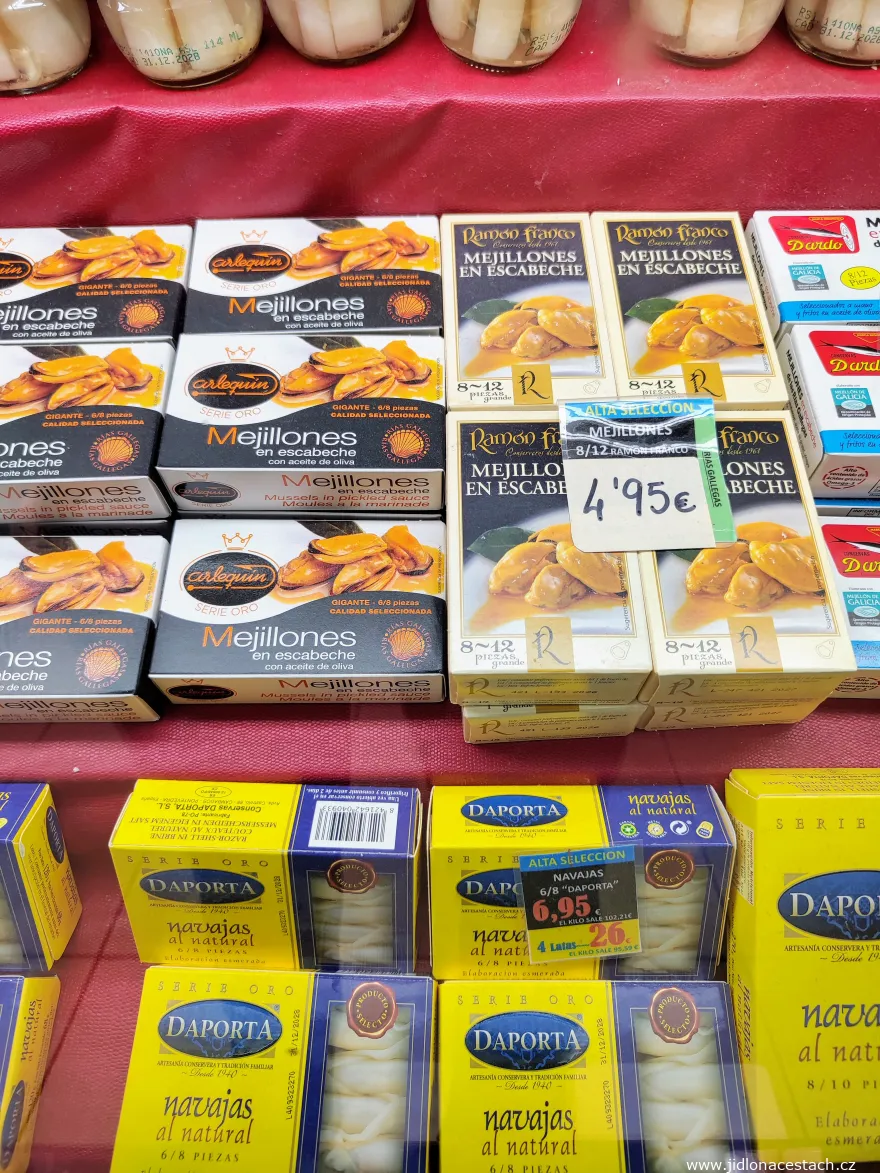
There are two reasons for the price on the lid and neither of them is marketing. The first is handwork: in the better canneries mussels, cockles and anchovies are still cleaned and packed into the cans by hand, one piece at a time, and anchovies spend months curing in salt before anyone slits them open and bones them. The second is time in the tin: the contents keep maturing in the oil or the brine - mussels en escabeche in a vinegar marinade with paprika are better after a year in the can than after a month. Back home the only counterpart is a can of sardines in oil, the one you open when there's nothing in the fridge. Here a can gets opened when there's something to celebrate.
The ideal hour is la hora del vermut, the glass of vermouth before lunch that comes with olives, marinated anchovies and exactly this kind of can - a custom Spain took up in the 1940s. If you want to find out everything Spain puts in a can, ask at the market for codorniz en escabeche, quail in marinade; it isn't everyday food, but they have it wherever they have pheasant too. And on a menu always check whether "lata" follows the name: then you're paying for a whole can, not for a tapa, and it's worth sharing.
A Platter from Around Novelda
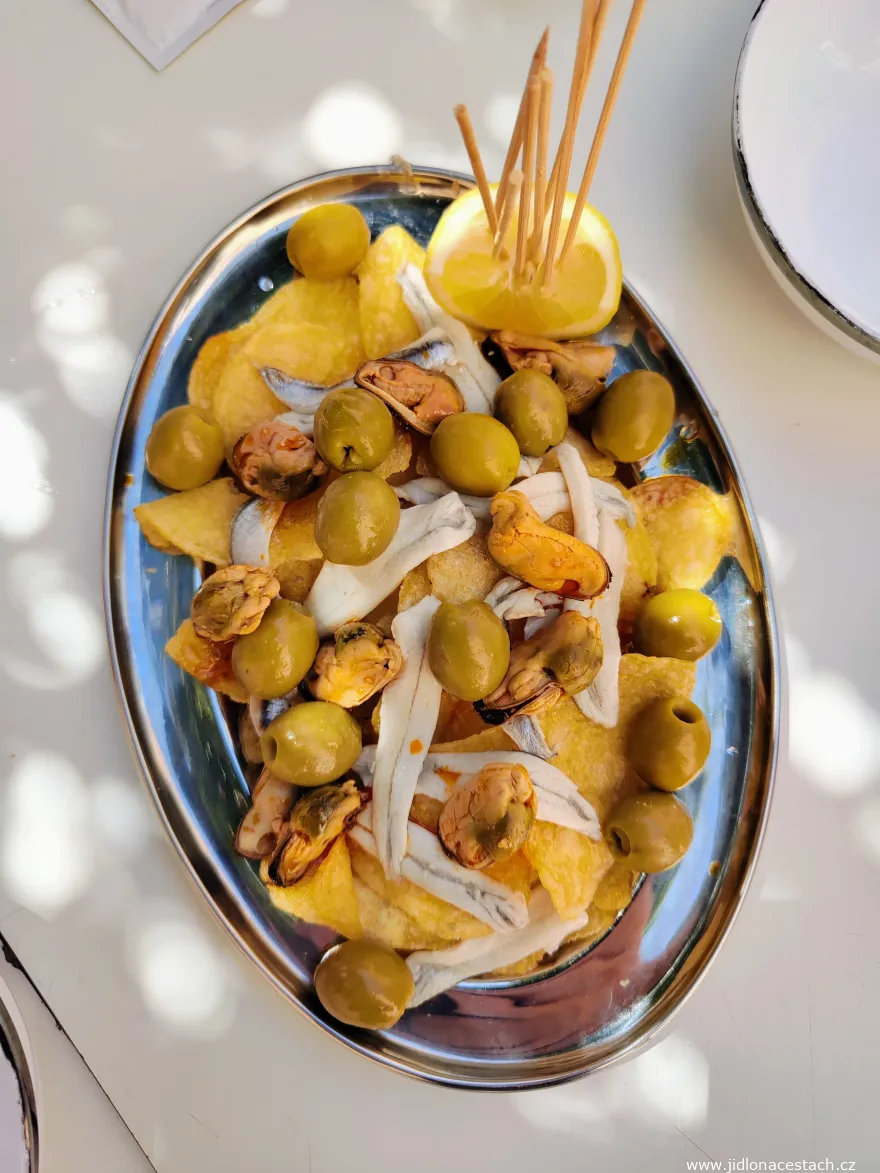
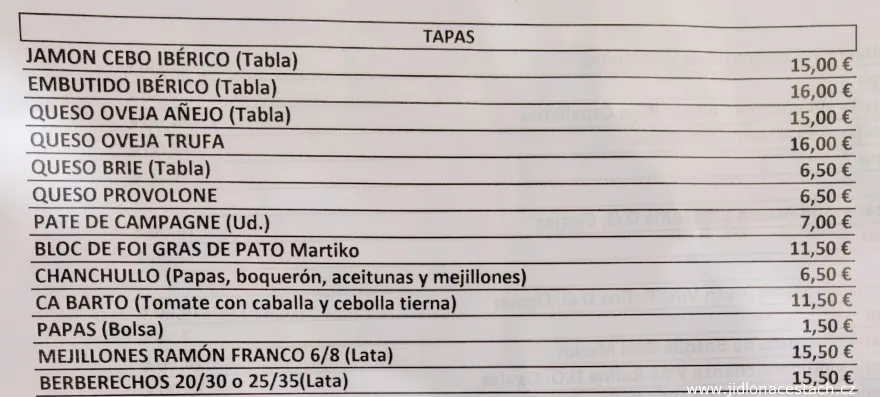
The closest I got to Spanish canned goods was in Alicante, at the central market, where a shelf of tuna stands next to boxes of mussels and razor clams, and then around Novelda, where the local aperitif, chanchullo, is assembled from cans: a layer of potato chips, mussels in marinade on top of them, cockles, anchovies in vinegar and olives, with toothpicks and lemon on the side. In the rest of Spain chanchullo is an ordinary word for a scam or a fiddle; in Novelda it's a plate the town throws a festival for. On the restaurant menu the chanchullo was 6.50 EUR, a can of Ramón Franco mussels and a can of cockles both 15.50 EUR, each with "(lata)" after the name. The mussels were soft and sour from the marinade, which ran down onto the chips and softened them exactly where the two met, the cockles salty and firm, the anchovies cold and sharp, as if someone had tuned the whole plate against itself. It was the most honest scam I ever ordered in Spain.