Paella: A Guide to Spanish Rice Dishes
In October 2016 the British cook Jamie Oliver posted a paella recipe with chorizo in it. Spanish social media went into meltdown for days. Thousands of outraged replies piled up under the post and one of them became a catchphrase: "Take the chorizo out. We don't negotiate with terrorists. First warning." The affair earned the name Paellagate, and not even a public show of support from the chef José Andrés got Oliver off the hook.
Paella is a dish of short-grain rice cooked in a wide, shallow pan, the calling card of Spanish cuisine - and at the same time the recipe it polices most strictly. Yet it's only the most famous member of a large family: Spanish rice dishes go collectively by arroz, and it pays to know more than one.

Why Paella Is Named After a Pan
The word paella doesn't originally mean a dish at all. It's the Valencian name for a flat metal pan with a low rim and two handles - by way of the Old French paële it goes back to the Latin patella, a small dish. The name jumped from the pan to the food by the same shortcut that lets you order a glass when what you want is the wine. The rest of Spain now calls the pan a paellera, but a Valencian will explain that only outsiders need that word: at home the pan and the dish are both simply paella. And the charming story that the name comes from the Spanish para ella - "for her", because men supposedly cook paella for their wives - is folk etymology. Pretty, but unsupported.
Rice was brought to the marshes around Valencia by the Arabs back in the early Middle Ages, and it's still grown by the Albufera lagoon today. Paella itself, though, only shows up in writing from the middle of the 19th century - and in the first cookbooks it still went by arroz a la valenciana, rice the Valencian way. It started out as a regional dish of Valencian farmworkers, not a Spanish national dish - at home that unofficial title is claimed by tortilla de patatas as well, and it was mostly the rest of the world that turned paella into a national symbol. Valencia has made its peace with that in its own way: if it has to share paella with everyone, it has at least kept the right to say what's wrong with it.

Ten Ingredients and No Chorizo
Spaniards argue about what belongs in a real Valencian paella with an energy that back home in Czechia only the Christmas potato salad can stir up. In 2022 science joined in: a study from the Catholic University of Valencia worked out that an authentic paella valenciana contains exactly ten ingredients - rice, water, olive oil, salt, saffron, tomato, flat green beans, big white garrofó beans, chicken and rabbit. No peas, no onion, no seafood alongside the meat - let alone chorizo. Saffron gives it the color, olive oil the base, and instead of stock you pour in plain water: the dish is meant to build its own flavor, right there in the pan. Since 2021 paella has been protected as intangible cultural heritage of the Valencian Community; the decree wisely stopped short of a binding recipe, so the tradition is safe and the argument can carry on.
The second rule is just as strict: once the liquid goes in, the rice is never stirred. The exact opposite of Italian risotto, which is stirred until it turns creamy - in paella every grain is supposed to stay separate. The reward for that restraint is socarrat, the layer of rice that crisps and caramelizes over the flame in the last few minutes. The name comes from the Valencian verb socarrar, to scorch, and it's the most flattering use of that word anywhere in food. For anyone in the know, socarrat is the most prized part of the pan; the story goes that the last scraps are fought over in silent spoon duels. It's only seconds away from being burnt - which is why plenty of restaurants would rather skip it than risk a complaint from a diner who takes the crunchy bottom for a mistake.
The Arroz Family: From Black Rice to an Egg Crust
Once you move past the paella heading on the menu, the arroces section opens up - and there the rice behaves far more freely. Arroz negro is dyed black with cuttlefish ink and comes to the table with garlicky alioli; both the Catalan and the Valencian fishing coasts claim it, so there's an argument about the origin here too. Arroz al horno, oven rice, started out as a way of using things up: into an earthenware dish went the rice and the leftovers from Sunday's pot - chickpeas, potatoes, sausage, blood sausage - and the whole thing went into the oven. A good part of the Valencian rice repertoire is simply leftovers promoted to the main event and nobody is embarrassed about it.
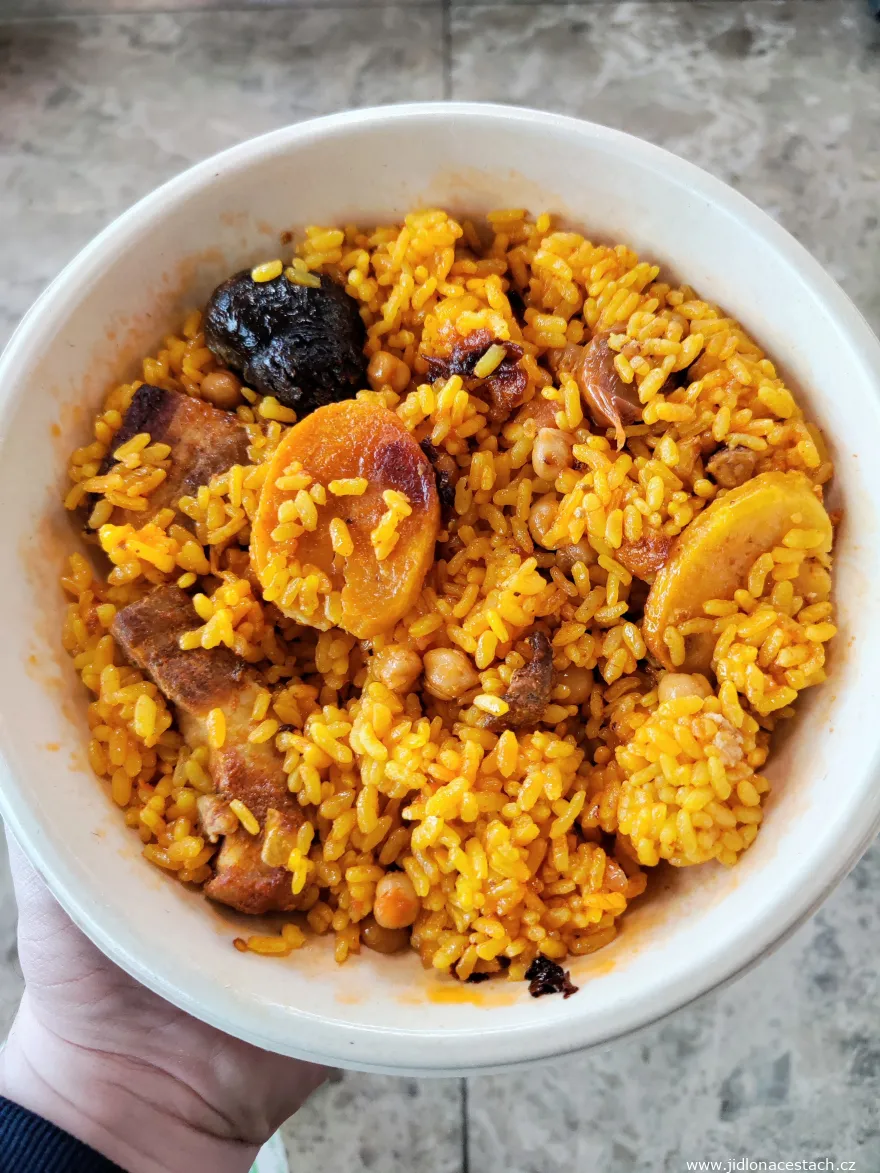
Rice with a crust, arroz con costra, is baked until a golden, puffed layer covers the surface - the crust isn't cheese, as a Central European would expect (and as I expected myself), but beaten eggs. The towns of Elche and Orihuela in the south of the province of Alicante both claim to have invented it. Arroz del senyoret, the little gentleman's rice, comes with the seafood already peeled so you don't get your hands dirty; one legend credits the painter Joaquín Sorolla, who supposedly couldn't peel a shrimp. The province of Alicante adds the seafaring arroz con boquerones, rice topped with fresh anchovies. And modern kitchens come up with combinations of their own, such as arroz con secreto ibérico with a marbled cut of Iberian pork - it isn't tradition, but I haven't heard anyone complain.
Arroz a Banda: Rice Cooked in Fish Stock
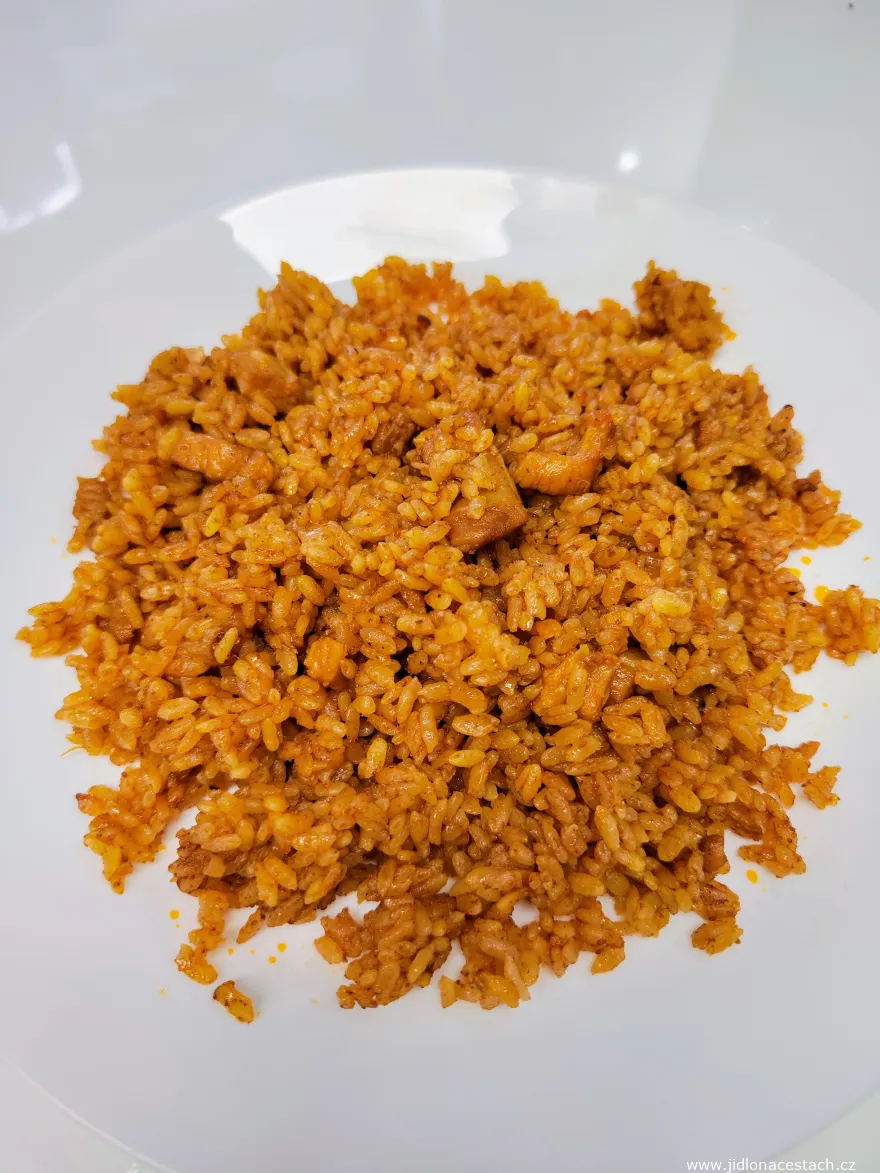
The humblest pedigree belongs to the rice you're most likely to overlook on the menu. Fishermen in Dénia and Alicante used to make a strong stock out of the small bony fish they hadn't managed to sell that morning; they ate the fish on its own and cooked the rice in what was left. Hence the name: a banda is Valencian for "on the side". What began as a makeshift meal on fishing boats is now the pride of Alicante menus - what arrives is an unremarkable brownish rice, a dab of alioli and all the flavor of the sea the stock managed to carry into it. It's the dish that best shows what an arrocería, a restaurant built around rice, can do - with a plate that plain there's nowhere to hide.
Arroz a banda has a famous descendant born of the same thrift. According to a legend from Gandía, a ship's captain liked the dish so much that he kept eating his crew's share; the cook swapped the rice for short noodles, hoping the captain would go off it. The plan backfired completely and Spain gained a new classic - fideuà, the noodle version. There's no proof for the story; all that's certain is that fishermen in Gandía were cooking with noodles by the early 20th century. The legend gets told anyway, because a cook who set out to ruin a dish and created a classic is simply the better story.

How to Order Rice in Spain
Spanish rice dishes are sorted by how much liquid they carry: seco (dry, like paella), meloso (creamy) and caldoso (soupy, eaten with a spoon) - the menu usually says which, and it pays to know the difference. A few rules hold across the family. Rice is lunch, not dinner: the Sunday family paella is the most sacred version of all, and a place that happily offers you one at ten in the evening is cooking for tourists. A real paella is made to order only, usually for two people at a minimum, and you can easily wait more than half an hour for it. There's also a back door for the curious: the lunchtime menú del día. The rice arrives on a plate instead of a pan, but at a price that makes experimenting a no-brainer.

Socarrat From a Lunch Menu in Alicante
I've eaten my way through Spanish rice in a lot of places, often via the menú del día: paella mixta and arroz con secreto ibérico both came that way, and for the sake of completeness I picked up an arroz al horno at a Mercadona supermarket. But there's no question about the winner. The best socarrat I've ever eaten came from a plain arroz a banda off a lunch menu - crunchy underneath, still soft on top, and the fish stock gave it more flavor than that unassuming brown portion had promised.


