Patxaran: The Sloe Liqueur of Navarre and the Basque Country
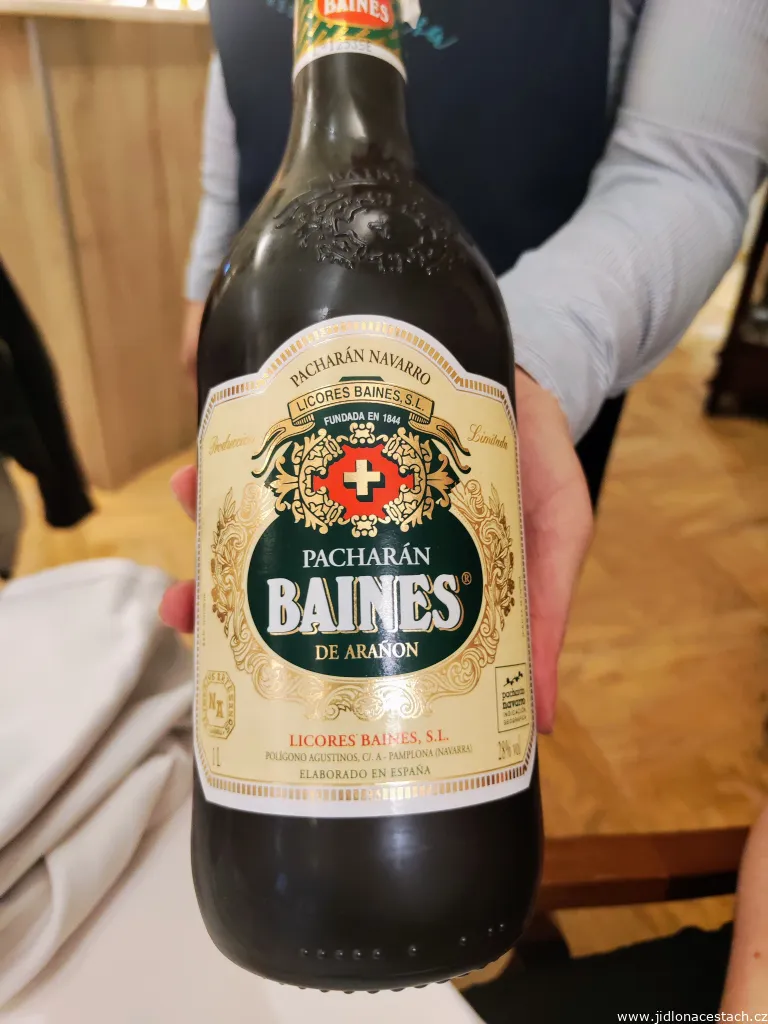
The label says DE ARAÑÓN in capitals, and it reads like an address: a liqueur from Arañón, a village somewhere up in the hills where the hedgerows get picked over every autumn. Except there is no such village. Arañón is simply the word for a sloe in Navarre and Aragon, so the bottle isn't announcing where it comes from, but what it's made of.
Patxaran (Spanish: pacharán) is a liqueur of Spanish cuisine made from wild sloes steeped for months in anise spirit - deep ruby, sweet and 25 to 30 percent alcohol, drunk ice cold after a meal. Anyone who took it for a village is in good company.
A Basque Name, a Navarrese Stamp
The name is Basque and it spells out exactly what floats in the bottle: basa means wild, aran is a sloe, and the Navarrese basaran turned into patxaran in the dialects, pronounced pah-cha-RAN. Its legal address, though, is somewhere else entirely from its linguistic one. The only protected designation, Pacharán Navarro, has belonged to Navarre since 1988; the region turns out the vast majority of all bottles and is the only place in Europe where sloes are actually farmed in orchards. Plenty of people take it for a Basque liqueur, and they aren't entirely wrong: it's drunk across the whole Basque Country, the French part included, where two small distilleries make it, and all of Spain knows it as a digestif. Only the cradle and the stamp are Navarrese. You can spot the relatives by what they're missing: English sloe gin steeps the same sloes in gin and skips the anise, Italian bargnolino from around Piacenza uses neutral spirit with sugar and sometimes red wine. The anise is the one thing none of them have.
A Wedding in 1415 and a Bottle from 1956
The oldest mention is a wedding: in 1415 Godofre, son of King Charles III, was married in Navarre, and sloe liqueur was served at the feast. A generation later, in April 1441, the ailing Queen Blanche I of Navarre drank it as medicine at the monastery of Santa María la Real de Nieva. Out of that episode grew the guidebook legend that monks invented patxaran. All that is documented is that the queen drank it in a monastery; nobody wrote down who made it. The rest of the story is homemade: for six centuries patxaran stayed a matter of Navarrese pantries, and it took until 1956 for it to get its first labeled bottle, the Zoco brand. It reached the rest of Spain in the 1960s, carried by Navarrese boys doing their military service and by families on holiday at the coast. No liqueur has ever had a more effective distribution network.
Sloes, Anise and Four Months in the Dark
The sloe is a fruit you can't eat raw: it puckers your mouth so badly that casting it as the lead in a liqueur looks like a mistake. That astringency is exactly its job, though - it reins in the sweetness of the anise spirit the sloes go into in autumn, usually around two hundred grams to the liter, where they give up their color and juice for anywhere from one to eight months. Then they're strained out, because they have no business in a bottle that goes on sale. The difference between the ordinary and the Navarrese comes down to a number: the general Spanish standard settles for 62 grams of sloes per liter, while Pacharán Navarro demands 125 to 250.
Patxaran doesn't belong with the meal; it belongs after it. It comes during the sobremesa, that Spanish hour after dessert and coffee when everyone is still at the table and nobody is in a hurry, and it comes ice cold, straight out of the fridge at three degrees if you like, with one cube of ice at most so it doesn't get watered down. In Navarre you'll find it everywhere; in the rest of Spain you only have to ask. If you're picking out a bottle to take home, look for two words on the label, Pacharán Navarro: a plain pacharán can get away with half as many sloes, and you really can taste it.

A Shot After a Tasting Menu in Alicante
I had my first patxaran in Alicante, at Tabula Rasa Restaurant (see Where to Eat in Alicante), a Michelin Guide place with a single tasting menu, where they brought it out after the last course on the house - the waiter came over with the whole bottle and poured for everyone at the table. The liqueur was ice cold, sweet and full of licorice; the sloe spoke up only after a moment, more as a bitter tickle on the palate than as fruit, and the finish was shorter and cleaner than I'd expect from a sweet liqueur. It was on the house, so I have no idea what it costs. The fruit you can't eat raw, then, came to me for free and in the best form it takes.


