Spas: Armenian Yogurt Soup
In Yerevan they'll happily throw in a story with this soup: during one of the Russo-Turkish wars, frozen Cossacks were supposedly handed a plate of hot yogurt soup by an Armenian farmer and gasped "spasli", you've saved us. A nice story, easy to pass on, only the dictionaries don't buy it - Armenian knew the word spas long before any Cossacks turned up.
Spas (Armenian: Սպաս) is a thick soup of Armenian cuisine made from matsun yogurt, thinned with water or broth and thickened with hulled wheat or rice, eaten hot in winter and cold in summer. In the bowl it's white, tangy and scattered with herbs.

A Soup Named After the Waiter
The older and more descriptive name is tanapur: tan is yogurt whisked with water, the drink I write about in my article on tan, and apur means soup. The name spas came in from Persian, where it originally meant service or attendance; it's also where Armenian gets its word for dishes. So Armenians have one soup with two names - one tells you what's in it, the other who carries it to the table. The republic settled on the second, while the Western Armenian dialect and the diaspora held on to the first. The Cossack legend just attached itself to a word that had been around long before it.
Yogurt soup with a grain in it is no Armenian invention, though, and the map spills across several borders. Spas is closest to Azerbaijani dovga and Iranian ash-e doogh - both stir the egg and flour straight into the yogurt, they just use far more herbs, and the Iranian one adds chickpeas and lentils; the drink that goes into the Iranian version at the end is doogh. Turkish cuisine cooks yayla çorbası, which sets itself apart from spas with an obligatory cap of clarified butter and dried mint, and by being served warm only; Georgian matsvnis supi smells of dill instead of mint.
A Lenten Dish You Can't Eat During Lent
Spas has no founding date. It's a village soup that got written into pots, not chronicles; the oldest record I could find is an entry in a 1997 encyclopedia of household management - which is to say no record at all. What spas does have is a lovely contradiction: Armenian Wikipedia lists it as a dish historically eaten mainly during the fast, except that the Armenian church fast bans dairy, and matsun is dairy. Either someone somewhere turned a blind eye, or a version without yogurt was cooked for Lent. In Syunik, in the south of the country, at least one method survives in which the wheat and the lentils are cooked separately and the matsun goes in only at the end. Past that I'd just be guessing, so I'd rather stop.
A Wooden Spoon, a Pot, and When Spas Is Served Cold
The star here is matsun, the Armenian cultured yogurt, thicker than the one we get back home, and its temperament is where it gets tricky: heat it hard and it breaks into flakes, leaving you with curds floating in water. So the matsun is first whisked with egg and a little flour, then set over a low flame and stirred constantly with a wooden spoon until it comes to the boil. Walk away from the pot and you've made dinner for the chickens. The grain is dzavar, hulled wheat, the more traditional country choice, which in the cities is increasingly giving way to rice. Onion fried in butter goes in right at the end, so it stays crisp, with herbs on top. A bowl of sour cream sits on the table for anyone who wants more than yogurt.
Spas is a first course, not a side dish: you order it before khorovats, you tear lavash or leavened matnakash to go with it, and in winter it comes hot. In summer plenty of households and restaurants serve it cold, and then it's a soup and a drink at the same time - yogurt, herbs and the cold do more for you than most lemonades in thirty-degree Yerevan. If the menu offers you both, take the cold one at noon and the hot one in the evening; the rice version thickens a little as it cools, the wheat one holds up.
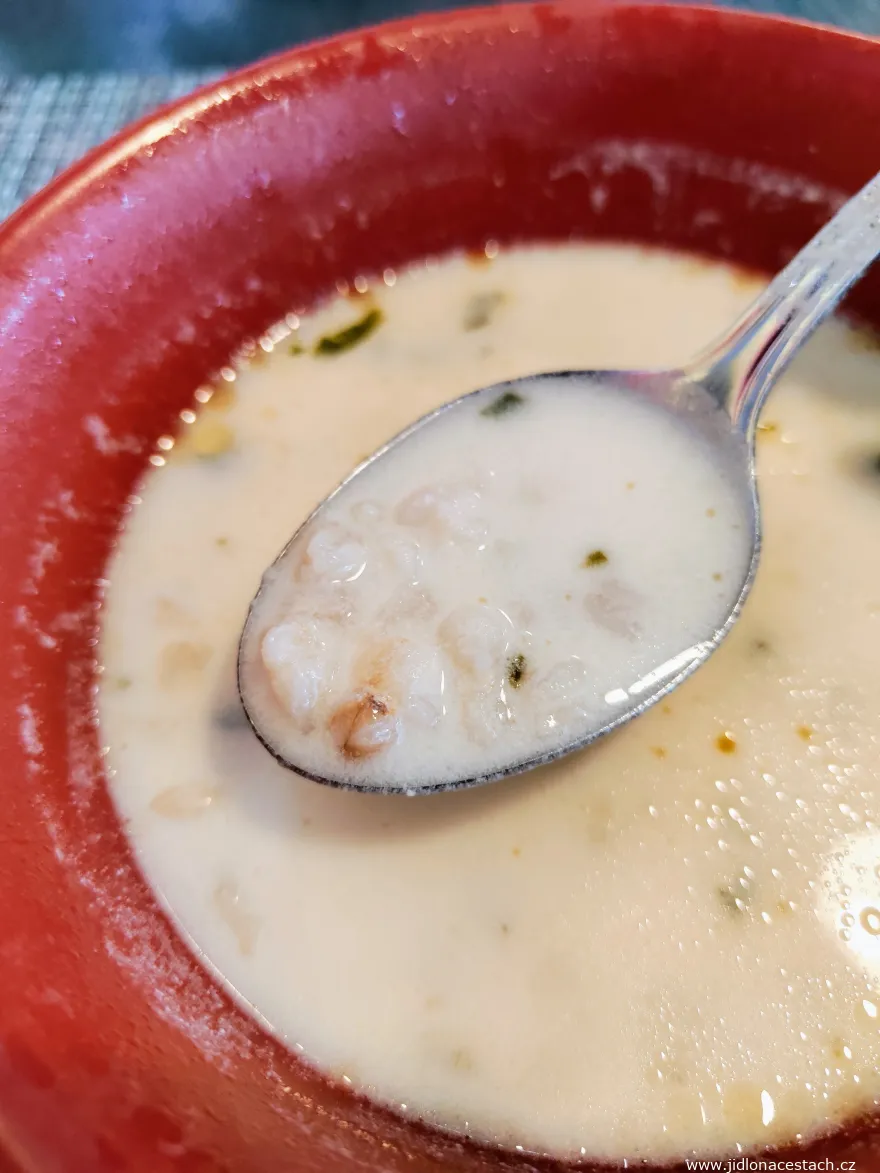
A Main-Course Portion at Artashi Mot
I ate spas in plenty of places in Armenia, but the one I remember was in Yerevan at Artashi Mot (see Where to Eat in Yerevan), where it arrives in a portion that would pass for a main course in Prague, with a basket of lavash alongside. It tasted tangy but mild - the egg and the flour smooth out the sharpness of the yogurt - and the wheat grains held their shape and had a bite to them. The bowl cost 600 AMD (1.40 EUR). For a soup you can barely get to the bottom of, that's not much.


