Pastrmajlija: Macedonian Flatbread with Meat
"Regular or small?" That was the first question the food of North Macedonia asked me. My friend and I took a taxi straight from the airport to the Gustoso bistro in Skopje, hungry after the journey, and the woman behind the counter was waiting for an answer. We said regular, one for the two of us: we only wanted to take the edge off our hunger and move on to a proper meal, and my friend is over two meters tall, so we figured a small one would just make him laugh.
Without another word she took a ball of dough, pulled it into an oval boat in a few practiced moves, lifted the edges, scattered brick-red cubes of meat inside and slid it into the oven.
Pastrmajlija (Macedonian: Пастрмајлија) is a flatbread of leavened dough with raised edges, baked with cubes of meat cured in salt and red pepper - a specialty of the eastern part of the country, and today a fixture of Macedonian cuisine. You eat it hot, with your hands.
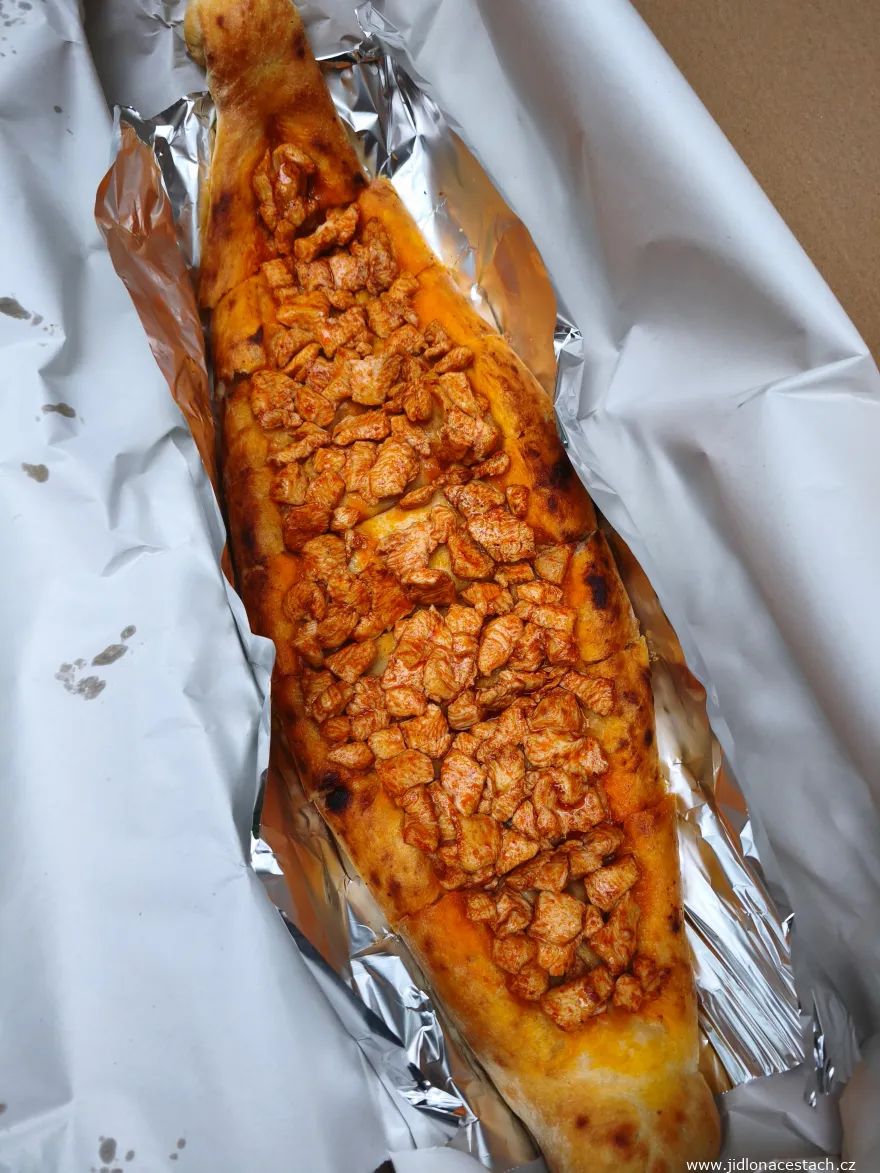
What Pastrmajlija Means and Where It's Baked
Pizzerias in Skopje list it on the same menu as a margherita, which is why foreigners call it Macedonian pizza. But pizza has sauce and cheese; pastrmajlija has dough, meat and the fat that soaks into the dough as it bakes. The name gives away what that meat used to be: pastrma is salted, dried mutton, and the suffix -lija means "with something." So pastrmajlija is "the one with pastrma." The word came from Turkish pastırma, and the very same word traveled with emigrants from Romania all the way to New York, where it turned into pastrami. The Štip flatbread and the New York sandwich share an ancestor and nothing else.
Hardly anyone uses the dried mutton the name refers to anymore; the flatbread gets fresh pork, sometimes chicken. The name stayed, the meat was swapped.
Pastrmajlija is at home in the east of the country, in Štip and Veles; the two towns have a friendly rivalry over it. From there it spread to every bakery. Nobody across the border claims it as their own, which in the Balkans, where neighbors squabble over every pie, is something of a rarity. What relatives it has, it has by shape only: Turkish cuisine bakes the boat-shaped pide, whose Black Sea version with cubes of meat looks the most like pastrmajlija, and Greece has peinirli, a boat filled with cheese. No source documents a direct line from those to pastrmajlija, though - what they share is the oven, the leavened dough and the raised edges, the Ottoman legacy of the whole region.
How Pastrmajlija Came About and How It's Baked
Nobody knows when the first one was baked; Veles claims the year 1862, but that rests on the word of a single local journalist. What is documented is better than a date: pastrmajlija used to be a winter dish. After the pig slaughter the meat spent weeks curing and drying in the frost and the wind, and once there was something to cure, women would take their own dough and their own cured meat to the bakery and the baker turned it into a flatbread. So the first pastrmajlijas weren't made at home on the stove, but at the baker's - and you can still buy one in bakeries today. These days it's simple: cubes of pork or chicken are left overnight in salt, pepper and ground red pepper; the dough is stretched into an oval, the edges are lifted and once it comes out of the oven the whole flatbread is brushed with butter. It bakes fast and hot, best of all in a wood-fired oven.

How Pastrmajlija Is Eaten and What Goes with It
Pastrmajlija calls for hot peppers and pickled vegetables, and rakija to drink. Štip, which trademarked its own pastrmajlija in 2011, celebrates it with a festival every September - in 2025 they baked a single flatbread from seventeen kilograms of meat on the promenade and cut it up among the visitors. The everyday one holds about a palmful of meat and comes in two sizes, small and regular. One piece of advice, though: don't take the word "regular" for a portion for one - it feeds two and there will still be some left; the small one is for a single grown adult with a big appetite.
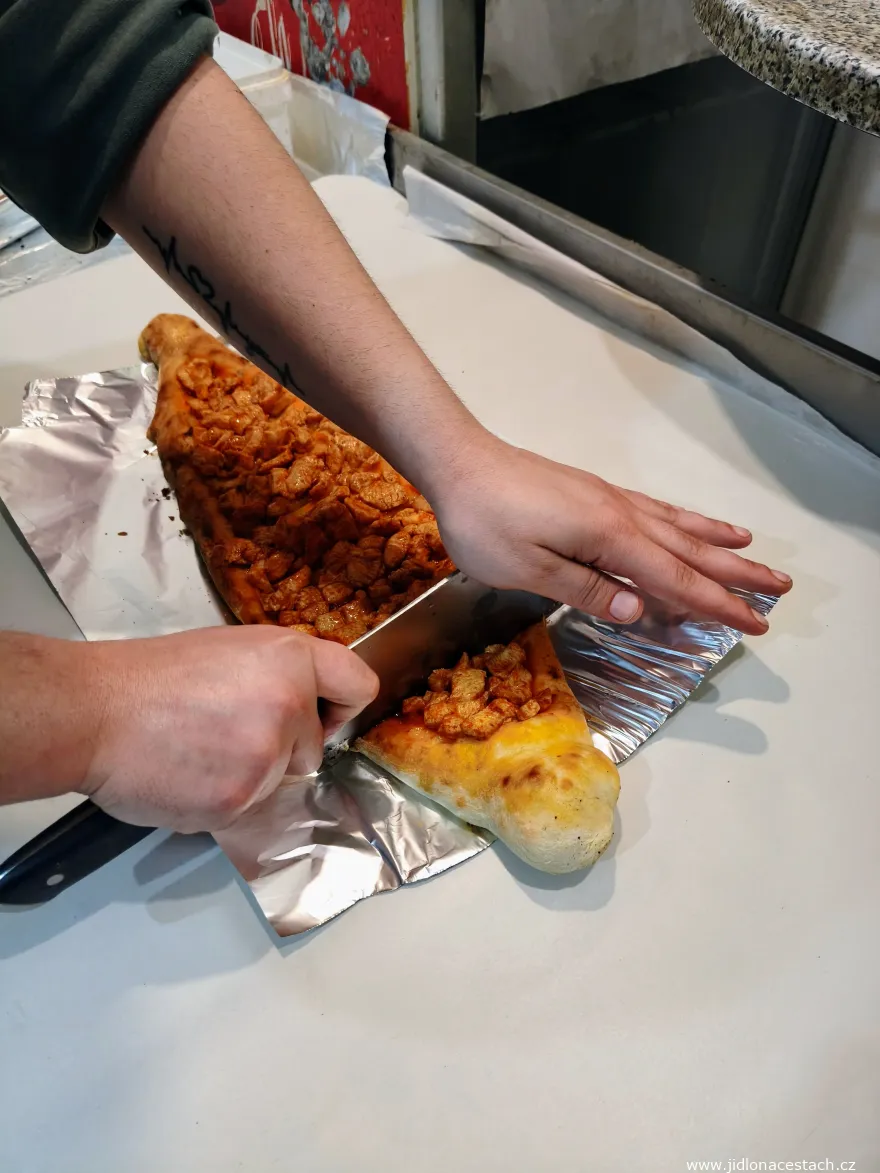
Where I Ate Pastrmajlija
I ate my first pastrmajlija - and my very first meal in the country - in Skopje, at the Gustoso Shtipska Pastrmajlija bistro (see Where to Eat in Skopje), a few minutes after I had watched it being made. The meat was juicy and the peppers that came with it so hot that from the second bite on I was rationing them by the millimeter. The regular cost 340 MKD (5.60 EUR) and was only meant to be a starter for the two of us before we headed out for a real meal. It turned out to be dinner. Even for my two-meter friend and me it was enormous, and I don't think one person could finish it.
The woman at the counter wasn't asking how hungry we were. She was asking whether we knew what we were getting into.


