Kot Ti Baz: Grandma's Bistro with Farata in Flic en Flac
In Flic en Flac there is a bistro with a board on the wall that lists no prices. The owner wrote it herself, and on it she explains why the place exists: she is a grandmother, and her four-year-old grandson apparently kept coming to her with one sentence, "Mamie, mo ventre à faim" - Granny, I'm hungry. So she opened a bistro for him.
Kot Ti Baz is a tiny family place on Coastal Road in Flic en Flac that pulls off the classics of Mauritian cuisine in a few square meters: stuffed flatbreads, fried noodles and steamed dumplings. And it has the smallest kitchen I have ever been handed food from.
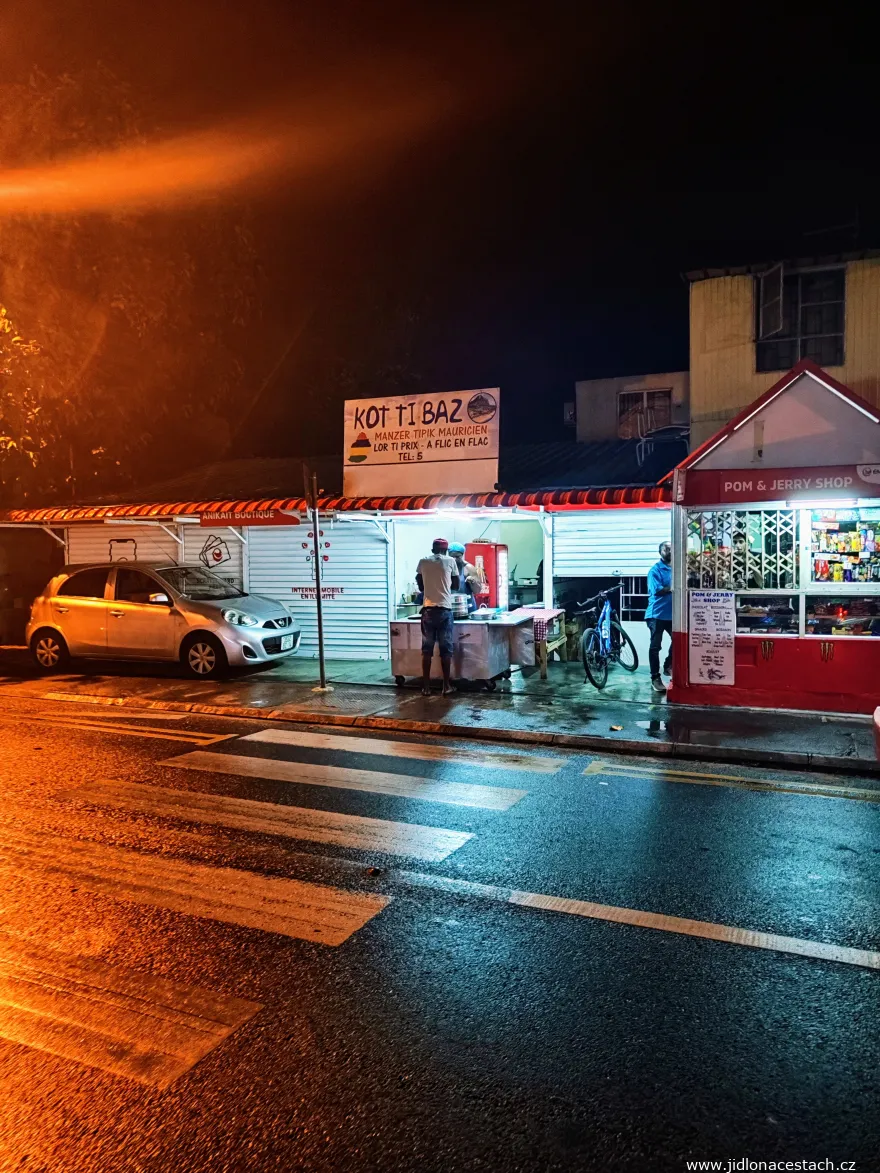
What Kot Ti Baz Means
The sign above the counter promises Manzer tipik mauricien, typical Mauritian food, and it tells the truth. In Mauritian Creole, the three words of the name break down like this: kot is the preposition "at", a relative of the French chez, ti means "little", and baz is a colloquial word for a place people hang out in, and for the crowd they hang out with. The name is not about a base at all - it sounds far homelier: "Ti Baz's place". Who or what exactly Ti Baz is, I never managed to find out; Creole doesn't let its bar slang into dictionaries. Only one thing is certain - as bases go, this one is very poorly armed.
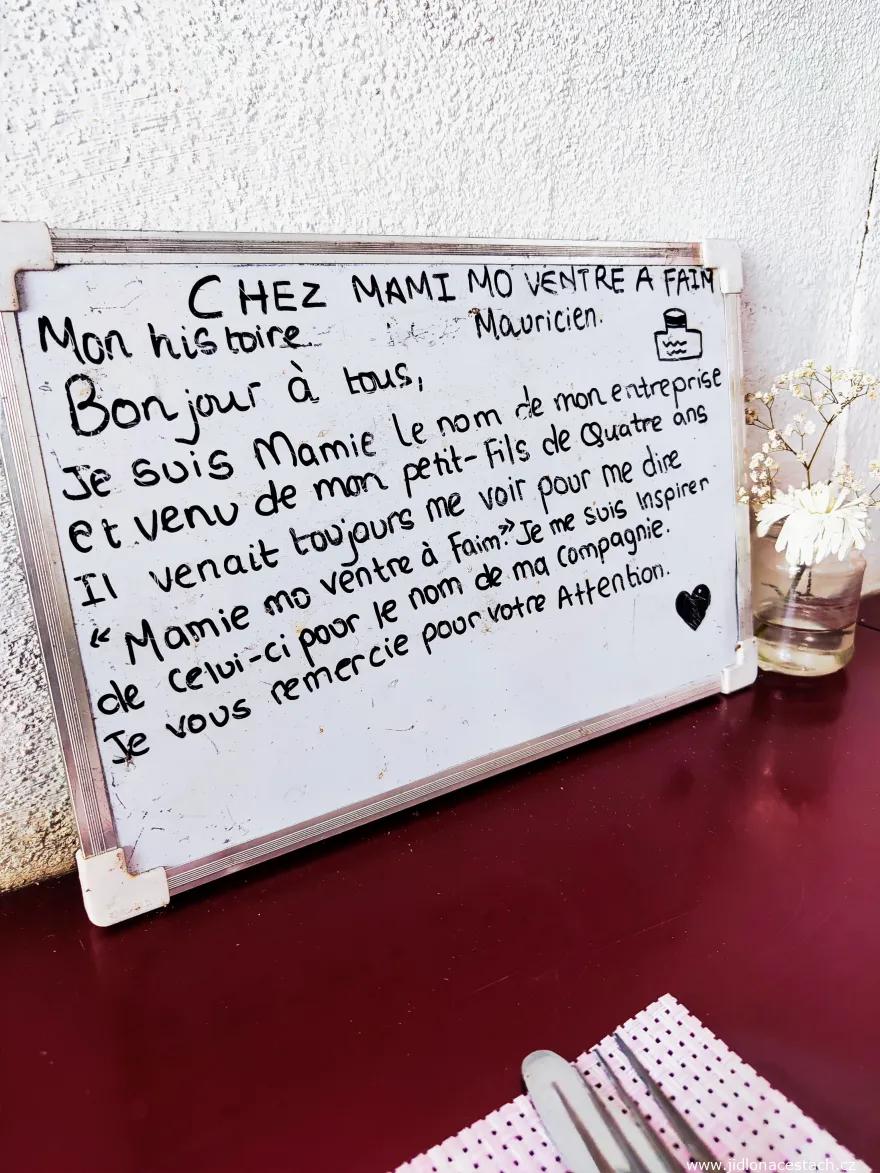
The Bistro the Internet Doesn't Know
Don't look for Kot Ti Baz on Google Maps, it isn't there. Apart from one empty Foursquare profile, the place has not a single review online - and its neighbors do have them: a few steps away stands the Chinese-Mauritian bistro Nam Wah Snack, a kilometer up the coast Farata Aka Vinoda bakes flatbreads, and down by the beach Ti Kabann fries noodles. So a place that cooks two of the most widespread items of Mauritian street food gets by with a sign, a handwritten board and a pot by the door. The menu on the board gets crossed out and rewritten depending on what's available that day. It struck me as the most honest advertising on the island: it is harder to lie on a board where a price can be wiped off with a rag than on a website.
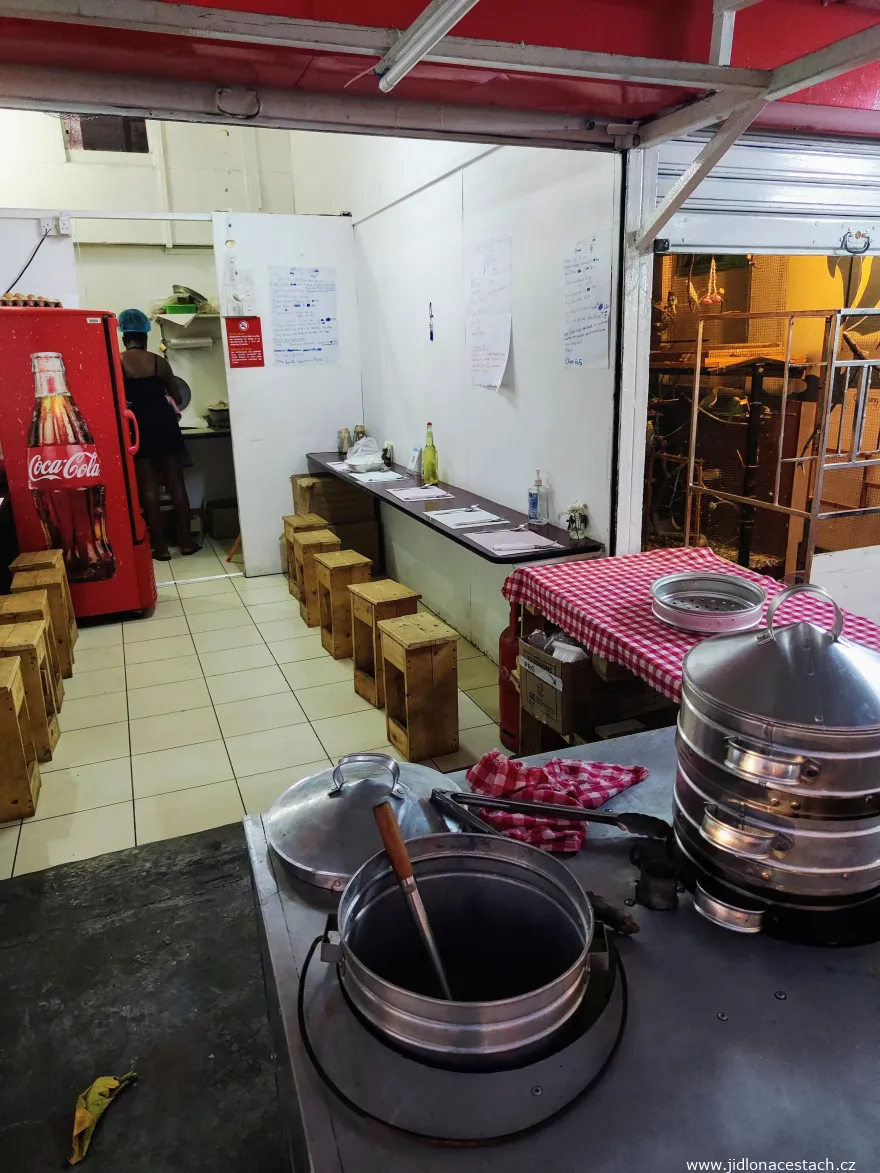
One Fridge, One Burner
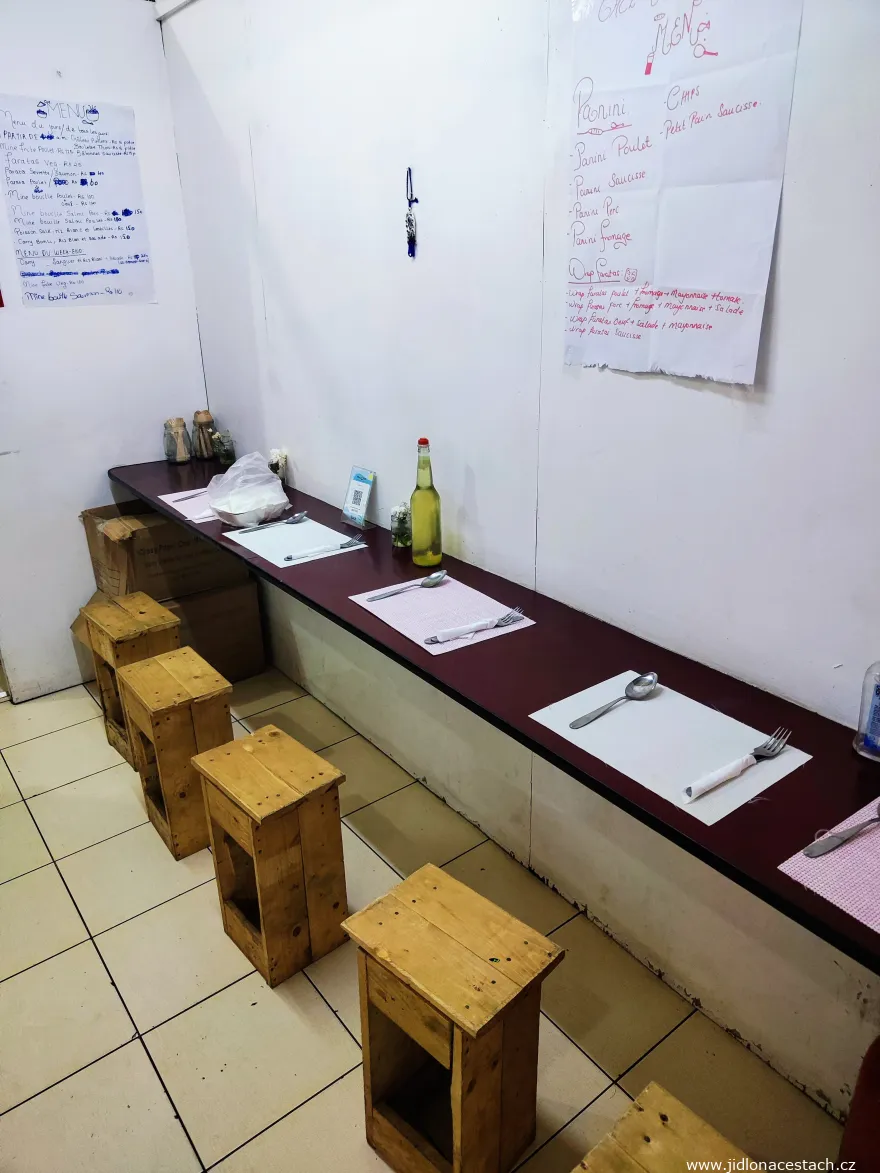
The kitchen is partly open, so if you ask, you can watch the cooking. The entire inventory is on show: one fridge, a gas burner and a work surface barely bigger than a chopping board. Out of that come stuffed farata flatbreads, fried mine frit noodles, boiled mine bouillie and curry; and out front a steamer works all day on boulettes dumplings. Printed cookbooks back home in Czechia love to slap "grandma's cooking" on dishes no grandmother ever saw; here it is simply a description of how the place runs. I cook almost every day and my kitchen at home is bigger than this whole bistro. I wouldn't dare turn out five dishes at once in it.
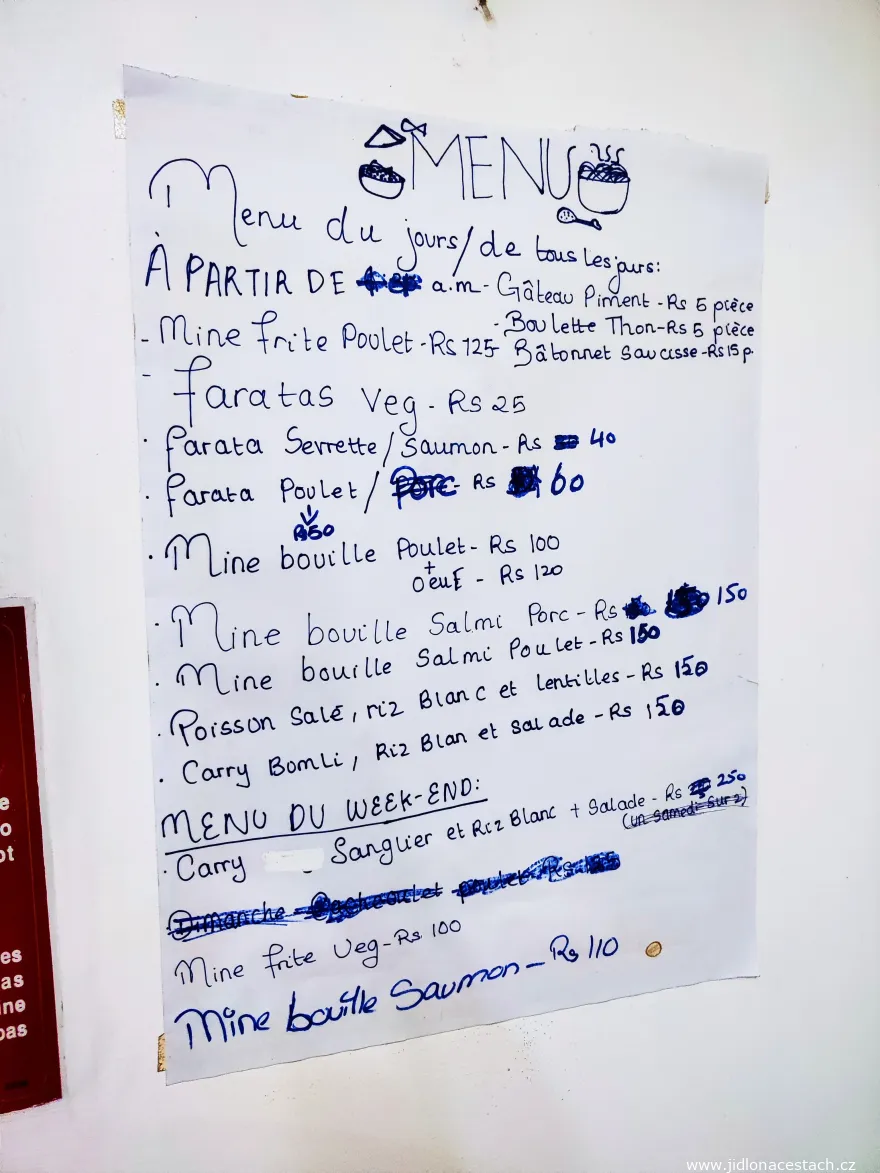
You sit on wooden crates by the wall, but most of the food leaves wrapped in paper; that is what I did every time. The cook doesn't speak English and it doesn't matter in the least: point, nod, pay. Just keep an eye on your cash, they take nothing else here. And you can do the conversion in your head: when I was there, you just divided the prices on the board by fifty to get euros.
The Faratas I Kept Coming Back For
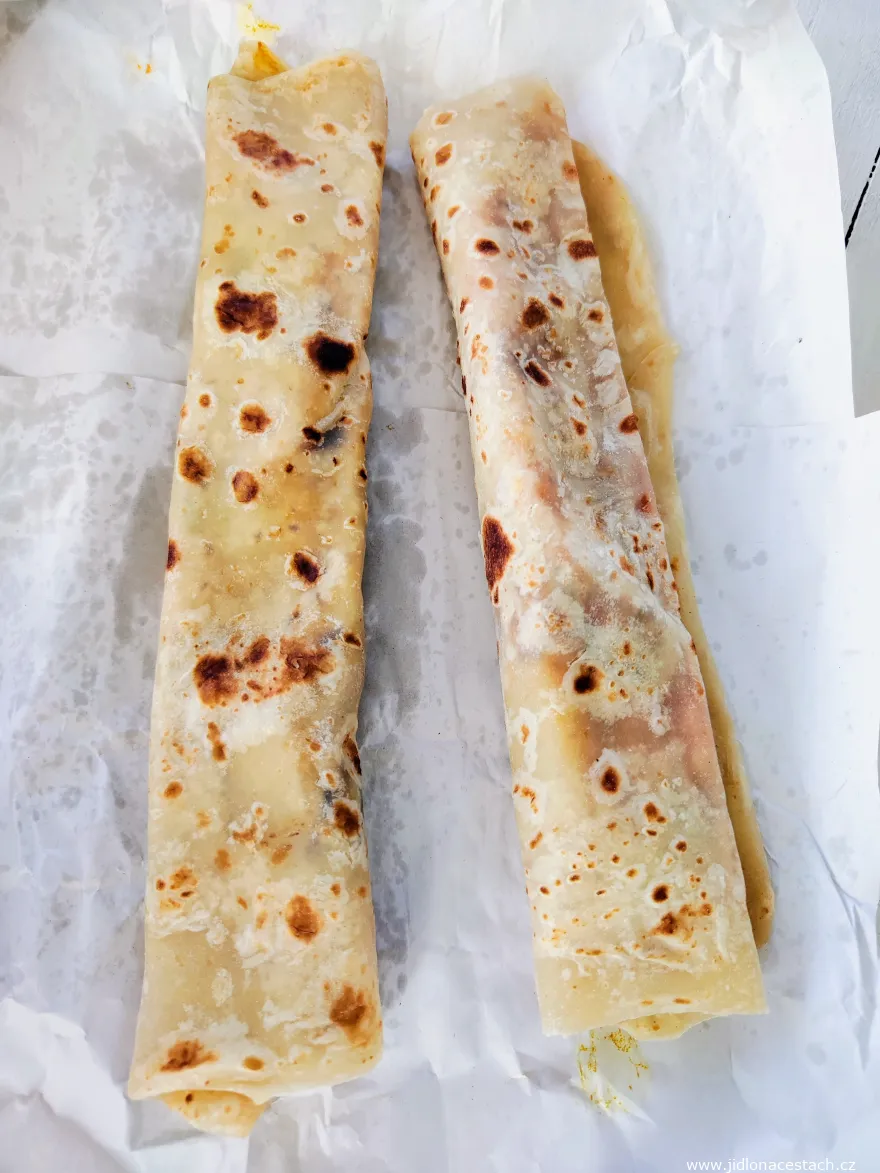
I took faratas away from the grandmother time and again, with the vegetarian filling and with the chicken one, and every one of them was excellent: dry, crisp layers on top, softer, greasier dough underneath and a filling that smelled of curry. The vegetarian farata cost 25 MUR (0.50 EUR), the one with chicken 60 MUR (1.20 EUR). Let's be straight about it: you won't come to Flic en Flac for Kot Ti Baz. But once you are there, there are few better faratas to be had in the middle of town. The grandson talked his way into a whole bistro with one sentence about being hungry. After several of his grandmother's faratas, I know the boy was right.


