Nam Wah Snack: A Chinese-Mauritian Bistro in Flic en Flac
Fried and boiled noodles, fried rice, an upside-down bowl, spring rolls, stuffed peppers, taro balls, steamed tofu - I ate all of it in a single place, and that place deserves its own story.
Nam Wah Snack is a small Chinese-Mauritian bistro on the coastal road in Flic en Flac: a counter, a wok and a few tables under ceiling fans, serving up the Chinese branch of Mauritian cuisine. It was the first place I went to eat after landing on the island, and the one I kept coming back to most often.
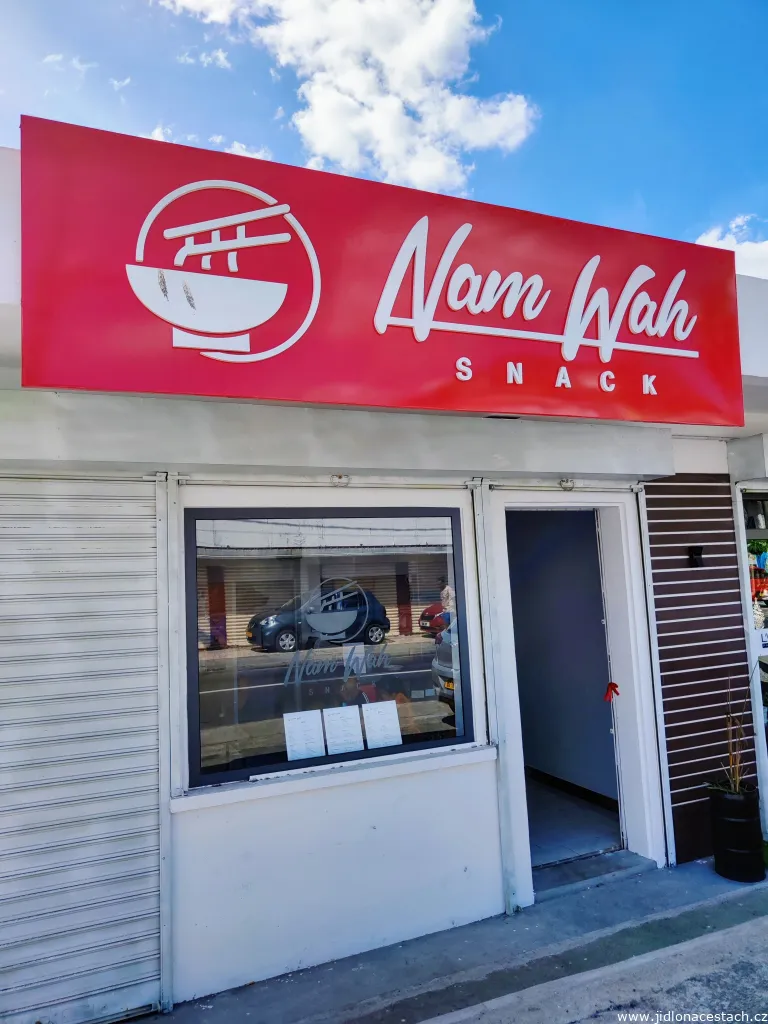
What the Sign Says: Nam Wah and Snack
The sign above the door has two words on it, and both mean something different from what a Czech reader might assume. Snack in Mauritius isn't a light bite, but a type of eatery: a kitchen with a counter where people eat any time between mid-morning and late afternoon, and where baskets by the till hold gajaks, small fried snacks you eat with your hands. Nam Wah is the Cantonese transliteration of the characters 南華, Southern China - a name common enough that a teahouse in New York's Chinatown has gone by it since 1920, with nothing connecting it to the bistro in Flic en Flac beyond the cooks' origins. Mauritian sources don't explain the meaning of the name, but a Cantonese dictionary does. And Southern China is exactly where it's from: most Chinese families on the island came from Canton and the Hakka villages beyond it.
What Nam Wah Fries to Order
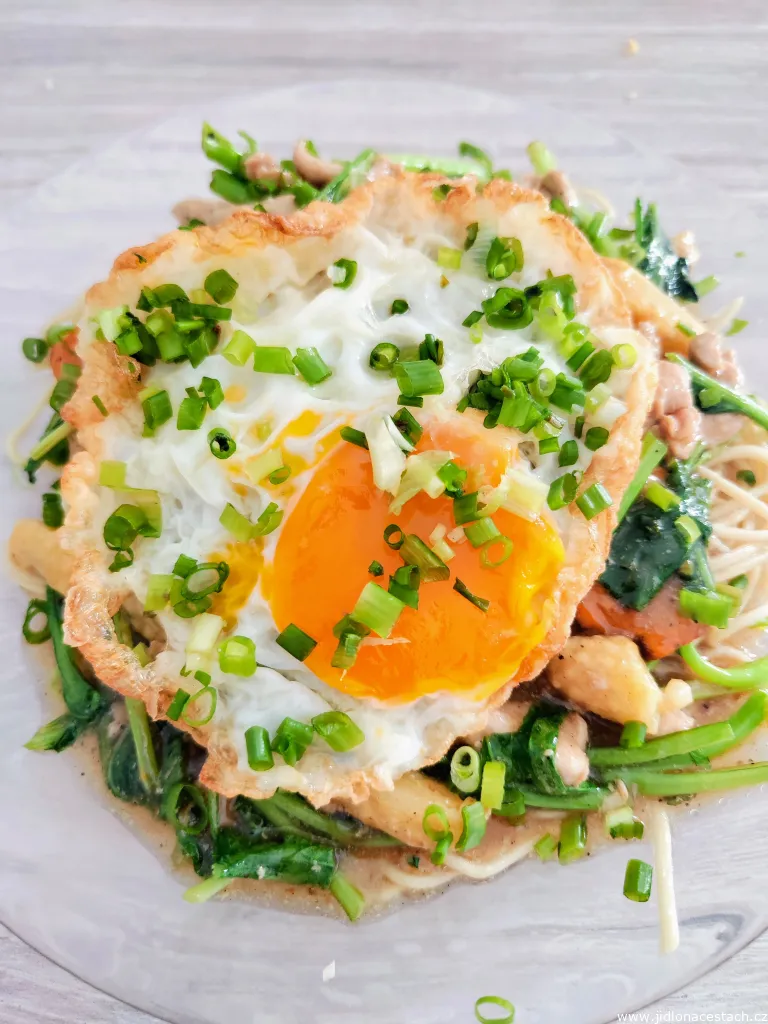
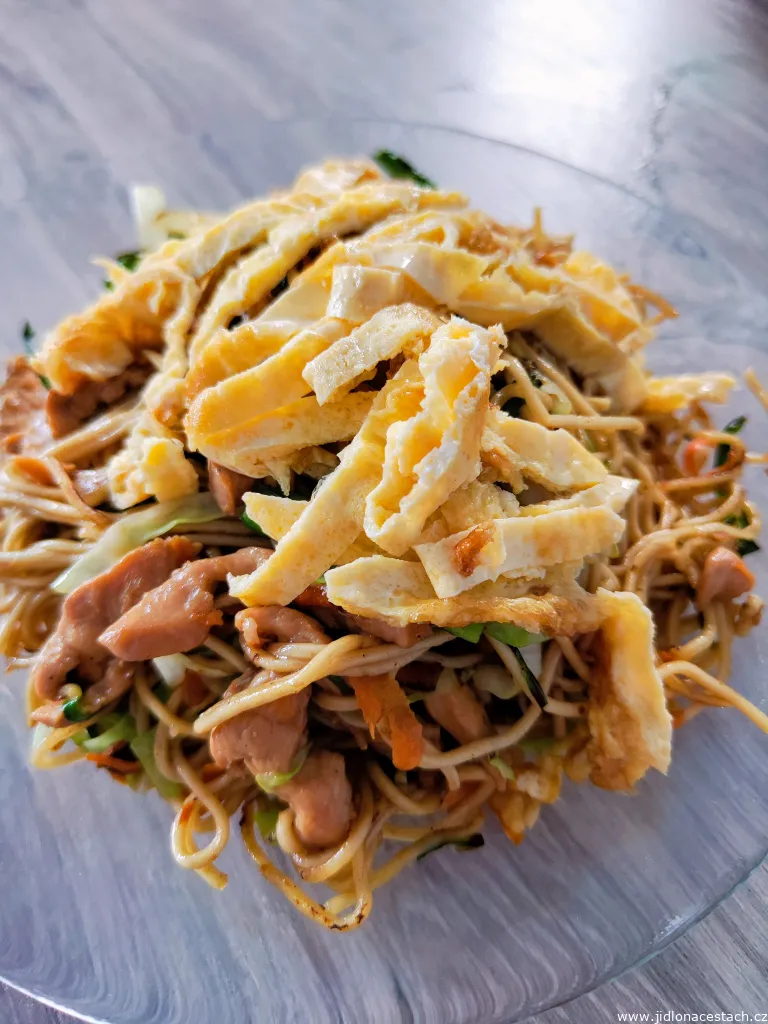
Fried noodles mine frit, boiled mine bouillie, fried rice riz frit and bol renversé, a bowl turned out onto the plate right at the table, are the core of the menu, and none of those portions cost more than 170 MUR (3.60 EUR). From the display case by the counter you pick up twice-fried hakien rolls, spicy piment farci and taro balls gato arouille by the piece, 25-40 MUR (0.50-0.80 EUR); stuffed tofu teokon farci comes in a bowl of broth for 38 MUR (0.80 EUR). The difference from the stalls right on the beach comes down to timing: there, the meat is fried in advance and a portion is just assembled from ready parts; here it goes into the wok only after you order, and it stays juicy and tender on the plate. At Ti Kabann I ate the same noodles made from ready parts, and I could tell the difference. You can also order the egg fried sunny-side up with a runny yolk, and one afternoon when they ran out of rice, I got a bol renversé built on noodles instead. It tasted just as good.
When to Come and How to Pay
Nam Wah cooks around lunchtime and into the afternoon; it closes one day a week, and since sources disagree on which one, I wouldn't rely on the internet - trust the shutter instead. After the beach it's a good stop for a late lunch - just not too late: the fried snacks from the display case tend to be gone by around two. You pay in cash - cards don't work here. Small bistros on the island stick to cash rupees even as mobile payments spread elsewhere. Inside it's clean, there's plenty of seating, and the fans do what they can; they'll also pack food to go. The staff speak English, which here is more standard than remarkable: English is the official language, French is spoken on the street, and Creole at home.
Hot Broth in Thirty Degrees
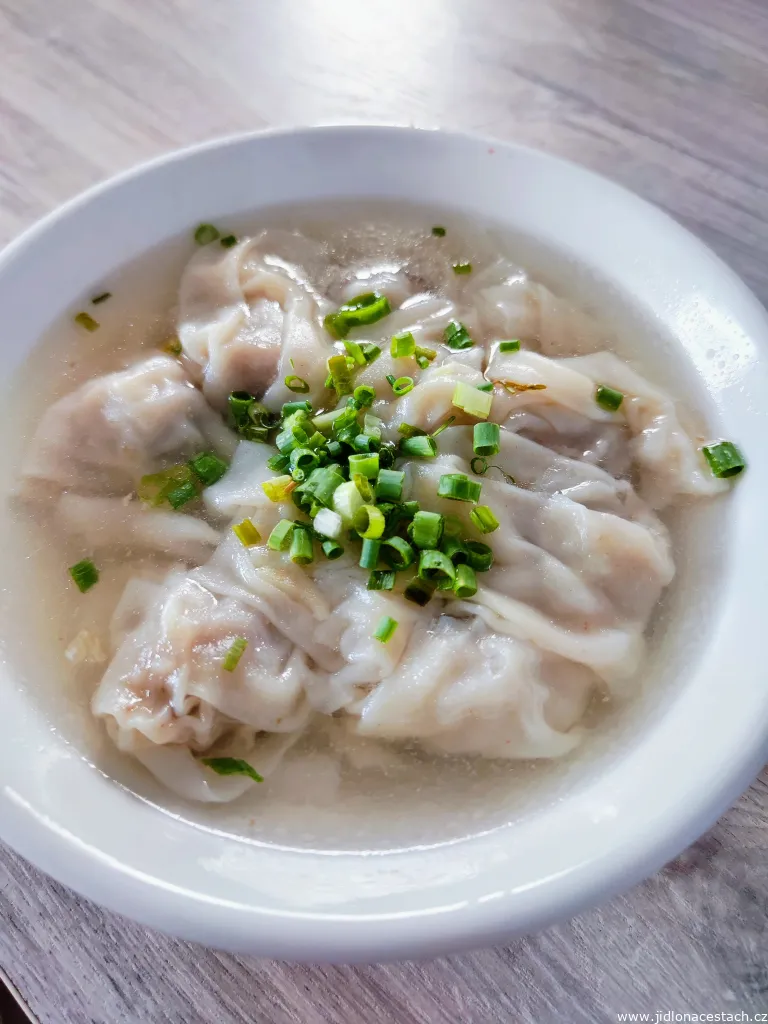
I ordered the broth with ten wonton dumplings on a day when it was pushing thirty degrees in Flic en Flac, and I took it as a mistake I'd make just once. The chicken broth was strong and clear right to the bottom, and the dumpling filling was seasoned more carefully than I'd expect for ten pieces at this price. The bowl cost 140 MUR (2.80 EUR). I ordered it several more times after that, always a different variation, always under a fan. Hot soup in thirty-degree heat simply can't be justified. It can only be ordered again.
Nam Wah Snack


