Khashlama: Armenian One-Pot Braised Meat
A kilo of meat and vegetables takes about a glassful of liquid. No more. The dish cooks the rest itself - out of the tomatoes, the onions and the fat that bone-in meat releases over three hours on a low flame. That is why khashlama (Armenian: խաշլամա) is an Armenian dish of bone-in lamb or beef, layered with potatoes, tomatoes, onions and peppers and braised in a single pot with almost no water until it falls off the bone. And yet it is named after boiling, which is the first thing about it that doesn't add up.
What Khashlama Means and Who It Belongs To
The word comes from the Armenian verb khashel, to boil or scald, and the same root gives khash, the hearty soup made from beef trotters. Khashlama is literally "the boiled one", even though these days it is closer to a braise: the name stayed on from the era of the cauldron, while the technique learned to go easy on water. The Turkish haşlama sounds almost identical and means the same thing, except that Armenian etymologists hold the Armenian verb to be native and Indo-European, while the Turkish one is Turkic. Two neighbors, one word, no kinship - linguists call it a coincidence, and no cook has ever cared.
It is much the same on the plate. The whole South Caucasus knows khashlama, but the one name covers several different dishes. The Georgian khashlama from Kakheti is simply meat boiled in water with onion and bay leaf and scattered with herbs, and it can just as easily be pork or turkey; anyone looking through Georgian cuisine for something closer to the Armenian pot will end up with beef ostri instead. Azerbaijan has its own xaşlama; the Armenian version, with its layered vegetables and beer in the juices, is the most distinctive of the whole family, which is why it earns its place here.
A Legend That Can't Even Agree on the God
Armenian websites tell of princes who once consecrated khashlama at the feast of Navasard in honor of the god Aramazd: goose or mutton in a cauldron over the fire, barley beer, mountain herbs. It is a lovely story with one flaw - nobody can point to a source for it, and the Russian sites that copied it offer the meat to a different god, Ara. The legend has been copied around so thoroughly that its versions can't even agree on who the meat was meant for. What is reliably documented is something more modest: khashlama is a family dish, its recipes handed down from one generation to the next, with no birth date and no inventor.
Why Men Cook Khashlama and What to Drink with It
In an Armenian family khashlama is men's work: the men pick the meat, buy it, cut it into bone-in pieces and layer it in the pot with potatoes, tomatoes, onions and peppers, sometimes eggplant as well. A kilo of ingredients gets barely a deciliter of liquid, and it is usually beer or wine - the meat softens faster and the juices end up smelling of malt. Oil and flour have no business in the pot; all it takes is a lid and three hours, and the meat comes off the bone. Anyone who sat by a cauldron at summer camp as a kid knows that slow wait when you mustn't stir and the only clue to what is going on under the lid is the sound. The meat can also be swapped for Lake Sevan trout, though fish khashlama is the rarer version. On the table the dish needs nothing but lavash to mop up the juices and a glass of whatever went into the pot - Armenian beer or red wine. In a restaurant, the thing to check is the bones: khashlama without them is just stewed meat and vegetables, because the juices come from the marrow and the cartilage.
Bone-In Veal in Yerevan
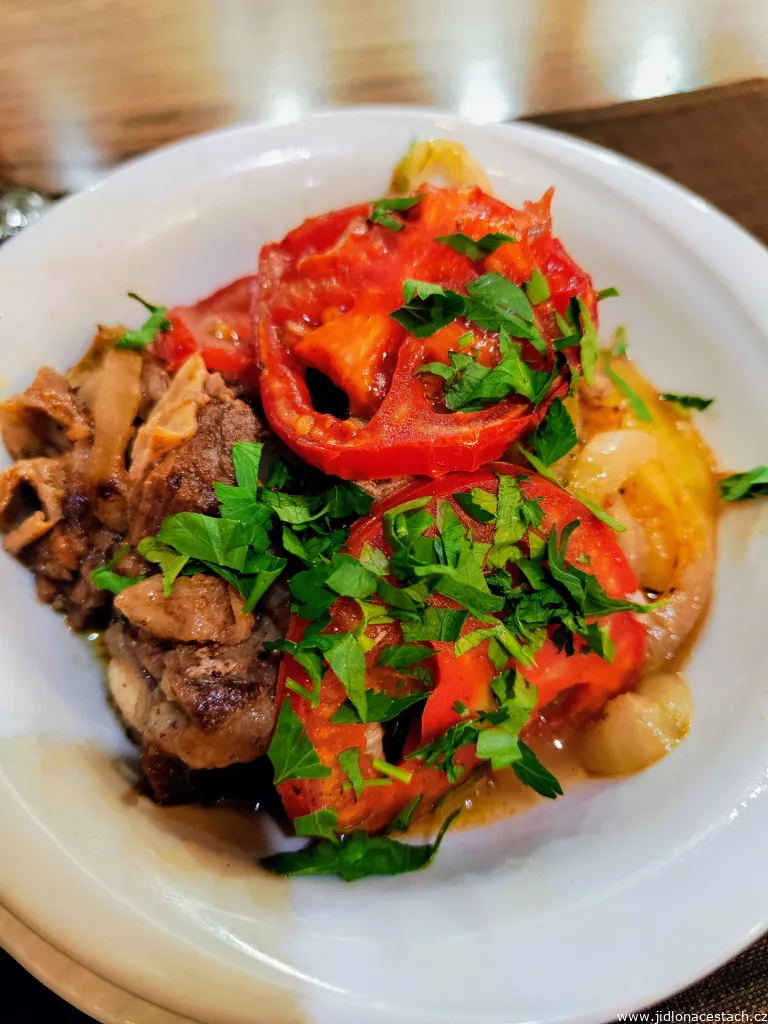
I ate khashlama in Yerevan, at the Tavern Yerevan Khorenatsi restaurant (see Where to Eat in Yerevan), where folk songs are played between the tables and the band always has a duduk in it. I ordered the veal with potatoes and vegetables. The meat was tender and fell off the bone by itself - a fork was all it took; the potatoes tasted more of meat than of themselves, and the onion had disappeared altogether, leaving nothing behind but its sweetness. I couldn't taste a single one of them on its own; over those hours the flavors had merged into a single one. The portion cost 3,800 AMD (9.20 EUR).


