Saint-Émilion: A Wine Village Near Bordeaux
Saint-Émilion has fewer than two thousand permanent residents and more than a million visitors a year - roughly six hundred tourists for every local. By that math it should be a nightmare, with a queue for every ice cream. Yet I turned up at the height of the season and spent two days walking around in a quiet that those numbers give no hint of.
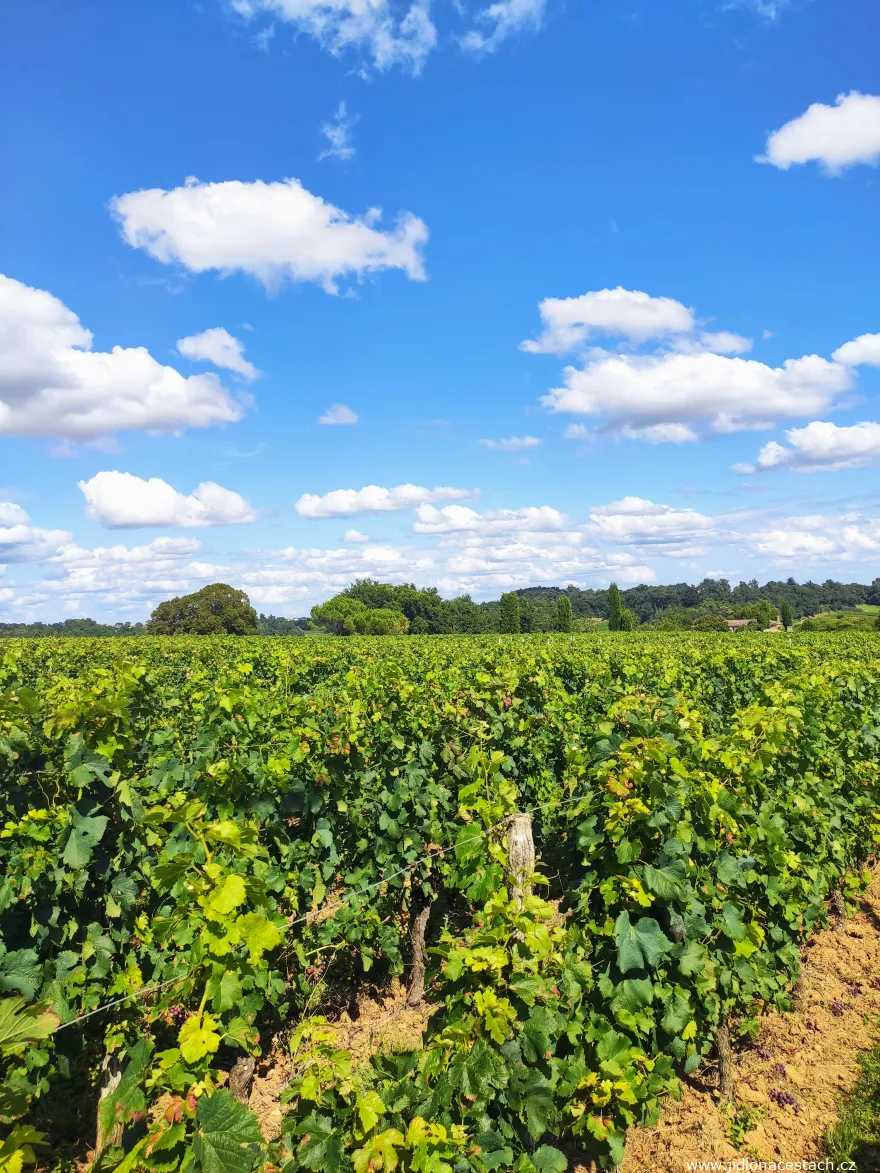
Saint-Émilion is a medieval wine village on a limestone spur half an hour by train from Bordeaux - and of all the vineyards I've walked through in France and elsewhere, this is the one I found most beautiful.
The Hermit Émilion and a Church Carved into the Rock
The village owes its name to no king or bishop, but to Émilion, a Breton monk who settled in a cave in the local spur in the 8th century. He died in 787 and the settlement that had meanwhile grown up around his hermitage kept his name. Later a building rose above the cave that today has visitors queuing for a tour: the église monolithe. The church was created in the early 12th century by subtraction - the masons hacked some 15,000 cubic meters of limestone out of the spur, and the space they left behind is still the largest monolithic church in Europe. Below the village, catacombs and chapels branch off from it. Saint-Émilion simply has two levels: on the upper one they sell wine; on the lower one they quarried stone and buried the dead for centuries.

King John's Charter and the Revolt of the Most Famous Château
Tradition has it that the Romans planted the first vines here. Every source gives a different date, so the first solid date is 1199: that year the English king John Lackland issued a charter for the wines of Saint-Émilion, one of the oldest vineyard regulations anywhere. Today Merlot accounts for about sixty percent of the local vineyards, and it makes the right bank of the Dordogne the softer, rounder half of the French wine map around Bordeaux; the left bank with the Médoc backs Cabernet Sauvignon and a power that ages for decades.
The local wine classification reads more like a court docket. The Médoc drew its own up in 1855 and has barely touched it since; Saint-Émilion regrades roughly every ten years and almost every round ends in a lawsuit. The most recent revision turned out to be the strangest yet: Cheval Blanc and Ausone, the two most famous names in the appellation, walked out of the classification in protest at the new rules - they gave up their own top ranking, and it made no difference at all to the price of their bottles. Neighboring Pomerol watches the whole show from a distance: it is the only major Bordeaux appellation that refuses to be graded at all.

Vineyards, Cool Cellars and Convent Macarons
In 1999 the Jurisdiction of Saint-Émilion - the village and eight surrounding communes - was added to the UNESCO list as the first wine-growing landscape in the world. You can walk the vineyards, cycle through them, or take the little train of the sort that usually hauls children around zoos; this one, though, stops between the rows of vines, and instead of ice cream there is a tasting at the stop. In the summer heat the village has one more advantage: the cellars. The limestone galleries hold their chill all year round, wine matures a few steps below the streets and you can walk down into some of the cellars for free. If you want to understand wine better than a single tasting allows, there is the La Cité du Vin museum in Bordeaux.
The second local specialty is a sweet one: the macarons that Ursuline nuns baked here to a recipe from 1620 and whose real recipe is still handed down as a family secret. And one observation you rarely find in the guidebooks: tours in English at the different sights often run at the same time, so you can't fit in more than one a day. The village makes the case for a second day all by itself.


Two Days at the Height of the Season
I came at the beginning of July on a direct train from Bordeaux - it runs several times a day and the ride takes about half an hour. I had planned a day trip. I stayed two days, and both went by faster than I would have liked. Mornings among the vines, midday in the cool of the cellars, evenings on the steep lanes where you stop every few steps just to look around. A one-way ticket bought on the day of travel cost 9.60 EUR. The cheapest thing in the whole wine paradise was the ride into it.
Saint-Émilion


