Syrok: The Glazed Quark Bar from Soviet Dairies
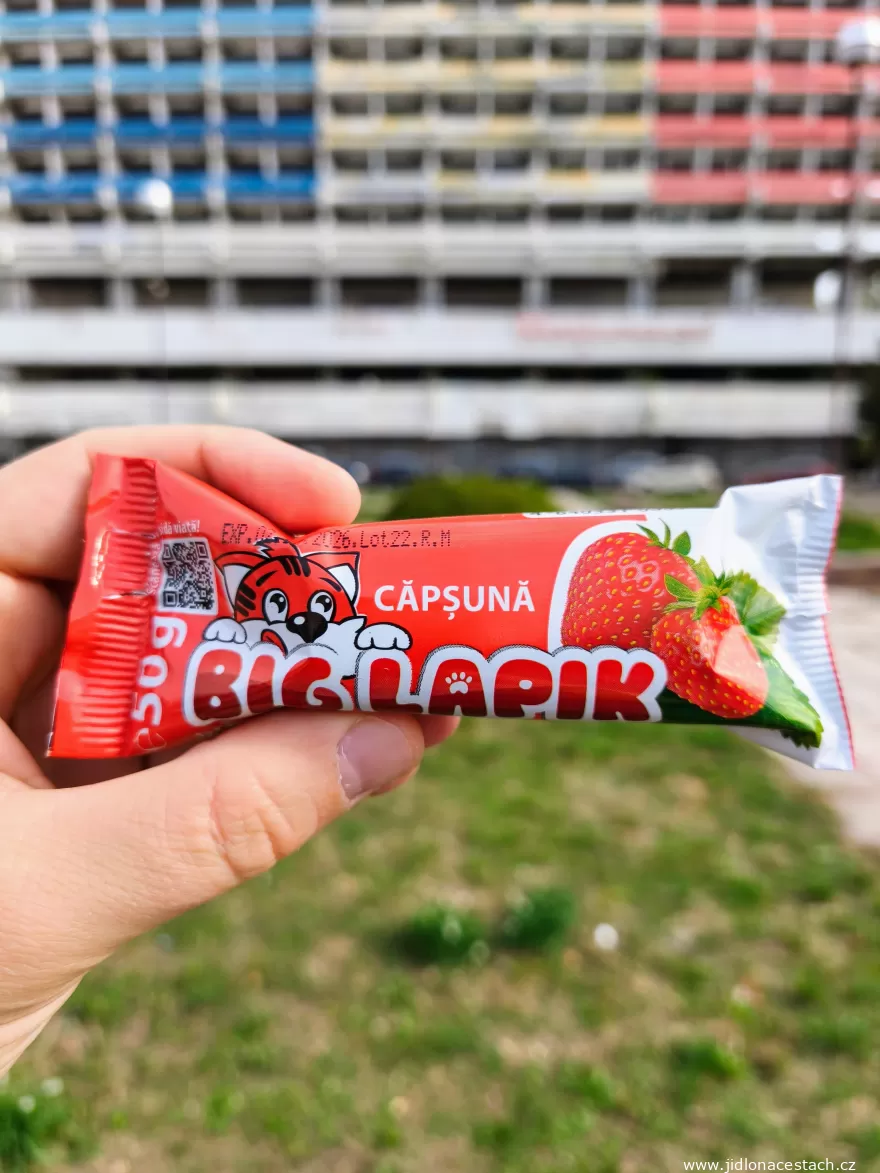
The high-rise above Chișinău's Negruzzi Square used to be the Intourist, the showcase hotel of Soviet tourism; today it stands empty and bears the name Național. Instead of guests, it wears colors: an artist group called Post Soviet Kids painted its facade in three vertical stripes - blue, yellow and red - so the abandoned giant looks like the Moldovan flag stretched skyward. I stood beneath it eating a dessert that had been through the same thing, only pocket-sized: a Soviet product, now in a wrapper with a Romanian name. Syrok (Russian: сырок; on Moldovan labels brânzică glazurată) is a small bar of sweetened quark in a thin chocolate coating - a chilled sweet that Moldovan cuisine inherited from the Soviet Union and has long counted as its own.

What Syrok Means and What It's Called Elsewhere
The name is a small lie - and a bilingual one at that. In Russian, syrok is the diminutive of syr, cheese; the Romanian brânzică glazurată literally means "glazed little cheese." Except there's no cheese inside: the old Russian syr covered soured dairy products in general, quark included - which is why the quark pancakes called syrniki are named after "cheese" too. Both languages settled on a little cheese that is really quark. Foreign websites spin the misunderstanding into a sensational tale of cheese dipped in chocolate and use it to scare tourists, quite successfully.
Syrok is a shared heritage of the whole post-Soviet world, and nearly every country has its own name for it - usually, once again, some kind of little cheese: Ukrainian sirok, Latvian biezpiena sieriņš, Lithuanian varškės sūrelis; only the Estonians held a language contest to name their kohuke. Hungarian cuisine grew an offshoot of its own: dairy makers brought the idea home from a study trip to the Soviet Union, spent fourteen years fine-tuning it, and the result, Túró Rudi - slimmer and in a dark chocolate coating - is now one of Hungary's national classics. Thanks to Hungarian exports, Romania knows glazed quark too, and in Poland the shelves are stocked with batonik twarogowy, often imported from Lithuania.

Where Syrok Came From
Its origins are unusually straightforward: no grandmother's kitchen, no village - it went straight to the factory. The recipe was developed by technologists at Soviet dairies in the 1930s; who exactly, history doesn't say. Mass production took off in the 1950s in Moscow and Leningrad - a vanilla or cocoa bar in aluminum foil - and from there syrok spread across the whole USSR. The story about an Altai village that supposedly made it several generations earlier is a hoax. By the late 1980s it had joined the list of goods in short supply; today's range of fillings, from condensed milk to coconut, only arrived with the dairies of the successor states.
What's Inside and Where to Find It
There's no secret to the recipe: according to the label of a typical Moldovan bar, half the weight is fresh quark, and the rest is sugar, butter and a thin coating - the Russian standard sets aside 16 to 20 percent of the weight for it, and the latest revision adds that it must not stick to the wrapper. If the whole thing sounds like a chocolate-coated quark ice cream bar that nobody bothered to freeze - the kind every Czech kid grows up with - you're not far off: the first Estonian ones really were poured into eskimo ice cream molds. In Moldovan fridges, local brands - Big Lapik with its cartoon tiger cub, Mic-vis, Loko - share the space with imports from Ukraine and Latvia. Syrok had its brush with officialdom in 2018: food safety inspectors found vegetable fat in one producer's bars and pointed out that a product like that may not be called brânză. So the little cheese that never had any cheese in it nearly lost even its borrowed name.
You buy them one at a time, eat them straight from the foil, and they're best well chilled - even in Chișinău in autumn, the coating doesn't last long. Look for it in the refrigerated case next to the yogurts, not among the chocolates - exactly where a foreigner wouldn't expect it, and exactly where a local would look. The dairies all advertise it as a dessert for kids and grown-ups alike.


A Snack Below the Național Hotel
I bought syrok at supermarkets all over Chișinău, depending on what happened to be on the shelf: the red Big Lapik wrappers with strawberry and forest berries, the white Lacterra ones with strawberry filling or cocoa. I unwrapped my first one with some trepidation - websites had described it to me in advance as an unusual combination of cheese and chocolate, and that's hard to picture as anything good. But nothing cheesy lurked inside. A cool, dense quark cream, just sweet enough, with a faintly tangy background - and around it a thin coating that cracks when you bite in. One cost around 8 MDL (0.40 EUR). I ate one right on the street below the repainted Național hotel - a Soviet building in Moldovan colors above me, a Soviet dessert with a Romanian name in my hand. The dreaded unusual combination turned out to be plain sweetened quark. And a great snack.


