Birnbrot: Pear Bread From the Swiss Mountains
In the Lower Engadine, a sled ride on St Stephen's Day is paid for in bread. The boys call out to the girls, "Dà a mai!" - give it to me - and the girl who wants to ride down the hill with that particular boy hands him a loaf. And it's no ordinary bread: there's barely any dough in it, just a thick, dark paste made from dried pears.
Birnbrot is a pastry from eastern Switzerland in which the dough is only a thin wrapper around a spiced filling of dried pears, nuts and other dried fruit - Swiss cuisine calls it bread and slices it thin. The name promises a bakery, the contents come from an orchard.
A Name Younger Than the Bread: Where Birnbrot Is Baked
Birne is a pear, Brot is bread, and that's where the wordplay ends - almost. The name is a good deal younger than the pastry itself: a Bernese cookbook from 1911 describes the Glarus specialty as Bündnerbrot, the bread of the neighboring canton, and the exact name Glarner Birnbrot only turns up in baking literature in 1944. So for thirty years the bakers of Glarus baked a bread that on paper was named after Graubünden, and nobody made a fuss about it. Birnbrot is at home in three regions of eastern, German-speaking Switzerland - in Glarus, Graubünden (in Romansh paun cun paira) and in Toggenburg - and around Lucerne it has a sibling, birnweggen. Don't go looking for it in the French and Italian parts of the country; across the border, though, it has plenty of relatives: Austrian cuisine bakes Kletzenbrot (Bavaria and Swabia call it Hutzelbrot), the South Tyrolean branch of Italian cuisine has Zelten, and Alsace in France has beerawecka.
Why the Mountains Stretched Their Flour With Pears
There is no monastery and no inventor with a name in this story. Birnbrot came about in several places in the Alpine foothills independently and for the very same reason: the mountains raised cattle but grew no grain, flour had to be hauled up from the lowlands at a price, and so the highlanders stretched it with what their orchards were full of - dried pears. A dried pear was also the sweetener of an age when sugar belonged to the rich. The bread with the least bread in it is, in other words, the bread of regions that couldn't afford enough flour for bread. Nobody knows exactly when people started baking it; the Swiss inventory of culinary heritage speaks of a time before the late Middle Ages, and its first written record dates from 1911 - for a pastry with several hundred years of practice behind it, that is a very late piece of paper.
What's Inside and How Birnbrot Is Eaten
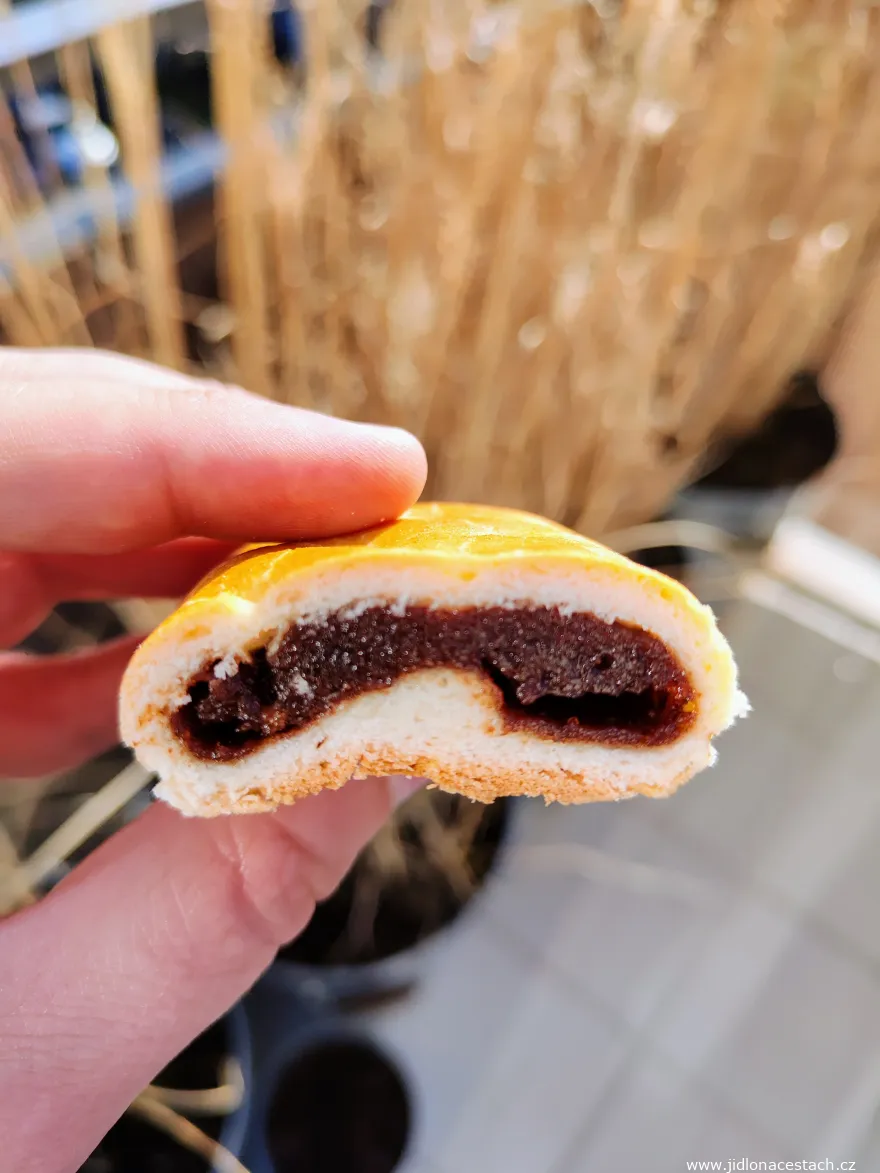
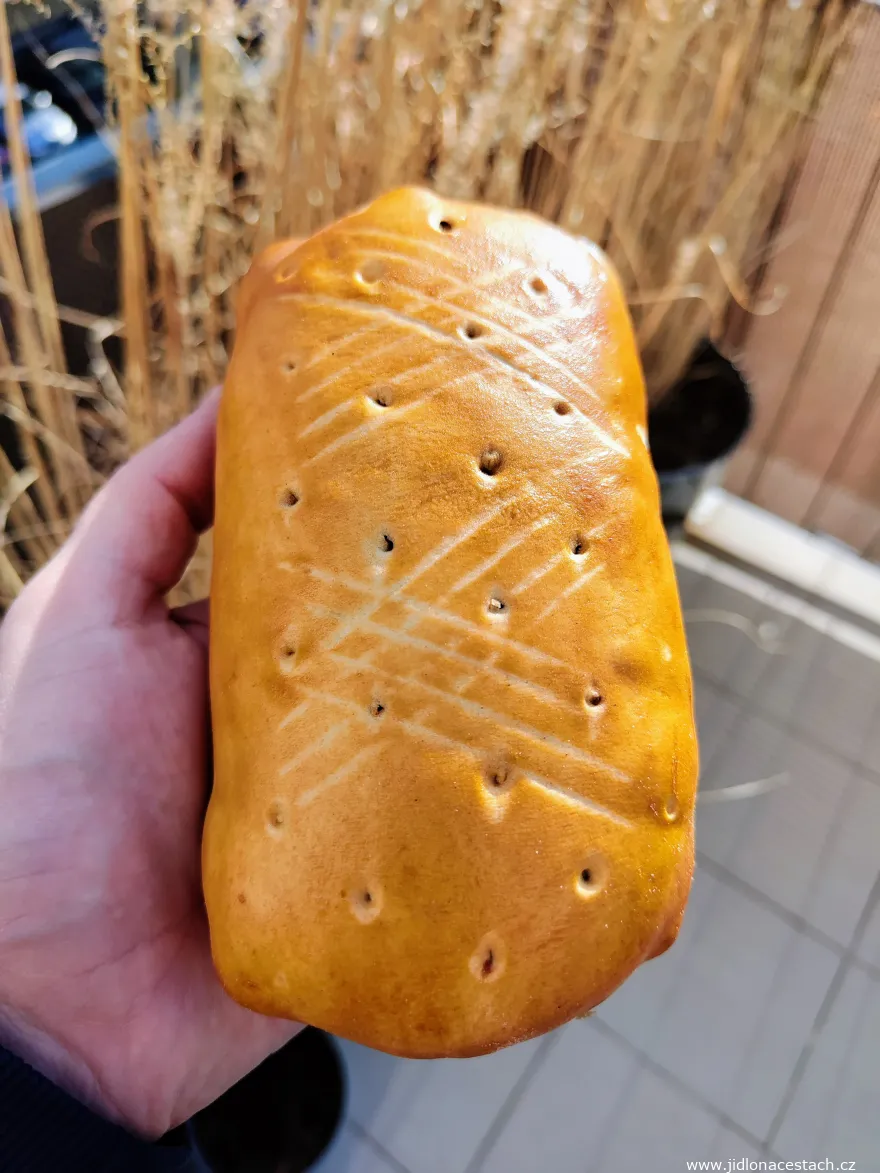
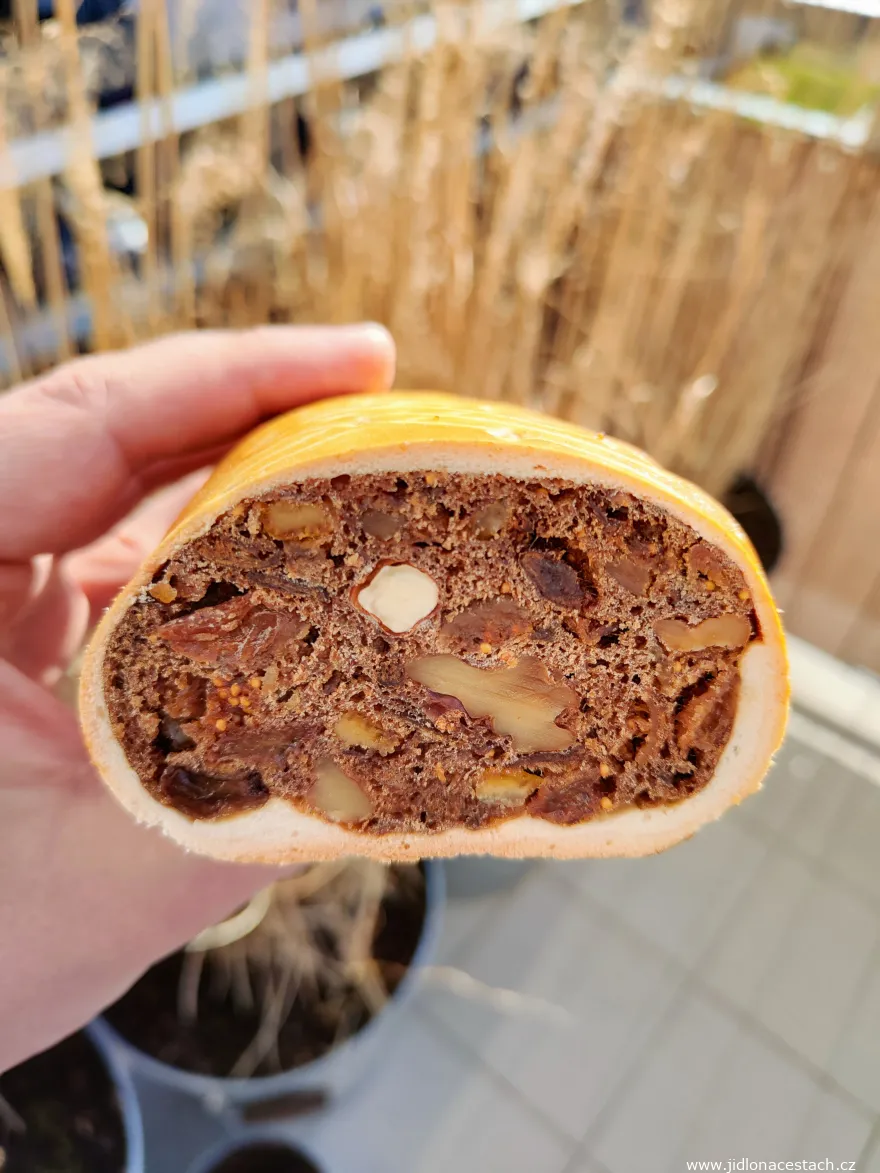
The lead role belongs to the dried pear, and every region handles it in its own way: in Glarus and Toggenburg the pears are cooked and pressed through a sieve into a thick paste, in Graubünden the slices are only soaked, in rose water for instance, so the filling stays coarser. In with the pears go walnuts, figs, sultanas, candied lemon and orange peel, spices that vary between cinnamon, aniseed, coriander and cloves depending on who's mixing them, and a splash of fruit brandy. If you know the big flat yeast-dough cakes we bake back home with pear butter, you know exactly what I mean: the same dried pear cooked down into a thick, almost black filling, except that here there's more of it in the pastry than everything else put together. A thinly rolled yeast dough wraps the whole parcel up, the crust gets pricked and it bakes to a deep brown; birnweggen spreads the same filling out and rolls it up like a roulade, which is why the slice is smoother and has no nuts in it.
It is eaten in thin slices, with butter, with a milky coffee or tea - the Swiss call that afternoon ritual Zabig. It is a pastry of Advent and the turn of the year, but it keeps so well that bakeries and supermarkets carry it all year round. Somebody suggested baking a slice with Swiss cheese on top; I haven't tried it and I didn't find that combination in a single local source, although the heritage inventory does mention birnbrot served with fondue and red wine. Take it as a secondhand tip.

One Loaf, Three Pastries and a Label
I bought my birnbrot packaged in a supermarket: just under half a kilo for 10 CHF (10 EUR), plus three birnweggen pear pastries for 3.20 CHF (3.20 EUR). The label was worth a read in itself - dried pears, sultanas, figs, candied peel, walnuts and hazelnuts, fruit brandy, malt, milk powder, shea butter and "spices" with nothing more specific. The filling was dense and sticky like pear butter, the sweetness came from the fruit and I couldn't find any sugar in it, the spices spoke up only after I swallowed; the crust was thin, there mostly for form's sake. I picked up the birnweggen because it reminded me of those cakes from home - pear butter has been a weakness of mine forever - and it was smoother, finer, without nuts, more of a snack. In the Engadine it would probably have been enough to buy me a ride on a sled. Moravian Wallachia and Lucerne never compared notes on pear butter, and yet they cook it the same way: mountains everywhere get through winter with the same pear.