Gault & Millau: The French Dining Guide
It's a scale whose top rung nobody has ever reached - and by the rules, nobody ever can. Restaurants here are scored out of twenty, but a twenty is never awarded on principle: absolute perfection doesn't exist, the founders reckoned, so why keep it on the menu.
Gault & Millau is a French dining guide that rates restaurants with points and chef's hats called toques, and alongside Michelin it is the most influential judge of French cuisine. It was founded by two journalists who had never cooked for a living - and they still changed the way France cooks.
Two Journalists Named Gault and Millau
The name of the guide hides no wordplay: Henri Gault and Christian Millau are simply two surnames off the masthead. Gault wrote a weekend column about day trips for a Paris newspaper, Millau started out covering domestic politics at Le Monde; both came to food as reporters, driving from restaurant to restaurant for city guides. They put out their own yearbook for the first time in 1972 and wrote it the way nobody wrote about restaurants back then - cheeky and against the grain. The old-guard Michelin prized heavy sauces, silverware and the gravity of haute cuisine; Gault and Millau praised cheap little bistros and thought nothing of writing that a famous restaurant was not worth a detour.
But it wasn't the scores that made their name. In 1973 they ran a manifesto in their monthly magazine, "Vive la nouvelle cuisine française!", with ten commandments for the new cooking: cut the cooking times, buy fresh at the market, throw out the heavy marinades and sauces. They didn't invent nouvelle cuisine - that was the work of chefs like Paul Bocuse, the Troisgros brothers and Michel Guérard. Gault and Millau named the movement and sold it to the world, which is, for a pair of journalists, a fair division of labor. Bocuse himself resisted being called the pope of the new cuisine: the title had been pinned on him, he said, "quite undeservedly".
Toques Go Up to Five, Points Up to Twenty
The rating works on two levels. Under ten points you don't get into the guide at all, from eleven up the toques start to appear, and the fifth and highest goes only to a kitchen with nineteen points. Everyone remembers a teacher who refused on principle to hand out top marks, so there was always room to grow - here that idea became an entire system. And the toques don't land only on temples of gastronomy - the guide rates bistros, wine bars and hotels as well, and nobody pays to be listed, a point Gault & Millau makes as firmly as Michelin does.
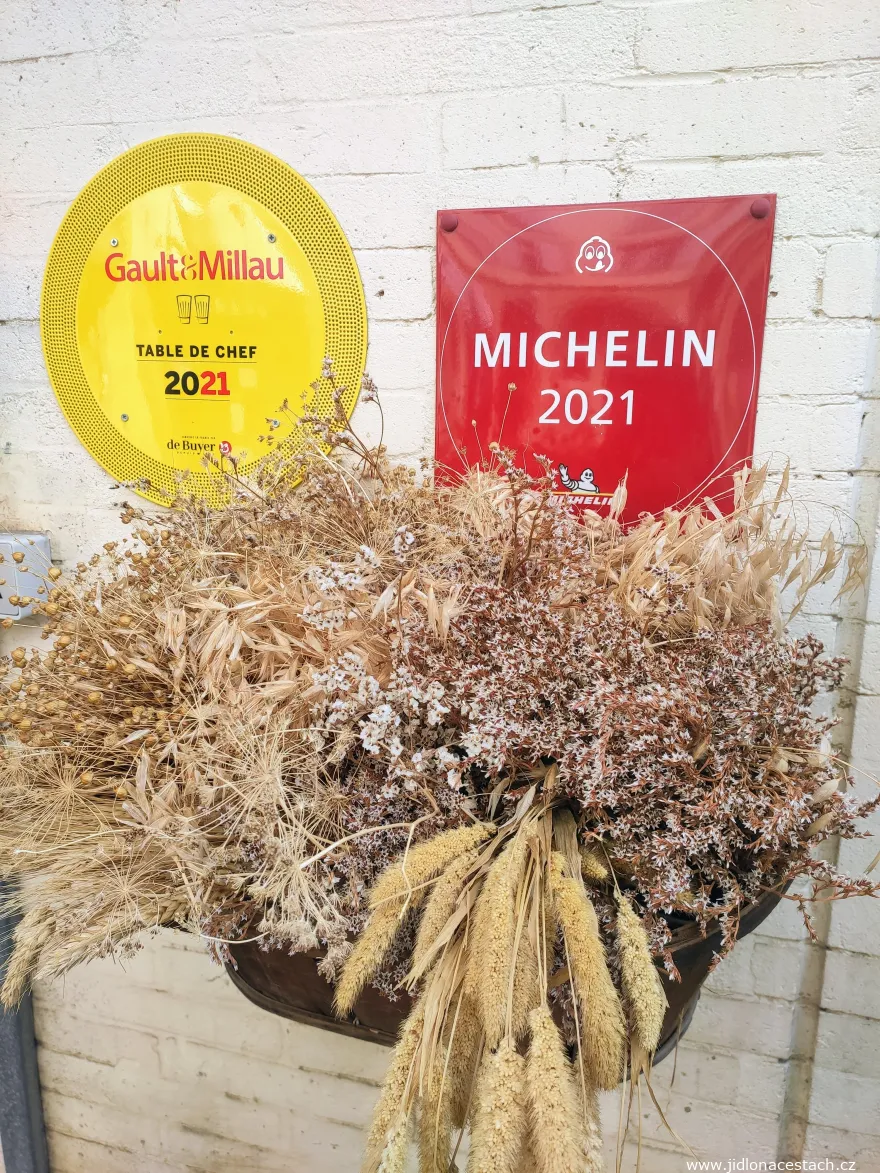
The relationship with Michelin began as a rebellion and settled into peaceful coexistence: the doors of good restaurants now carry both plaques side by side, the red one with stars and the yellow one with toques. That doesn't mean the two agree: they measure by different scales, send different inspectors, and the same kitchen can easily walk away from each with a very different verdict. Two judges, one stove, two results - and the diners just get on with dinner.
How Far the Toques Have Reached
Meanwhile, the French institution has become an export brand. The guide now operates in 15 countries and hands out toques in Turkey and Georgia, among others - always on the understanding that the rating adapts to the local cooking instead of measuring it against Paris. Czechia is still missing from the list. A Czech edition is already in the works, though, and it is due out in early 2025 - so Michelin stars here are about to get competition counted in toques.


