Gâteaux Piment: A Mauritian Fried Ball of Yellow Split Peas
If Mauritius ever voted for a national snack, gâteaux piment would win without campaigning: it is fried at the markets, by the bus stations and anywhere else people stop, it is sold by the piece for a few rupees, and you can taste your way from stall to stall. I'll admit right away that I'd abstain in that vote - which is exactly why it's worth working out what the island likes so much about it.
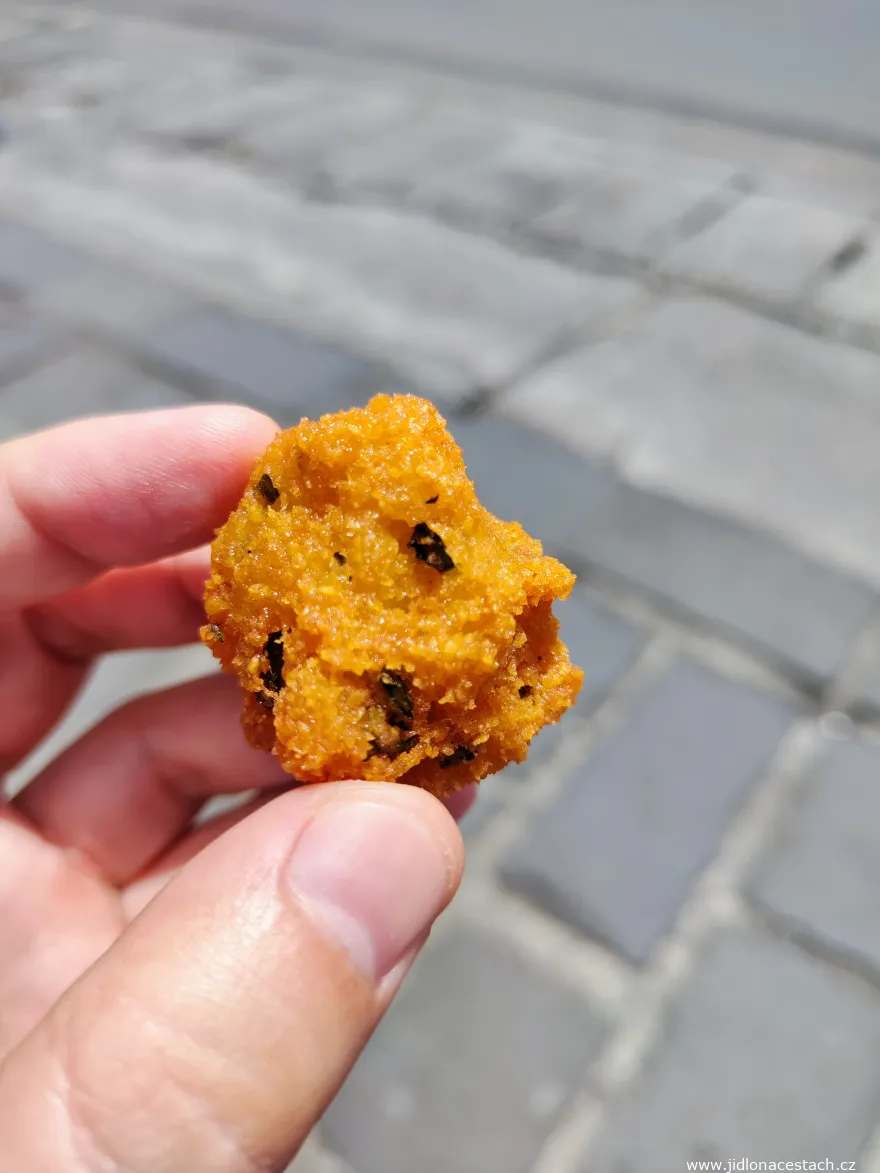
Gâteaux piment is a fried ball of ground yellow split peas, chili and spices - the most widespread street snack in Mauritian cuisine.
What Gâteaux Piment Means and Who Brought It
The French name literally promises a "chili cake" and Creole only bends it phonetically into gato pima. No source explains why a fried ball without a grain of sugar is called a cake - French-language sources just repeat the name and leave it at that. Réunion, the island next door, calls the very same ball bonbon piment, a spicy candy - so neither of the dish's two names tells the truth about it. And neither island feels any need to do anything about it.
Plenty of people will tell you it is a purely Mauritian specialty. It's more honest to say this: both Mascarene islands share the idea, each of them filling it with a different pulse - Mauritius with yellow split peas, dholl, Réunion with the big pois du Cap beans. The ball's ancestor is the South Indian fritter vadai; Indian indentured laborers brought it to the islands in the 19th century and nobody has ever pinned down the exact year - this is history from the hold of a ship, not from a parish register. From that same sack of yellow split peas, Mauritius also came up with the flatbread dholl puri and the sweet tekwa; gâteaux piment is the hot-tempered cousin in that family.

How to Eat Gâteaux Piment and What Goes with It
Inside, soaked and ground yellow split peas are mixed with chili, cilantro, cumin and curry leaves, known here as caripoulé - and it is the leaves that give the ball the aroma that gives away its Indian ancestry the moment you smell it. The seasoned mash is shaped and dropped into hot oil, so the ball ends up with a crisp crust and a moist, spicy inside. Ideally, at least; I'll come back to that.
You eat them at any hour - with morning coffee, with afternoon tea or in the evening. They taste best hot, straight out of the oil, and anyone who wants breakfast the Mauritian way has a few balls squashed into a fresh baguette with butter - the baguette is what the French left behind here, and the island has never given it up. Cold ones don't go to waste either: quarter them, add tomatoes, onion and lemon, and you have gâteaux piments salad.

A Takeaway Window in Curepipe
I've eaten a lot of gâteaux piments on the island: at the Victoria Station Market in Port Louis, as a starter at the Creole Shack restaurant in Flic en Flac, and most often at the takeaway window of the Caravanne Bleu Blanc Rouge food truck in Curepipe, which wears blue, white and red on its paintwork as well as in its name and has "Gateaux Piment" on the very first line of its sign. And now back to what I promised: the island's most popular snack didn't win me over - the inside is too dry for my taste and only comes alive once chili paste helps it along. I kept giving it another chance at every stall anyway, because that's the kind of research you can afford. One cost 4 MUR (0.10 EUR).


