Miel ca la Moldova: Moldovan-Style Lamb
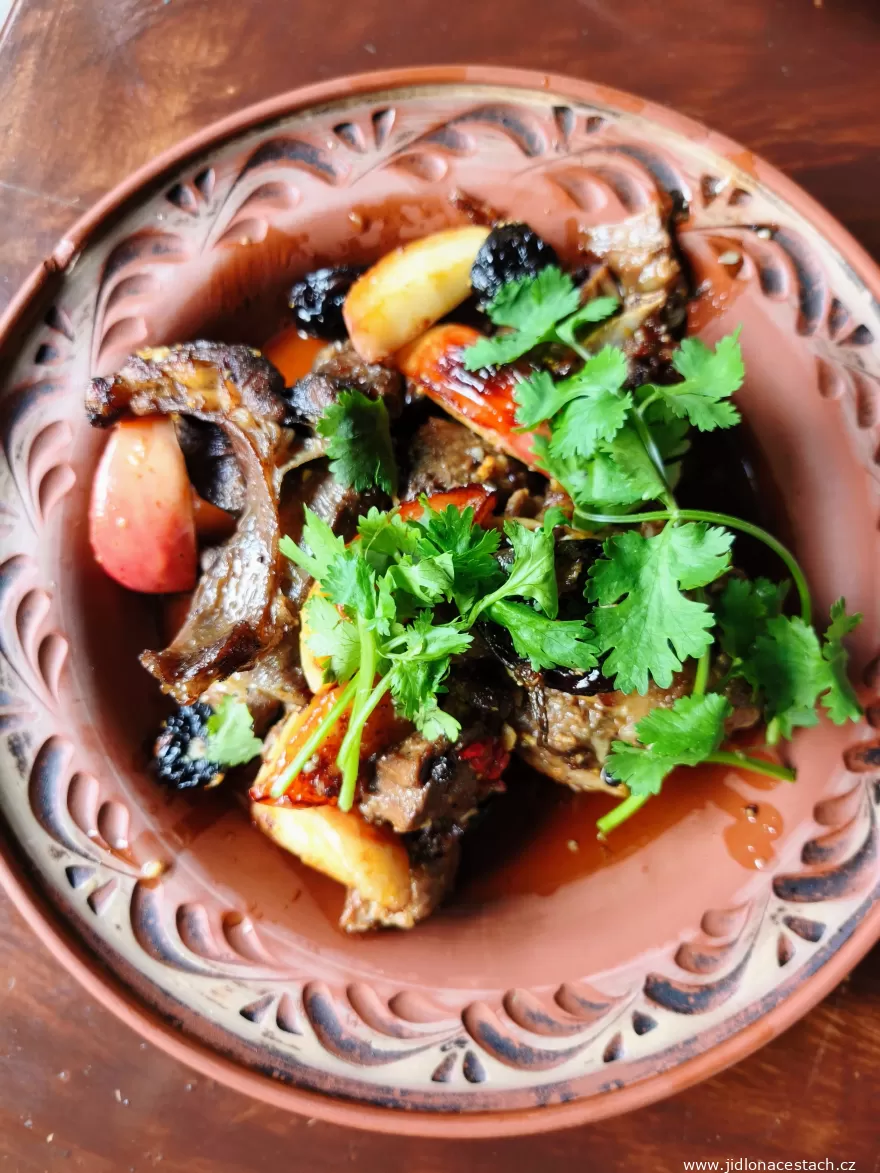
Going by the cookbooks, the best dish I tasted in Moldova doesn't exist. You can look for it in Romanian recipe collections, in Soviet cookbooks and on Easter menus - a dish called miel ca la Moldova turns up nowhere but on the menu of one Chișinău restaurant. And yet this plate brings together more of Moldova than plenty of dishes with centuries of pedigree. Miel ca la Moldova, literally "lamb as in Moldova", is chunks of fatty lamb roasted until tender with prunes and apples - a restaurant name for an old habit of Moldovan cuisine: braising meat with fruit.
What Ca la Moldova Means and Whose Dish It Is
Romanian recipes like to label a style with the formula "ca la" - as in, the way they do it at. Yet "ca la Moldova" points less to the modern state than to historical Moldavia - the principality whose western half now lies in Romania - so lamb "as in Moldova" lays claim to the whole region, not just one republic. The word miel itself, lamb, comes from the Latin agnellus and sets a small trap for foreigners: it sounds almost exactly like miere, honey, even though the two words are completely unrelated. And to make the confusion complete, the eastern dialects call a lamb mel - which is exactly the Latin word for honey.
The name belongs to a single restaurant, but lamb itself is an Easter affair that Moldova shares with all of Romanian cuisine - roast leg of lamb, the lamb meatloaf drob, or stufat, lamb stewed with green onions and garlic, with no fruit in sight. The pairing of lamb and prunes has its cousins around the world rather than next door: in Moroccan cuisine, the festive tajine is braised with prunes, almonds and honey, and Georgian chakapuli is lamb cooked in wine with sour plums, in the form of tkemali sauce. Neither has any documented connection to Moldova - it's just the same idea in different corners of the world.
Meat and Fruit in One Pot
Soviet cookbooks on Moldovan cuisine sum up its meat dishes with a single principle: meat is braised with vegetables or with fruit - tomatoes, prunes, quinces and apples supposedly give the meat a particularly delicate flavor. Miel ca la Moldova puts that very principle on the plate. But a named recipe for lamb with prunes can't be traced in Moldovan sources - it's a custom, not a recipe. In Czech cuisine, fruit meets meat only by the spoonful - compote next to the schnitzel, lingonberries with the Sunday roast; in Moldova it goes straight into the pot. The only thing on the plate without traditional credentials is the fresh cilantro: old lists of Moldovan seasonings include leeks, lovage, thyme and coriander seed, but not the fresh leaves, and neighboring Romania hardly uses them even today. So the green leaves on my lamb were probably the youngest thing on the whole plate.
In Moldova, lamb has a fixed date: Easter, when the lamb symbolizes sacrifice and purification. The rest of the year, you're more likely to find it in restaurants - the Chișinău one I've been talking about all along even gives lamb its own section on the menu. And there are still plenty of goats and sheep in the country: at the start of 2025, Moldova kept over half a million of them, and nine out of ten live not on a farm but in someone's backyard. People here drink both white and red wine with lamb, and mămăligă with cheese and sour cream makes a great side - there's plenty of juice and prunes left on the plate, and you need something to mop it all up.
Four Hundred Grams for Two
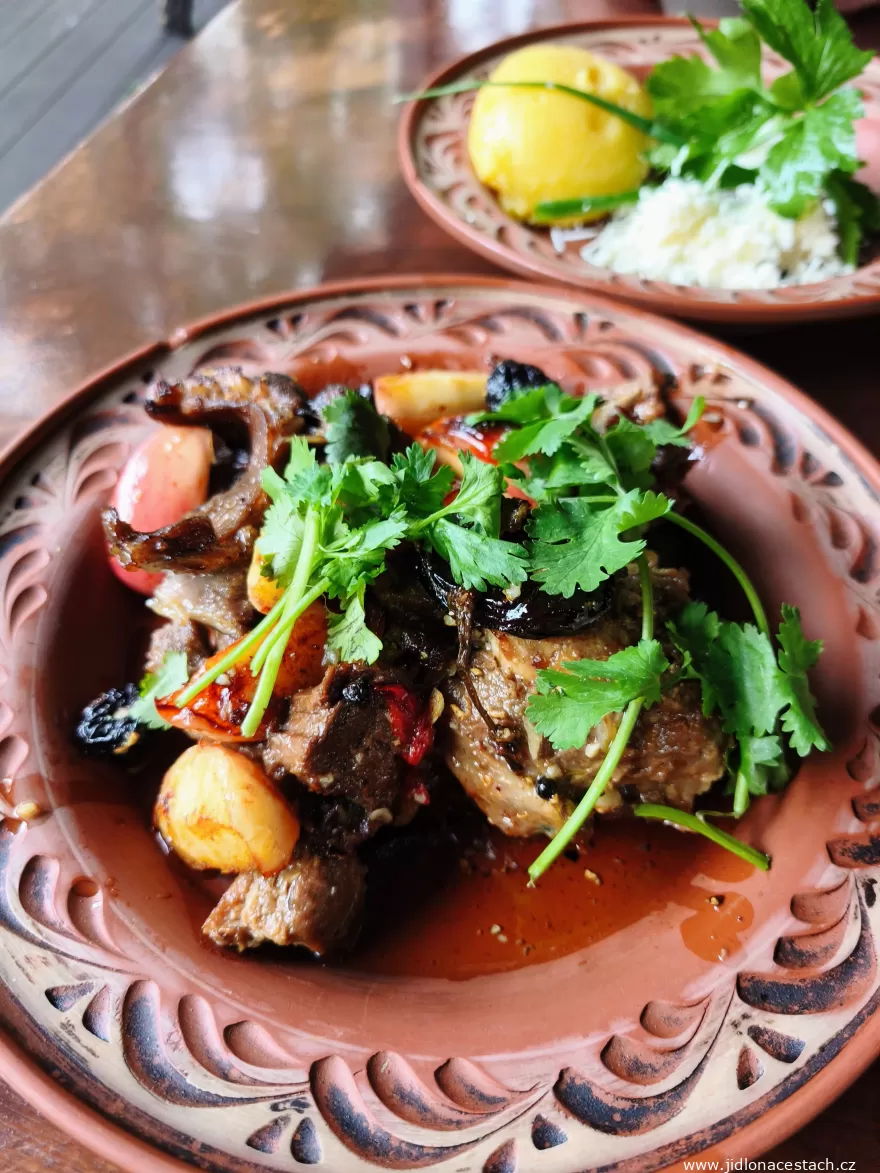
I ate miel ca la Moldova in Chișinău, at Acasă la Mama Restaurant (see Where to Eat in Chișinău), after a bowl of borș verde soup. The meat - lamb, or maybe good honest mutton by then - I didn't dwell on it at the table - was fatty, but roasted so well it fell off the bone on its own, and together with the sweetness of the prunes and the pieces of sautéed apple it was pure luxury: I didn't eat anything better in Moldova. The 400-gram portion cost 279 MDL (13.60 EUR) and we shared it between the two of us - we left the table full and happy. Dessert was prunes with walnuts simmered in wine - fruit with the meat and after it too. It was our first visit to this restaurant. After a lunch like that, we simply had to come back.


