Arancini: Sicilian Fried Rice Balls
The oldest Sicilian dictionary that lists the word as a food came out in 1857, and it describes a sweet rice dish shaped like a small orange. A dessert. Bite into a hot ball in Palermo today and you find meat ragù with peas inside - a dish that turned a full hundred and eighty degrees in a couple of generations, and nobody minds.
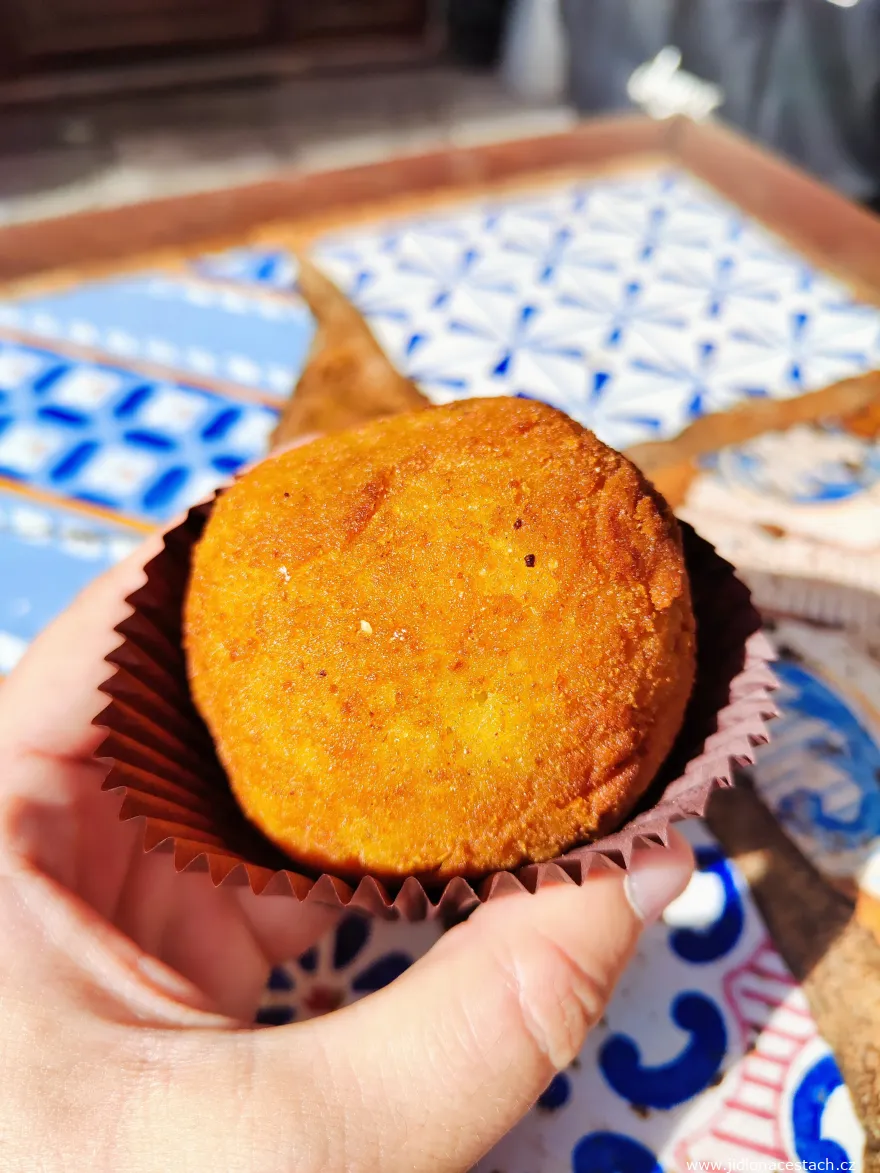
Arancini are fried balls of saffron-tinted rice, most often filled with meat ragù or with ham and cheese, rolled in breadcrumbs and fried until golden - the best-known street food in Sicily and a piece of Italian cooking that grew up a long way from Rome. The rosticcerie turn them out at around two hundred grams each: one is a snack, two are lunch.
What Arancini Means and Why Palermo Argues With Catania
The name is simple enough: Sicilian aranciu is an orange, the suffix -inu makes it small, and arancinu is a little orange. But Sicilian splits into west and east, so in Palermo they say arancina and shape it round, while in Catania they say arancino and make it pointed, supposedly after Etna, which stands at their back. The argument over a single letter has been running for decades, and it is no joke: the foreign press has written about it and it made it onto the satirical show Striscia la Notizia. The Accademia della Crusca, Italy's highest authority on the language, ruled that both forms are correct - so the quarrel goes on, now with an official stamp saying it can never end. I write arancini, the masculine plural, which in Sicily offends exactly half the island.
Arancini are a dish of the whole of Sicily, not of one city, and on the mainland they are sold with a "Sicilian" label. The closest cousin lives in Rome: supplì, a long rice croquette with mozzarella inside that stretches like a telephone cord when you break it open (supplì al telefono). Arancini put on no such show; their filling stays where it is and draws no attention to itself. I am leaving the pointed Catania version for a separate article - we are in Palermo here.
The Year 1226 and Other Legends That Fry Alongside Them
Guidebooks like to say that arancini go back to 1226, when an Arabic cookbook described a dish resembling an orange. That recipe does exist, it is called naranjiya, and it is a fried ball of lamb. There is no rice in it, and no Sicily either. What is documented is more modest: rice and saffron were brought to the island by the Arabs between the ninth and eleventh centuries, and the word arancinu was first recorded as a food in Giuseppe Biundi's dictionary in 1857 - the sweet rice dish from the start of this piece. The legend about Emperor Frederick II, who supposedly had the balls coated in breadcrumbs so they would survive a hunting trip, is backed by no source at all; even the people who tell it hedge with a "supposedly". Nobody knows exactly when the dessert turned into a savory ball with ragù.

Saffron Rice in a Crumb Coating and When Arancini Are Eaten
The base is risotto that has cooled and stiffened, yellow with saffron. You press a hollow into it in the palm of your hand, drop in ragù with peas, or ham with béchamel and mozzarella (in Palermo al burro), and close the ball up. It is a dish built on leftovers: the leftover rice that in a Czech kitchen would end up in the oven as a sweet pudding goes into egg, breadcrumbs and hot oil in Sicily; older generations breaded them twice so the ball would not burst open. The professionals chill the breaded balls for a few hours before frying; the difference in temperature is what gives them the crust that cracks audibly when you bite in. Fillings have since gone off in all directions, from spinach to squid ink, but in the rosticcerie the original two still rule.
Arancini are eaten with your hands out of a paper tray, standing up or on the move, from morning to night; in Catania some people have one with their morning coffee. They are best hot, from a batch that has just come out of the oil, but cold is no disaster - people eat them both ways. One day a year they hold a privileged place: on December 13, St. Lucy's Day, Palermo eats nothing made of flour, in memory of the grain ships that legend says ended a famine in 1646, and that day arancini stand in for bread and pasta alike.
The Cheese Arancino at Ke Palle
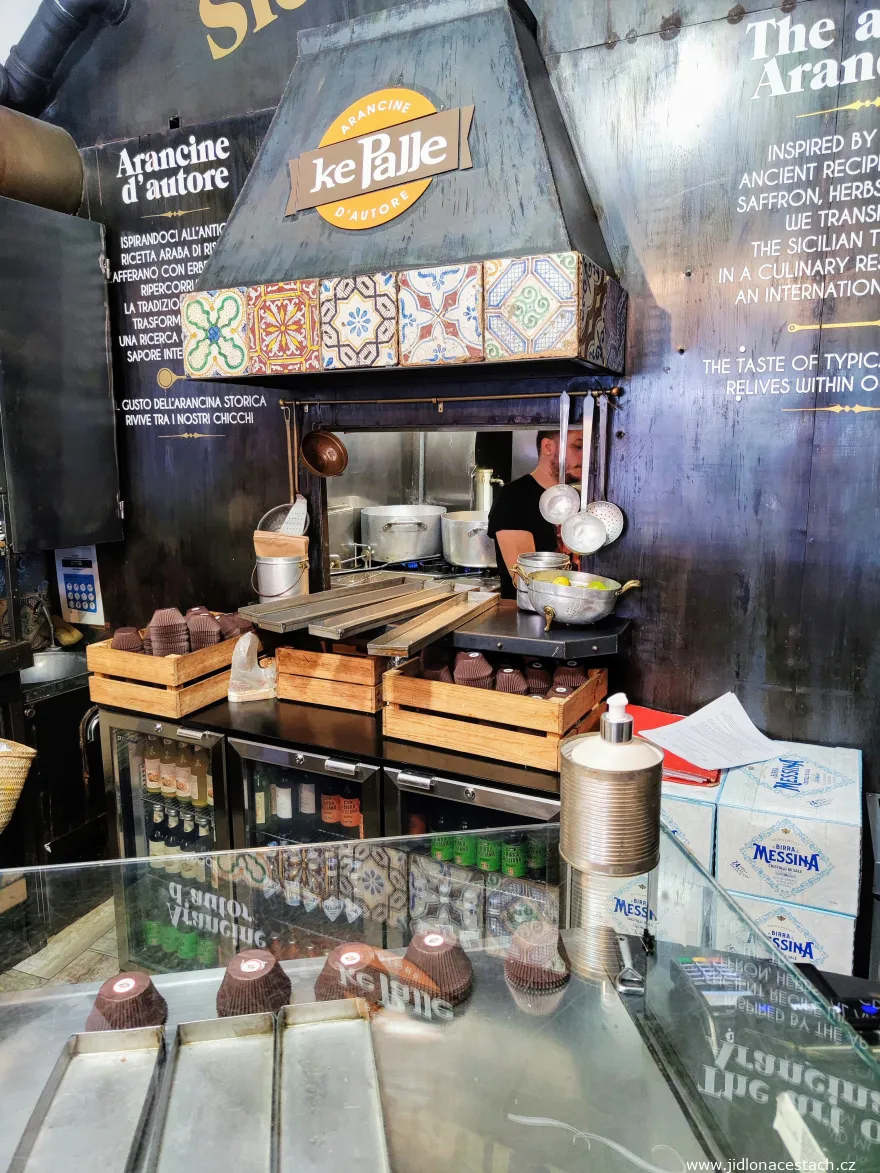
In Palermo I ate arancini most often at the Ke Palle bistro on via Maqueda, the city's main food street (see Where to Eat in Palermo), which sells nothing else; inside, it is just a few square meters, and you sit outside at metal tables. I picked the cheese one: inside were friarielli greens, a relative of broccoli, pieces of salsiccia sausage and smoked scamorza. The crust cracked, the rice underneath was dense and hot, the cheese pulled into threads and the smoky scamorza drowned out the sausage, which I was hunting for more than I was tasting. One cost 3.50 EUR. If you would rather sit down for the next round, a few steps away is the Al Vecchio Club Rosanero Restaurant, my best memory of Palermo.


