Pizza Secca: The Dry Pizza from Catania's Bakeries
In a bakery in Catania, pizza is sometimes sold the way cheese or ham is: it sits on a tray in the window, already cut into pieces, and the woman behind the counter takes as much as you ask for, weighs it and wraps it in paper. Don't expect the classic pizza box.
Pizza secca, literally "dry pizza", is a Catanian sheet of dough rolled out to a few millimeters, brushed with tomato paste, oil and oregano and baked long enough to turn crisp - and Italian cuisine has saddled it with the vaguest word it owns: pizza.

Why a Dry Flatbread Is Called Pizza
It's only imprecise from our point of view. In medieval Latin and in half the dialects of Italy, pizza simply meant a flatbread, any flat piece of dough that came out of the oven, and in plenty of Italian regions that is still what people call it; the Neapolitan one with tomatoes and mozzarella is just one flatbread among many, the one that went furthest. In linguistic terms, pizza secca is a "dry flatbread" and promises nothing more - the adjective only describes what the baking does to it. Some recipes also call it schiacciatina, a diminutive "little flat one" from the verb schiacciare, to squash - which is exactly what the rolling pin does to the dough.
Sfincione, Cartocciata and Other Pizzas That Aren't Pizza
Sicily has a whole collection of pizzas, one per town, and pizza secca sits right at the edge of it: it is a local thing in Catania and its immediate surroundings, and you won't find it elsewhere on the island. Roundups of Sicilian pizzas often don't even mention it, because next to the famous names it's ordinary bakery fare. Palermo's sfincione is its exact opposite, a tall spongy flatbread with onion sauce and anchovies, and in America it's that one that ends up called "Sicilian pizza", so Sicily's two best-known pizzas resemble each other about as much as crust and crumb. Catania's cartocciata, in turn, is a soft stuffed half-moon from the rosticceria, a cousin of the calzone. On the mainland, montanara is fried and pizza rustica is baked like a savory pie. In the south, pizza is a genus, not a species.
What Goes into Pizza Secca and When People Eat It
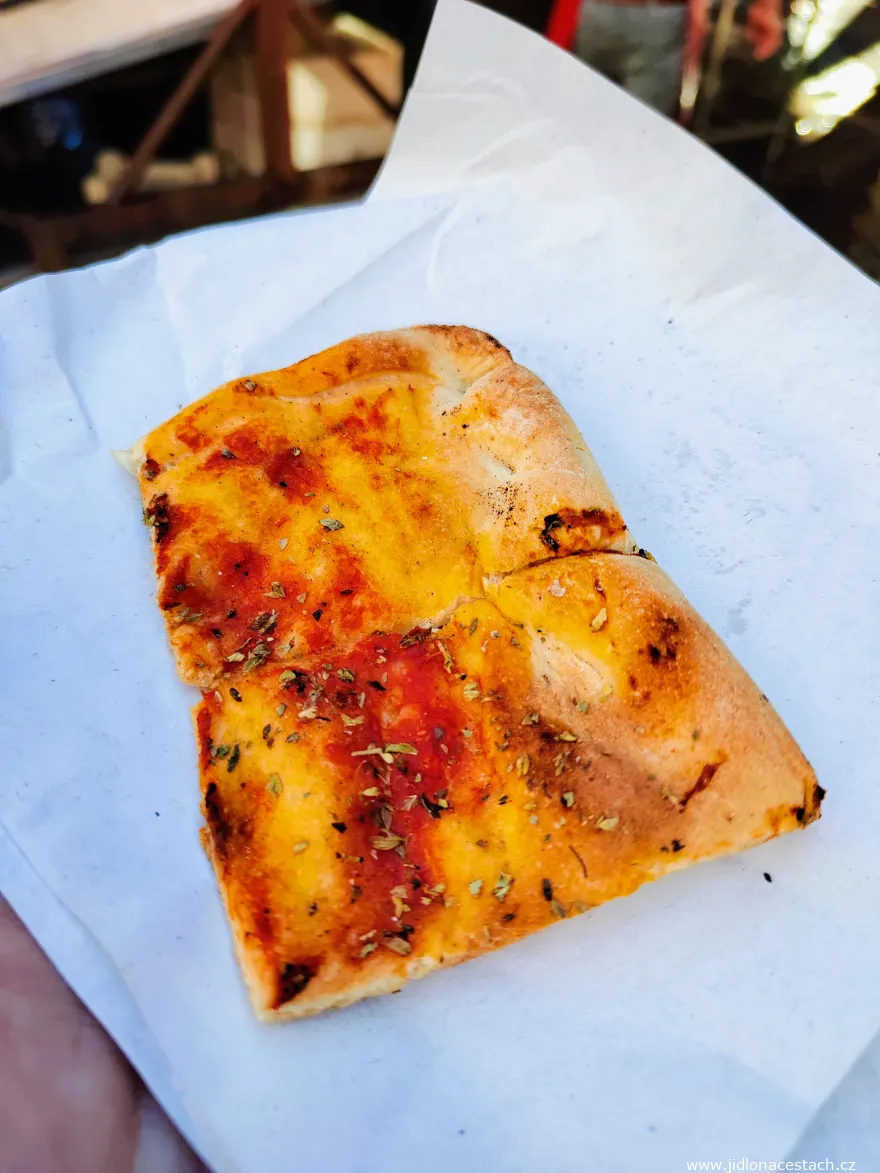
Its history is short, or at least unrecorded: nobody dates the first dry pizza and no bakery claims to have invented it. The dough is as plain as dough gets - flour, water, olive oil, salt and just a pinch of yeast so the flatbread doesn't rise much; a rolling pin takes it down to a few millimeters, and then comes the crucial step: baking in a hot oven long enough for all the water to leave the dough. The yeast is there only to make up the numbers; the dryness does the work. On top goes a thin layer of tomato paste, oil, salt and oregano; in the white version, thinly sliced onion instead of the tomato. It tastes like that crisp crust from the edge of the baking tray, except that here the crust is the whole tray.
You eat it cold, any time between meals, as a snack, with a beer or on the way back from the market, and bakeries keep it on display from mid-morning until evening, so unlike fresh bread, you never have to wait for it. In a paper bag it stays crisp for a few days, not weeks, so as a souvenir it only works for someone flying home the day after tomorrow. It is sold by weight, and all the woman behind the counter needs is for you to show her how big a piece you want.
Two Pieces by the Fish Market in Catania
I bought my pizza secca in Catania, in a small bakery on Via Gisira that I walked past on my way to the fish market. It was soaked through with oil until it was yellow, so at first glance it looked as if it had cheese on it; it didn't. It crackled like a wafer, the tomato paste was more salty than sweet and the oregano drowned out everything else, and the oil stayed on the paper and on my hands. The two pieces came to just under 1 EUR. I never came across it anywhere else in Sicily. If you want it, you have to go to Catania; and once you are in Catania, it costs you less than a euro.


