Padobranci: Walnut Sweets With Cream Known Across the Former Yugoslavia
An English-language travel blog once called them "failed French macarons," and a Parisian pastry chef would probably agree: a cracked shell is a flaw in a macaron, a sign of overbaked batter. In the Balkans, it's exactly the opposite. The cracks on the surface are the whole point.
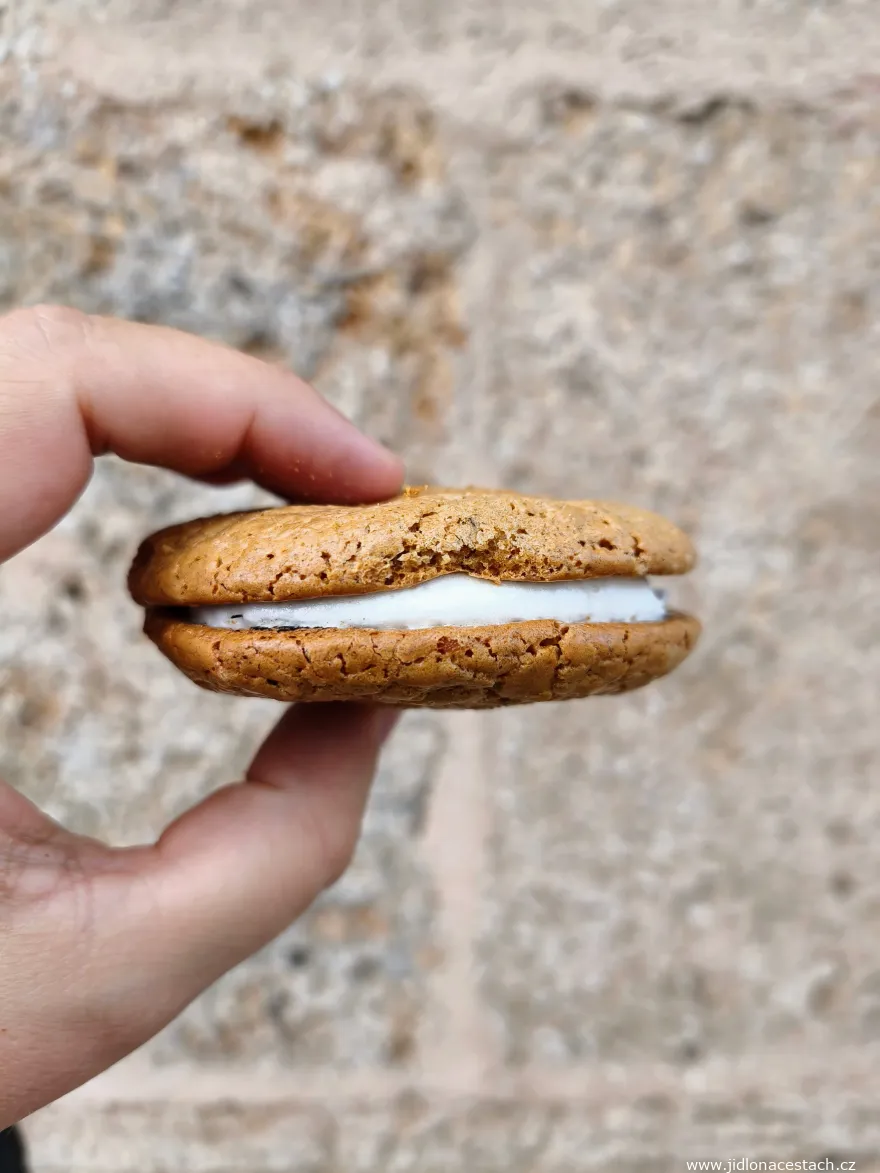
Padobranci (Macedonian: падобранци) are two crisp meringue-like halves made of egg whites, sugar, and ground walnuts, baked in the oven until the surface cracks, then glued together with a thick layer of cream once cooled. They're sold in pastry shops and eaten straight from the hand. It's not a Macedonian invention, but a homemade sweet found across the former Yugoslavia - in Macedonian cuisine it simply holds a firm place in the pastry shops, and one famous address.
Why the Walnut Sweet Is Named After Paratroopers
A spoonful of batter spreads and puffs up in the oven into a round dome - and that's exactly where the name comes from. Padobran is Macedonian for parachute, padobranec for paratrooper, and in pastry-making the word covers anything with a dome that looks like an open parachute. Nobody recorded who first pointed at a tray of meringue halves and said "paratroopers"; the name offers no other clue. And it's not a name unique to Macedonia: padobranci are known under the same word and the same way of making it in Serbia and Croatia too, Serbian recipe websites even carry more of them than Macedonian ones, and they all say the recipe "was known to every housewife in the former Yugoslavia" - it's a homemade sweet of that whole region, not of one country. Anyone looking for a country of origin won't find one. The same technique under a different name turns up further from the Balkans, too: Turkish cuisine glues together cracked almond meringues called acıbadem, and French pastry drew macarons from Saint-Émilion from nearly the same batter - egg white, sugar, ground nuts.

A Childhood Treat Nobody Ever Dated
The history is quickly told. Both Macedonian and Serbian websites file padobranci under "treats from our childhood," recipes every Yugoslav housewife supposedly knew by heart - and that's where the dating stops. Only one thing can be pinned down: they've been around since at least the childhood of today's adults, and they've since moved from home kitchens into pastry shops, where they now sit as a regular item next to éclairs and marzipan. That English-language blog wronged them a second time, too: it claimed you could only buy them in a single pastry shop in Skopje. The Rigara pastry shop in the Old Čaršija - Skopje's historic Ottoman-era bazaar quarter - really does sell them, and old-timers praise it for them, but other Skopje pastry shops carry them as well, and the recipe appears on every other Macedonian recipe website. They're about as rare as bread.
Egg Whites, Walnuts, and an Oven You Mustn't Open
There aren't many ingredients, and none can be swapped out: egg whites whipped with sugar, ground walnuts folded in, and some cooks add a spoonful of flour or a handful of crushed biscuits to help the batter hold its shape. Spoonfuls are then dropped onto a baking tray, well spaced apart since they spread in the heat, and go into a lightly preheated oven that, according to one recipe, mustn't be opened for half an hour. The crispness comes from low heat and a long bake: the surface sets and cracks before the center has time to dry out, so each half is crunchy and falls apart the moment you bite it. The cream is the other half of the treat: pastry shops tend to go with a pale vanilla one, often made from a pudding powder locally called gustin; at home, a darker version is more common, made from chocolate, butter, and the egg yolks left over from the whites.
Padobranci don't wait for Christmas or weddings: they sit in pastry shops all year round. They're eaten out of hand.

A Taste by a Stone Wall in Skopje
I bought padobranci in Skopje, in the Old Čaršija, at the Rigara pastry shop (see Where to Eat in Skopje), just to taste them, since I'd already had tavče gravče with kebapi, and dessert at the table was out of the question by then. I actually ate them a bit further on, somewhere quieter. The crispness caught me off guard: the top meringue gave way before I'd properly bitten into it, and it was really good - I don't have a more precise word for it, so that's how I'll put it. Distantly, and I mean only distantly, it reminded me of Turkish acıbadem and macarons from Saint-Émilion. I don't remember the price.
Šenol Hadži, who is one day meant to take over this most famous of pastry shops from his parents, cites a Čaršija saying in an interview for a Macedonian website: that whoever hasn't tasted a padobranec at Rigara might as well never have set foot in the Čaršija at all. So it seems I now have it officially confirmed: I was in the Čaršija.


